
App Store 2026: Age Ratings and SDK Deadline Playbook
Two deadlines define the next quarter for iOS teams: the App Store age rating 2026 update that began on January 31, 2026, and Apple’s minimum SDK requirement taking effect on April 28, 2026. If you haven’t answered the new age rating questions in App Store Connect, expect friction when you try to push your next update. And if your build pipeline isn’t targeting SDK 26 by late April, your submission will be rejected on upload. Here’s how to land both changes cleanly without derailing your roadmap.

Why the App Store age rating 2026 update matters
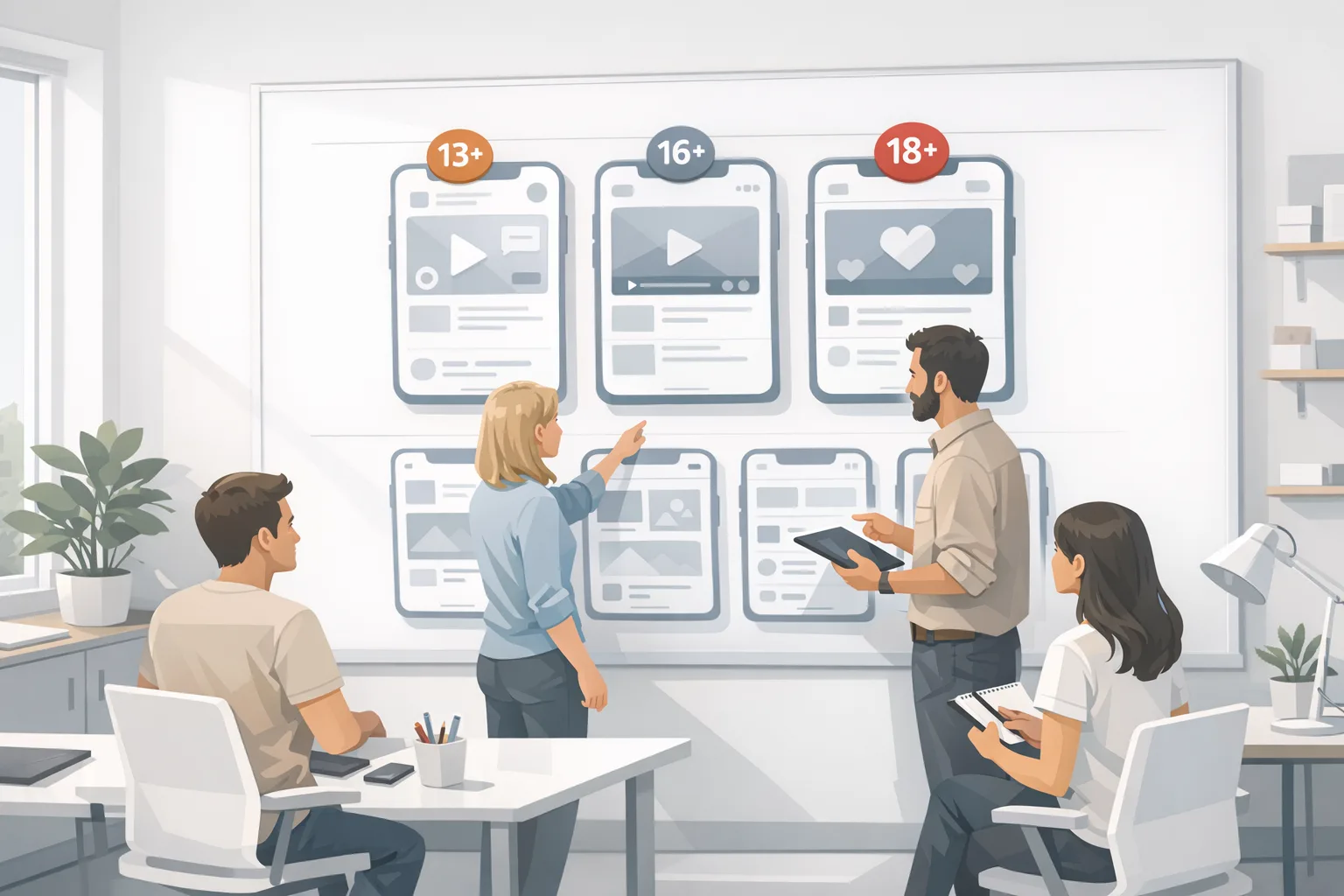
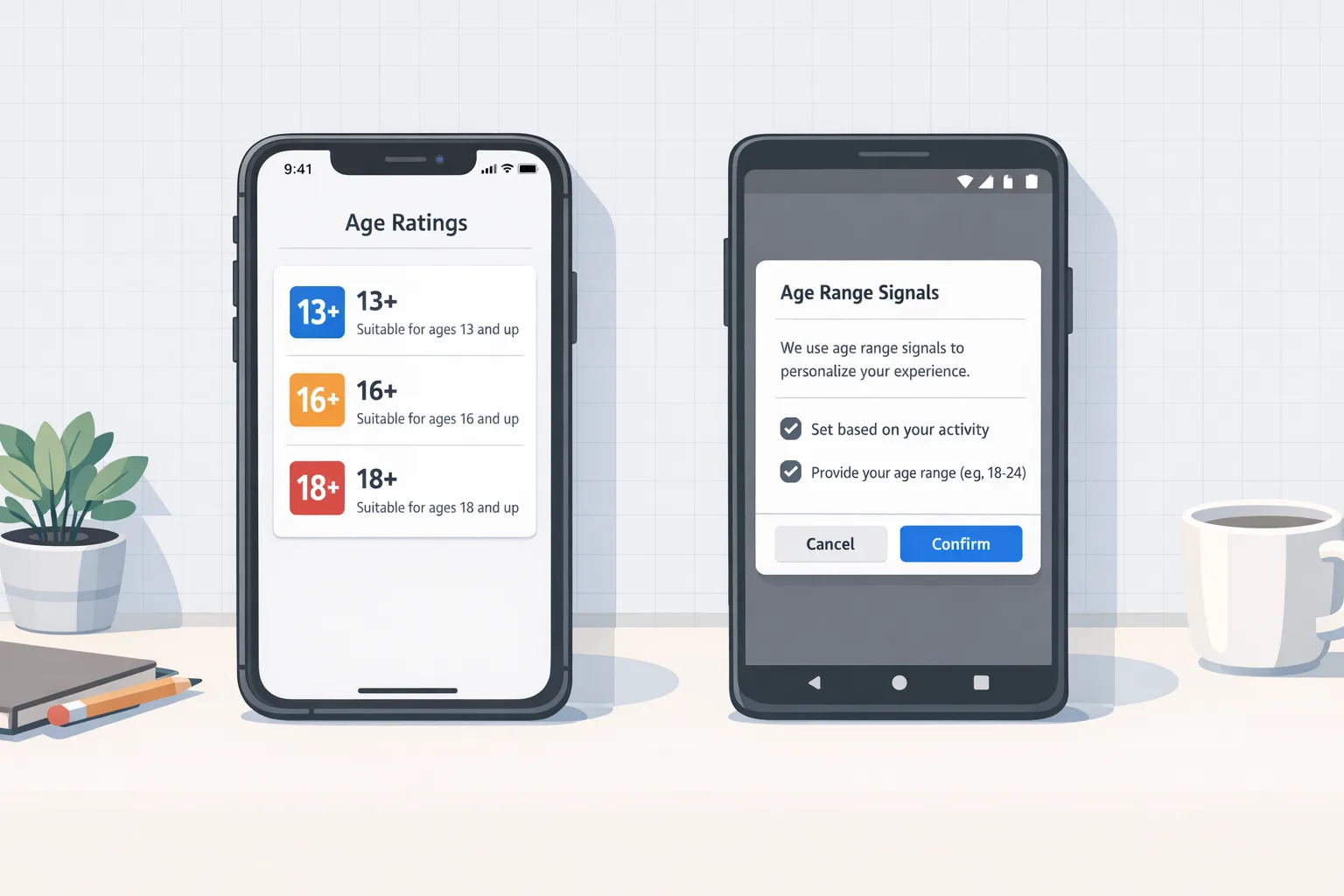
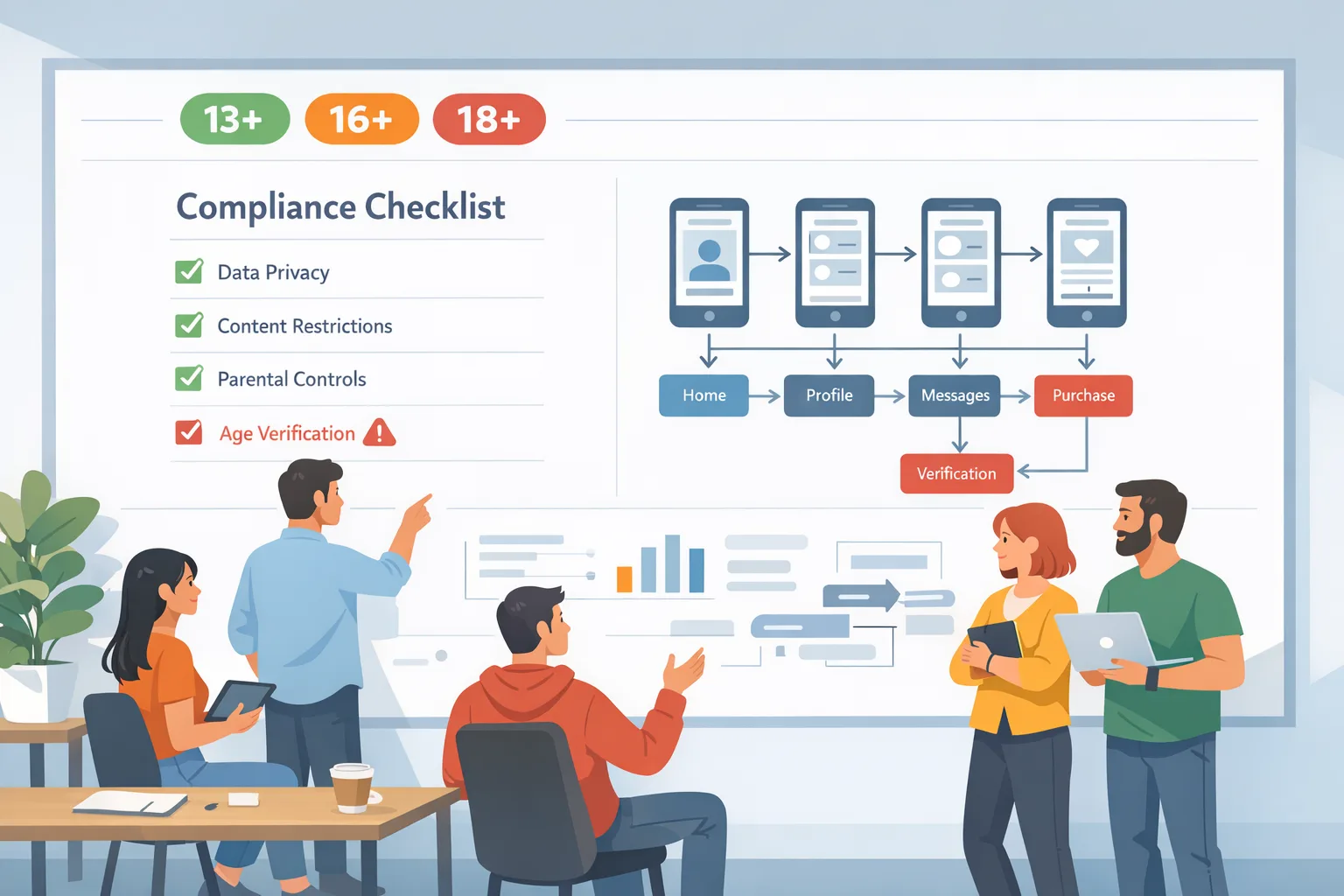
Apple expanded its age classifications to better separate teen experiences and align with regional standards. That translates to clearer 13+, 16+, and 18+ tiers alongside 4+ and 9+. Your product page will increasingly reflect whether your app includes user‑generated content, messaging, advertising, and whether you expose in‑app controls for parents or age assurance. If you haven’t responded to the updated questionnaire, you’re flying blind: the store may show a rating you didn’t intend, parental controls may hide your app from parts of the storefront for minors, and your next submission could be blocked until you comply.
On the user side, families with Screen Time and content restrictions enabled will see tighter filtering. If your rating lands above a child’s allowed range, your app won’t surface in editorial placements for that child, and Ask to Buy approvals could become the only path. That’s not theoretical; it’s a real distribution throttle for apps that rely on organic discovery among younger users.
The two hard dates: January 31 and April 28, 2026
Two milestones anchor your plan this quarter:
January 31, 2026: Apple automatically updated age ratings under the new system and expects developers to answer the updated questionnaire in App Store Connect. If your answers are missing or outdated, your rating may not reflect your product today, and submissions can be interrupted until you complete it.
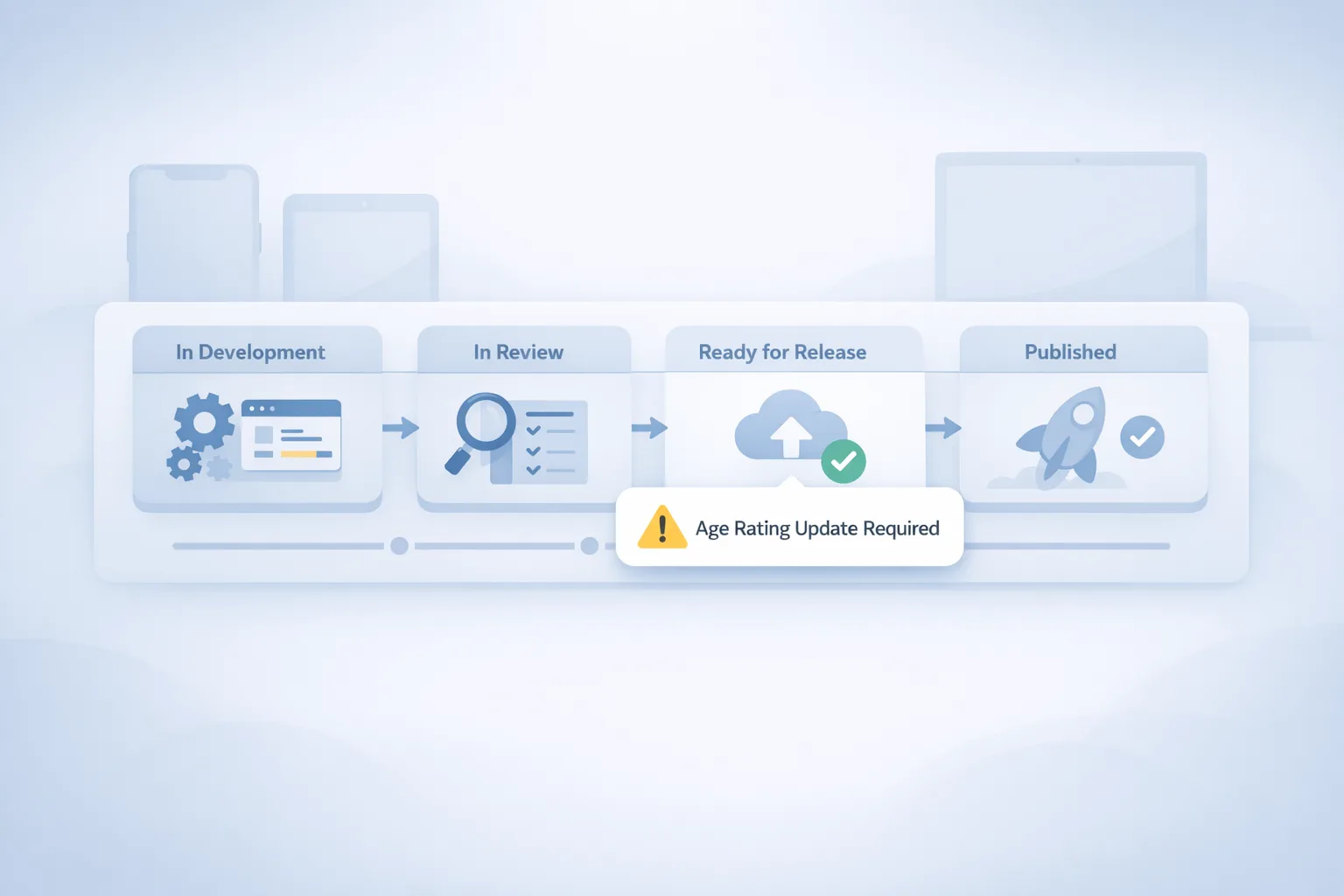
April 28, 2026: New uploads must target SDK 26 for iOS, iPadOS, tvOS, watchOS, and visionOS. Practically speaking, you need Xcode 26 in CI, updated build settings, and dependency readiness. If you ship multiple binaries or have white‑label variants, each must meet the minimums.
If those dates feel uncomfortably close, you’re not wrong. Treat February through April as a single compliance sprint with two outputs: accurate age metadata and a green build against SDK 26.
What actually changed in age ratings?
The biggest shift is granularity. Many apps that previously sat under a broad 12+ or 17+ are now split across 13+, 16+, and 18+. Apple’s form emphasizes content frequency and intensity, plus whether you host user‑generated content or messaging features and whether you offer in‑app controls. A few practical implications:
First, user‑generated content and messaging often trigger higher tiers unless properly moderated with tools and reporting. Apps that expose public feeds, DMs, or live chat without robust filters and controls are more likely to move into teen‑or‑above categories.
Second, advertising and tracking disclosures matter for families. If you rely on ad networks and your format occasionally surfaces mature content, be conservative in your answers. Consider age‑aware ad waterfalls or contextual ads for younger cohorts.
Third, in‑app content controls can help. If you can toggle user interaction modes, filter mature topics, or disable links, say so. Clear parental controls can support a lower visible risk profile and a rating that matches your intended audience.
Risk scenarios from real teams
Let’s pressure test typical apps:
Social marketplace. You host listings with photos, DMs, and buyer‑seller chat. Even with content moderation, you’ll likely fall into a teen tier. If you’ve added short‑form video or livestream auction features, expect 16+ unless controls are strong and defaults are conservative.
Wellness tracker. You include community forums and image uploads. If your topics include sensitive health discussions or body‑related imagery, 13+ is common; adding open messaging may bump you.
Casual game with chat and clans. Without safe‑chat or filters, teen tiers are standard. If you sell chance‑like loot boxes or simulated gambling elements, be careful—these answers materially affect your rating.
Education app for middle schoolers. If you embed YouTube‑style content or link out to the web, you need tight in‑app controls and kid‑safe browsing to hold a lower rating. A single unchecked browser view can raise your classification.
Let’s get practical: a 10‑week compliance sprint
Here’s a battle‑tested sequence that fits between early February and the April 28 cutoff. Adjust for your release cadence.
Week 1: Inventory and assign owners. List every SKU and target (iOS, iPadOS, tvOS, etc.). For each, assign two owners: one for age rating answers (PM or compliance) and one for SDK migration (lead engineer). Document current rating, known risk factors (UGC, messaging, ads), and dependency versions.
Week 2: Dry‑run the questionnaire. In App Store Connect, preview the updated age rating questions. Draft answers as a PRD artifact. Capture gaps: missing parental controls, weak reporting flow, or unclear moderation policies.
Week 3: Ship minimal controls. Add the smallest viable set of in‑app content controls: report/block, filter toggles, and a parent‑gate for sensitive areas. Log events for moderation actions. Update your privacy policy and product page copy to reflect these controls. If you need deeper guidance, our build age‑aware apps guide covers design patterns that don’t kill engagement.
Week 4: Lock answers and submit. With controls in place, finalize the questionnaire answers and submit in App Store Connect. Screenshot every page for audit history. Set a calendar reminder to review after your next feature release.
Week 5: Flip CI to Xcode 26. Update runners to Xcode 26, set the new SDK as the build base, and enable warnings‑as‑errors for deprecated APIs. Regenerate dSYMs and re‑seed your symbol upload tokens for crash tooling. Verify fastlane or custom scripts haven’t pinned an older Xcode image.
Week 6: Dependencies and SDK diffs. Bump your SPM and CocoaPods packages. For any binary SDKs, ask vendors for SDK 26 ready builds and changelogs. Run a compile‑time audit: APIs replaced, entitlements updated, and Info.plist keys required. Track blockers in a visible migration Kanban.
Week 7: Runtime and permission checks. Validate permission prompts still meet platform rules: camera, photo library, microphone, health data. Confirm your reason strings and usage flows. If you localize, review truncation issues in non‑Latin languages.
Week 8: Store policy spot‑check. Re‑read the App Review guidelines sections that relate to your features: user‑generated content safeguards, account deletion, and sign in. Patch edge cases now. If you’re handling minors, verify parental consent paths and age gating align with your answers.
Week 9: Release candidate week. Cut an RC build with SDK 26, smoke test fresh installs and upgrades, and validate purchase flows in sandbox. Run TestFlight focused on power users and family accounts. Expect subtle UI shifts with updated SDKs—fix them before you ship.
Week 10: Submit early. Don’t wait for April 27. Submit a routine update a week earlier to verify the pipeline clears the new checks. That buffer absorbs any unexpected policy questions.
People also ask
Do I need to resubmit my app just to update the age rating?
No. You can answer the questionnaire in App Store Connect without shipping a binary. But if your answers imply new controls or policy changes, ship those changes promptly so your product matches the metadata you’ve declared.
What happens if I miss the January 31 questionnaire update?
Your next attempt to submit can be interrupted. At minimum you’ll see delays while you complete the answers; at worst you’ll find your app is shown to the wrong audience in the meantime. Treat this like a production bug—fix it now.
Does the minimum SDK rule block hotfixes?
Yes. After April 28, new uploads must build with SDK 26. That includes hotfixes and point releases. Keep an emergency branch ready that compiles cleanly under the new toolchain.
A lightweight decision framework for product owners
When an app straddles audiences, overthinking the rating is easy. Use this simple rule of thumb to cut through analysis paralysis:
Start with intent: Who is the core audience you’re willing to optimize the experience for today? If it includes teens, plan for a 13+ baseline and invest in controls that let parents dial options down.
Map the riskiest surfaces: Anything public, persistent, or link‑rich gets scrutiny. If a feature is hard to moderate, gate it by default for younger accounts and expose it as an opt‑in with clear language.
Design for reversibility: Prefer feature flags and server‑controlled filters so you can adjust exposure without a binary release when policy guidance evolves.
Engineering notes for SDK 26 migrations
I’ve shepherded enough major Xcode upgrades to know where teams stub their toes. Watch for these recurring issues:
Deprecated APIs turned hard errors. What was a warning under the previous SDK can be a compile error now. Assign a dev to sweep deprecations early and propose modern replacements with code samples so reviewers can move fast.
Entitlement and capability drift. New SDKs sometimes formalize capabilities that used to work implicitly. Audit your entitlements for camera, Bluetooth, local network, health, and background tasks. Missing or renamed entitlements manifest as runtime failures that integration tests won’t catch unless you simulate real hardware flows.
Privacy prompts and policy text. Reason strings evolve. Your old text may be rejected or confusing. Keep prompts short, specific, and truthful about the benefit to the user. If the feature is non‑essential, gate it with a pre‑permission screen that explains the why before iOS prompts.
CI image mismatch. Local builds work, CI fails. Pin your Xcode image version explicitly and validate command line tools. If you use custom runners, verify provisioning profiles and code signing identities survived the upgrade.
Third‑party SDK lag. Not every vendor ships day one. If a critical SDK isn’t ready, look for shims, disable non‑core surfaces behind flags, or negotiate a short‑term downgrade strategy. Document the temporary risk and set a removal date.
Compliance isn’t a tax; it’s a growth lever
Here’s the thing: accurate ratings and age‑aware controls increase trust. Parents approve more installs when they understand what their kids will encounter and how to manage it. Teams that treat this as product work—not just paperwork—see fewer store review hiccups, cleaner support queues, and better retention among families.
We’ve helped clients implement age‑aware UX without kneecapping engagement. If you want a deeper walkthrough of control patterns that ship fast, read our developer blueprint for 2026 age ratings and our post‑deadline playbook for teams catching up after January 31. And if you’d rather have a partner own the migration end‑to‑end, our mobile engineering services outline how we structure fixed‑scope compliance sprints.
Minimalist checklist you can copy today
Keep this one close during standup:
- Confirm every app’s current rating and finish the questionnaire this week.
- Ship report/block and content filters if you host UGC or messaging.
- Update privacy policy and product page to reflect new controls.
- Upgrade CI to Xcode 26; pin the image and verify code signing.
- Bump dependencies; request SDK 26 builds from vendors.
- Run permission and entitlement audits on device, not just simulator.
- Cut an SDK 26 RC build by early April and submit a routine update before April 21.
What to do next
First, complete the age rating form in App Store Connect today and align your app’s settings to match. Second, start your SDK 26 track in parallel—treat it like a feature with a clear definition of done and a release date. Third, talk to your ad and analytics partners about teen‑safe defaults. Fourth, schedule a pre‑April submission to validate the pipeline under real conditions.
If you want hands‑on help, browse how we work on what we do, check relevant case studies in our portfolio, and message our team via contacts. Getting this right isn’t just about passing review; it’s about giving families confidence in your product and safeguarding your release velocity in a busy quarter.


Comments
Be the first to comment.