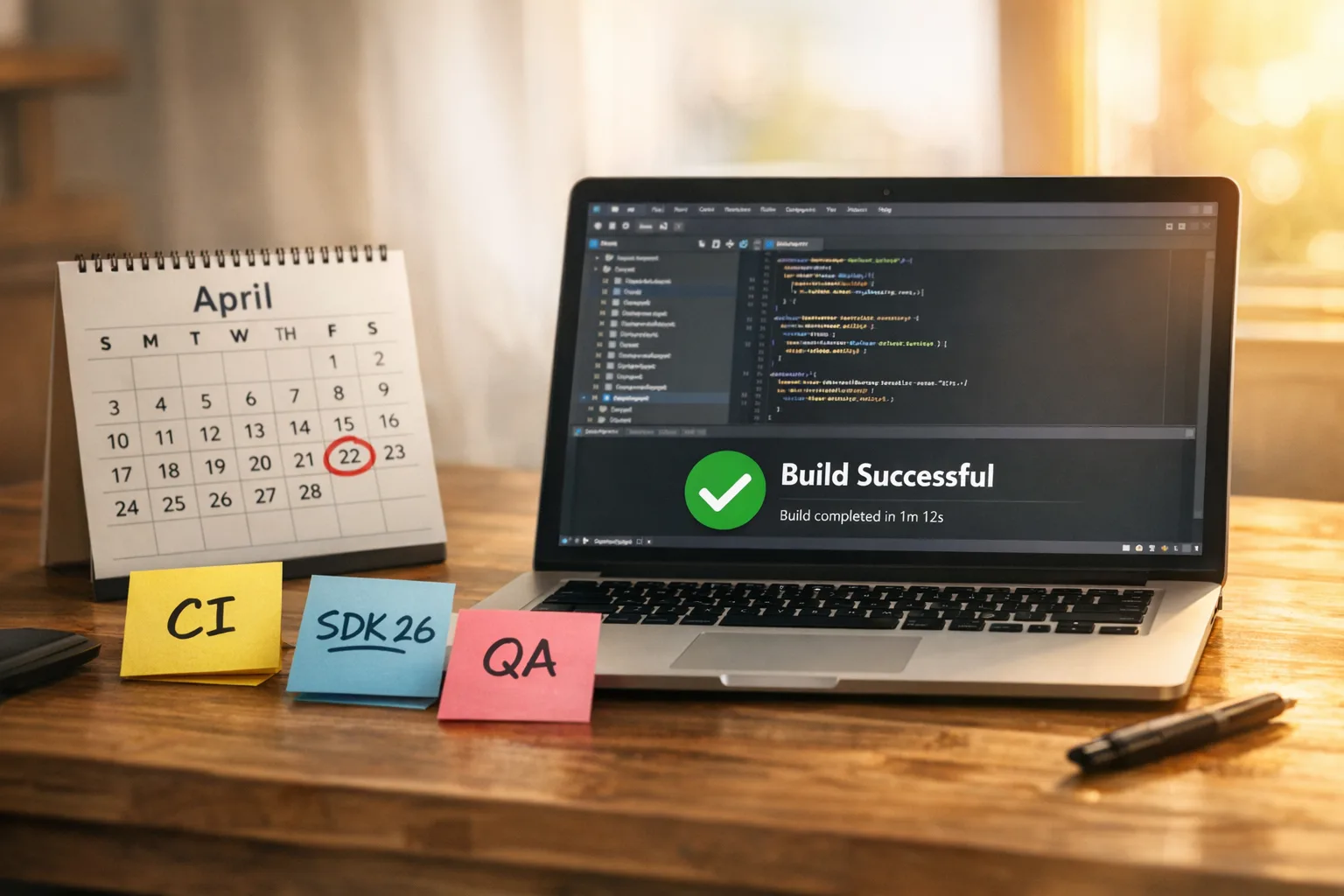
Xcode 26 Requirement: The April 28 Ship Plan
The Xcode 26 requirement is now a hard gate: starting April 28, 2026, new uploads to App Store Connect must be built with Xcode 26 or later using the 26‑series SDKs. It’s a build‑time mandate, not a demand to drop older OS support, but it will surface subtle behavior changes in permissions, UI defaults, and background modes that you can’t ignore. Apple also finished auto‑updating App Store age ratings on January 31, 2026, which affects your submission flow. Both dates shape your next sprint. (developer.apple.com)

What the Xcode 26 requirement actually enforces
Let’s get precise. After April 28, any build you upload must target the 26‑series SDKs (iOS, iPadOS, tvOS, visionOS, watchOS) and be compiled with Xcode 26+. Your minimum runtime OS support remains your call, but SDK defaults can introduce small behavioral shifts. Treat this as a migration, not a checkbox. (developer.apple.com)
Related context: Apple completed age‑rating updates on January 31, 2026. If you haven’t answered the revised questionnaire, you can hit interruptions in App Store Connect when you try to submit. This won’t stop you from coding, but it can stall your release. Put it on the same checklist as your toolchain upgrade. (developer.apple.com)
Xcode 26.3’s AI agents: accelerant or distraction?
Apple’s latest Xcode 26.3 adds integrated coding agents from OpenAI and Anthropic that can suggest and perform actions inside Xcode—editing code, adjusting settings, and searching docs. Used well, they’re a legitimate force multiplier in refactors and API migrations. Used recklessly, they can silently change project configs a human didn’t intend. Pilot them with guardrails. (theverge.com)
Where AI helps right now
I’ve had good outcomes limiting agents to: (1) making repetitive API‑surface updates (new initializers or option sets), (2) drafting unit tests based on your existing patterns, and (3) quickly surfacing doc citations for permission‑prompt changes you must verify anyway. Keep changes small and reviewable; batch risky edits in throwaway branches. (theverge.com)
Where it’s risky
Project settings. Build phases. Entitlements. Those are brittle, and a stray toggle can break your CI at 2 a.m. If an agent proposes non‑code edits, require a human to apply them manually with a second reviewer. Also lock your .xcodeproj diffs behind PR templates that call out provisioning profiles, signing, and build number rules.
The 2–2–1 migration plan to beat April 28
Here’s a pragmatic, low‑drama approach we use with teams shipping on tight timelines. It assumes a medium‑size app, an existing test suite, and a weekly release cadence. Adjust time boxes as needed.
Two weeks: triage and baseline
• Fix your tooling: Install Xcode 26 locally and on CI runners. Pin the exact Xcode version; don’t rely on “latest.” Validate the SDK and simulator images you’ll actually test against.
• Build and smoke test: Compile with SDK 26; run a quick exploratory pass on iOS 26 devices and at least one smaller device. Capture differences in permissions, notifications, in‑app purchases, background tasks, and appearance.
• Dependency audit: List every binary and source SDK. Note minimum supported SDKs, required Reason APIs if any, and deprecated frameworks. Flag anything that the vendor hasn’t acknowledged as 26‑compatible.
• Submission rehearsal: Export an archive and attempt an internal upload on a non‑production bundle ID to confirm App Store Connect doesn’t reject the toolchain. Save the transport logs.
Two weeks: implement and stabilize
• Update SDKs and feature flags: Migrate to vendor releases that explicitly list 26‑series compatibility. Where you can’t, isolate shims behind compile‑time flags to keep risk localized.
• Permission and privacy polish: Compare new prompt copy and sequencing against your old version. If your onboarding references old strings or flows, fix the mismatch before it hurts conversion.
• TestFlight cut: Ship a beta with SDK 26 to your internal testers first. Track crash‑free sessions, background wake behavior, and any UI regressions.
One week: hardening and submit
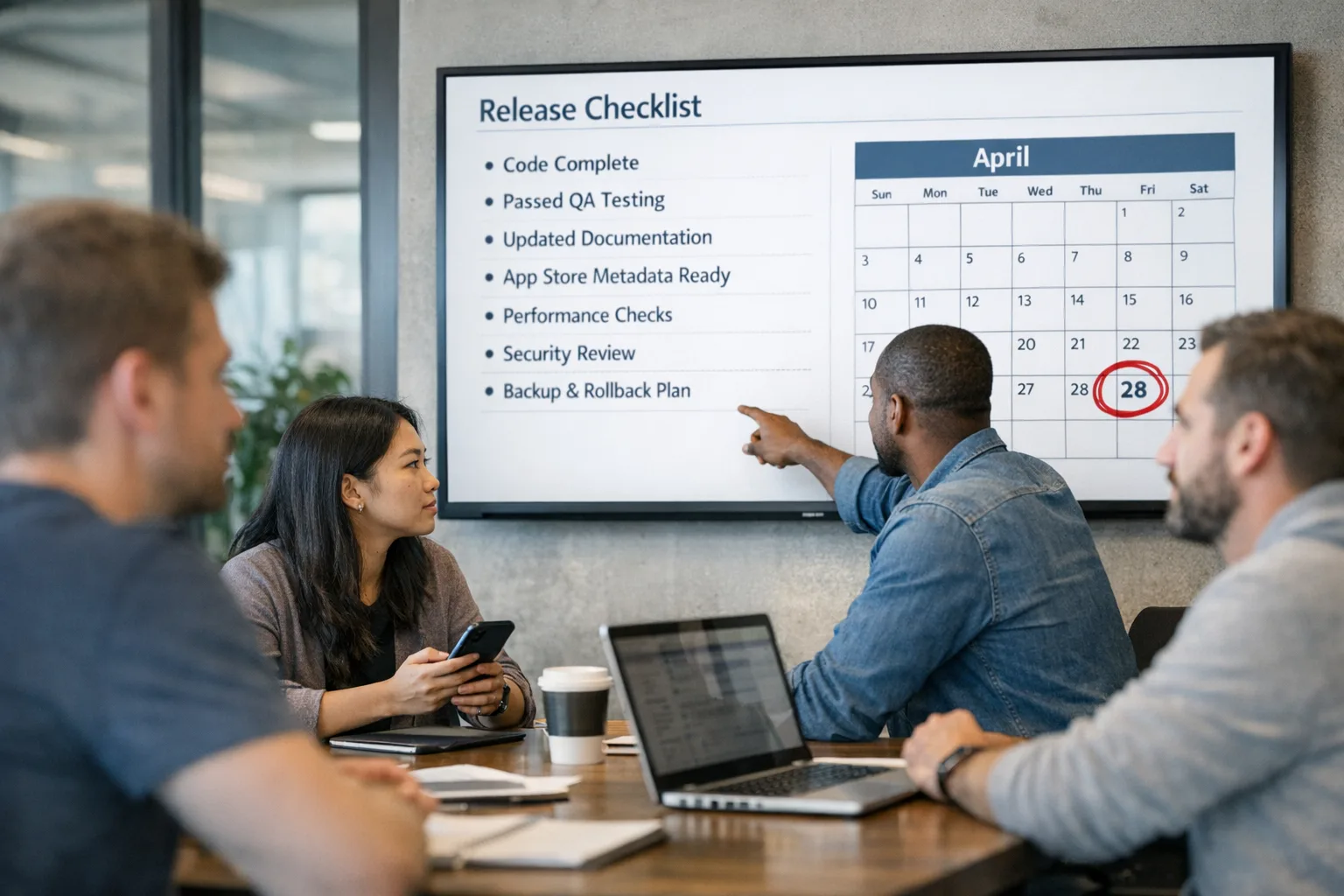
• Pre‑submit checklist: Re‑run the age‑rating Q&A in App Store Connect, verify Marketing Opt‑In toggles, refresh screenshots if UI shifted, and confirm your Offer Code flows if relevant.
• Release window discipline: Avoid Friday submissions. Keep a rollback build on ice that’s been rebuilt with Xcode 26 so you’re never reverting to an older toolchain under pressure.
CI/CD trenches: dodge the silent failures
Most “we’re blocked” pings I see come from CI images quietly pinned to an older Xcode. Your laptop compiles, CI doesn’t, and you discover the drift at upload time. The fix is boring and essential: declare the Xcode image explicitly, check in a xcversion/DEVELOPER_DIR pin, and cache your toolchain so you control the upgrade.
Historically, platform requirements have outpaced hosted runner images; teams asked for newer Xcode on shared runners when Apple set an earlier enforcement date. Assume you’ll need to manage versions deliberately even if your provider promises “latest.” (github.com)
People also ask
Do we have to drop support for older iOS versions?
No. The Xcode 26 requirement governs the SDK you build with, not the minimum OS your app supports. You can continue supporting older devices while compiling against the new SDK; just test for changed defaults and deprecations. (developer.apple.com)
Is April 28 a soft grace period or a hard gate?
It’s a hard enforcement date for uploads to App Store Connect. Plan your last pre‑deadline build a week earlier to leave room for re‑submission if review flags something. (developer.apple.com)
Will my third‑party SDKs break?
Many won’t, but the risks cluster around notification auth changes, photo/camera access flows, and UI components adopting new defaults. Prioritize SDKs that ship binary frameworks, those with heavy swizzling, and any doing background work. Ask vendors for explicit 26‑series compatibility notes.
Risk register: 26‑series behaviors worth retesting
• Permissions and prompts: Expect copy and sequencing tweaks that can reduce opt‑ins if your UX still references old dialogs.
• Notifications: Verify provisional authorization and delivery timing; some apps see subtle changes in how alerts surface after upgrade.
• Theming and accessibility: Component styling changes can affect hit targets and contrast, especially on smaller phones. Run automated checks, then manual tap‑tests.
• Background execution: Re‑exercise tasks that rely on background fetch, location updates, or BLE; confirm wake frequency and time budgets didn’t move.
Zooming out: Android 17 is tightening large‑screen rules
If you’re cross‑platform, note Google’s moves. The first Android 17 beta is live with a push toward platform stability around March and a Q2 2026 target for stable release. One meaningful change: developers won’t be able to opt out of resizing restrictions on large screens, pushing better behavior on tablets and foldables. If you’re aligning your spring roadmap, test windowing and orientation edge cases now. (techcrunch.com)
Dates and facts to pin on your wall
• January 31, 2026: Apple auto‑updated App Store age ratings; answer the new questions to avoid submission interruptions. (developer.apple.com)
• April 28, 2026: Minimum SDK enforcement—builds must use Xcode 26+ and the 26‑series SDKs for iOS, iPadOS, tvOS, visionOS, and watchOS. (developer.apple.com)
• February 2026: Xcode 26.3 introduced integrated AI coding agents from OpenAI and Anthropic inside Xcode. Pilot them with review controls. (theverge.com)
Let’s get practical: a submission‑ready checklist
• Tooling: Xcode 26 installed locally and on CI; image pinned and verified. Build settings diff reviewed.
• SDKs: Third‑party dependencies updated to 26‑compatible releases or isolated behind flags.
• Privacy and permissions: Prompt copy reviewed; onboarding updated to match new dialogs; analytics events adjusted.
• Commerce: Offer Code flows documented; support pages updated; QA on restore purchases and edge cases.
• Test coverage: Automated tests updated for SDK changes; smoke tests across small and large devices.
• App Store Connect: Age‑rating questionnaire completed; screenshots audited; metadata ready; archive successfully uploaded in staging.
What to do next (this week)
1) Book two uninterrupted hours to pin your CI image and produce a clean SDK 26 archive. 2) Cut a TestFlight build for internal testers with the highest‑risk journeys first. 3) Schedule a targeted accessibility and permissions review. 4) If you need a battle‑tested plan, start with our ship‑ready guide and cutover steps below.
For a deeper end‑to‑end plan, see our App Store Connect ship‑ready playbook, our tactical April 28 cutover plan, and networking guardrails in Xcode Cloud IP ranges: what to update now. If Android is in scope, benchmark your layouts against our notes in Android 17: new rules for large screens.
Working with AI in the migration
Use Xcode’s agents for localized refactors, not wholesale rewrites. Have them propose code with links back to docs, then confirm against Apple’s human‑written references. Keep PRs small, require screenshots for UI work, and run unit tests before and after every agent‑assisted change. If an agent suggests entitlement or signing tweaks, pause and run those by a senior engineer. That five‑minute sanity check can save hours of broken builds later. (theverge.com)
Final thought
April 28 is when busy teams get caught by “almost ready.” Don’t be that team. Treat the Xcode 26 requirement as a deliberate migration, lean on AI where it’s safe, and put boring CI pins in place so you never discover a version drift at upload. Do that, and your spring release stays on schedule—and your roadmap, not a deadline, sets the pace. (developer.apple.com)



Comments
Be the first to comment.