React2Shell isn’t just another scary headline. On December 3, 2025, the React team disclosed CVE‑2025‑55182, a CVSS 10.0 remote code execution in React Server Components (RSC) that impacts default configs in popular frameworks. Patches shipped for affected packages—react‑server‑dom‑webpack, react‑server‑dom‑parcel, react‑server‑dom‑turbopack—with fixed versions 19.0.1, 19.1.2, and 19.2.1. If you run Next.js with the App Router, the downstream advisory is CVE‑2025‑66478 with patched releases including 16.0.7 and backports on the 15.x line. Patch first, yes—but then comes the work that actually keeps you safe. (react.dev)

What changed—and why the patch isn’t the finish line
Here’s the thing: the bug lets unauthenticated requests trigger server execution via the RSC protocol’s payload decoding path. That makes attack traffic look like normal app traffic until you inspect the shape of requests and the server behavior they provoke. React’s post notes the flaw affects RSC packages in React 19.0, 19.1.0, 19.1.1, and 19.2.0; the team shipped 19.0.1, 19.1.2, and 19.2.1 as the fix train on December 3. Next.js documented the downstream impact the same day and began rolling out fixed releases across supported lines. (react.dev)
Within 24 hours of disclosure, public exploit PoCs appeared, and platform providers issued WAF rules and customer banners while urging immediate upgrades. Reports soon followed of active exploitation by threat groups scanning broadly for vulnerable RSC endpoints—another reminder that internet‑facing RCEs move from theory to reality fast. (vercel.com)
Primary keyword: React2Shell—how to verify you’re actually patched
Don’t assume “merge + deploy” equals safety. Validate in three layers: source of truth (packages), artifact (what’s in your container or build), and runtime (what’s serving traffic).
1) Package verification
In your monorepo or app repo, check lockfiles for the exact RSC package versions. You should see react‑server‑dom‑webpack/react‑server‑dom‑parcel/react‑server‑dom‑turbopack at 19.0.1, 19.1.2, or 19.2.1. If you’re on Next.js, verify the framework version equals a patched release (for example, 16.0.7 or one of the 15.x backports noted by Vercel). Avoid loose ranges that can drift in CI. (react.dev)
2) Artifact verification
Crack open the container or serverless artifact that actually ships to prod. If you run Docker, list installed package versions inside the image and compare to the lockfile. For serverless or edge, dump the build manifest your platform provides and confirm dependency hashes. If your platform does deterministic builds, a mismatched hash is a red flag.
3) Runtime verification
Check the running deployment’s framework banner or headers where available, and validate your routing table for RSC endpoints. If the platform exposes an environment banner (Vercel does for vulnerable Next.js deployments during incidents), confirm it’s clear for each environment. Then smoke‑test RSC routes under load to ensure your rollout didn’t fall back to old instances. (vercel.com)
A 48‑hour triage plan: hunt for signs of compromise
If you were exposed before you patched—or you’re unsure when the patch hit—assume initial access may have happened. Focus your hunt on the small set of behaviors an RCE tends to enable in Node‑based stacks.
Where to look, in order
Start with your API gateways and CDN/WAF logs for unusual POSTs to routes that normally receive GETs, large or malformed payloads to RSC endpoints, and sequences of requests that escalate from 4xx to 2xx within minutes. In app logs, look for spikes in server exceptions from component rendering or serialization code paths during December 3–9 UTC. Cross‑reference with deployments and traffic anomalies.
On hosts, query for child process spawns originating from your Node server process (node, next‑start, vercel‑server) executing shells, package managers, curl/wget, or archive tools. Check temp directories for unexpected scripts or binaries dropped by the app user. If you run serverless, use your provider’s runtime logs and any eBPF‑based telemetry you collect for process and network events.
Indicators worth chasing
- New outbound connections to IPs/domains your app never contacts (especially immediately after an HTTP 200 from an RSC route).
- Ephemeral files in /tmp or OS‑specific temp dirs with executable permissions or names mimicking Node internals.
- Process tree anomalies: node spawning /bin/sh, powershell.exe, bash, curl/wget, or tar/unzip.
- Unexplained changes to startup scripts, PM2 configs, or systemd unit files, which may indicate persistence.
If you front your stack with a major CDN/WAF, check for emergency rules pushed around December 3–6. Fastly, Vercel, and others coordinated advisories and rulesets around disclosure; align your investigation windows with those timestamps. (fastlystatus.com)
Practical containment if suspicious activity is found
Don’t overcomplicate the first hour. Rotate credentials and tokens used by the affected service, invalidate sessions, and redeploy from a clean build using the patched dependencies. If you find evidence of code execution, assume lateral movement attempts: restrict egress to only the destinations your service actually needs (databases, queues, observability) and block everything else at the network layer until you’re confident.
For Next.js, roll forward to a patched line and redeploy all edge/serverless targets, not just origin servers. Even if your WAF is blocking known patterns, the vendors are clear: only upgrading removes the risk. (community.vercel.com)
Hardening that sticks: make RSC safer by default
RCEs thrive on permissive defaults and unmonitored edges. These controls reduce blast radius without turning your app into a fortress of timeouts.
1) Tighten egress and execution
Lock down outbound traffic to known destinations. In Node environments, deny process execution from the web worker entirely if your workload allows it. Treat child_process usage as privileged and rare; add runtime hooks or policy (e.g., seccomp/eBPF on containers) to alert if it fires.
2) Rate limit and shape RSC traffic
Apply method‑aware rate limits on RSC routes. Reject oversized payloads and requests with suspicious content types or compression bombs. If your platform offers managed rules specific to this incident, keep them in detect mode after you patch to measure drift before turning them off.
3) Separate concerns at deploy time
Split the RSC server from your public API when feasible (separate processes or services), with different IAM roles and network policies. That way, a flaw in one plane doesn’t unlock the rest of your estate.
4) Immutable builds and provenance
Pin dependency versions, sign artifacts, and verify signatures at deploy. If you bring your own CI runners, rotate credentials and rebuild everything touching RSC since November 29 (the private report date) through your patch date; keep a notarized manifest for this window. (react.dev)
People also ask
“We don’t think we use RSC. Are we still at risk?”
Possibly. Some frameworks enable RSC paths via app scaffolding or experimental flags that sneak into production. Verify via dependency graph and routing; don’t rely on memory or a README. The React advisory is explicit that even apps without custom Server Function endpoints may be vulnerable if they support RSC. (react.dev)
“Do WAF rules cover us if we can’t patch immediately?”
They reduce risk but aren’t a guarantee. Vendors shipped emergency rules for known exploit patterns, but bypasses follow quickly. Use WAFs as a buffer while you roll forward—and then keep them on for visibility. (vercel.com)
“Is this being exploited in the wild?”
Yes—multiple outlets reported exploitation attempts within hours of disclosure. If your service was internet‑facing and unpatched during the early window (December 3–6), prioritize hunting. (techradar.com)
Field notes: a fast, repeatable aftercare framework
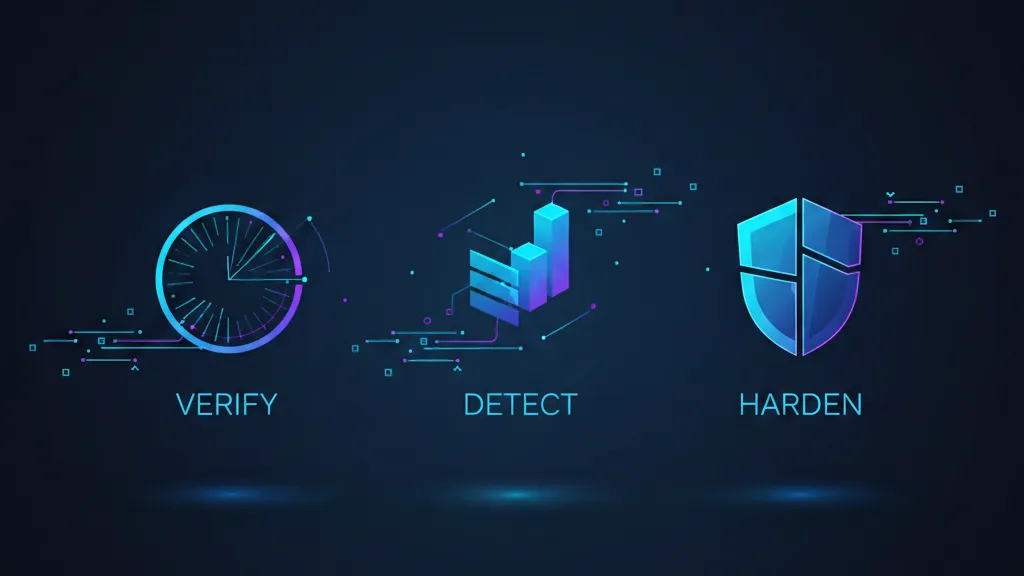
When we guide teams through post‑patch work, we use a four‑part loop—Verify → Detect → Contain → Harden—and we timebox it ruthlessly so product roadmaps don’t stall.
- Verify (2–6 hours): lockfile and artifact checks, runtime confirmation in each environment, traffic smoke tests.
- Detect (24–48 hours): focused log hunts, process/network telemetry queries, triage anything suspicious, snapshot evidence.
- Contain (same day): rotate secrets, redeploy clean, restrict egress, enable temporary WAF strict mode.
- Harden (1–2 weeks): finalize egress policies, artifact signing, dependency pinning, dashboards and alerts, chaos tests.
If you’re on Next.js and need a step‑by‑step patch run, pair this with our Next.js CVE‑2025‑66478 patch, verify, prevent guide and our 72‑hour patch plan for React2Shell. For an ops‑focused checklist, see the React2Shell pragmatic playbook.
The engineering why: what failed in the protocol
RSC’s server function protocol parses client‑provided payloads that reference server code paths. The vulnerability hinged on how those payloads were decoded and trusted—opening a path for crafted input to influence server execution. When these mechanisms live in default stacks, it’s a wide blast radius. React’s advisory details affected packages and fixed releases; Next.js’ write‑up tracks the downstream behavior change and versions. (react.dev)

Make it measurable: dashboards and alerts you’ll actually use
Don’t add a dozen new charts you’ll ignore. Add three you’ll watch:
- RSC route anomaly panel: method mix, payload size distribution, and error codes over time for only your RSC paths.
- Process spawn alert: when your Node process spawns a shell or network utility. One telemetry rule can pay for itself here.
- Egress change detector: destinations not seen in the last 30 days from this service trigger a review.
Set alerts to page once (aggregation window) and then mute for an hour; investigate in a shared incident channel with a short checklist. You’ll reduce alert fatigue and still catch real issues.
Risk, cost, and the rollout conversation with leadership
Business leaders will ask three things: Are we safe? What did this cost? How do we prevent a repeat?
Offer a crisp status: patched versions in prod with timestamps; any IoC hunts and outcomes; secrets rotated; hardening items with owners and dates. If you run a platform team, propose a small recurring budget for dependency hygiene and egress governance—these pay down risk faster than big, occasional refactors.
If you need a reference point for operating cadence during busy release months, our December 2025 Node.js patch runbook shows how to ship security fixes without derailing sprints.
What to do next (developers)
- Confirm your app is running fixed RSC and framework versions in prod—don’t stop at the PR.
- Backfill logs from December 3–9 UTC and hunt for the behaviors listed above.
- Rotate secrets touched by the affected service; redeploy from a clean build.
- Lock egress; alert on Node spawning shells or network tools.
- Keep emergency WAF rules in detect mode for two weeks to observe drift; then revisit.
What to do next (business owners)
- Ask for a one‑page status with dates, versions, and a yes/no on compromise indicators.
- Fund two standing controls: dependency hygiene (pin, sign, verify) and egress governance.
- Schedule a 45‑minute retro to codify the Verify → Detect → Contain → Harden loop for the next incident.
Zooming out
Security isn’t a one‑off sprint you power through after a scary CVE. It’s how you build and ship—quietly, every week. React2Shell will fade from headlines soon enough, but the controls you put in place now will blunten the next protocol‑level surprise.

If you want a second set of eyes on your aftercare plan or need help instrumenting guardrails without stalling delivery, talk to us about security engineering engagements and see how we structure rapid, low‑drama upgrades across stacks like React, Next.js, and Node.




Comments
Be the first to comment.