The next Node.js security releases are scheduled for Monday, December 15, 2025, with fixes landing across the 25.x, 24.x, 22.x, and 20.x lines. Maintainers have flagged multiple high‑severity issues alongside medium and low‑severity bugs. If Node powers your APIs, workers, or edge functions, this is not a wait‑and‑see week—it’s a get‑ready week.
Here’s the thing: runtime patches ripple through everything. You’ll touch Docker images, native addons, CI caches, load balancer health checks, and sometimes OpenSSL behavior. Below is a pragmatic, no‑drama plan you can execute in 48 hours—prep now, patch on the 15th, and ship with confidence.

What changed on December 15, 2025?
The Node.js team pre‑announced a coordinated set of security releases for December 15, 2025, covering supported lines (25, 24, 22, and 20). The summary: three high‑severity issues plus medium/low issues will be addressed. If you’re on 18.x, remember it hit end of life on April 30, 2025, and upstream community fixes stopped then. Some vendors offer extended support builds, but upstream Node doesn’t. Meanwhile, the AWS CDK dropped Node 18 support as of December 1, 2025, nudging cloud teams toward 20 or 22 for tooling and pipelines.
Translation for busy teams: expect patched point releases across those lines on or shortly after December 15. Plan to rebuild base images and roll out to every service with a Node runtime—even the quiet cron jobs and glue scripts. When in doubt, treat the runtime as a first‑order dependency and patch.
Why this one matters: runtime risk plus ecosystem drift
In late November, a high‑severity bug in node-forge (CVE‑2025‑12816) highlighted how ASN.1 validation bugs can undermine signature checks. That’s a dependency many apps don’t realize they rely on—often pulled in transitively through build tools, auth libraries, or certificate handling. Add the ongoing cadence of npm supply‑chain incidents and you’ve got two classes of risk converging: the runtime and the registry. Patch weeks are the right time to close both fronts.
Zooming out, we’ve seen large‑scale registry compromises this fall that rely on install scripts, lateral movement in CI, and credential scavenging. Even if this week’s Node fixes don’t touch your favorite framework directly, the testing you do while rebuilding images is a perfect moment to verify lockfiles, remove abandoned packages, and re‑baseline your SBOMs.
A 48‑Hour Patch Playbook you can run this week
Below is the runbook we use with clients. It assumes a typical setup: Dockerized services, a canary environment, and basic observability (APM + logs + error tracking). Adjust names and commands to your toolchain.
0) Inventory and owners (2–3 hours)
Make a list of every place Node runs:
- Customer‑facing APIs, workers/queues, SSR apps, edge functions, cron jobs.
- Developer tools that ship to production pipelines (CDK/TF wrappers, codegen, bundlers).
- Baked runtimes in container base images and AMIs—note digests.
Assign an on‑call owner for each service. Capture runtime details via process.version at startup and log it—if you don’t already, add it now. Knowing “this pod runs 22.10.0” beats guessing during an incident.
1) Freeze and branch (30 minutes)
Create a short‑lived release branch for the patch. Freeze non‑urgent feature deploys for 48 hours after the Node updates drop. Put the maintenance window on calendars with escalating Slack reminders.
2) Prep your build system (1 hour)
Update your Dockerfiles and toolchain to make the minimal Node version a build argument, e.g. ARG NODE_VERSION=22.10.1. Ensure CI can rebuild images with that arg and outputs a tagged digest (e.g., node-22.10.1@sha256:...). Pre‑warm caches but avoid pinning to old layers.
3) Harden npm before the rush (1–2 hours)
Regenerate lockfiles where needed and update cryptography dependencies. If node-forge is anywhere in your graph, bump to 1.3.2 or later. For install‑script risks, audit for packages with postinstall hooks, and in CI use npm ci --include=dev --ignore-scripts for build steps that don’t actually need scripts to run. Then run a full install (with scripts) only inside a hardened, ephemeral build container with no long‑lived credentials.
If you’ve never practiced a supply‑chain incident, bookmark our 72‑hour recovery plan for npm compromises and schedule the tabletop for January.
4) Build candidates the moment releases land (same day)
When Node publishes the patched releases, rebuild services against the new point versions for your line. Do not jump major lines during security week unless you must; keep scope tight. Produce both a canary image and a production candidate per service with the exact Node version in the tag.
5) Run the quick‑but‑real test matrix (2–4 hours)
Focus on classes of breakage we see most often:
- Native modules (bcrypt, sharp, canvas, grpc): rebuild and verify. These can break on minor Node/ABI shifts.
- OpenSSL behavior: if the release bumps the bundled OpenSSL or its config, re‑verify mTLS handshakes, HTTP/2, and TLS 1.2 ciphers your partners require.
- SSR/Edge: Next.js, Nuxt, SvelteKit—run server render + streaming paths. Watch for subtle header/cookie differences.
- Workers/Queues: soak test for memory regressions and event loop stalls. Check “time in GC” and throughput deltas.
If you run Next.js, skim our Next.js CVE patch playbook for a fast set of health checks. The patterns apply here too: verify headers, cookies, and auth flows under load.
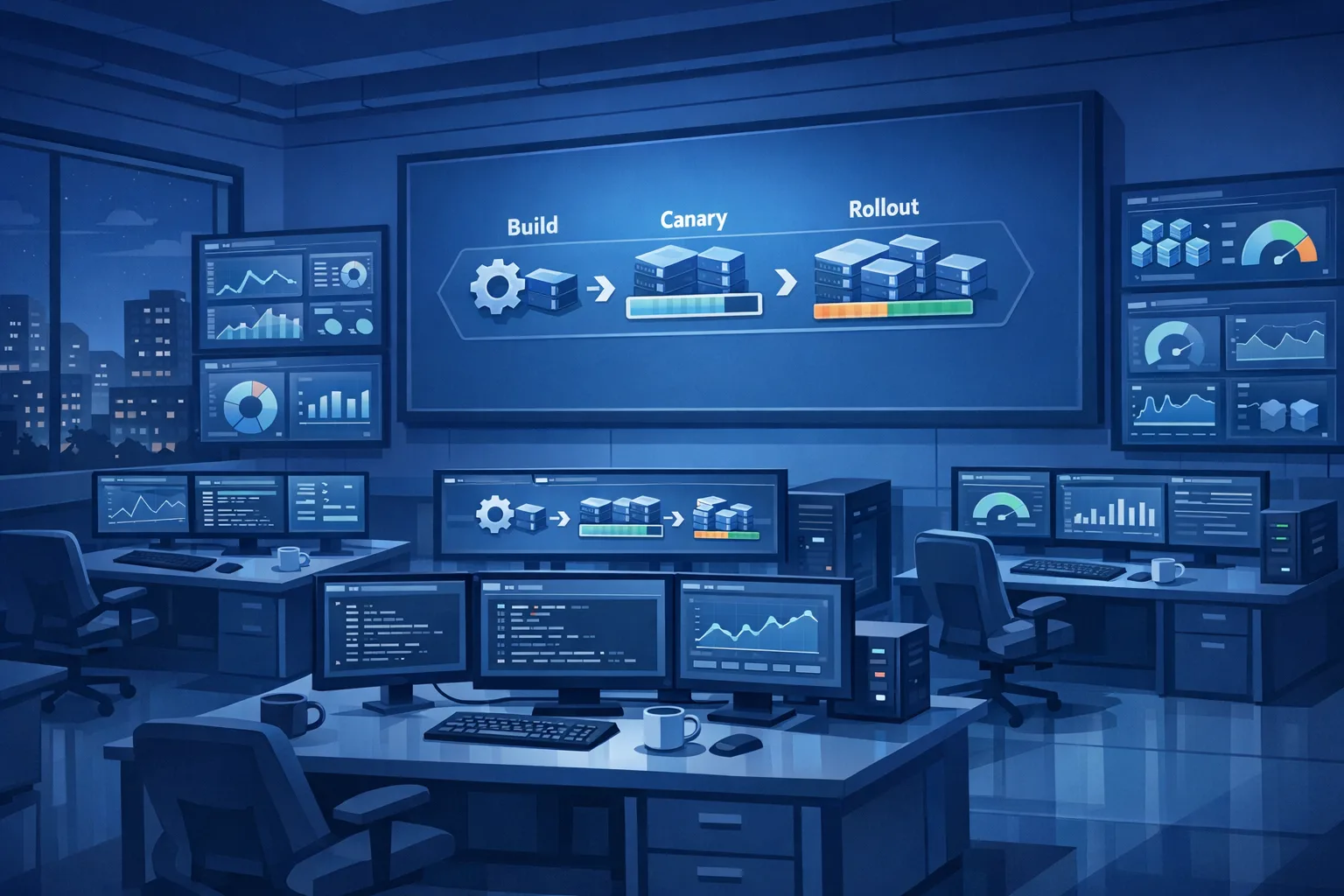
6) Canary, watch, then ramp (the rest of the day)
Ship to 5% of traffic for each service. Watch four metrics for 30–60 minutes: error rate, p95 latency, CPU load, and memory. If clean, ramp to 25%, wait again, then to 100% before the maintenance window ends.
7) Rollback is a command, not a hope (10 minutes)
Have a single shell alias to roll a service back to the prior image by digest. Keep the prior Node image cached for 48 hours. If one service shows a regression, don’t block the rest of the fleet—finish the others, then circle back with a focused fix.
People also ask: Is Node 18 still safe to run?
Short answer: upstream Node 18 reached end of life on April 30, 2025. Some vendors provide extended maintenance builds under support contracts, but your community packages, tooling, and cloud SDKs will increasingly drop 18.x as a target. AWS CDK already ended support on December 1, 2025, which is a good predictor: you’ll spend more effort fighting your toolchain than you save by staying put. If you need a long runway, standardize on 22 LTS for 2026 projects.
People also ask: Will security releases break my app?
Most security releases are intended to be backward compatible within a major line, but they may change default behavior in security‑sensitive areas—certificate parsing, ciphers, HTTP nuances. That’s why the canary soak and targeted tests are non‑negotiable. If you rely on undocumented behaviors, consider that a tech‑debt signal to address in January.
Dependency hygiene for patch week
Use the patch window to clean house. A few high‑leverage actions:
- Pin the registry: mirror critical packages or use a vetted proxy. Block
latesttags in CI for production builds. - Ban risky scripts: raise pull‑request checks when
postinstall,install, orpreinstallhooks appear. Many registry attacks ride those hooks. - Refresh your SBOM: generate and store SPDX or CycloneDX for each build; diff against last week’s baseline.
- Update known hot spots: bump cryptography libs (e.g.,
node-forge≥ 1.3.2), auth middlewares, and XML/ZIP parsers. - Lock your lockfiles: for production, use
npm ciorpnpm install --frozen-lockfile; don’t drift.
If you want a deeper incident drill, see our hands‑on React2Shell patch playbook—different exploit, same operational discipline.
How do we find every Node runtime across hundreds of services?
Don’t guess. Instrument and report:
- Runtime beacon: on startup, log
process.version,process.versions.openssl, and the container image digest. Export as tags to your APM. - HTTP health: add a
/runtimezendpoint that returns versions and feature flags. Cache‑control: private, short TTL. - SBOM sweep: weekly job to scan images in your registry and post a diff to Slack with anything older than N days.
- Policy: block deploys if the base image is older than, say, 21 days or missing the current security patch level.
A template you can paste into Slack
Channel: #eng‑announce (adjust times and versions when the releases drop)
“Heads up: Node.js security releases go live Monday, Dec 15. We’ll rebuild and canary all Node services the same day. Expect brief restarts; no API schema changes. Owners: please be on deck during your service’s canary window and watch p95 latency and error rates. Rollback is make deploy ROLLBACK=1. If you see anything odd—TLS handshakes, JWT validation, SSR streaming—page @runtime‑oncall.”
Data points to track this week
If you report weekly risk posture to leadership, collect these:
- Coverage: percentage of Node services rebuilt on patched versions within 48 hours.
- Time to canary: median time from patch release to first 5% traffic.
- Regression rate: percent of services that required rollback.
- Supply‑chain hygiene: number of cryptography and auth dependencies bumped this week.
These metrics justify the discipline—and they help you negotiate future patch windows without drama.
What about cloud tooling and the EOL gap?
If your IaC or deployment tooling still runs on Node 18, prioritize that migration. The practical destination for most teams is Node 22 LTS in 2026. Where you must keep a legacy runtime running for a while, isolate it: separate build containers, read‑only tokens, and explicit network egress. Don’t let an old tool drag modern services off the patch train.
People also ask: Should I wait for my distro images?
Container distros and cloud images often lag by hours or days. For security releases, it’s fine to pin a direct Node binary or use an official upstream image as a stopgap, then roll back to your distro‑blessed image when it catches up. Just document the temporary change and the follow‑up ticket to unify on your standard base again.
“Good enough” smoke tests for security week
When time is tight, hit the scenarios that historically fail after runtime updates:
- JWT issue/verify round trip—including clock skew and key rotation.
- mTLS client calls to upstreams and partners—test renegotiation and cert chain validation.
- SSR streaming responses under load—ensure early flush and backpressure work as before.
- Image/crypto transforms that use native addons.
- Background workers processing a representative backlog—watch for stalls and memory growth.
A quick decision framework when something breaks
If a regression pops up mid‑canary, run this:
- Severity: Is it user‑visible or internal? If user‑visible, stop the ramp.
- Scope: One service or many? If one, isolate; if many, suspect a shared library or base image configuration.
- Workaround: Can you toggle a feature flag or revert a library without rolling back Node?
- Rollback: If the workaround isn’t trivial, roll back the service and file a focused issue with logs, versions, and a reproduction.
Don’t force a heroic fix into the patch window. Take the win—patched runtime everywhere else—then return to the outlier with fresh eyes.
What to do next
- Today: Prep Dockerfiles for an easy Node version bump; enable
process.versionlogging; update any lingeringnode-forgeto 1.3.2+. - Monday, Dec 15: Rebuild images as patched Node versions appear; canary to 5%, monitor, then ramp.
- This week: Generate SBOMs, block risky install scripts in CI, and schedule a January supply‑chain tabletop using our npm recovery playbook.
- This month: Standardize on Node 22 LTS for new work. If you need help, see our security and platform services or get in touch.
Closing thought
Treat the runtime like any other dependency: versioned, monitored, and routinely patched. The December 15 releases are a straightforward lift if you prepare now. Use the moment to clean up dependency risk, modernize straggling tools, and get your rollback muscle memory back. That’s how you keep velocity high without gambling on luck.

Want a second set of hands for the patch window or a dry run before Monday? Explore what we do for engineering teams and reach out. We’ve helped teams ship similar runtime patches with zero downtime and no surprise wake‑ups.



Comments
Be the first to comment.