
Node.js January 2026 Security Release: Patch Fast
The Node.js January 2026 security release landed on January 13 and touches every active line: 20.x, 22.x, 24.x, and 25.x. If “what version are we on?” isn’t instantly answerable in your org, treat this as a fire drill. The Node.js January 2026 security release fixes eight CVEs (three High, four Medium, one Low) and includes dependency bumps—most notably c-ares 1.34.6 and undici 6.23.0/7.18.0. The patched versions are 20.20.0, 22.22.0, 24.13.0, and 25.3.0. Here’s what changed, why it matters, and exactly how to roll this out with near-zero drama.
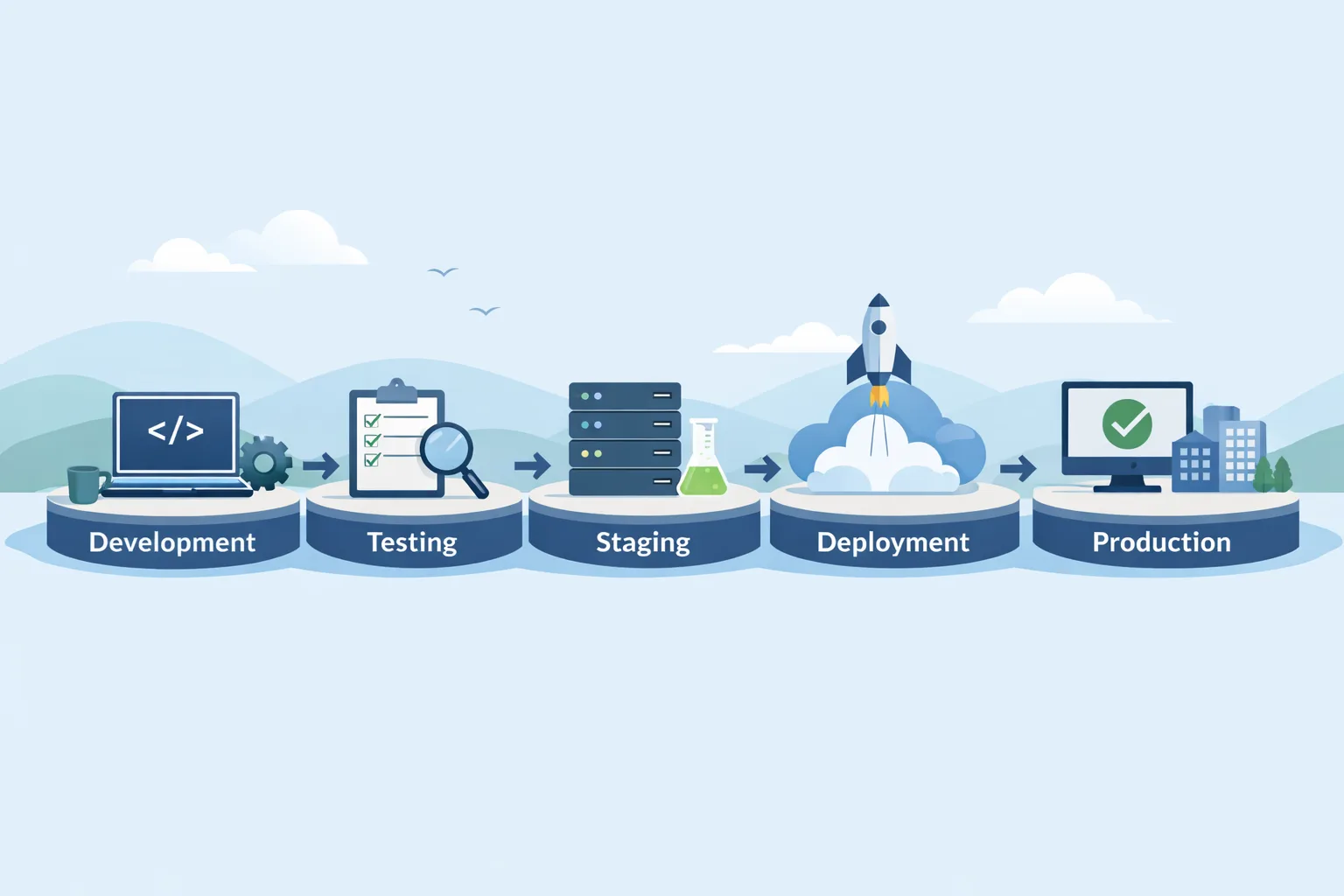
What changed in the Node.js January 2026 security release
Eight vulnerabilities were addressed across the active branches. You don’t need to memorize CVE numbers, but you do need to understand how they map to real failure modes:
1) Buffer initialization race can expose secrets (High)
A timeout-based race in buffer allocation could surface uninitialized memory in Buffer.alloc() and TypedArrays under specific timing conditions (for example, using the vm module with timeout). In practice, this creates the risk of in-process secrets—tokens, session material—leaking into responses or logs. If your app serializes buffers or pipes them to clients, you’re in the blast radius. The fix hardens the allocation path so memory is zeroed before exposure.
2) Permission model: symlink traversal bypass (High)
With the permission model enabled, crafted relative symlinks could escape the allowed directory and access files you didn’t intend to expose. If you sandbox workloads using --permission with --allow-fs-read or --allow-fs-write, this matters. The fix enforces checks when resolving symlinks so they’re treated the same as direct paths.
3) HTTP/2 malformed HEADERS can crash servers (High)
A malformed HTTP/2 HEADERS frame could trigger an unhandled TLS socket error (ECONNRESET) and crash the process. If you terminate TLS in Node—or even in a sidecar that passes through—this is a remotely triggerable DoS. The patch ensures these errors don’t punch through normal error handling.
4) TLS certificate processing memory leak (Medium, limited scope)
When converting X.509 fields to UTF‑8, memory wasn’t freed in one path. Apps calling socket.getPeerCertificate(true) during client-auth TLS handshakes could leak memory over repeated connections. The fix shipped on the 24.x line earlier and is accounted for in the coordinated updates.
5) Permission model: Unix domain sockets bypass (Medium)
UDS connections weren’t consistently gated behind network permissions when the permission model was enabled. That meant net, tls, or fetch could connect to local sockets even without --allow-net. The fix brings UDS under the same permission checks.
6) TLS callback exceptions causing DoS or FD leaks (Medium)
Thrown exceptions inside pskCallback or ALPNCallback could bypass normal TLS error-handling paths, causing process termination or silent file descriptor leaks. The patch ensures these callback failures are safely handled.
7) Permission model: fs.futimes() could modify timestamps in read-only mode (Low)
This was a policy mismatch: even with read-only permissions, timestamp updates were possible. It’s now aligned with write-permission expectations.
Beyond the CVEs, two dependency updates are worth explicit verification in your estate:
- c-ares 1.34.6 (DNS): you can confirm at runtime with
node -p "process.versions.ares". - undici 6.23.0/7.18.0 (HTTP client backing
fetch): this ships inside Node; you don’t pin it via npm. Validate with targeted HTTP smoke tests rather than version strings.
Your hour-by-hour, production patching playbook
This plan assumes you run multiple services across environments and that downtime is expensive. Adjust the timings to your risk tolerance and change window constraints.
Hour 0–1: Inventory and triage
Pull a list of every runtime in production and pre-prod. If you don’t already export Node version in your logs/metrics, run a quick sweep:
- Kubernetes: query container images and the node --version output from startup logs or a one-off exec against a small sample of pods per service.
- VM/Bare metal: SSH fan-out to run node -v, aggregate results.
- Serverless: export runtime info via a diagnostic endpoint or logs on cold starts.
Flag anything on an unsupported line immediately. Today, 24.x is Active LTS, 22.x is still supported, 20.x is in Maintenance LTS until April 30, 2026, and 25.x is Current. If you see 18.x or older, that’s a separate incident—treat as an upgrade project.
Hour 1–2: Risk-based order of operations
Patch in this order:
- Internet-facing HTTP/2 servers (ingress, API gateways, TLS-fronted Node apps).
- Workloads using the permission model (
--permission)—especially multi-tenant or sandboxed code execution. - Apps allocating or serializing buffers under load (binary protocols, media processing, crypto glue).
- Everything else—still important, but you’ve just cut the most obvious exposure.
Hour 2–4: Stage the upgrades
Promote patched Node builds into a pre-production environment that mirrors production: same TLS termination path, same HTTP/2 settings, same DNS resolvers. Deploy the corresponding line bump:
- 20.x → 20.20.0
- 22.x → 22.22.0
- 24.x → 24.13.0
- 25.x → 25.3.0
If you pin Node via Docker base images, update and rebuild. If you use a platform default (Heroku, cloud builds, container registries), read the provider changelog and explicitly set your version to avoid surprise jumps. We’ve seen teams burn nights chasing an auto-upgraded runtime and a stale build cache.
Hour 4–6: Focused smoke tests
Now validate the hot spots:
- Buffer safety: generate and round-trip randomized buffers through your API or streaming endpoints; verify no unexpected data appears when under CPU or time pressure. If you sandbox code with
vmtimeouts, exercise that path while producing and consuming buffers. - HTTP/2: hit your TLS entrypoints with concurrency and malformed headers via a test rig; ensure errors don’t crash the process and that you see graceful connection closures. Confirm you’ve attached error handlers to
"error"on both the server and any raw sockets where applicable. - Permission model: try to follow a symlink chain outside the allowed path and attempt UDS connections without
--allow-net; both should fail after the update. Also verify timestamp changes are blocked in read-only directories. - DNS (c-ares): resolve internal and external names; compare latency/error profiles pre/post patch. Look for regressions in retry logic.
- Fetch/undici: run your highest-throughput HTTP call paths and ensure no header casing or timeout behavior changed in ways your code assumes.
Hour 6–10: Rolling production deploys
Do a standard surge/rollout with health checks tightened. For Kubernetes, keep surge at 25–50% for critical fleets, and crank readiness gate strictness so bad pods never enter rotation. For VMs, a canary pool of 5–10% traffic for 20–30 minutes is usually enough to detect regressions. Watch four things: process crashes, TLS handshake failures, HTTP/2 stream resets, and latency spikes on DNS lookups.
Once your canary is quiet, finish the rollout. For high-SLA systems, leave a small shadow canary on the old version for one hour with mirrored traffic to catch rare edge cases, then retire it.
Testing hot spots (and what tends to break)
Here’s what I’ve seen bite teams—and how to shake those bugs out before your CFO sees a revenue dip.
1) Buffer assumptions in glue code. Libraries sometimes assume a newly alloc’d buffer is zeroed and then skip init steps. The fix restores that guarantee, but your tests may have been papering over racey code. Add assertions around buffer content before network writes and after deserialization.
2) HTTP/2 error handling paths. A surprising number of apps don’t attach explicit error listeners. Add a top-level TLS server error handler and ensure unhandled socket errors can’t take down the process. While you’re here, confirm your load balancer’s HTTP/2 implementation is current and not downgrading behavior unexpectedly.
3) Permission model sandboxes. If you use --permission for internal tooling, CI, or user-supplied code execution, bake tests for symlink escape attempts and UDS access. These shouldn’t succeed after the update; if they do, halt rollout.
4) TLS client-auth services. If you read peer certificates programmatically, hammer the handshake path with multiple renegotiations and verify memory stays flat under load. Run your favorite memory profiler just long enough to rule out leaks.
5) DNS retries and timeouts. With c-ares bumps, subtle behavior shifts can change how fast you fall back between resolvers. Watch tail latency on first-hop calls to internal services.
Do I need to move off Node 20 now?
Not this second, but plan it. Node 20 is in Maintenance LTS and is scheduled to receive security updates until April 30, 2026. If you’re still on 20.x, deploy 20.20.0 now, then schedule a migration to 24.x LTS. Many vendors already default to 24.x as the supported LTS, so you’ll see fewer surprises across SDKs, APM agents, and hosting platforms.
Running a mixed estate (20.x plus 24.x) is a perfectly valid intermediate state. Just ensure your build system can produce language- and ABI-compatible binaries for native modules per line.
People also ask
Which Node.js versions include the January 13, 2026 fixes?
Deploy 20.20.0, 22.22.0, 24.13.0, or 25.3.0 depending on your line. Anything older is missing fixes.
Does this hit serverless runtimes?
Yes, insofar as your provider’s Node runtime image must pick up the patched line. If you ship a container, you’re in control: rebuild on the patched base. If you rely on a managed runtime, check the provider’s status page or changelog and redeploy to pull the new image. Either way, run canary traffic through the patched runtime before full promotion.
How do I verify the DNS and HTTP client updates?
For DNS, run node -p "process.versions.ares" and confirm it reports 1.34.6. For HTTP, undici is embedded; you won’t see it in process.versions. Validate behavior by exercising real fetch traffic to representative endpoints, asserting on timeouts, header handling, compression, and connection pooling.
A practical checklist you can copy into your runbook
- Inventory all Node runtimes by service and environment; flag unsupported lines.
- Prioritize: Internet-facing HTTP/2, permission-model workloads, then everything else.
- Promote the patched runtimes to pre-prod and run buffer, HTTP/2, TLS, DNS tests.
- Roll canaries with strict health checks; monitor crashes, TLS errors, HTTP/2 resets, DNS latency.
- Complete rollout; retire stragglers; document any library regressions for follow-up PRs.
- Schedule Node 20 → 24 LTS migrations before April 30, 2026.
What to do next (today and this quarter)
Today:
- Deploy the patched line for every service: 20.20.0, 22.22.0, 24.13.0, or 25.3.0.
- Run the hot-spot tests—buffers, HTTP/2, TLS callbacks, permission model, DNS, fetch.
- Confirm c-ares at 1.34.6 with
process.versions.ares; sanity-check your outbound HTTPs.
This quarter:
- Plan your Node 24 LTS adoption across services; remove Node 18/legacy holdouts.
- Codify runtime reporting into logs/metrics so you always know what’s running where.
- Add a recurring “CVE drills” slot to your on-call practice—patch dry runs catch footguns before the next drop.
If you want a deeper, evergreen playbook for day-of security updates, our Node.js security release patch guide covers blue/green patterns, build cache pitfalls, and regression hunting. For a broader monthly view of OS and platform fixes, see our January 2026 Patch Tuesday triage. And if you’d rather have a team run point on this, our application security services include runtime upgrades and validation in production-like environments—reach out via contact.

Zooming out: why this release deserves priority
Here’s the thing: a lot of Node incidents don’t show up as obvious 500s. A buffer leak might look like a rare serialization blip; a TLS callback crash might appear as a sporadic container restart; an HTTP/2 issue might only spike under a certain CDN client mix. Patching now is cheaper than the hours you’ll spend explaining a transient drop in conversions or a mysterious memory plateau to the business.
And while none of these fixes are headline-grabbing remote RCEs, they cut across the most common Node deployment patterns—HTTP, TLS, DNS, and runtime sandboxing. That’s why I recommend shipping the Node.js January 2026 security release this week, not “when we get to it.”
If you need a sanity check on your plan, send us your current runtime matrix and deployment process. We’ve helped teams move through changes like this without flipping the table on dev velocity—or sleep schedules.
Stay safe, ship fast.




Comments
Be the first to comment.