
Today’s Node.js security releases land across 25.x, 24.x, 22.x, and 20.x with three high‑severity fixes plus a medium and a low. The window was nudged from December 15 to December 18 to finish a tricky patch, but the punchline is the same: if Node powers your APIs, workers, or SSR, treat this like a live-fire exercise. Below is a practical, zero‑hand‑waving plan to ship the updates without breaking prod—and to avoid getting blindsided by related changes in Next.js/React and npm that have tripped teams this month.

What changed on December 18?
Node’s security team confirmed a stack of fixes landing on or shortly after Thursday, December 18, 2025: three high‑severity issues plus one medium and one low affecting supported lines (25.x Current, 24.x Active LTS, 22.x Maintenance LTS, 20.x Maintenance LTS). End‑of‑life branches are implicitly affected, but won’t get patches. If you’re still running EoL, you’re accepting unbounded risk.
Because the release was pushed from December 15 to December 18, some orgs delayed change windows. If that’s you, you’ve got a narrow runway—plan for a canary rollout today, with full production completion inside 24–48 hours for internet‑facing services.
Do these Node.js security releases affect me?
Short answer: if you run Node 20/22/24/25 anywhere—containers, VMs, serverless functions, job runners, edge runtimes—you’re in scope. The longer answer is that exposure depends on how traffic reaches your processes, which modules are in play (HTTP/2, path handling, diagnostics, Undici), and whether your platform bundles its own Node runtime. Assume you’re affected until proven otherwise. Inventory first, argue later.
Prioritize like you mean it: what to patch first
Here’s the order I’d ship in, based on risk and blast radius:
- Internet‑facing APIs and SSR frontends (especially anything terminating TLS, parsing headers, or proxying to internal services).
- Worker fleets that process untrusted inputs (webhooks, message queues, user‑supplied files, template rendering).
- CI/CD images and build agents running Node (to avoid artifacts built on vulnerable runtimes lingering in caches).
- Internal services behind auth but reachable from other workloads (lateral‑movement risk).
- Dev shells and ephemeral sandboxes last—but don’t skip them if they hold long‑lived tokens.
If you run Next.js or React Server Components on Node, patch Node and your framework. Don’t stop at one layer; the RCE and follow‑on issues from earlier in December proved that assumptions about “safe defaults” age quickly under real traffic.
How to roll out the Node.js security releases without breaking prod
This is the playbook we’ve used with large teams all year. It’s fast, boring, and reversible—exactly what you want when the stakes are high.
Step 1: Inventory and freeze (60–90 minutes)
Make a fresh list of every place Node runs. That means Dockerfiles, base images, PaaS buildpacks, serverless functions, cron jobs, and internal CLIs. Lock deploys for 90 minutes while you prep. Capture a one‑liner inventory from prod and staging: node -v, distro, libc (glibc vs. musl), and whether OpenSSL is system‑ or statically‑linked.
Tag each service with inbound exposure (public, partner, internal) and auth posture (none, session, OAuth/JWT, mTLS). That triage drives the rollout order. Write it down in your incident channel so everyone shares the same mental model.
Step 2: Build fresh artifacts on the new runtime (2–3 hours)
Update your base images or runtime layer to today’s patched Node lines. Rebuild every image—even services you think won’t go live today. Native modules will recompile; expect different SHAs and cache misses. If you vendor Undici, fetch, or HTTP/2‑touching libs, ensure your lockfile resolves to their latest compatible patches. For Alpine images, confirm the musl version; subtle musl/glibc differences are a top cause of “works locally, fails in staging.”
If your pipeline depends on npm automation, remember that classic tokens were fully revoked earlier this month. If builds suddenly fail on npm publish or npm ci, migrate to granular access tokens and Trusted Publishing. We wrote a concise fix path in our CI token guide—use it to unstick pipelines fast.
Step 3: Smoke test what matters (60 minutes)
Spin canaries in staging and hit the critical paths: TLS handshakes, header‑heavy requests, large payload uploads, HTTP/2 streams, SSR routes, and WebSocket upgrades. Watch for native addon rebuild problems (bcrypt, sharp, canvas, sqlite) and ABI mismatches. Run your golden journeys under load, not just a curl. A 10‑minute k6 burst or a Lighthouse run on SSR routes will catch most regressions you’ll see in prod.
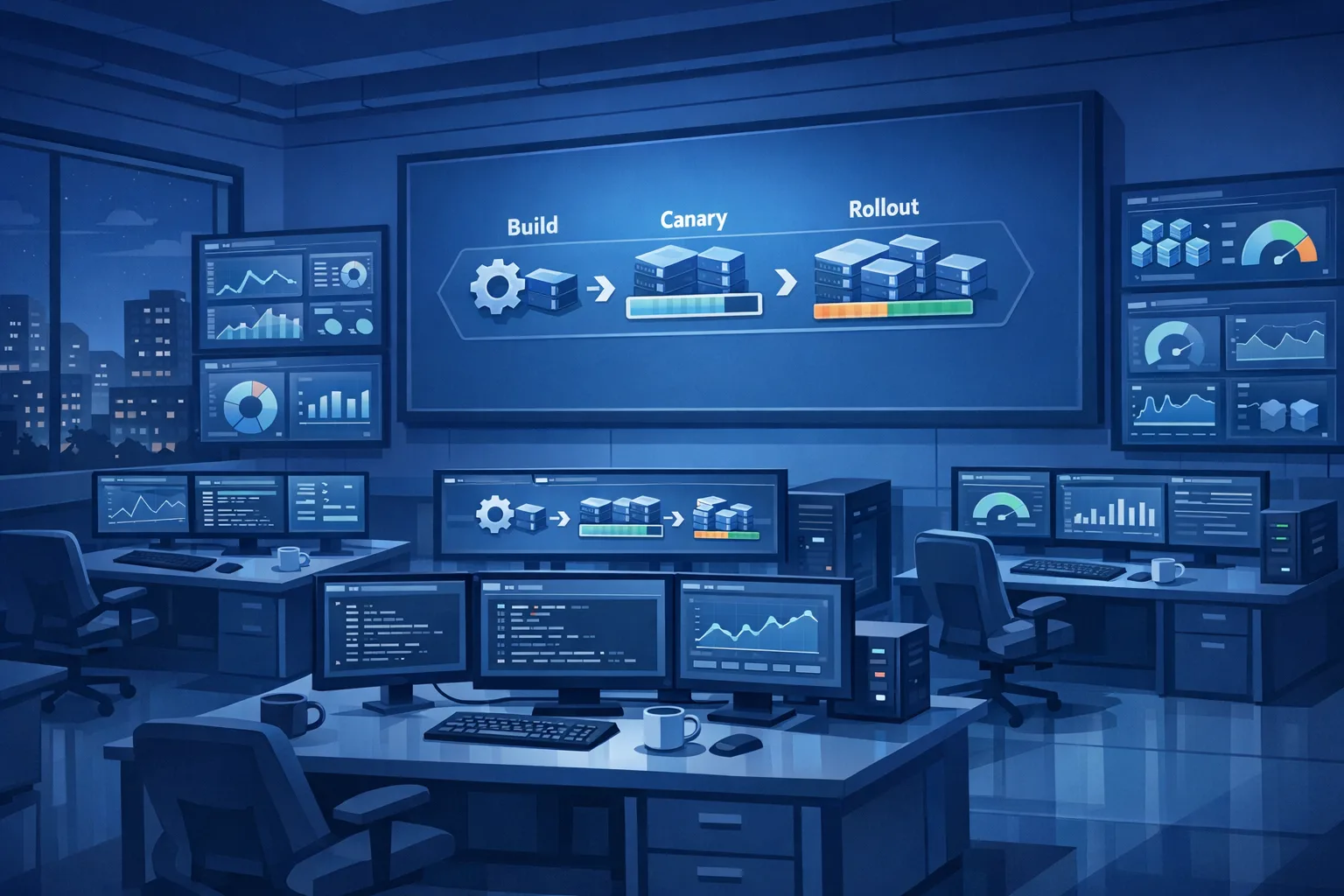
Step 4: Roll out in waves (2–6 hours, service‑dependent)
Use blue‑green or canary. Start with 5–10% of traffic on the new images behind feature flags. Monitor error rates, P99 latency, memory, and TCP resets. If your edge or CDN terminates TLS, still watch origin behavior—many header parsing bugs only surface under proxy quirks. Raise the slice to 50%, then 100% if stable for 30–60 minutes. Keep the previous image warm for immediate rollback.
Step 5: Post‑patch validation (same day)
Run security smoke checks: authenticated and unauthenticated endpoints, oversized headers, malformed chunked requests, and suspicious header terminators. Confirm logs, tracing, and diagnostics still flow; some fixes change event emissions in diagnostics_channel or tighten error semantics. If you run data compliance monitoring, capture evidence now.
Step 6: Clean up and prove it (end of day)
Lock your commit that pins today’s Node versions and archive the build attestation. Update your SBOMs and asset inventory. Finally, post a two‑paragraph “what we shipped, where, and why” in your change log and risk register. That proof beats scrambling for receipts during an incident review.
People also ask: quick answers your team will ping you for
Which versions are patched today?
Expect updated builds for Node 25.x, 24.x, 22.x, and 20.x. Take the latest in your line. If your platform auto‑updates (some serverless and PaaS tiers do), confirm the runtime has actually rolled out in your region before assuming you’re covered.
Will this break native modules?
It shouldn’t, but it can. Any time you change the runtime, rebuild and test modules with native code. Pin matching node, npm/pnpm, and libc combos across build and run stages to avoid the “compiled against glibc X, running on Y” class of failure.
Do I need to restart everything?
Yes—new runtimes don’t backport into running processes. For stateful services, drain connections or use connection pools that respect pod termination signals to avoid 500s. Queue workers should checkpoint and rehydrate cleanly.
What about containers and serverless?
For containers, rebuild on the patched base image and redeploy. For serverless, pick the patched runtime or vendor Node in your bundle. Edge workers vary by provider; check their status page and runtime release notes, then redeploy to nudge caches.
Related risks this month: React2Shell and Next.js follow‑ons
On December 3, a critical pre‑auth RCE in React Server Components (widely dubbed React2Shell) was disclosed and patched. If you run Next.js with the App Router, you were likely in the blast radius. The Next.js team shipped patches the same day and published a remediation utility; many teams also rotated secrets as a precaution.
A week later, on December 11, two more RSC issues dropped: a high‑severity DoS and a medium‑severity source code exposure. The first DoS fix needed a follow‑up patch, so plenty of apps had to upgrade twice. If you haven’t validated your deployed versions, do it now. We maintain a real‑world matrix of what to ship in our Next.js patch playbook, and we explain post‑incident hygiene—secrets rotation and forensic checks—in React2Shell: Patch, Prove, Rotate.

CI/CD heads‑up: npm token changes can stall your patch
GitHub permanently killed npm classic tokens this month and tightened defaults around granular tokens and 2FA. Teams trying to ship security bumps discovered their pipelines failing at the worst possible moment. If you use local publishing or private registries, upgrade pipelines to granular access tokens, set short lifetimes, and prefer Trusted Publishing from CI with OIDC instead of long‑lived secrets. For local npm login, expect short‑lived session tokens; plan for periodic re‑auth. If you need a step‑by‑step fix, lean on our npm token migration guide.
Operational gotchas we’ve seen this year
These aren’t theoretical—we’ve watched them burn hours on patch days:
- Undici/fetch behavior shifts. If you depend on subtle request cloning or trailer handling, re‑run contract tests with partner APIs.
- Header parsing edge cases. Some proxies normalize differently; test behind your real CDN and ingress, not just localhost.
- Alpine vs. Debian images. Musl/glibc mismatches show up as “missing symbol” or “invalid ELF header” when native addons load. Align build and run bases.
- OpenSSL and FIPS modes. When crypto defaults change, older clients or mTLS peers can fail handshakes. Keep a targeted allowlist, not global downgrade flags.
- Diagnostics and tracing hooks. Tightened internals can alter event timing. Make sure your APM dashboards don’t go dark because an agent expects older semantics.
A simple, defensible checklist you can paste into Slack
Leads keep asking “are we done yet?” Use this to make the answer unambiguous.
- Confirm patched Node lines available in your region/platform for 25.x/24.x/22.x/20.x.
- Update base images and rebuild all services; capture SBOM and build attestations.
- Run canary smoke tests on TLS, headers, HTTP/2, SSR routes, and native modules.
- Roll to 10% → 50% → 100% with live metrics and a warm rollback image.
- Validate logs/traces/metrics and run malformed request fuzzers post‑deploy.
- Update inventory, pin versions, and post the change record with evidence.
What to do next (today and this week)
If you own delivery: schedule a two‑hour emergency change window today, apply the playbook, and finish public‑facing rollouts before close of business. Defer non‑security deploys until after traffic ramps stabilize. If you’re time‑boxed, at least update the front door: API gateways and SSR apps.
If you run platform/infra: patch shared base images and build agents first, then publish a single source of truth tag (for example, node24-sec-2025-12-18). That stops teams from pulling yesterday’s image by accident.
If you lead a business unit: confirm which customer‑facing endpoints already rolled to the patched runtime and which are left. Ask for proof: version, region, and timestamp. That’s a 10‑minute message and saves you days later.
Need a deeper runbook or a second set of eyes?
If you want the 48‑hour version with preflight scripts and rollback templates, start with our 48‑Hour Patch Plan. If your team prefers a concise checklist by role (SRE, app engineer, platform), grab the annotated sequence in this runbook. And if you need help mapping risk across Next.js, Node, and your CI posture, talk to us via contacts—we’ve been sitting in these war rooms all month.

Zooming out
Here’s the thing: reactive patching is table stakes. The teams that keep their weekends win by building boring, repeatable mechanics—aligned base images, consistent libc across stages, canary gates that catch regressions in minutes, and a culture that treats “prove we shipped the fix” as part of done. Today’s Node.js security releases are a good stress test. Use them to tighten your game before the next advisory drops.



Comments
Be the first to comment.