
React2Shell isn’t over. The critical React Server Components RCE disclosed on December 3, 2025 (CVE‑2025‑55182, CVSS 10.0) forced urgent patches across React and Next.js. One week later—on December 11—the React team published two follow‑up issues (CVE‑2025‑55183 source exposure, CVE‑2025‑55184 DoS). If you ship on React Server Components or Next.js App Router, treat the past two weeks as an incident timeline, not just a version bump. This guide gives you a practical, 72‑hour plan to patch React2Shell, prove remediation, and reduce blast radius now.

React2Shell: What changed, and when?
Here’s the thing: the facts matter because leadership and auditors will ask for dates and versions, not vibes. On December 3, the React team confirmed unauthenticated RCE in the RSC protocol affecting react-server-dom-webpack, react-server-dom-parcel, and react-server-dom-turbopack in 19.0 / 19.1.0 / 19.1.1 / 19.2.0. Patched lines shipped the same day: 19.0.1, 19.1.2, 19.2.1. Next.js issued a downstream advisory the same day tracking the impact on App Router, with fixed releases across 15.x and 16.0.7. Then on December 11, two non‑RCE follow‑ups landed: a DoS (high) and source exposure (medium), prompting another round of upgrades even if you’d already patched the RCE.
Several threat intel teams reported exploitation attempts within hours of disclosure, with scanning rising after public proof‑of‑concepts dropped. In other words: if you were online and unpatched during December 3–6, assume attempts, and prepare to rotate sensitive material while you patch.
Am I affected by React2Shell?
If you use React Server Components, yes—until you confirm patched versions are deployed. If you use Next.js with the App Router, you’re affected across all 15.x and 16.x before 16.0.7 (and specific patched 15.x lines). Pages Router and Edge Runtime were not in scope of the RCE, but don’t assume you’re clean—monorepos, stale lambdas, or container images often hide older builds.
Which Next.js versions are fixed?
Patched releases for App Router include 15.0.5, 15.1.9, 15.2.6, 15.3.6, 15.4.8, 15.5.7 and 16.0.7. If you’re on any earlier 15.x or 16.0.0–16.0.6, you must upgrade. Verify at build time and at runtime that the right versions are actually present (lockfiles lie after hotfixes; containers lie after forgotten ARG caching; servers lie after half‑rollouts).
Which React packages must move?
At minimum, bump react-server-dom-webpack / parcel / turbopack to 19.0.1 / 19.1.2 / 19.2.1 as appropriate. In React Native monorepos, update only the affected RSC packages if they’re installed—don’t force mismatch errors by blindly bumping react and react-dom where they’re not needed.
The 72‑Hour React2Shell Patch‑and‑Proof Plan
Let’s get practical. This is the sequence we’ve used with several teams to move fast without breaking traceability.
Hour 0–6: Freeze, inventory, and gate traffic
Freeze deploys except for security changes. Inventory four sources of truth: 1) git default branch and release branches; 2) package lockfiles; 3) container images and SBOMs; 4) live services by URL. Add temporary WAF rules to rate‑limit and block known exploit payload shapes, and enable request sampling on RSC endpoints if possible.
- Search your repos and images for
react-server-dom-*andnextversions. - Tag every service and environment where RSC/App Router is present.
- Log requests that hit
/_next/dataand any server actions endpoints if you expose them.
Hour 6–18: Upgrade React and Next.js safely
Update RSC libraries to a patched version line and apply the corresponding Next.js patch if you use App Router. Regenerate lockfiles (npm i/pnpm up/yarn up) and rebuild containers with cache‑busting build args. Validate that the runtime contains the patched versions—don’t stop at build output.
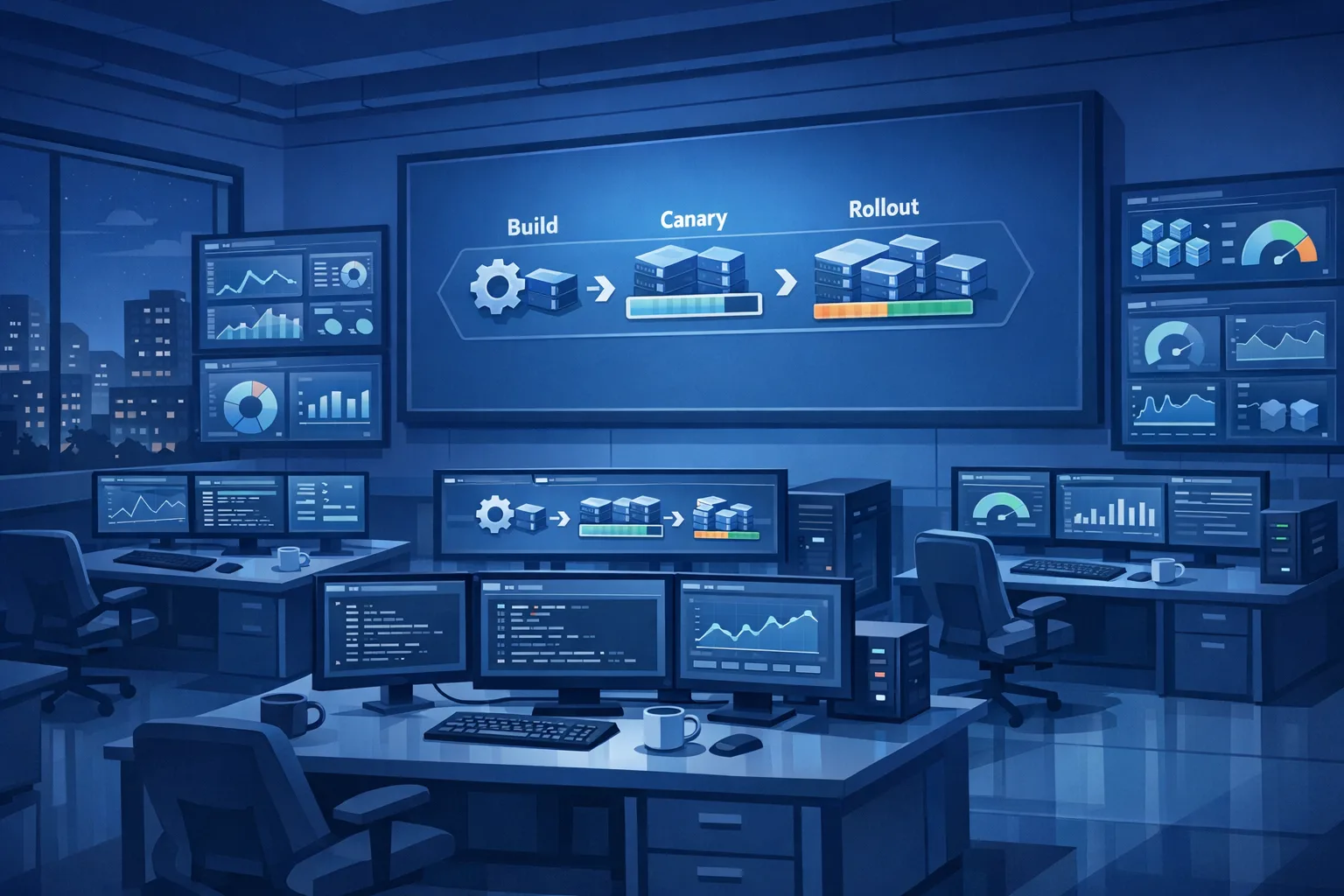
Have a monorepo? Upgrade shared packages once, then run canary builds across workspaces to surface breakages. For teams on managed hosting, use environment protection rules so only builds containing patched artifacts can be promoted.
Hour 18–24: Prove the upgrade
Proving matters. Build two pieces of evidence: 1) artifact proof (SBOMs or signed attestations showing patched versions) and 2) runtime proof (a script hitting a /version or health endpoint that echoes dependency versions, or a checksum file baked at build). Store both with timestamps.
If your compliance program needs formal documentation, capture the ticket numbers, commit SHAs, package versions, and environment IDs. That pack will power executive updates and any customer-facing incident note.
Hour 24–36: Hunt for signs of probing
Search access logs for suspicious RSC payloads, unusual POST bodies, or spikes in 500s around December 3–6. Look for unexpected Node processes spawned by your web workers, writes to /tmp or /var/tmp, or outbound IPs not in your allowlist. If you can, add application‑level telemetry around server actions to spot anomalous inputs and timings.
Hour 36–48: Rotate high‑value secrets
If you were online and unpatched during the first disclosure window, rotate secrets that could be reachable from your server environment: database credentials, primary API keys, cloud provider keys, OAuth client secrets, signing keys, and any session encryption keys. Prioritize by blast radius—start with production data stores and long‑lived infrastructure credentials. Keep old credentials valid briefly with dual‑key windows to avoid downtime, but close the overlap quickly.
Hour 48–72: Close follow‑up CVEs, strengthen edges
Apply the December 11 patches even if you’ve handled the RCE—they remove DoS and source exposure risks that can still hurt. Then ship durable guardrails: request size limits, strict content types, and endpoint‑level auth on server actions that don’t need to be public. Finally, capture a written remediation summary with dates and versions for your incident log.
How do I know if attackers tried to hit us?
Great question. You’re looking for a few classes of signals:
- Network and access logs: POSTs to RSC endpoints with odd payloads (binary blobs or malformed JSON), sudden spikes in 400/500 status codes, or unusual user‑agents and geos clustered right after December 3.
- Process activity: Child processes launching from Node or your web server, especially shell utilities, compression tools, or interpreters that your app never uses.
- File system artifacts: Writes to
/tmpor nesting temporary directories appearing around the disclosure dates. - Outbound calls: New destinations outside your normal egress patterns or DNS requests to ephemeral hostnames.
If any of that correlates with the disclosure window, treat it as a probable attempt. Patch, rotate, and keep deeper forensics going in parallel.
People also ask: Do I have to rotate everything?
No—rotate deliberately. If the service was unpatched and internet‑exposed during the initial days, assume hostile inputs reached your process and focus on secrets with immediate blast radius: DB creds, cloud IAM keys, API tokens, and session/signing keys. If the service sat behind a strict allowlist or was offline, you may decide on a narrower rotation. Document your rationale either way.
Monorepos, preview environments, and React Native gotchas
Monorepos multiply risk because old preview builds live on in orphaned environments. Search your hosting provider and Kubernetes clusters for zombie previews or feature environments that never got the patch. Tear them down or patch them explicitly. For React Native monorepos that also include web apps, upgrade only the impacted RSC packages if they’re installed so you don’t break native builds with mismatched react/react-dom versions.
Runtime hardening you should keep after React2Shell
Don’t make this just an upgrade. Add friction for future bugs:
- Strict input shapes: Enforce content type and size limits on RSC endpoints. Reject unknown fields and oversize payloads at the edge.
- Least privilege on servers: Stop running the app with blanket file system access. Use restricted service roles, immutable images, and read‑only filesystems where possible.
- SBOMs and attestation: Generate SBOMs during CI and sign them. At deploy, verify that artifacts match expected dependency versions before promotion.
- Update your runtime: If you’re on Node 20/22/24, keep an eye on the December security releases and patch the runtime promptly; it reduces the chance that a chained exploit sticks. We’ve published a battle‑tested Node.js security patch runbook you can follow this week.
Evidence that stands up to questions
Executives, customers, and auditors will ask: When did we know? What did we do? How do we know it worked? Build a short dossier:
- Timeline: First disclosure (Dec 3), your patch start time, completion times per environment, follow‑up patches (Dec 11) applied.
- Artifacts: Commit SHAs, package versions, SBOMs, and deploy IDs.
- Runtime proofs: Health endpoint outputs or signed attestations captured after rollout.
- Detection outcomes: Whether you observed probes or anomalies and how you responded.
If you need a template, mirror the structure we use in our security articles like our React2Shell patch, prove, and monitor guide and the week‑three follow‑ups in Fix, Verify, Fortify.
FAQ: Is Pages Router or the Edge Runtime affected?
Pages Router and Edge Runtime were not in scope for the RCE tracked as React2Shell. That said, shared infra, secrets, or CI pipelines don’t stop at framework boundaries. If your organization uses both, patch where needed and rotate shared credentials that could be reached from any compromised process.
FAQ: Can I patch React but skip the Next.js upgrade?
Don’t. If you run App Router, ship the Next.js patched line that corresponds to your major/minor. React and Next.js fixes are complementary; many organizations got into trouble by updating one and assuming the other wasn’t needed.
A quick detection and mitigation checklist
Use this as a bare‑minimum daily ritual until you close the window:
- Block exploit payload shapes at your WAF/CDN; enable request sampling for RSC endpoints.
- Alert on unusual POST bodies and spikes in 4xx/5xx around December 3–6.
- Scan lockfiles, images, and live URLs for vulnerable packages; fail CI on sight.
- Verify runtime versions after each deploy; store proofs and SBOMs with timestamps.
- Rotate high‑blast‑radius secrets if you were unpatched during the first disclosure window.
What about our release schedule next week?
Plan for a short runway of stability testing after the upgrade, then unfreeze feature deploys in low‑risk areas. Keep the WAF rules and telemetry enhancements; they’re cheap insurance. If you maintain SLAs, communicate the patch window to customers and share your version evidence on request. For teams still catching up, our Next.js security update playbook has a focused patch‑and‑proof sequence you can apply today.

What to do next (today)
If you’ve made it this far, here’s the condensed action list you can paste into your tracker:
- Upgrade RSC packages to 19.0.1/19.1.2/19.2.1 and Next.js to a listed patched version (15.0.5+ by line, or 16.0.7).
- Rebuild containers with cache busting and regenerate SBOMs; publish signed attestations.
- Verify at runtime and capture evidence (endpoint output or artifact report) for each environment.
- Instrument WAF/CDN rules and request sampling; add alerts on suspicious POST bodies.
- Hunt for anomalous processes, temp file writes, and unexpected egress around Dec 3–6.
- Rotate high‑value secrets if you were exposed during the first disclosure window.
- Document a short, date‑stamped remediation summary for leadership and customers.
Zooming out
React2Shell is a reminder that modern web stacks are distributed systems of people, packages, and pipelines. Patching quickly is necessary; proving it and hardening your process is what changes the outcome next time. If you want a partner to pressure‑test your plan or handle the heavy lifting—SBOMs, runtime attestations, incident comms—our team at Bybowu Services can help. You can also review our previous security notes on Next.js updates with a patch map and proof plan, and check in on pricing options if you need an emergency engagement via security response pricing.




Comments
Be the first to comment.