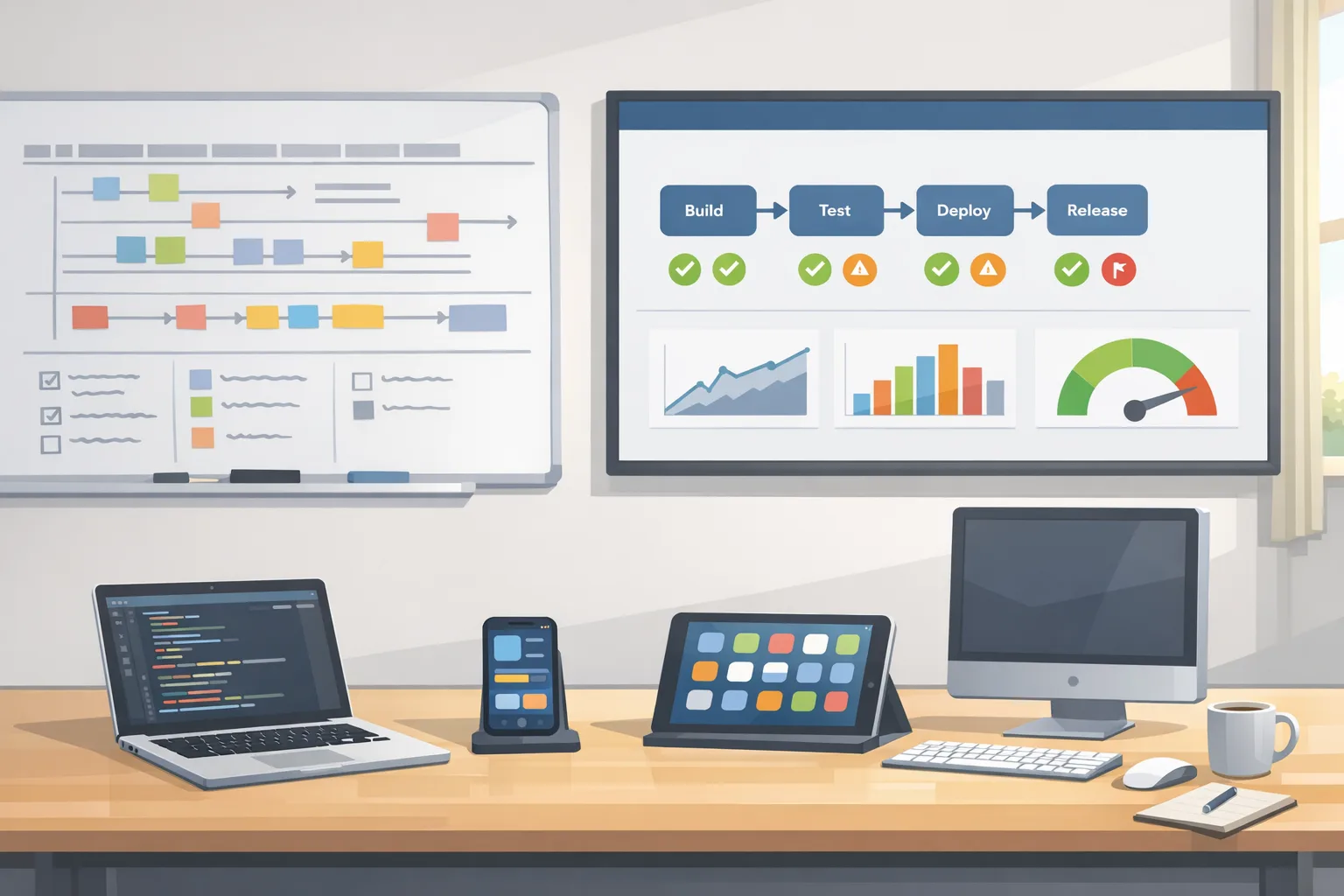
App Store Connect Update 2026: Your 10‑Week Ship Plan
The App Store Connect update 2026 lands alongside a tight April 28 SDK cutoff, a fresh Android 17 beta, and UK CMA commitments that start monitoring from April 1. Together they change how you schedule builds, test cross‑platform flows, and defend store visibility. If you lead a mobile team, treat February–April 2026 as a linked sprint cycle: compliance, migration, and growth work must ship in parallel—not serially.
What actually changed—and when
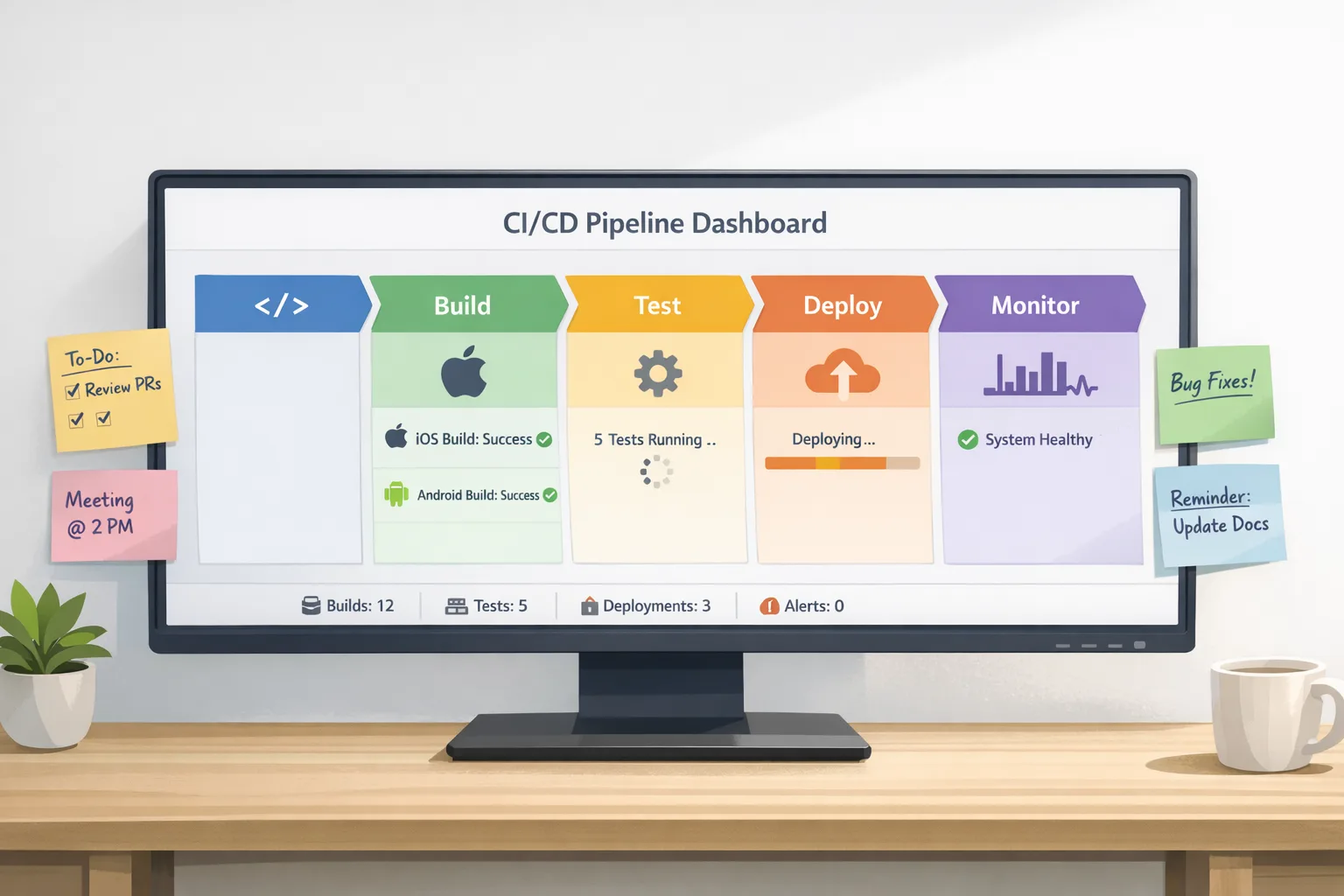
Let’s anchor the calendar. On February 3, App Store Connect began accepting builds created with Xcode 26.3 Release Candidate targeting the 26.2 SDK family. That de‑risks your pipeline now. On January 31, Apple’s new age rating system took effect for how ratings render on devices running current OS releases; developers were asked to answer updated questions to avoid review friction. And on April 28, 2026, Apple will require uploads to be built with Xcode 26 or later using the 26‑series SDKs. That’s your hard date.
Meanwhile, on February 13, Google shipped Android 17 Beta 1 and formalized its continuous Canary approach for developer‑facing platform changes, meaning new APIs flow earlier and more often. In parallel, the UK’s Competition and Markets Authority (CMA) announced app‑store fairness commitments from Apple and Google that—subject to consultation—take effect April 1, including monitoring around app review and ranking transparency.
Here’s the thing: none of these are isolated. The SDK cutover collides with updated ratings and the Android beta cadence. If you prioritize them in the wrong order, you’ll inflate cycle time, risk a failed submission, or miss an opportunity to make switching from Android to iOS (and back) smoother.
The App Store Connect update 2026, decoded
When App Store Connect accepts Xcode 26.3 RC builds, you can switch CI images early. That means getting real feedback from TestFlight on 26.2‑level features without waiting for the full IDE release. If you run trunk‑based development with multiple release branches, treat 26.3 RC as the integration line: raise your minimum Xcode in CI nodes and gate any truly 26.3‑only APIs behind server flags until you’re sure you’ll submit with the final toolchain.
April 28 SDK cutover: what breaks if you miss
After April 28, uploads built with older toolchains will be rejected. The most common failure patterns are mundane: stale CI images, an outdated fastlane lane pointing at the wrong Xcode path, or a dependency that hasn’t released a 26‑compatible binary. Do a dry run in the next 7 days: rebuild your shipping targets with Xcode 26.3 RC, run unit and UI tests, archive, and push to TestFlight. If anything in your stack (analytics SDKs, crash reporters, payment libraries) lags, you want to discover it this month—not during a hotfix.
Practical safeguard: add a build‑time assertion for the Xcode version and the iOS SDK version you expect. That prevents a stray developer Mac or runner with an old image from creating a release candidate you can’t actually submit.
Age rating updates: small form, big impact
The January 31 change isn’t just a checkbox refresh. Ratings now surface differently on modern OS versions, and reviewers will see your new answers. If your app skews teen or general audience but dips into user‑generated content, re‑validate your moderation and age‑gating flows. It’s cheap insurance: a mismatched rating response can send your binary into a clarification loop that burns a sprint.
Need a deeper dive on compliant gating patterns? We outlined practical, shippable flows in our age verification playbook and a follow‑up focused on shipping after the deadline.
OS data transfer (iOS ↔ Android): the overlooked growth lever
App Store Connect now supports mapping your iOS bundle to your Android package for OS‑level data transfer flows—if you also set things up on Google’s side. Translation: moving platforms gets less scary for users, which directly affects acquisition and reactivation. Treat this like a funnel feature, not a niche tool: instrument it, test it end‑to‑end with your real auth and storage, and highlight it in release notes for both platforms. We covered setup details and rollout traps in our February App Store Connect dev playbook.
Android 17 beta and Canary: why iOS teams should care
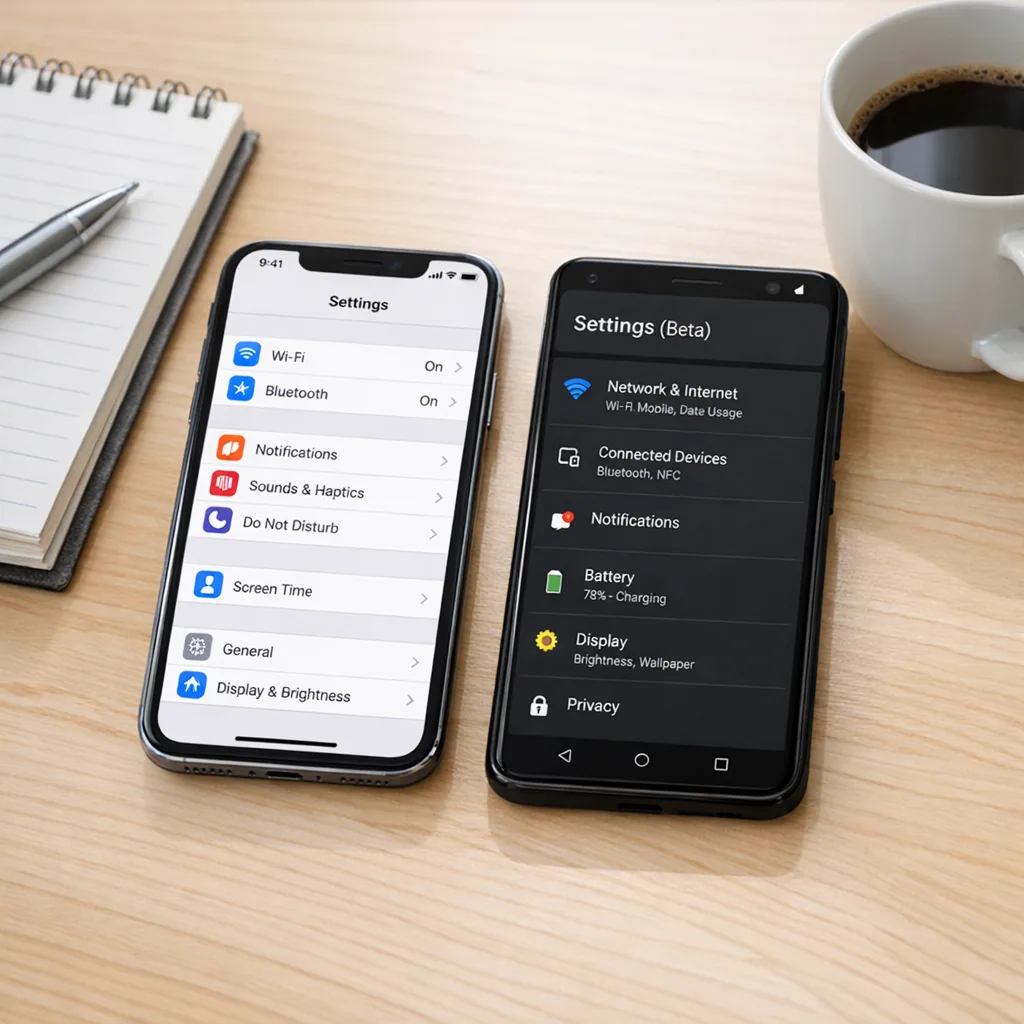
Android 17 Beta 1 arrived on February 13, and Google reinforced a continuous Canary channel for developer‑facing changes. Two implications matter for iOS‑first teams. First, cross‑platform parity work no longer maps neatly to a few big Android preview drops; changes you depend on—camera, media, connectivity—may appear sooner and stabilize faster. Second, your QA calendar should shift from “wait for DP2” to “monitor Canary notes weekly, exercise feature flags behind build‑time checks, and aim your parity work at Beta milestones.”
If you build in‑app capture, real‑time effects, or companion‑device experiences, start a rolling test plan now. Use an Android 17 Beta device to validate latency, permission prompts, and battery behavior against your iOS 26.2 builds. And feed those findings back into your iOS backlog—especially if you gate features by OS version. Parity is a product decision as much as a technical one; users don’t care which team “goes first,” they notice what works today.
UK CMA commitments: what changes for app visibility and review
From April 1 (subject to consultation), the CMA intends to monitor commitments from Apple and Google on fair, objective, and transparent app review and ranking. No, this doesn’t slash commissions or guarantee instant approvals. But it does formalize reporting around review outcomes, ranking signals, and non‑discrimination—especially when your app competes with a first‑party service.
What to do with that? Build an evidence file. Track your review timelines, rejection reasons, appeal outcomes, and rank positions for high‑intent keywords weekly in the UK storefronts. If patterns look off, you’ll have structured data to share through proper channels. Also, if your product depends on wallet or other system‑level hooks, watch Apple’s developer documentation for interoperability requests; the commitments emphasize clearer pathways here.
The Switch‑Ready Playbook (10 weeks)
Here’s a practical plan I’ve used with client teams to juggle compliance, migration, and growth when deadlines collide. Adapt the pace to your release cadence (weekly or biweekly works well).
Weeks 1–2: Prove the pipeline
• Cut CI images to Xcode 26.3 RC and run a full regression on your shipping target OS matrix. Log any third‑party SDKs that need updates. Add build‑time guards for Xcode and iOS SDK versions.
• Stand up an Android 17 Beta device and subscribe your QA lead to Canary notes. Draft a two‑page parity plan for camera/media/connectivity areas your app actually uses.
• Audit age rating answers and content filters. If moderation relies on heuristics, ratchet thresholds for edge cases during peak usage windows.
Weeks 3–4: Make switching effortless
• Configure OS data transfer mappings in App Store Connect and on Google’s side. Test with real accounts across fresh devices. Verify deep link handling after restore.
• Create a migration‑specific onboarding path: detect a transfer and surface one‑tap login, preference import, and “continue where you left off.” Measure completion time.
• Draft UK storefront instrumentation: weekly rank snapshots for five core keywords, review turnaround time, and rejection reason categories.
Weeks 5–6: Lock compliance, unblock growth
• Freeze dependencies still lacking 26‑compatibility and build fallback toggles. For any blocker, set a vendor deadline two weeks before April 28—and a plan B if they miss it.
• Ship a TestFlight build with migration paths exposed to external testers. Include a “What to Test” note calling out OS requirements and any Canary‑inspired Android parity toggles.
• Refresh store listings. If you rely on editorial features or top‑of‑category ranking, tighten your keyword focus and creative testing in the UK now; new ranking transparency doesn’t replace good ASO discipline.
Weeks 7–8: Submit early, monitor signals
• Aim to submit your first 26‑compliant binary by early April. You want headroom before the April 28 cutoff.
• Track UK review times daily and keep your evidence file current. If you see unusual delays, escalate through official channels with facts, not vibes.
• Validate Android 17 Beta behavior at scale: soak tests for background tasks, media capture, and network retries. Document any behavior you’ll lock behind server flags until stable.
Weeks 9–10: Cutover and communicate
• Land your final pre‑cutover submission the week of April 21.
• Publish migration guides in your Help Center and surface dynamic prompts for users arriving from a transfer. Marketing should test acquisition messaging that highlights seamless switching.
• Post‑April 28, run a submission retro: where did time go, what would you automate before the next SDK turn, and which flags can now be permanently enabled.
People also ask
Do I need to rebuild with Xcode 26 before April 28, 2026?
Yes—uploads must be built with Xcode 26 or later using the 26‑series SDKs starting April 28. Plan a dry‑run submission in March, then a production submission in early April to give yourself buffer.
How does Apple’s OS data transfer mapping actually work?
You declare a relationship between your iOS bundle ID and Android package so OS‑level migration tools can route your data and state. You still need to implement the app‑side pieces: account linking, secure storage, deep links, and idempotent restore logic. It’s not magic, but it reduces friction when done well. Our April 28 SDK cutover guide covers rollout timing and gotchas.
What happens if I ignore the age rating update?
You risk review delays, clarifications, or a mismatch between your in‑app experience and what users (and reviewers) expect based on the displayed rating. Revisit your answers, especially around user‑generated content and social features. If you need practical gating patterns, read our age‑gating that actually ships.
When will Android 17 be stable?
Google’s public signals around the beta cycle point toward a late‑Q2 target. Treat that as guidance, not a promise. Build with feature flags so you can flip parity features on as stability firms up, instead of waiting for a single big‑bang release.
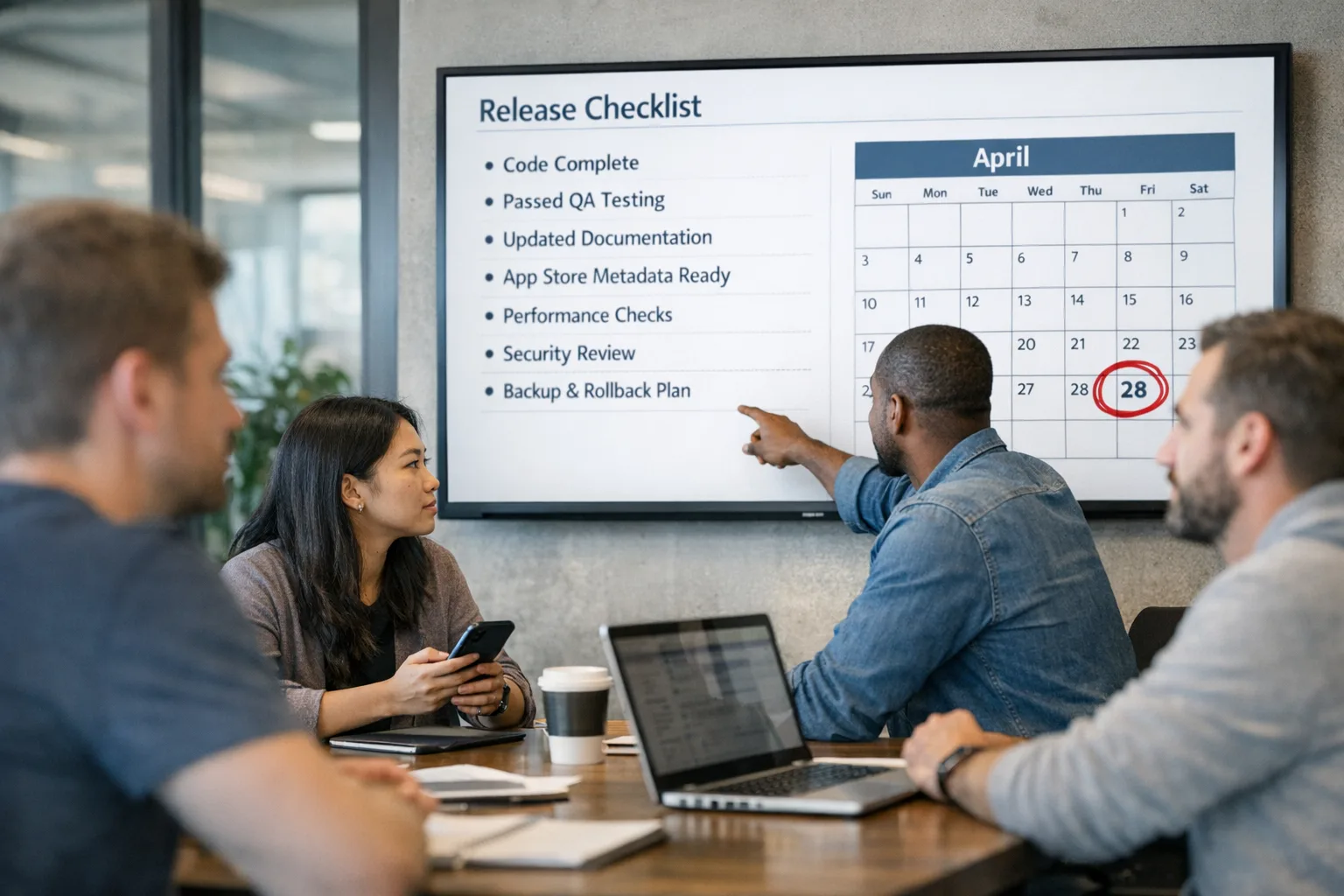
A lightweight compliance checklist you can run today
• CI images updated to Xcode 26.3 RC; build guards in place.
• Third‑party SDKs verified for 26‑series compatibility; fallbacks defined.
• App Store Connect age rating answers reviewed; moderation and gating audited.
• OS data transfer configured and tested end‑to‑end across iOS and Android.
• Android 17 Beta device enrolled; Canary updates monitored weekly.
• UK storefront telemetry logging review times, ranking, and rejections.
What to do next (developers and founders)
Developers: cut CI to 26.3 RC, run the dry‑run submission, and light up migration telemetry. Keep parity features behind server flags until Android 17 stabilizes. Product and growth: market the switch—call out seamless transfer in screenshots and update your support docs. Leadership: defend focus. If it doesn’t move compliance, migration, or growth in Q1–Q2, park it.
If you want expert help aligning engineering and product around the April 28 cutoff, our team ships these transitions for a living. See our services, and skim the deeper tactics in our February App Store Connect Dev Playbook and the Xcode 26, 60‑day ship plan. Then grab our April 28 SDK cutover guide when you’re ready to lock your timeline.
Zooming out, this cycle rewards teams that rehearse. Run the play now: prove your pipeline, smooth the switch, and submit early. The rest is craftsmanship—requiring less heroics, more checklists.




Comments
Be the first to comment.