DevOps and cloud engineering that keeps your product moving
If you run a SaaS product, marketplace, or high-traffic ecommerce site, you do not just need servers. You need deployments that are boring, environments that are predictable, and a platform your team can change without crossing their fingers every time they push.
BYBOWU is a web, app, and cloud engineering team based in Phoenix, AZ, partnering with product and operations leaders across the US and internationally. We help you put in place practical DevOps foundations around how you actually work: CI/CD pipelines, cloud infrastructure, monitoring, and performance checks that turn release days into a non-event.
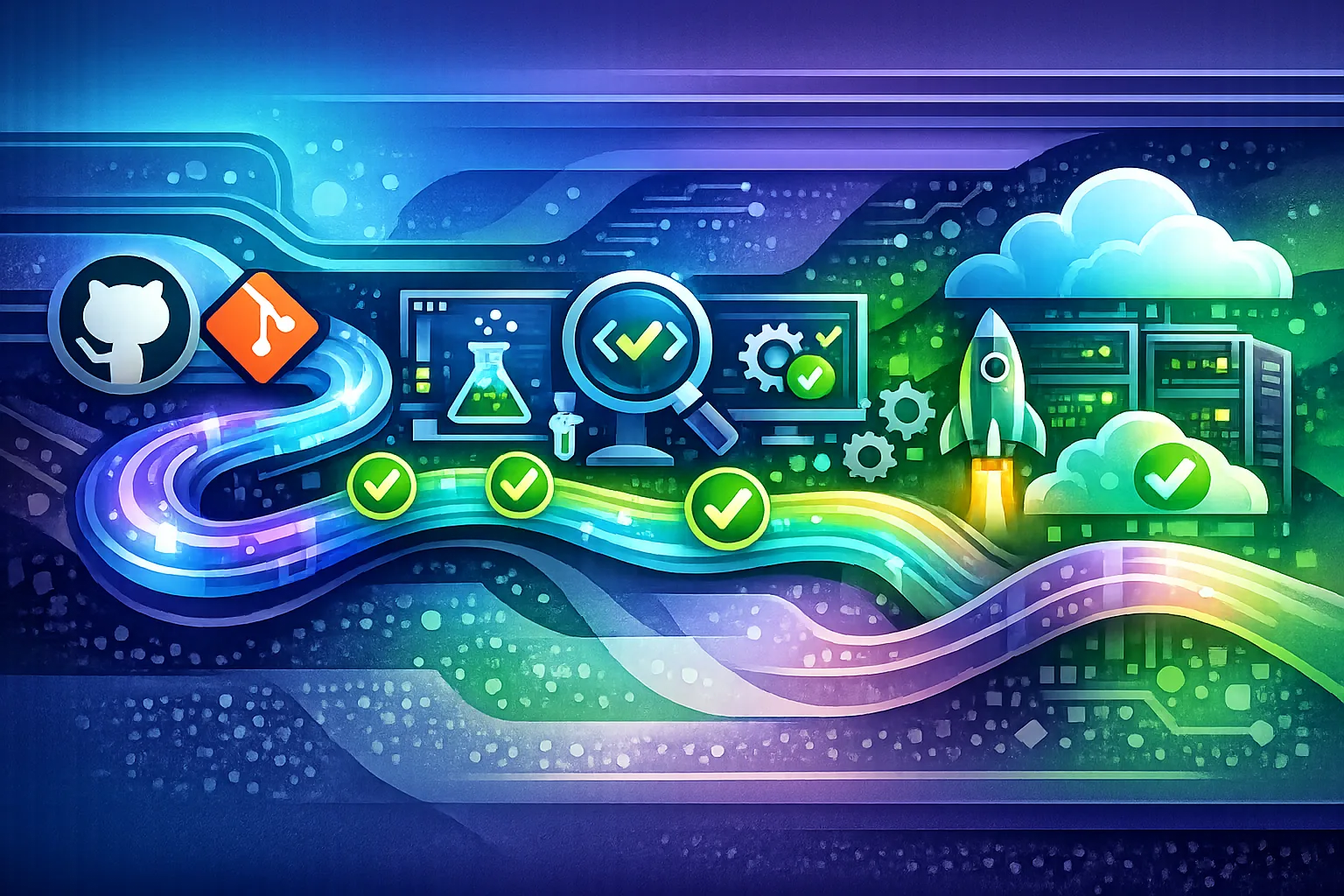
Problems we are usually asked to fix
Teams do not ask for DevOps because they want new tools. They ask because something important keeps breaking or slowing them down:
- Deployments are manual, stressful, and depend on one or two people who know the magic steps.
- Incidents are hard to debug because logs, metrics, and alerts are scattered or missing.
- Cloud costs keep climbing and nobody is confident what is safe to turn off or resize.
- Staging and test environments do not match production, so bugs appear only when real users hit them.
- Access control and security settings grew organically, and now nobody fully trusts who can change what.
- Performance degrades under load and there is no clear capacity or scaling plan for launches and campaigns.
Our job is to replace that uncertainty with a clear, observable, and automated platform so you can focus on roadmap and customers, not firefighting.
How we approach DevOps and cloud for your team
We treat DevOps and cloud as a product that supports your product. You get a straightforward plan, visible progress, and changes your own team can understand and run.
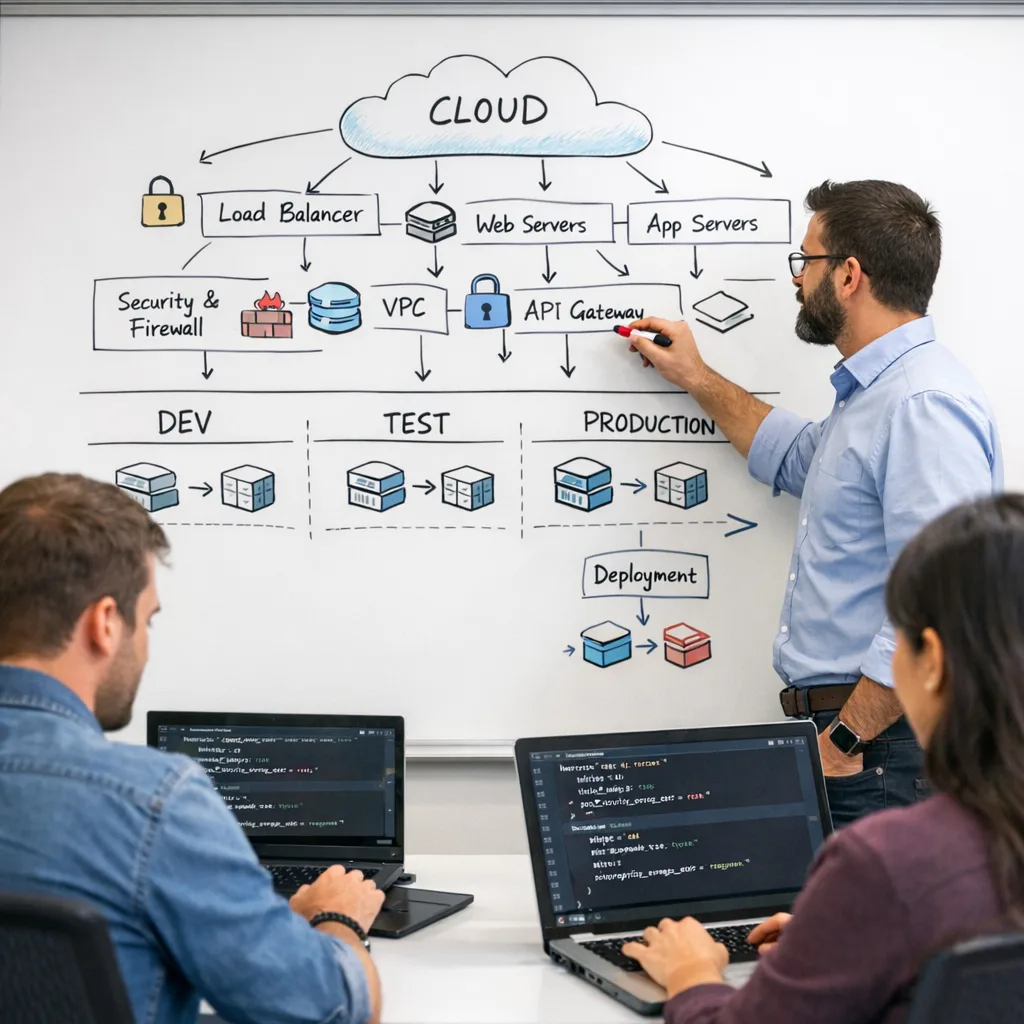
- Environment and process audit. We start with a focused assessment of your current infrastructure, deployment process, tooling, and team workflows. We highlight quick wins, risky shortcuts, and the bottlenecks that are blocking faster, safer releases.
- Architecture and roadmap. Based on your growth plans, compliance needs, and budget, we propose a target cloud architecture and practical DevOps roadmap. When it helps, we tap focused offers like Cloud Infrastructure Setup and CI/CD Pipelines & Release Automation.
- Implementation and automation. We build or refactor your infrastructure using battle-tested patterns and infrastructure-as-code. CI/CD pipelines turn deployments into a repeatable habit, with real rollback options instead of wishful thinking.
- Monitoring, observability, and performance. We put proper health checks, logging, tracing, dashboards, and alerts in place so your team can spot and fix issues quickly. When needed, we connect this work with our Monitoring & Observability and Load Testing & Performance Validation services.
- Knowledge transfer and support. We document how everything works, walk your team through it, and, if you want, stay on to maintain and evolve the platform alongside your product roadmap.
What you get as concrete deliverables
Every DevOps and cloud engagement ends with tangible assets your team can rely on, not just a list of tool suggestions.
- Architecture diagrams that explain how environments, services, and data flows connect.
- Infrastructure-as-code (for example, Terraform or similar tools) so your stack is reproducible instead of click-configured.
- Automated CI/CD pipelines wired to your repositories so you can ship more often with less risk.
- Defined environments (dev, stage, production) with consistent configurations and access policies.
- Monitoring, logging, and alert rules integrated with your preferred channels so incidents are noticed early.
- Performance and load test reports with concrete recommendations for scaling and tuning.
- Documentation and runbooks for common tasks, releases, and incident response.
What you can order
- CI/CD pipeline setup — Automated build, test, and deployment pipelines for your main services, including branching strategy, environment promotion, and basic rollback paths. Often paired with CI/CD Pipelines & Release Automation.
- Cloud infrastructure foundation — A secure, scalable base environment in your chosen cloud provider, with networking, environments, access control, and cost visibility. Commonly combined with our Cloud Infrastructure Setup service.
- Containerization and orchestration — Packaging existing apps into containers and preparing them for orchestrators such as Kubernetes, including local development workflows. Related to Docker & Kubernetes Enablement Services.
- Monitoring and incident readiness — End-to-end monitoring and observability setup, alert policies, dashboards, and incident runbooks so your team can respond quickly and consistently. Built on top of your current or new tools and aligned with our Monitoring & Observability offer.
- Performance and load testing — Targeted performance, stress, and capacity tests for your critical APIs or user flows, plus tuning recommendations so you can handle traffic spikes with confidence. Delivered alongside Load Testing & Performance Validation.
- Ongoing DevOps support — A retainer for continuous improvements, incident response help, and support for your product team as you scale features, regions, and traffic. Often paired with our Support & Maintenance services.
How engagement works with BYBOWU
Your team is busy. We keep collaboration predictable, senior, and light on ceremony.
- 1. Short intro call. We walk through your current stack, pain points, and timelines. If there is a good fit, we move into a scoped discovery.
- 2. Discovery and proposal. You get a clear proposal with target outcomes, deliverables, and phased options, usually within one business day once we have the essentials. You can also review typical ranges on our Prices page.
- 3. Build in focused phases. We tackle infrastructure and process improvements in sensible chunks, starting with the biggest risks, and keep you updated without dragging you into low-level details.
- 4. Rollout and validation. We roll changes out carefully, validate monitoring and tests, and adjust based on how your team actually uses the system.
- 5. Iterate or hand over. We can stay on as your DevOps partner, or hand over with documentation and training if you plan to run things internally.
If you prefer in-person workshops and are nearby, we are happy to meet at our office. If your team is elsewhere in the US or abroad, we run everything smoothly over video calls and async channels.
Why choose BYBOWU for DevOps & cloud engineering
- Product-aware, not tool-obsessed. We connect infrastructure decisions directly to what matters for you: faster releases, fewer incidents, better performance, and a cleaner path to revenue.
- Development and operations under one roof. Because we also build web applications and mobile apps, we understand the realities of your codebase, not just the infrastructure around it.
- Senior people in the room. You work with engineers and consultants who can talk architecture, process, and business tradeoffs in the same conversation, not just YAML and dashboards.
- Security, performance, and cost in balance. We favor simple, robust designs over fashionable architectures that are expensive to run and hard to staff for.
- A partner for the long term, if you want one. Many clients start with a focused DevOps project, then keep us on to support future launches, new regions, or new product lines.
Proof it works in the real world
Marketplace with stable high-traffic releases
For a modern apparel marketplace, we helped the team stabilize their release process and cloud setup so they could push catalog and UX improvements without risking checkout failures. See project details.
Tactical ecommerce platform scale-up
On a tactical clothing marketplace, we prepared the infrastructure to handle a growing catalog and traffic, supporting a smoother browsing experience and higher conversion. See project details.
Real-estate matchmaking platform reliability
For a roommate-finder web app, we focused on stable environments and monitoring so the team could keep iterating on matching features without destabilizing the core platform. See project details.
B2B dropshipping portal operations
We supported a B2B wholesaler and dropshipping platform with a more structured environment and release process, reducing risk for suppliers and resellers who rely on accurate product data. See project details.
Questions founders usually ask
What budgets do you typically work with for DevOps?
Budgets vary with scope. A focused CI/CD or monitoring setup sits at the lower end, full infrastructure redesign or multi-environment rollout is in the middle, and complex multi-service or multi-region platforms are higher. Share your constraints and we will design a phase 1 that fits. Typical ranges are outlined on our Prices page.
How long does a typical DevOps project take?
A focused engagement like a single CI/CD pipeline or monitoring setup can often be delivered in 2–4 weeks. Broader work like full cloud foundations or containerization for several services usually runs 4–8 weeks or more, depending on your stack and internal availability. We confirm realistic milestones before we start.
Can you work with our existing cloud provider and tools?
Yes. We generally work within your existing cloud provider and preferred tools where it makes sense. If something is clearly blocking you, we explain the tradeoffs and suggest alternatives, but we do not force a rewrite without a clear benefit.
Will there be downtime while you change our infrastructure?
Our default approach is to build and test changes in separate environments, then migrate traffic in a controlled way. Some changes may require short maintenance windows, but we plan them with you, communicate clearly, and aim to keep user impact as close to zero as possible.
How do you handle security and access control?
We follow practical security basics by default: least privilege access, separated environments, key and secret management, backups, and auditability for critical operations. If you have internal security or compliance requirements, we align our work with those standards.
What happens after the initial project is finished?
You choose the level of involvement. Some clients keep us on a small retainer for ongoing DevOps support and improvements. Others prefer a clean handover with documentation and training, then bring us back for larger roadmap items. Either way, you are not locked into a black-box managed service.
Talk through your DevOps and cloud priorities
If you have a specific issue, like unstable releases, unclear cloud costs, or missing monitoring, we can usually outline an approach, rough budget, and timeline within one business day once we understand your goals.
If you are still sorting out priorities, we can review your current setup, point out quick wins, and sketch a practical sequence of improvements.
Contact us for a 24-hour DevOps estimate or request a local infrastructure and deployment audit.