
Third‑Party Cookies in 2026: What Actually Changed
Let’s get the headline right: third‑party cookies are still here. Chrome did not flip the kill switch in 2025, and as of January 1, 2026, ad platforms, analytics tags, and retargeting pixels continue to function in general browsing. That doesn’t mean you can ignore privacy, consent, or measurement drift—far from it—but it does change your 2026 roadmap. Below is the field guide we’re using with clients to stabilize revenue now and de‑risk what comes next.

What actually changed in 2025—and why it matters in 2026
After years of drafts and delays, Google said in April 2025 that it wasn’t going to force a new, standalone prompt or a hard cutoff for third‑party cookies. The UK Competition and Markets Authority then closed the book in October 2025 by releasing Google from the Privacy Sandbox commitments that were meant to oversee a deprecation path. Translation: the regulatory pressure that made a 2024/2025 cutoff feel inevitable has eased, and Chrome’s default behavior remains intact.
That sounds like a win for performance marketers. It is—retargeting lists and view‑through models didn’t fall off a cliff. But here’s the catch: your risk profile didn’t vanish. Consent obligations still bite in the EU and increasingly in US states, ITP and ETP still limit cookies in Safari and Firefox, and your data layer is probably a patchwork of client‑only hacks added during the “cookieless by Q4” panic. If you keep running the stack the way you did in 2023, your costs creep up, your signal quality decays, and your legal exposure compounds.
Third‑party cookies in 2026: where they stand
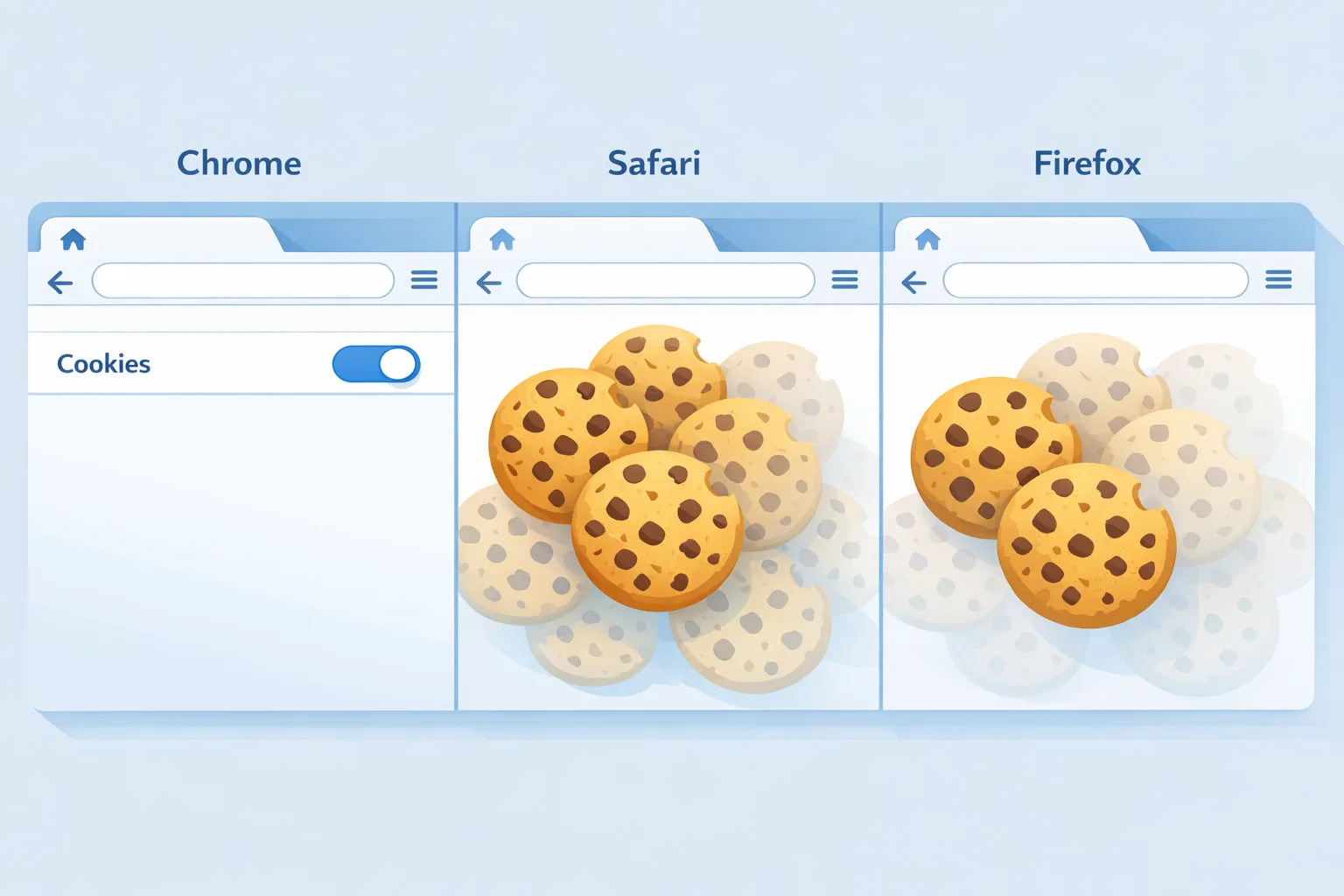
Today, third‑party cookies continue to work in Chrome for general browsing. There’s no announced hard deadline. Safari and Firefox remain stricter: Intelligent Tracking Prevention and Enhanced Tracking Protection cap or block cross‑site tracking by default, and private browsing modes remain unforgiving. Expect channel‑by‑channel asymmetry to persist.
Google hasn’t fully abandoned Sandbox concepts; it has simply stopped tying the entire web’s ad economy to a forced cutoff. Some APIs (like Topics) may still be testable, but they’re optional and not a prerequisite to staying competitive. If you’re spending real money on experimentation, demand lift you can defend—measured against incrementality, not vanity CTR.
The impact on measurement, attribution, and spend
Three consequences now define 2026 planning:
First, Chrome’s status quo means retargeting ROAS and audience size projections are more stable than your worst‑case 2025 models assumed. You can maintain prospecting and nurture plays that depend on cross‑site IDs—at least in Chrome.
Second, everything Safari/Firefox‑heavy still behaves like a partial cookieless world. If your audience skews high‑income mobile (iOS + Safari), expect model drift without server‑side fixes and consent tuning.
Third, privacy enforcement didn’t pause. Consent logs, data minimization, and vendor governance remain table stakes. If you kept every tracker “just in case,” you increased risk with little upside.
Let’s get practical: a 90‑day rebuild plan
This is the same playbook we run in audits and sprints. It’s deliberately unglamorous—and it works.
1) Inventory and classify every third‑party touchpoint
Export your tag manager and CDN rules. For each tracker: purpose, data captured, domain ownership, consent category, cookie lifetime, and whether it’s mission‑critical. You’ll find dead pixels and duplicate conversions. Delete aggressively.
2) Move critical tags server‑side
Use a server tag gateway on your own subdomain. The goal isn’t “hide tracking” (don’t); it’s to reduce client latency, improve control over data sent, and consolidate IP and UA handling into compliant, transparent logic. Bind every server call to consent state. Keep a clear audit trail.
3) Normalize identity with first‑party data—not gray‑area IDs
Lean on hashed emails collected with explicit value exchange: account creation, gated content, loyalty. Map them to platform conversion APIs (Meta, Google, TikTok, Snap) through your server layer. Avoid fingerprint‑adjacent workarounds; they invite compliance pain without durable lift.
4) Rebuild attribution as a layered system
Stop chasing a single source of truth. Pair platform conversion APIs and click IDs with modeled incrementality and a lightweight MMM (marketing mix model) run monthly. Give finance a simple guardrail: if platform‑reported lift diverges from your modeled lift by more than a defined band (for example, 15%), trigger a budget review.
5) Redesign consent for clarity and performance
Consent banners shouldn’t be dark‑pattern puzzles. Use short, plain labels, visible reject options, and purpose‑level toggles. Honor outcomes in real time—no tags until opt‑in where required. Store immutable logs with timestamp, policy version, and device signals for audit defense.
6) Tighten cookie hygiene
Constrain lifetimes to business‑justified windows, avoid writing duplicate IDs across domains, and default to Secure, HttpOnly where relevant. Prefer first‑party set ups via your own subdomains; keep cross‑domain linking explicit and documented.
7) Prove lift before fancy experiments
Run holdout tests on one or two channels where retargeting still drives real dollars. If your server‑side conversion API plus consent‑correct deployment gives you 90%+ of pre‑rebuild conversions, expand. If not, fix data loss before adding Sandbox or new ID partners.
Architecture that ages well
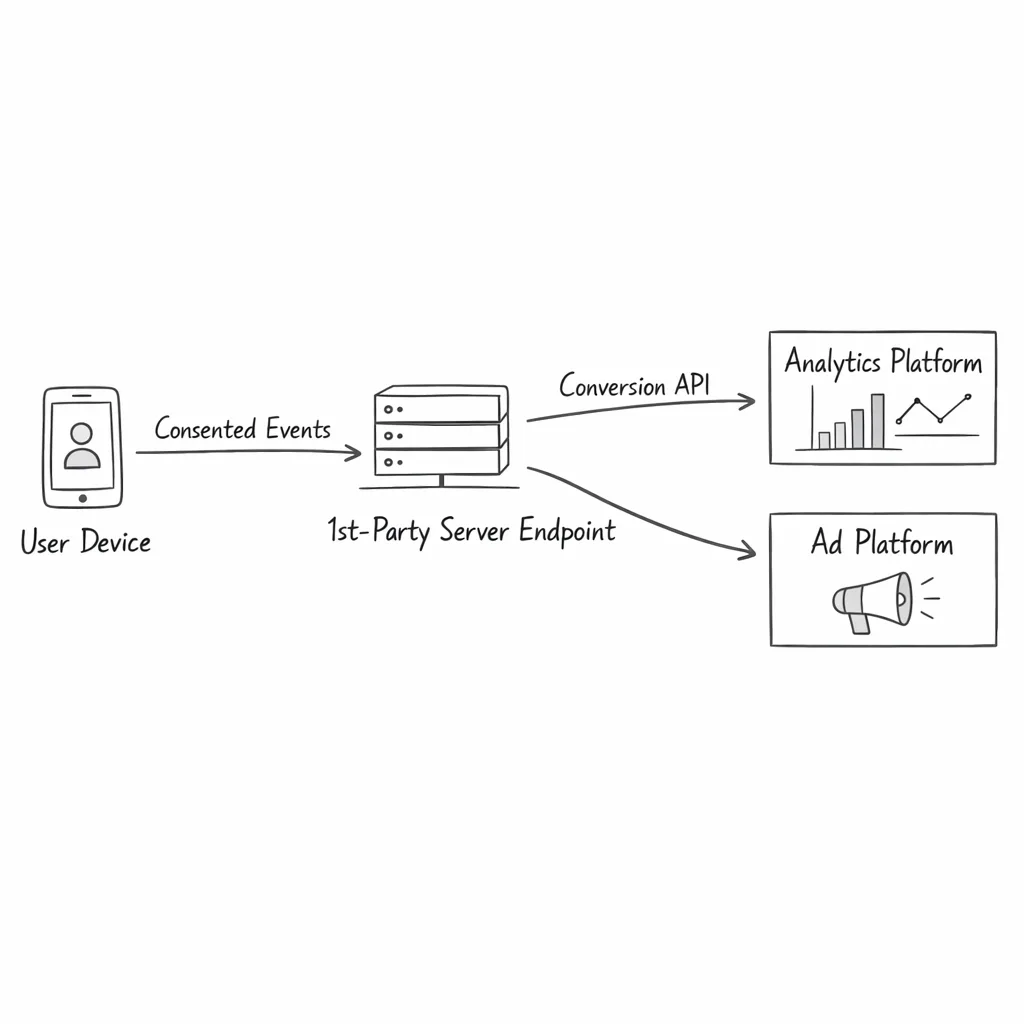
Here’s a simple, resilient shape that survives policy whiplash:
• Client apps and web collect only consented events into a first‑party endpoint on your domain.
• A server decision layer enforces consent, validates schema, and fans out to analytics, CDP, and ad platforms’ conversion APIs.
• Identity resolves around a small, explicit set of first‑party keys: user ID, hashed email, and session ID. No shadow IDs.
• All downstream vendors are mapped with purpose, TTLs, and contracts aligned to your privacy policy.
If you’re unsure where to start, our growth engineering and analytics sprints lay this foundation while keeping the ad machine running.
Do I still need to test Privacy Sandbox APIs?
Test only when a clear hypothesis justifies the lift. Topics can inform interest segments without individual tracking, but the economics vary by vertical. Protected Audience auctioning might matter if you run your own buying stack. For most mid‑market advertisers, the bigger returns in Q1–Q2 2026 come from server‑side conversion accuracy, consent compliance, and creative iteration speeds—not from Sandbox tinkering for its own sake.
Compliance isn’t optional, even if Chrome keeps cookies
While cookies continue in Chrome, enforcement elsewhere is heating up. The EU AI Act begins major applicability on August 2, 2026, with transparency and governance requirements that will spill into product analytics and experimentation for teams shipping AI features. If you’re logging prompts, user profiles, or model outputs, expect to document purpose, oversight, and risk controls—on top of your marketing consent stack. Treat 2026 as your year to reconcile growth and governance rather than treating them as competing roadmaps.
We’ve been guiding clients through similar regulatory pivots on mobile. If your team is juggling app distribution and payments alongside ads, see our take on what iOS policy shifts require by Q1 2026 and how to stage changes without revenue shocks.
A simple rubric to prioritize work in January–March 2026
Use this order. Don’t skip steps because a vendor promises instant ROAS.
1) Legal and data map: confirm your lawful bases, DPA coverage, and vendor list. Trim the list.
2) Consent UX: ship a transparent banner with reject symmetry and purpose toggles; wire to real enforcement.
3) Server‑side conversion: deploy a gateway; bind to consent; send platform events reliably.
4) Attribution sanity: define your three‑layer measurement (platform + lift testing + MMM) and thresholds for budget changes.
5) Retargeting calibration: rebuild audiences with first‑party events; cap frequency; measure incremental lift.
6) Experiment backlog: only after 1–5 are stable, test Topics or audience APIs with a predeclared success metric.
People also ask
Are third‑party cookies still going away?
No hard date exists today for Chrome. Safari and Firefox will continue to limit cross‑site tracking. Plan for channel asymmetry rather than a universal shutdown.
Do we still need consent banners in the US?
It depends on jurisdiction and data use. You may not need a European‑style opt‑in banner for every US visitor, but you do need transparent disclosures, opt‑out mechanisms where required, and careful handling of sensitive categories. If you operate globally, simplest practice is a geotargeted banner and centralized logging.
What replaces third‑party cookies for attribution?
Nothing one‑to‑one. Use a combined approach: server‑side events to platform conversion APIs, click IDs where available, and incrementality tests. Add a lightweight MMM for budget planning. Chase operational reliability before fancy models.
Should we invest in identity partners promising 1:1 cross‑site IDs?
Be skeptical. Many solutions wander into fingerprinting territory or hinge on low‑quality signals. If you can’t document lawful basis, consent state, and retention, the legal risk outweighs the marginal targeting gain.
Risk management for 2026
Cookies lingering doesn’t mean risk disappeared. The biggest issues we see in reviews:
• Shadow tags deployed by agencies years ago still collecting data without a contract trail.
• Consent toggles that “remember” opt‑in but forget opt‑out, or that mis‑categorize analytics as “strictly necessary.”
• Conversions double‑counted across client and server because IDs aren’t deduped. Finance loses trust, and your growth lead fights weekly budget skepticism.
• Vendor bloat: six trackers doing the same job with overlapping data exhaust.
Fixing these raises ROAS more reliably than any speculative API bet.
Team playbook: roles and responsibilities
• Engineering owns the event schema, server gateway, and dedupe logic. Every field has a documented purpose.
• Marketing owns experiments and success criteria, not the pixel zoo. If a tag isn’t tied to a live test or a proven channel, it’s off by default.
• Legal and privacy own policy text, vendor DPAs, and consent UX truthfulness. They approve purpose categories—and the kill switch process.
• Analytics owns the stitched dataset and reconciliation between platform numbers and modeled lift.
If you need a fast outside push to align these functions, we offer fixed‑scope audits; see the options on our pricing page or just start a conversation.
Chrome keeps cookies—so where does growth come from?
With less pressure to re‑platform, the best ROI in early 2026 often comes from speed: faster creative iteration, clean event schemas, and reliable conversion delivery. In practice:
• Shorten creative cycles to two weeks. Feed platforms more diverse, on‑brand assets—particularly short‑form video—then prune the bottom quartile on observed incremental lift.
• Cut client‑side bloat. Every 200 ms you shave off load helps performance across channels.
• Build a consent‑aware experimentation framework. If a variant only wins under “no consent,” it’s not a win you can bank.
Edge cases worth knowing
• App to web and web to app flows can still break attribution if you don’t coordinate parameters and deep links. Persist click IDs through the handoff using safe mechanisms; don’t hack around app store policies. If your mobile team is juggling policy shifts, our note on Google Play’s linking rules shows how we stage changes without tanking conversion.
• B2B with long cycles benefits more from first‑party event streams into a CDP or data warehouse, then selective syncs back to ad platforms, than from any cross‑site identity product. Invest in data contracts early.
• Retail with heavy affiliate traffic should re‑examine cookie lifetimes and attribution windows; otherwise, last‑click partners will cannibalize paid search credit and distort CAC.
What to do next (this week)
1) Book a two‑hour working session between engineering, growth, and legal. Decide on your consent categories and vendors to cut.
2) Stand up a server tag endpoint on your domain and route one high‑value conversion through it end‑to‑end with consent enforcement.
3) Pick one channel and run a clean, predeclared holdout test. Share results with finance.
4) Write a one‑page data retention policy for marketing data. Dates, purposes, deletion triggers. Ship it to the wiki and your privacy notice.
5) Schedule a quarterly audit. Don’t let entropy creep back in.
Chrome keeping cookies buys you time. Use it to build a stack that performs under scrutiny instead of praying for one more delay. If you want a sober partner who ships, not a deck factory, browse our recent work and check the rest of our practical guides.




Comments
Be the first to comment.