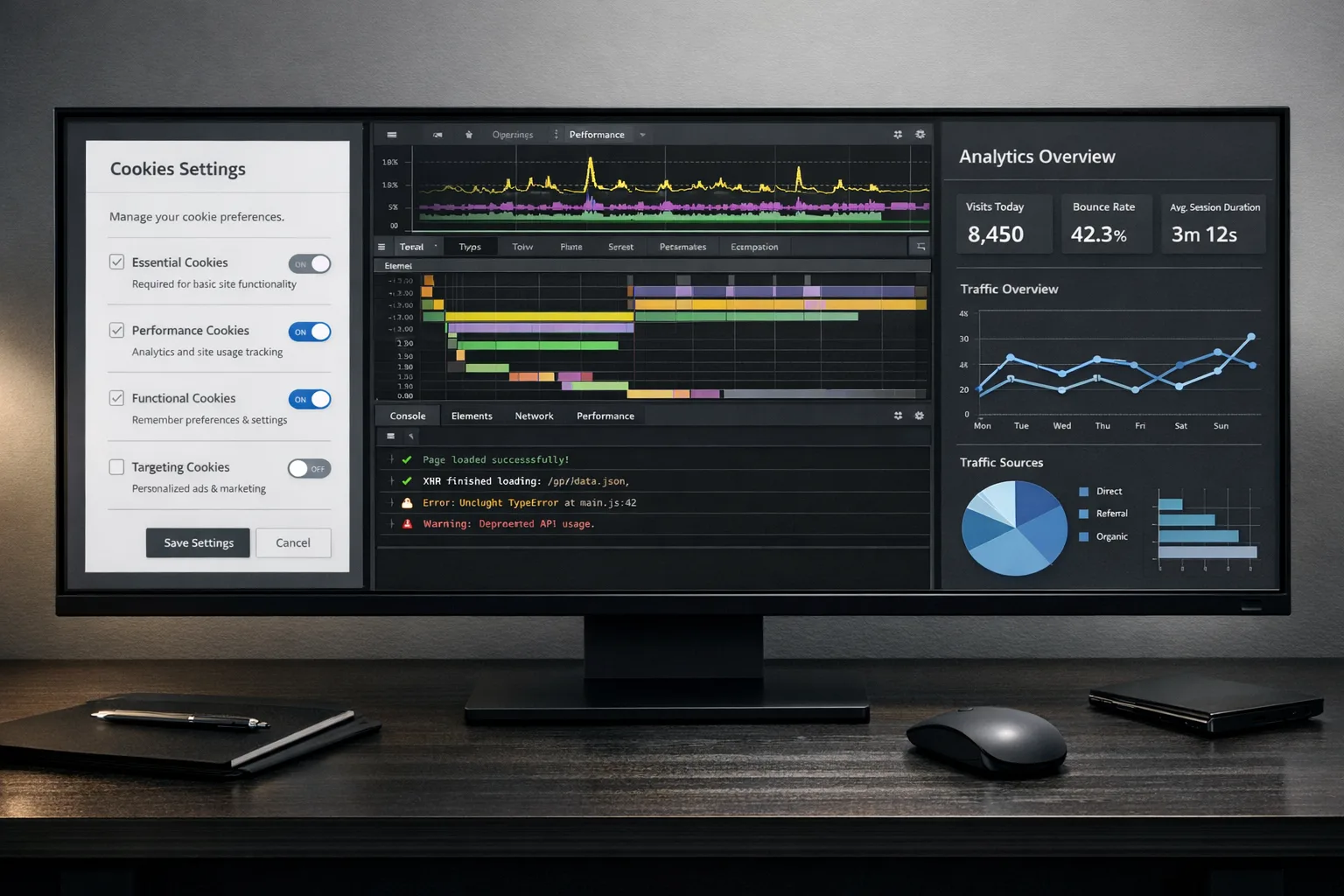
Third‑Party Cookies Aren’t Going Away. Ship This in 2026
Here’s the thing: third‑party cookies are sticking around in Chrome for the foreseeable future. In April 2025, Google said it would keep cookie choice in Settings rather than force a universal deprecation, and by October 2025 the UK regulator that had been overseeing the Privacy Sandbox effort released Google from those commitments. Several Sandbox APIs were subsequently marked for phaseout. Translation: the web didn’t flip to “cookieless”—but the ground definitely shifted. If you lead growth, SEO, analytics, or product, you still need a 2026 measurement stack that’s fast, resilient, and compliant.
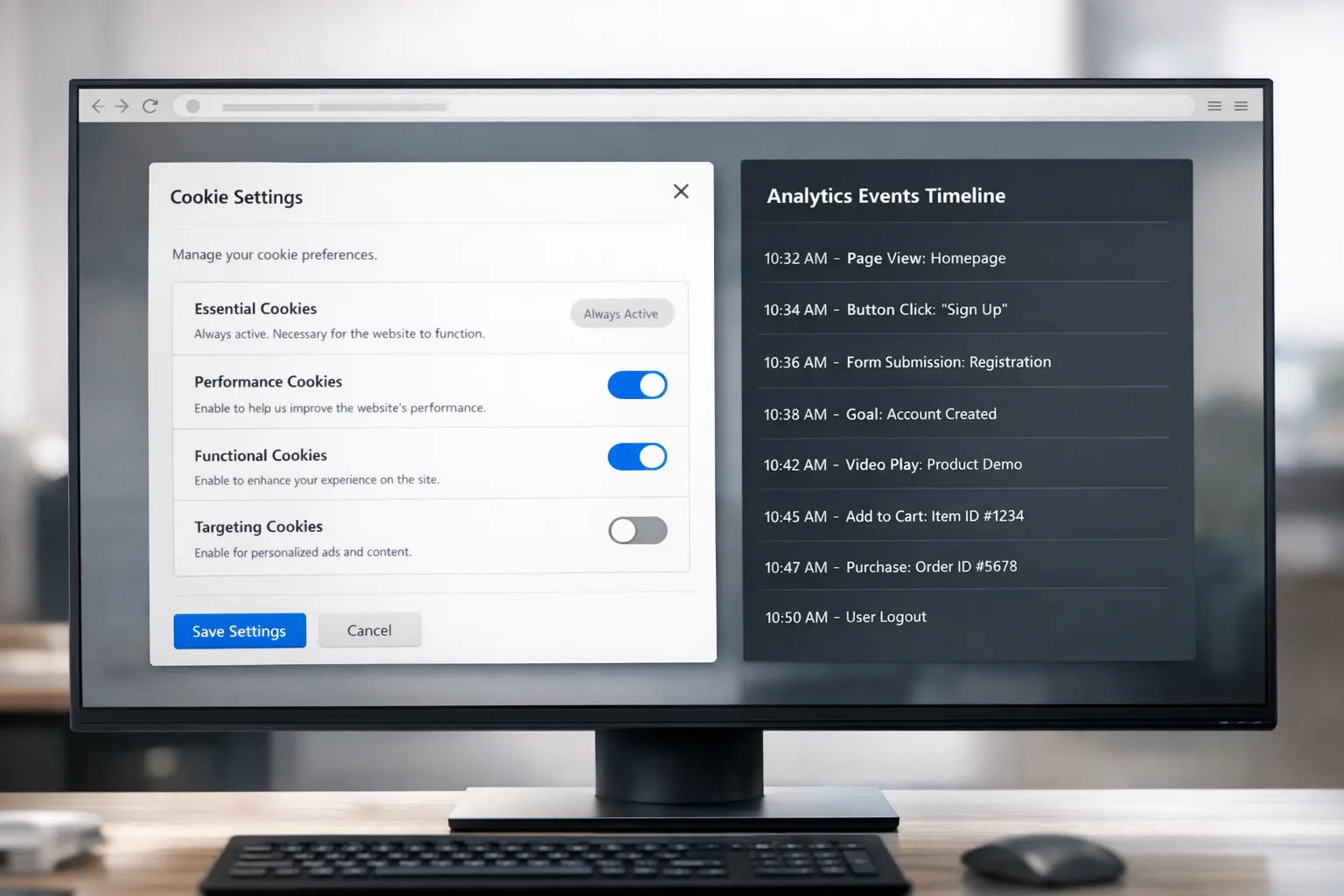
Third‑Party Cookies: Where Things Stand on January 1, 2026
Let’s anchor the facts and dates so your team is aligned:
- Chrome isn’t removing third‑party cookies as a default behavior. Users can still turn them off in Settings, and Incognito continues to block them by default.
- Regulatory oversight of Google’s cookie replacement plan shifted in 2025: the UK Competition and Markets Authority formally released earlier commitments in mid‑October 2025 after Google pivoted.
- Multiple Privacy Sandbox technologies—Topics, Protected Audience (FLEDGE), Attribution Reporting, and others—were flagged for deprecation or phaseout late 2025. Some primitives (like CHIPS and FedCM) persist because they solve unrelated security and login problems.
So yes, cookies remain—but the last five years forced better consent, smarter first‑party data practices, and more durable attribution. Those upgrades are still worth shipping now.
What this means for SEO and growth teams
For many organizations, SEO traffic funds the entire data flywheel: content drives discovery, organic converts with minimal CAC, and retargeting amplifies LTV. If you kept waiting for “cookieless” to land, your stack probably has gaps: inconsistent consent, slow pages from tag bloat, unreliable conversion modeling, and confusing channel credit.
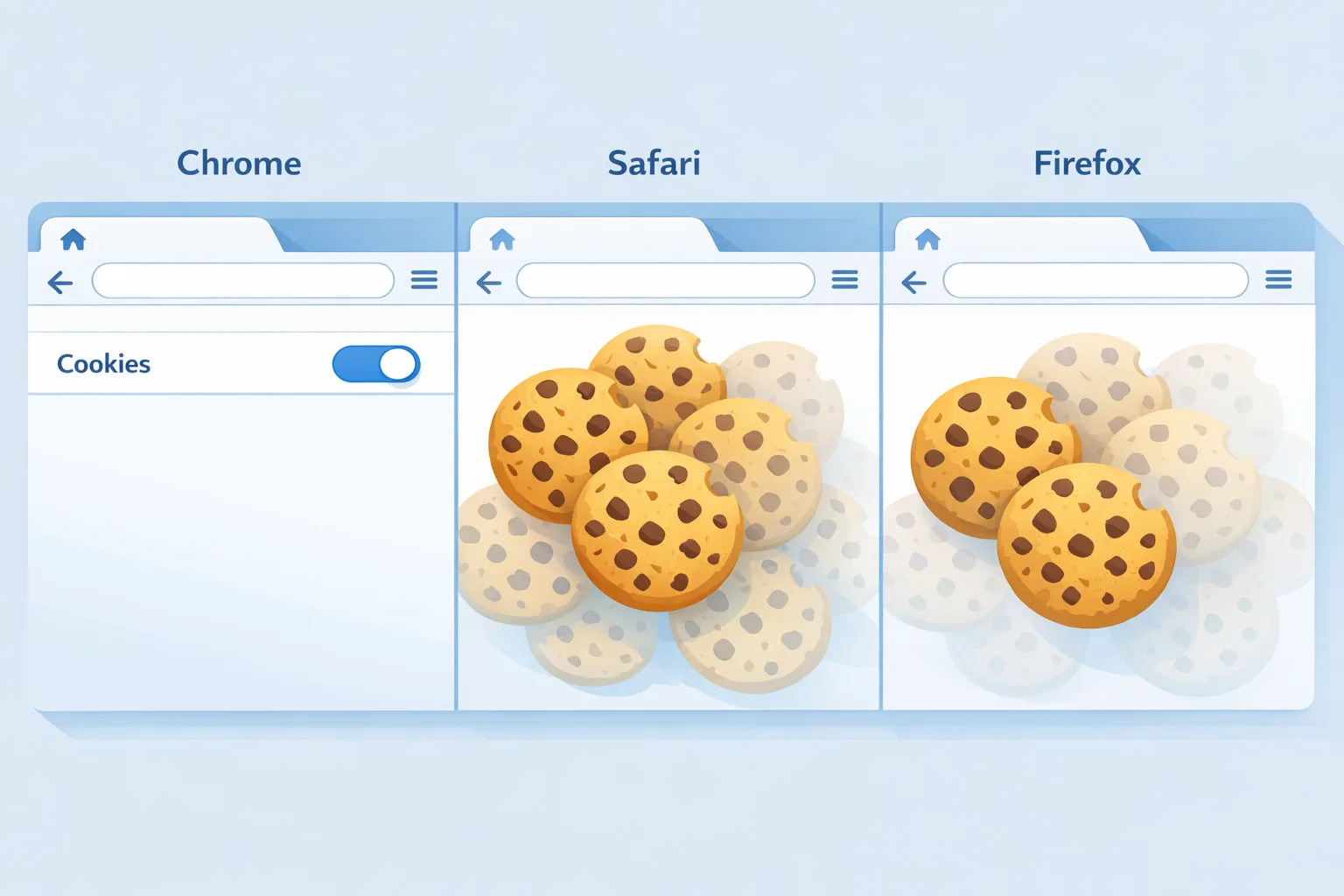
Chrome’s decision buys you time, not a pass. Safari and Firefox still restrict cross‑site cookies. iOS continues to sand down tracking edges. Privacy laws keep tightening at the state level in the US. The winning posture for 2026 is simple: assume variance across browsers and regions, invest in first‑party data quality, and keep your consent and measurement layers decoupled from any single vendor’s roadmap.
The 4×4 2026 Measurement Priorities
Use this to frame workstreams across engineering, marketing, and legal. Four themes, four concrete outputs each.
1) Consent: precise, fast, verifiable
- Deploy a lightweight Consent Management Platform (CMP) that actually gates firing behavior. No more “banner as decoration.”
- Wire Consent Mode v2 (or equivalent) so measurement and ad tags adapt based on user choices, with clear defaults per region.
- Record consent state server‑side to prevent drift between front‑end and backend systems.
- Log and retain consent change events for auditability (90–180 days, per your counsel).
2) Data collection: first‑party by default
- Consolidate to a single, first‑party tagging domain (e.g., collect.yourbrand.com) behind TLS and strict CORS policies.
- Move high‑volume collection to server‑side tagging to reduce layout shift and speed up LCP/INP.
- Adopt durable identifiers that respect privacy choices: hashed login IDs with rolling salt and clear TTLs.
- Continuously test Safari/Firefox behavior; don’t model your world from Chrome alone.
3) Attribution: useful over perfect
- Capture first‑touch and last‑non‑direct at the visitor level, then compute multi‑touch models offline for QA—not as gospel.
- Maintain campaign UTMs with opinionated naming standards; auto‑reject malformed params at the edge.
- Blend deterministic conversions with modeled lift tests (geo splits or holdouts) at least twice per year.
- Keep a media‑mix baseline so shifts in browser behavior don’t look like channel performance swings.
4) Risk and governance: fewer surprises
- Minimize third‑party scripts; keep a manifest with owner, purpose, load location, and change history.
- Use Subresource Integrity where feasible for third‑party JS.
- Audit your data processor list quarterly; align contracts with actual data flows.
- Plan for 72‑hour incident response if a tag or SDK misbehaves (spoiler: it will).
People also ask: Do I still need a CMP if Chrome keeps cookies?
Yes. Consent isn’t a Chrome feature; it’s your legal obligation where applicable and the backbone of trustworthy analytics everywhere. A good CMP prevents “phantom” conversions from firing before consent and keeps modeled reporting honest. Without it, you’ll play whack‑a‑mole with mismatched numbers across tools.
A practical architecture that ships in Q1
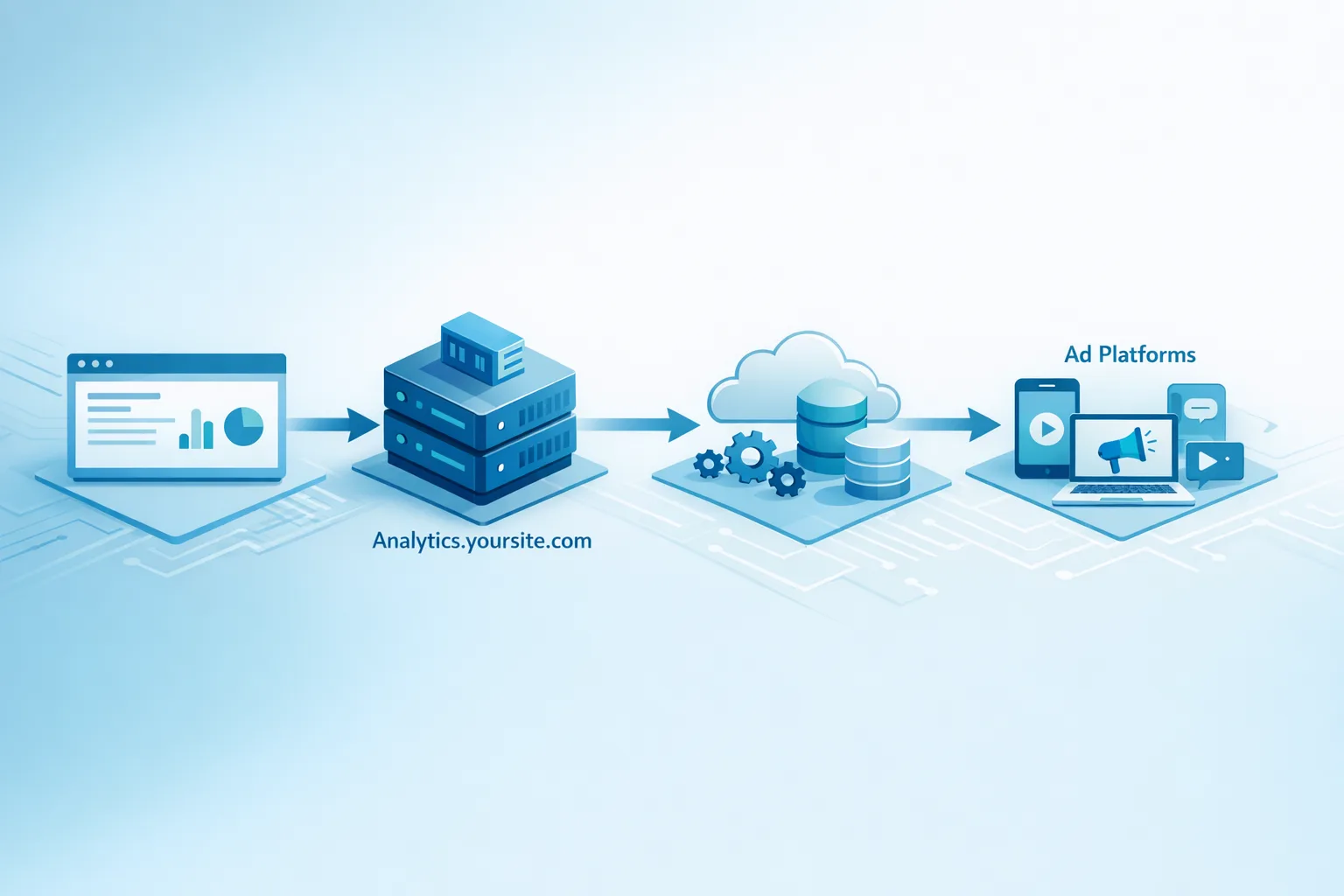
Here’s a reference design we’ve used on real projects that balances speed, flexibility, and compliance.
- Edge gateway terminates TLS and enforces basic bot filtering and geo‑based consent defaults.
- First‑party event endpoint on collect.yourbrand.com; accepts POSTed events with limited payloads (event name, IDs, consent flags, minimal metadata) and rejects oversized or sensitive fields.
- Server‑side tag router forwards events to vendors conditionally based on consent and jurisdiction; queues failed vendor calls for replay to preserve data quality without browser retries.
- Warehouse stream lands the raw and normalized event data with consent state for modeling and QA.
This isolates tagging logic from front‑end render paths, keeps LCP/INP healthy, and makes it easy to pivot if a vendor changes an API—or a regulator changes the rules.
Server‑Side Tagging: a 10‑step quickstart
If you’ve been burned by client‑side tag sprawl, this is the fastest route to value without boiling the ocean.
- Stand up a minimal collector behind your main domain with autoscaling and WAF.
- Define a strict JSON schema for page_view, session_start, purchase, and lead. Version it.
- Attach a consent object to every event: { region, banner_version, marketing: true/false, analytics: true/false }.
- Implement IP truncation and basic PII scrubbing at the edge.
- Route to your analytics vendor only after analytics=true; same for ads and remarketing destinations.
- Cache vendor keys in a secrets store; never in client bundles.
- Use retry with exponential backoff, capped; never retry from the browser.
- Mirror a small percent (5–10%) to a “null sink” for QA of payload shape and volume.
- Expose a health endpoint and push alerts on error‑rate spikes.
- Document everything in your runbook and assign clear owners.
Will third‑party cookies still break on Safari and Firefox?
Expect tight restrictions outside Chrome. That’s why first‑party endpoints, durable but privacy‑respecting IDs, and modeled attribution matter. Your SEO traffic from iOS Safari won’t behave like Windows Chrome—and that’s normal. Build for the messy middle, not a single browser.
Consent Mode v2 (or equivalent): how to wire it correctly
Plenty of teams “enable” consent signals but don’t actually change vendor behavior. Fix that gap and your numbers get cleaner overnight.
- Map each tag to the consent purposes it truly needs. Turn off “collect on page load” unless required.
- Gate server‑side routes, not just client scripts. Your server should never forward a disallowed event.
- Validate with synthetic users in three states: deny all, analytics‑only, analytics+ads. Compare payload diffs.
- Version your banner text and store which version a user saw alongside the event stream for audit.
If you need help getting from theory to shipped, our team outlines how we execute time‑boxed upgrades in articles like this 105‑day compliance sprint and our 30‑day framework upgrades. Same playbook: small batches, measurable wins.

Data quality > more data: the first‑party reset
When cookies don’t vanish, the temptation is to keep every pixel and SDK. Don’t. Each extra script adds latency, legal exposure, and failure modes. Treat on‑site data as a product:
- Document fields and data lineage like you would for your source code.
- Set expirations for identifiers (e.g., 90 days inactive → purge or rotate salt).
- Minimize personally identifiable info in event streams; enrich later on trusted servers under contract.
- Use separate keys and IAM roles for analytics vs. advertising destinations.
Attribution that survives browser change
You’ll never get perfect, but you can be robust. My preferred stack for 2026:
- On‑site: capture first‑touch and last‑non‑direct with a first‑party cookie and a server‑side session store.
- Modeled: run quarterly geo holdouts on 1–3 large channels; treat model output as directional, not a scoreboard.
- Organic lift: for major SEO launches, measure baseline vs. post changes using blended metrics (organic conversions, assisted conversions, and unsubscribed email growth) rather than a single KPI.
- Executive view: a simple, stable dashboard with three numbers—new visitors, qualified leads/orders, and ROAS/LTV trend—beats a 20‑tab “attribution” deck.
Performance still matters—maybe more now
Chrome’s status quo doesn’t excuse slow pages. Tag bloat still kills conversions and search performance. Make “tags don’t block rendering” a non‑negotiable. If you’re doing a frontend refresh, our Next.js 16 + React 19 upgrade plan and engineering notes show how we shave seconds without breaking analytics. Keep INP under 200 ms on the pages that make money.
Risk you can live with
Two uncomfortable truths: third‑party scripts will misbehave, and regulations will change on a schedule nobody controls. Build muscle memory now.
- Create an allowlist of third‑party domains and a monthly review for anything that snuck in.
- Enable Subresource Integrity for vendor JS where supported; monitor for hash mismatches.
- Set a budget: “no page ships with more than X KB of third‑party JS” and enforce it in CI.
- Run a quarterly “tag chaos day”—disable a major vendor in staging and prove graceful degradation.
When a breaking vulnerability hits an SDK or frontend dependency, time matters. Our 72‑hour patch‑and‑prove plan outlines a tight loop your team can adapt for tag incidents as well.
People also ask: Should we go all‑in on contextual now?
Contextual belongs in your mix, particularly for Safari/Firefox and for privacy‑sensitive regions. But you don’t need to swing the pendulum away from audiences entirely. The durable 2026 play is a hybrid: first‑party audiences for known users and contextual for scale—both measured with holdouts, not just click‑based attribution.
The 30‑60‑90 day plan
Day 0–30: foundation
- Pick a CMP and deploy to 100% with clear defaults per region. Validate Consent Mode wiring.
- Stand up collect.yourbrand.com with a minimal schema and consent object.
- Defer or remove low‑value tags; add SRI where feasible.
- Ship a single “source of truth” dashboard with three numbers leadership actually reads.
Day 31–60: performance and routing
- Migrate top 3 tags to server‑side routing; measure LCP/INP improvements.
- Implement bot filtering and geo defaults at the edge gateway.
- Add campaign governance (UTM standards + linting) and reject malformed UTMs at the edge.
- Run a Safari/Firefox parity test suite; file and fix gaps.
Day 61–90: attribution and resilience
- Enable modeled conversions only where consent allows; document the assumptions.
- Stand up quarterly geo holdouts for one paid channel.
- Run a tag chaos day and capture the runbook deltas.
- Brief execs: cookies aren’t gone, but we’re future‑proofing anyway.
People also ask: Is Privacy Sandbox completely dead?
Many Sandbox APIs moved to deprecation or phaseout in late 2025. Some building blocks like FedCM and CHIPS remain because they help login and cookie isolation beyond advertising. Practically, treat Sandbox as background noise. Build around consent, first‑party data, and server‑side infrastructure you control.
What to do next
- Pick a CMP and prove that blocking works. If your banner doesn’t gate behavior, it’s theater.
- Move top‑volume tags server‑side behind a first‑party endpoint and measure speed gains.
- Standardize UTMs and enforce them at the edge; stop bad data at the door.
- Run one geo holdout before April 2026. Put numbers to your channel assumptions.
- Write down your incident runbook and rehearse it once per quarter.
If you want a partner who ships with you—not just decks—see what we do for product teams and our implementation services. If your world includes app distribution changes too, this 2026 plan pairs well with our mobile policy checklist. Or just start a conversation via our contact page and we’ll tailor the sprint to your stack.
Final thought
Don’t read Chrome’s cookie decision as an invitation to procrastinate. Read it as permission to modernize on your terms—lighter pages, cleaner consent, durable first‑party data, and attribution you can explain in one slide. Ship those in 90 days, and you’ll be fine whether cookies stay, phase down, or finally exit stage left.



Comments
Be the first to comment.