Server‑Side Tagging in 2026: Build a Durable Stack
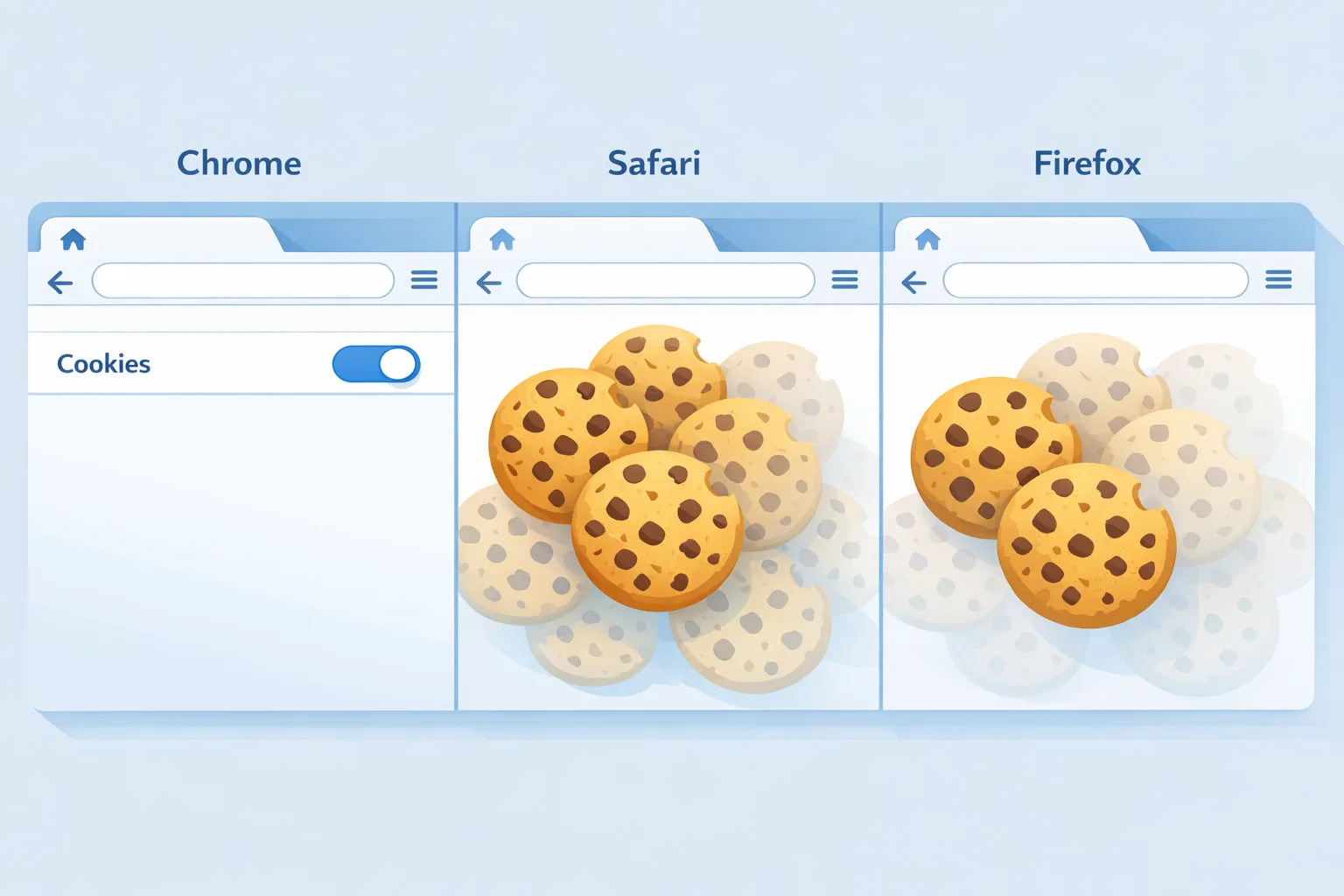
Let’s address the obvious: third‑party cookies in Chrome aren’t going away after all. That doesn’t mean measurement magically fixed itself. Safari has enforced full third‑party cookie blocking for years, Firefox corrals cookies with Total Cookie Protection, and Chrome’s Incognito blocks third‑party cookies by default. Server‑side tagging is the practical way to stabilize analytics, reduce page weight, and regain control over consent and data flows—without betting on browser politics. (webkit.org)
Why server‑side tagging matters after Chrome’s cookie U‑turn
On April 22, 2025, Google said it would maintain the current approach in Chrome: users keep choice over third‑party cookies and there would be no new cookie prompt. In October 2025, the UK CMA released Google from its Privacy Sandbox commitments after Google stepped back from deprecation. Translation: no “cookiepocalypse” in Chrome, but also no guarantee of stable cross‑site identifiers. Your job is to perform across mixed realities. (blog.google)
Here’s the thing: relying on brittle client‑side pixels keeps you exposed to ad blockers, network noise, and consent mis‑wiring. Moving tag execution to a server you control lets you enforce consent centrally, standardize schemas, and ship fewer scripts in the browser. Google’s own documentation calls out the upside: improved performance, better security, and higher data quality. (developers.google.com)

Quick refresher: what is server‑side tagging?
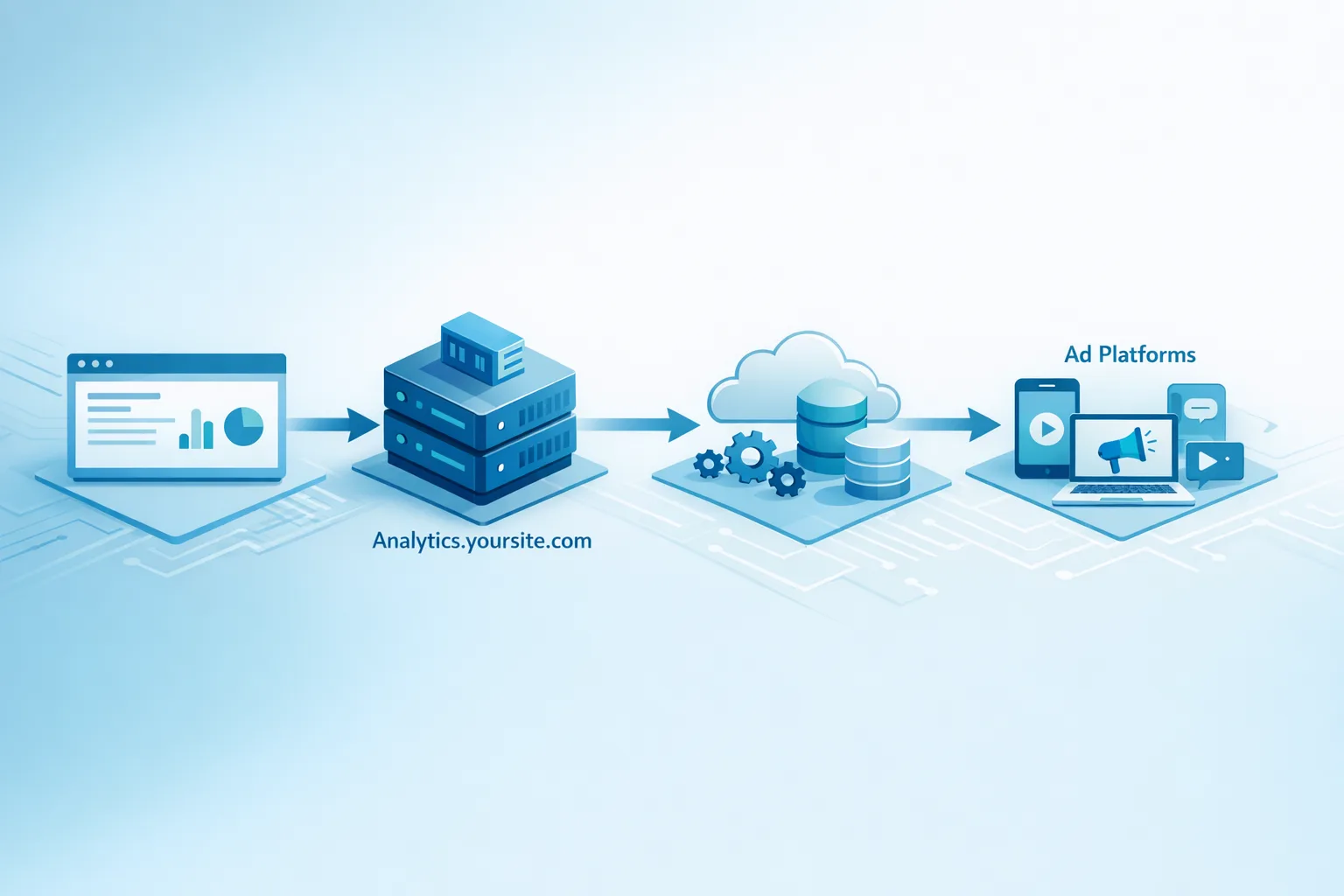
Instead of firing vendor tags in the browser, you send events to a first‑party subdomain (for example, sgtm.yourbrand.com) backed by a server container. That container—commonly deployed on Cloud Run via Google Tag Manager’s server‑side product—validates consent, cleans and transforms payloads, and forwards only the parameters you’ve allowed to ad/analytics endpoints. You can also add HTTP‑only, first‑party cookies where appropriate for state or de‑duplication. (developers.google.com)
In GTM’s model, “clients” receive and adapt incoming events; “tags” dispatch them; and “transformations” control which parameters ever reach a tag. With a custom domain, you avoid third‑party cookie scope issues and keep tracking under your brand’s origin. (developers.google.com)
What changed in 2024–2025—and why it still affects you in 2026
Chrome piloted third‑party cookie restrictions for small cohorts in 2024, then pivoted in 2025: no deprecation, no standalone user prompt, continued user choice. By October 17, 2025, the CMA removed its Privacy Sandbox oversight. Meanwhile, Safari continues to fully block third‑party cookies, and Firefox’s Total Cookie Protection isolates every site’s cookie jar by default. Said plainly: you’re operating in a majority cookieless or cookie‑confined world already—Chrome kept you from a cliff, it didn’t build you a bridge. (blog.google)
Server‑Side Tagging: a 90‑day rollout plan
Here’s a sequence I use on real projects. Treat it as a template; adapt to your stack and risk tolerance.
Weeks 1–2: Map signals and consent
• Inventory every tag firing today: destination, purpose, event names, parameters, and data sources (DOM, dataLayer, SDKs).
• Reconcile with your CMP: what purposes gate which signals? Document explicit on/off rules for analytics, ads, and personalization.
• Define your first‑party event schema: names, required fields, optional fields, data types, and identity fields (email, phone, user_id).
• Decide where to hash user‑provided data for Enhanced Conversions—client or server. Google supports both; server control is often cleaner. (support.google.com)
Weeks 3–4: Stand up the server
• Create a GTM server container and deploy to Cloud Run (or your platform of choice).
• Map a custom subdomain (for example, sgtm.example.com).
• Set up a preview server for safe QA and multi‑region traffic later. (developers.google.com)
Weeks 5–6: Wire the data path
• Point your web GA4/gtag to the server container URL.
• Configure clients (GA4, HTTP) and core tags (Analytics, Ads, other destinations).
• Implement transformations to exclude sensitive parameters by default and only allow whitelisted fields per tag.
• Add a de‑duplication strategy: consistent event_id across client and server paths. (developers.google.com)
Weeks 7–8: Enable conversion recovery
• Set up Google Ads Enhanced Conversions using user‑provided data from your data layer or server enrichment. Validate hashing (SHA‑256) and terms acceptance.
• If you advertise on TikTok, stand up the Events API Gateway or direct Events API. Pair with the pixel and pass a consistent event_id/_ttp for match quality. (developers.google.com)
Weeks 9–10: Performance and privacy hardening
• Remove redundant third‑party scripts from the browser; measure LCP/INP changes.
• Enforce consent in the server: deny‑by‑default, allow per purpose.
• Configure HTTP‑only cookies under your subdomain if needed for attribution windows; respect browser rules and CMP settings.
Weeks 11–12: Scale and handoff
• Add instances and regional redundancy; plan for 3+ instances per container.
• Document runbooks: incident response, tag changes, QA, and changelog discipline.
• Move remaining tags behind the server and deprecate legacy pixels. (developers.google.com)
Architecture choices that work in 2026
GTM Server on Cloud Run (recommended default)
Why: Fast to provision, great preview tooling, and clear guidance for scaling. Costs vary by traffic, but Google’s docs suggest roughly $30–$50 per server per month once you upgrade beyond the free tier. Start small, measure, then right‑size. (developers.google.com)
Hybrid: Keep analytics client‑side, move ads server‑side
For teams with limited engineering time, route Ads, social, and affiliate tags through the server first. You’ll reclaim performance and control where it matters most while you plan a GA4 migration later.
Multi‑endpoint dispatch
Standardize an internal event—say, purchase—with a stable schema. The server fans it out to Analytics, Ads, CRM, and your data warehouse. You can add or remove destinations without touching the website.
People also ask
Will server‑side tagging break consent?
No—if you integrate your CMP correctly. Treat the server as the enforcement point: if purpose X isn’t granted, the server drops or redacts fields before they reach a tag. This reduces the risk of a rogue client‑side script ignoring consent.
How much does it cost?
For modest volumes, a single upgraded instance can run in the tens of dollars per month; production stacks typically run multiple instances. Track egress and instance counts closely, then size up with autoscaling policies. (developers.google.com)
Does server‑side tagging improve Core Web Vitals?
It can. Fewer third‑party scripts and less main‑thread work usually lower JS execution and network overhead. You’ll still need to measure: compare LCP/INP before/after and validate that you’ve removed redundant pixels, not just moved them.
Is this future‑proof if Chrome changes again?
Yes—because the design reduces dependency on any one browser’s policy. Safari’s ITP will continue to block cross‑site cookies; Firefox will continue to isolate them; Chrome’s path could still evolve. A first‑party, consent‑enforced server puts you in control regardless. (webkit.org)
Implementation checklist you can use today
• Subdomain: Provision sgtm.example.com with TLS and strict HSTS.
• Identity hygiene: Normalize email/phone capture; hash at the right layer; send consistent event_id.
• Consent map: One table that maps CMP purposes to destinations and parameters.
• Transformations: Default‑deny; explicit allowlists per tag; scrub IPs or set to 0.0.0.0 for EEA if policy requires.
• QA gates: Use preview server; instrument synthetic conversions in staging; set up alerting on 5xx rates and destination timeouts.
• De‑dup and attribution windows: Agree on event_id and session rules across pixel and server; document lookback windows explicitly.
• Rollout: Start with one high‑value funnel (checkout or lead). Only then expand to browse and content events.

Data points and dates you can cite in your deck
• Apr 22, 2025: Google confirms Chrome will keep user choice for third‑party cookies; no standalone new prompt. (blog.google)
• Oct 17, 2025: UK CMA releases Google from Privacy Sandbox commitments after the reversal. (gov.uk)
• Safari: Full third‑party cookie blocking shipped in March 2020; continues today under ITP. (webkit.org)
• Firefox: Total Cookie Protection enabled by default; isolates cookies per site. (support.mozilla.org)
Common pitfalls we keep seeing
• “Lift‑and‑shift” tagging: If you simply proxy every vendor endpoint, you miss the chance to reduce scope and enforce consent. Use transformations to allowlist fields and destinations. (developers.google.com)
• Identity drift: Email casing, whitespace, phone formats—any inconsistency destroys match rates. Normalize fields before hashing for Enhanced Conversions or partner APIs. (support.google.com)
• Double counting: Without a single event_id across browser and server, you’ll inflate conversions. Align on a UUID strategy and de‑dupe in each destination’s docs. (developers.google.com)
• Under‑resourced infra: A single tiny instance will drop traffic during spikes. Plan at least three instances for redundancy and test failover. (developers.google.com)
Tooling notes and gotchas
• GTM server containers include GA4 clients and a generic HTTP client by default, which simplifies event intake. (developers.google.com)
• Google Ads Enhanced Conversions can be configured via GTM or API; if you go API‑first, accept customer data terms and send hex‑encoded SHA‑256. (developers.google.com)
• TikTok’s Events API Gateway is handy for agencies and multi‑brand retailers—centralized S2S with pixel pairing and tenant isolation. (ads.tiktok.com)
• Keep a strict change log. Treat tag updates like code: PRs, reviewers, and rollbacks. Preview servers exist for a reason. (developers.google.com)
Where this intersects your roadmap
If you sell online, you already feel the measurement gap on Safari and Firefox. Chrome’s decision reduced a crisis, not the complexity. Make 2026 the year you centralize consent and telemetry, reduce third‑party script surface area, and improve match rates with Enhanced Conversions and server‑to‑server events. If you want a broader strategy view on Chrome’s reversal and what it means for budgets, read our take: Third‑Party Cookies Aren’t Dead: Your 2026 Plan.
What to do next
• Talk to your engineering lead this week: pick a pilot funnel and a target domain for the server.
• Book time with a consent/privacy owner: finalize purpose mapping and redaction rules.
• Assign one developer to build an event schema and a QA harness.
• In 30 days: server live on a subdomain; one funnel routed; Enhanced Conversions sending.
• In 60 days: remove redundant third‑party tags; validate performance gains; expand to second funnel.
• In 90 days: redundancy, alerting, and runbooks in place; clean handoff to marketing with guardrails.
If you want help standing this up, our team ships these stacks end‑to‑end—from schema design to CMP integration and vendor QA. See what we build on the what we do page, browse recent launches in our portfolio, or get a scoping conversation on the calendar via contact us. For ongoing perspective, subscribe to our blog.




Comments
Be the first to comment.