
The React2Shell vulnerability is the kind of incident that separates disciplined engineering teams from the rest. Disclosed on December 3, 2025 as CVE‑2025‑55182 and rated CVSS 10.0, it targets React Server Components (RSC) and has downstream impact on frameworks like Next.js App Router. By December 5, real exploitation attempts were already circulating. One week later, two related RSC issues (CVE‑2025‑55183 and CVE‑2025‑55184) landed. And today, December 18, the Node.js project is shipping security releases across multiple lines. Here’s the thing: you don’t have time for a meandering response. You need a prioritized, defensible patch order that closes holes and creates evidence you can stand behind.

What changed since December 3?
Let’s anchor the timeline so your decisions map to concrete dates:
• December 3, 2025: The React team discloses CVE‑2025‑55182 (“React2Shell”), a pre‑auth remote code execution in React Server Components. Impacted packages include the server‑side RSC implementations (for example, react‑server‑dom‑webpack and peers) in versions 19.0, 19.1.0, 19.1.1, and 19.2.0. Next.js publishes a downstream advisory tracking the RSC issue for App Router users and provides guidance and tooling.
• December 5, 2025: Exploitation attempts start showing up in the wild. Most early payloads look commodity—think cryptominers and basic loaders—but that’s cold comfort; pre‑auth RCE is the front door being propped open.
• December 11, 2025: Two follow‑up RSC vulnerabilities are disclosed—one high‑severity DoS and one medium‑severity source code exposure (CVE‑2025‑55184 and CVE‑2025‑55183). They don’t enable RCE, but they matter for availability and confidentiality. Next.js issues a new security update the same day, and notes that an earlier mitigation for one issue required a complete fix shortly after. If you patched in the first wave, you likely had to patch again.
• December 18, 2025: Node.js ships security releases across current lines (25.x, 24.x, 22.x, 20.x), addressing multiple high‑severity issues plus medium and low items. If you’re planning downtime for app patches, coordinate your Node upgrade the same day and close two fronts with a single maintenance window.
Zooming out: this is a classic pattern. A critical upstream flaw (RCE) lands, defenders scramble, researchers find variants as the band‑aid settles, and runtime ecosystems add their own releases. Your job is to absorb the noise and move in a sequence that reduces blast radius fastest, then hardens and proves.
The patch order that minimizes risk today
The wrong move is to wait for everything to stabilize. The right move is to sequence actions so that the highest‑value risk is burned down first, then you return for completeness. Use this order and adapt to your stack:
1) Contain: Reduce exposure before you touch packages
Block obviously malicious traffic patterns and rate‑limit Server Actions endpoints. If you run a WAF, add rules to constrain suspicious multipart and boundary formats hitting RSC/Server Actions paths. If you can temporarily gate risky endpoints behind auth or IP allowlists without breaking user flows, do it now. Set short‑lived feature flags to revert quickly if you misjudge traffic shape.
2) Rotate secrets if you were online and unpatched through Dec 4, 1:00 PM PT
If your Next.js or RSC app was public and unpatched on or after December 4, 2025 at 1:00 PM Pacific, treat secrets as potentially compromised. Rotate the crown jewels first: database creds, JWT signing keys, OAuth client secrets, API tokens, and any cloud access keys. Propagate rotations through CI/CD, environment stores, and serverless configs. Don’t forget internal services that trust baked‑in tokens; rebuild images so secrets aren’t cached in layers.
3) Patch the React2Shell vulnerability across RSC packages
Upgrade React’s RSC server packages to the latest patched versions. Target the releases issued on or after December 3 for the RCE, and again after December 11 for the follow‑ups. If you pin ranges tightly, widen constraints to accept the fixed line—then re‑pin after the upgrade. Run a dependency diff and archive it; auditors will ask what changed.
4) Patch frameworks: Next.js App Router
If you’re on Next.js with the App Router, apply the latest security update from December 11 or later. Use the tooling provided by the Next.js team to update project files and configuration. If your application was online and unpatched during the early December window, finish secret rotations even if you see no suspicious logs. For shops standardizing on our guidance, cross‑reference our earlier playbooks—see the Next.js Patch and Prove checklist and the detailed December 11 Patch Map.
5) Rebuild and redeploy from clean base images
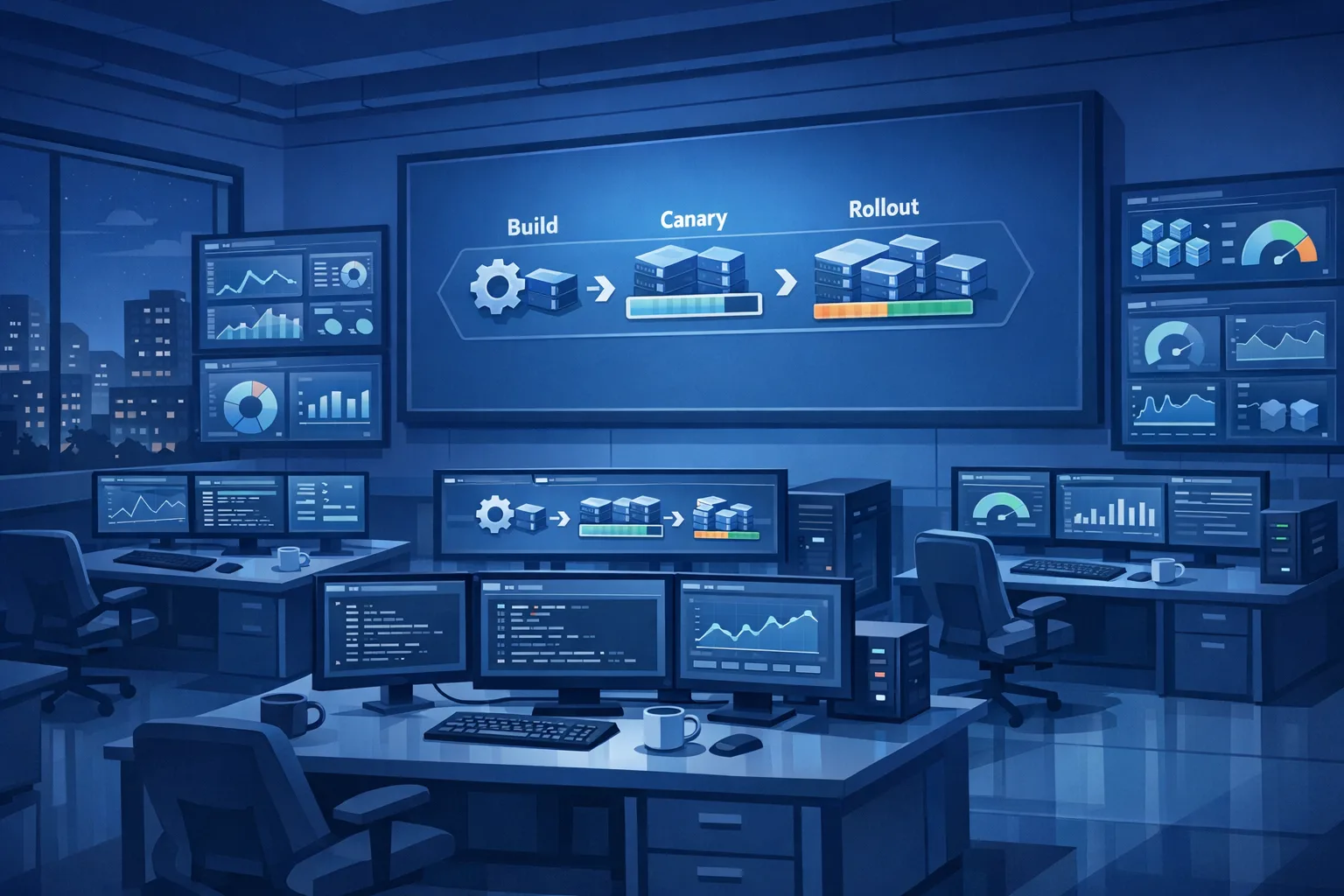
Don’t just bump a lockfile. Rebuild containers and serverless layers from scratch, verify the image digest, and redeploy. This clears stale caches that can preserve vulnerable code paths or old secrets. Sign your builds if you can—attestation will save time during incident review.
6) Align with today’s Node.js security releases
Once the app layer is patched, upgrade Node.js to the latest in your supported line (25.x, 24.x, 22.x, or 20.x) per the December 18 releases. Expect three high‑severity CVEs addressed across lines, plus medium and low fixes depending on your version. If you’re on an end‑of‑life Node, prioritize moving to a maintained line immediately. For a step‑by‑step, use our Node.js Dec 18 Patch Runbook.
7) Prove it: Capture evidence now, not after
Export lockfiles, SBOMs, and version manifests before and after the upgrade. Snapshot WAF and edge rules you added. Keep CI logs that show the rebuild and deploy timestamps. Store them in a read‑only bucket tied to the incident ticket. If your business is audited, this paper trail turns days of back‑and‑forth into a five‑minute review.
8) Monitor for post‑patch anomalies
Keep an eye on error rates from Server Actions, 5xx spikes, and slow queries that might emerge from changed serialization logic. Tighten any temporary allowlists to their long‑term configuration. Schedule a 7‑day follow‑up to re‑scan and verify there’s no drift.
Which versions are vulnerable—and what should I run?
React2Shell primarily affects React Server Components implementations shipped with React 19 server packages. The vulnerable range called out by vendors includes 19.0, 19.1.0, 19.1.1, and 19.2.0 for the server‑side RSC packages. Upgrade to the latest patched versions released after December 3 for the RCE, and after December 11 for the DoS and source‑exposure follow‑ups. If you use Next.js App Router, install the security updates published December 3 and December 11 and confirm you’re on the most recent patch, since one early fix was later replaced with a complete one.
For Node.js, pick the newest patch in your supported major line as of December 18, 2025. If you’re running 25.x, 24.x, 22.x, or 20.x, you’ll receive high‑severity fixes; earlier, end‑of‑life releases are affected but won’t be patched. Don’t sit on this—combine application and runtime updates in one maintenance window while your change management is warm.
People also ask
Is the React2Shell vulnerability only a Next.js problem?
No. Next.js App Router is heavily used, so it draws attention, but the root cause lives in the React Server Components implementation. Any framework or integration that implements or embeds RSC server logic in the affected versions can be at risk. Inventories often miss pilot projects or internal tools that quietly enabled Server Actions; search your repos for RSC usage, not just your public sites.
Do I really need to rotate secrets if I patched quickly?
If your app was exposed to the internet and ran an unpatched RSC stack through December 4, 2025 at 1:00 PM PT, treat secrets as suspect. We’ve already seen opportunistic attackers drop miners and loaders wherever they can. Rotation is cheap insurance, and it’s a clear line item that auditors understand. Prioritize tokens that grant lateral movement—databases, queues, CI/CD, and cloud accounts.
How do I prove to leadership and auditors that we’re clean?
Show the chain: advisory date, your detection notes, the patch PRs with version diffs, CI logs with build and deploy SHAs, and runtime evidence (SBOMs, container digests, and timestamped WAF changes). Pair that with log searches for suspicious RSC requests and a ticket documenting secret rotations. That’s usually enough to satisfy due diligence without a forensic excavation.
Detection and hardening checklist you can run today
Use this as a working checklist during and after patching:
• Search logs for bursts of requests to Server Actions or RSC endpoints, especially malformed multipart segments and unusually large payloads.
• Inspect container images and serverless layers for build dates during the vulnerable window; rebuild anything older than your patch cutover.
• Verify that public routes don’t accidentally expose Server Actions in preview branches or staging deployments—and that staging isn’t open to the world.
• Enable or tighten structured logging for Server Actions. If you can, add request IDs to correlate front‑end and server logs.
• Add rate limits per IP and path for RSC endpoints, and tune thresholds after you see production traffic shape for 24–48 hours.
• Run dependency audits that include transitive packages; don’t rely solely on top‑level lockfiles. Archive the reports.

How today’s Node.js releases fit into your plan
Coordinating runtime and framework fixes pays off. The Node.js team’s December 18 security releases address three high‑severity issues across active lines, plus medium and low items depending on your version. You don’t want to return to change management next week just for Node. Slot the Node upgrade right after you patch React2Shell and related RSC issues, run your tests, and ship in the same window. If you’re juggling multiple services, update the riskier internet‑facing apps first, then the internal ones within 48 hours. For a more prescriptive timeline, lean on our Node.js Security Releases Dec 18 runbook to map versions and verification steps.
Real‑world pitfalls I’m seeing in audits
• Hidden Server Actions in admin tools: That internal tool you shipped quickly in October? It’s using the App Router with Server Actions and lives behind a VPN—until a contractor opens a temporary tunnel that stays up for days. Inventory internal apps with the same rigor as public sites.
• Stale preview environments: Branch previews on shared hosting can expose older RSC builds. If your Vercel/Netlify preview stayed live while you patched production, audit and shut down stale previews. Add auto‑expiration policies.
• Secrets baked into layers: Teams rotate D B passwords but forget a background worker image bakes the old connection string. Rebuild workers and jobs, not just web heads. Confirm the new secrets are in memory by checking live environment vars post‑deploy.
• Over‑tight WAF rules: In the scramble, some teams block legitimate multipart forms or file uploads and then silently disable the rule a week later. Set a calendar reminder to revisit rules with real traffic data and keep the protections that don’t hurt conversion.
Let’s get practical: a 90‑minute execution plan
If you need a concrete schedule for a single service, here’s a realistic sprint you can run today:
0–10 minutes: Freeze deploys. Announce a limited maintenance window. Snapshot current versions and collect baseline logs. Create a ticket that will hold all artefacts.
10–25 minutes: Add WAF rules and rate limits. If feasible, restrict Server Actions temporarily to signed‑in users. Start secret rotation with the database and primary API tokens.
25–50 minutes: Upgrade React RSC server packages to the latest patched versions; if you’re on Next.js App Router, apply the latest security update tooling. Run unit and integration tests that hit Server Actions and file uploads.
50–70 minutes: Rebuild containers or serverless layers from scratch. Verify SBOM generation, sign images if supported, and push to your registry. Prepare rollback images as a safety net.
70–85 minutes: Upgrade Node.js to the newest patch level in your supported major line. Run smoke tests and a quick load test against the most trafficked flows.
85–90 minutes: Deploy. Validate health checks, top endpoints, and any external webhooks. Merge the artefacts—diffs, logs, SBOMs, WAF snapshots—into the ticket. Set a 24‑hour watch and a 7‑day follow‑up.
Why this matters for business leaders
This is not just an engineering clean‑up. React2Shell created measurable risk across availability, confidentiality, and compliance. Rotating keys and proving patch levels now reduces the odds of a costly breach notification later. Scheduling the Node.js upgrades in the same window compresses operational overhead. If you need help aligning patches across a portfolio, our team has done this at scale—see how we work on the What We Do page and browse patterns in our security posts like the ongoing React2Shell weekly safety checks.
What to do next
• Patch in the order above: contain, rotate, update RSC/Next.js, rebuild, upgrade Node, prove, monitor.
• Confirm you’re on the latest post–December 11 patches; if you updated early, update again.
• Rotate secrets if exposed during the early December window—even if logs look clean.
• Rebuild images, generate SBOMs, and attach artefacts to one ticket for audit.
• Review WAF and rate limits with real traffic after 24–48 hours.
• Schedule a portfolio scan for forgotten RSC usage and preview environments.
• If you maintain many services, stagger the least risky apps within 48 hours—don’t let this linger.

Final thought
Incidents like React2Shell test how well your organization can move under pressure. The goal is not just to patch—it’s to reduce real risk and to produce evidence that your board, customers, and auditors will accept. Follow the sequence, keep receipts, and align today’s framework fixes with the Node.js security drops. Then get back to shipping.



Comments
Be the first to comment.