
The Node.js security releases planned for mid‑December were postponed to Wednesday, January 7, 2026. For teams running holiday freezes, that’s a curveball: your runtime fixes aren’t landing this week, yet your attack surface didn’t take time off. Meanwhile, the React2Shell RCE against React Server Components is seeing real‑world probing, Next.js shipped emergency guidance, and npm permanently revoked classic tokens on December 9. Here’s how to recalibrate risk and what to patch first so you don’t trade uptime for a breach—or vice versa.

What changed with the Node.js security releases?
On December 17, the Node team updated its advisory and moved the target to January 7, 2026 to finish a challenging patch without rushing it into the holidays. The advisory also notes that release lines 25.x, 24.x, 22.x, and 20.x will receive fixes, addressing three high‑severity issues among several total items. If you’re on any supported line, you’ll have updates to apply the first week of January.
Two takeaways for planning: first, treat the window until January 7 as a “known unknown” period—don’t assume your specific workload is unaffected. Second, use the time to prep a low‑risk rollout: stage environments, e2e tests around network permissions and TLS, and canaries for your most sensitive services.
React2Shell makes waiting risky
React2Shell (CVE‑2025‑55182) is a critical pre‑auth RCE in the React Server Components protocol. Next.js published downstream guidance (CVE‑2025‑66478) and provided a one‑command updater. Security researchers have observed exploitation attempts since early December, with many payloads dropping miners first—because opportunistic actors go for easy money before stealthy persistence. If your app serves RSC endpoints and was online and unpatched in early December, rotate secrets after you patch. Yes, even if you “saw nothing in logs.”
Practical reality: most exploitation so far has been noisy, but the protocol surface is attractive enough that quieter operators will follow. You don’t want to be the org that hardened Node on January 7 but left RSC open all December.
npm classic tokens are gone—CI will tell you the hard way
On December 9, npm permanently revoked all classic tokens and switched local npm login to short‑lived session tokens (~2 hours). You also now have first‑class CLI management for granular access tokens, and write‑scoped tokens enforce 2FA by default. The net effect: human publishing is safer; fragile CI assumptions are not.
What breaks most often? Long‑lived tokens tucked into old GitHub Actions or self‑hosted runners. The fix is to adopt Trusted Publishing where possible, or create granular tokens scoped to the exact package and permissions you need with a tight TTL. If you maintain monorepos with many packages, plan a morning to script token rotation and policy checks rather than hand‑clicking.
If you need a step‑by‑step, our walkthrough on migrating CI off classic tokens covers GitHub Actions, pipeline variables, and per‑package scoping without breaking release automation.
Holiday Freeze Triage: the 72‑Hour Plan
Here’s a time‑boxed plan I use with client teams when security is moving faster than governance.
Day 0: Contain React2Shell
Start with your public‑facing apps using React’s RSC features or Next.js App Router:
- Run the official update command for Next.js apps and redeploy. If you forked the framework or pinned versions, reconcile your lockfile and vendor patches explicitly.
- Add a WAF rule to throttle or block suspicious RSC endpoints. Even basic rate limits blunt commodity scans.
- Rotate credentials your app can touch: database users, third‑party API keys, service‑to‑service tokens. Do it in order of blast radius.
Need a concrete path? Use our Next.js security update playbook and the deeper React2Shell hardening checklist to get through patches and verification without thrashing your infra.
Day 1: Stabilize npm publishing
Inventory where publishing happens (humans vs CI, which repos, which registries). Migrate those jobs to Trusted Publishing or short‑TTL granular tokens. Make test publishes to a private scope to prove it works before touching production packages. Then document the new process in the repo so the next engineer doesn’t revive a secret in a panic.
If you run a private mirror or air‑gapped registry, make sure your creds flow matches new npm session semantics for local dev, and that build agents use granular tokens with the minimum scopes. Don’t let convenience drag you back to all‑powerful org tokens.
Day 2: Prepare for Node’s January 7 drop
Assume there will be at least one runtime behavior edge case. Spin up ephemeral environments pinned to the latest patch of your release line and rehearse the upgrade. If you use the Permission Model (e.g., --allow-net, --allow-env), run smoke tests that intentionally deny and then grant caps, so you catch surprises before prod does.
If you maintain libraries, confirm your test matrix includes 20.x, 22.x, and 24.x (and 25.x where relevant). Many vendors have already left Node 18 behind—for example, some AWS developer tooling ended 18.x support on December 1. Don’t let your consumers discover your gaps first.
The practical patch order (why this order works)
When people ask me “What’s the safest sequence?”, I optimize for attacker incentives and operational blast radius:
- Close the RCE: Fix React2Shell and Next.js first. An RCE you can reach from the internet beats everything else for urgency.
- Restore supply chain controls: Migrate npm publishing so attackers can’t weaponize your release process—or stall your teams with failed publishes.
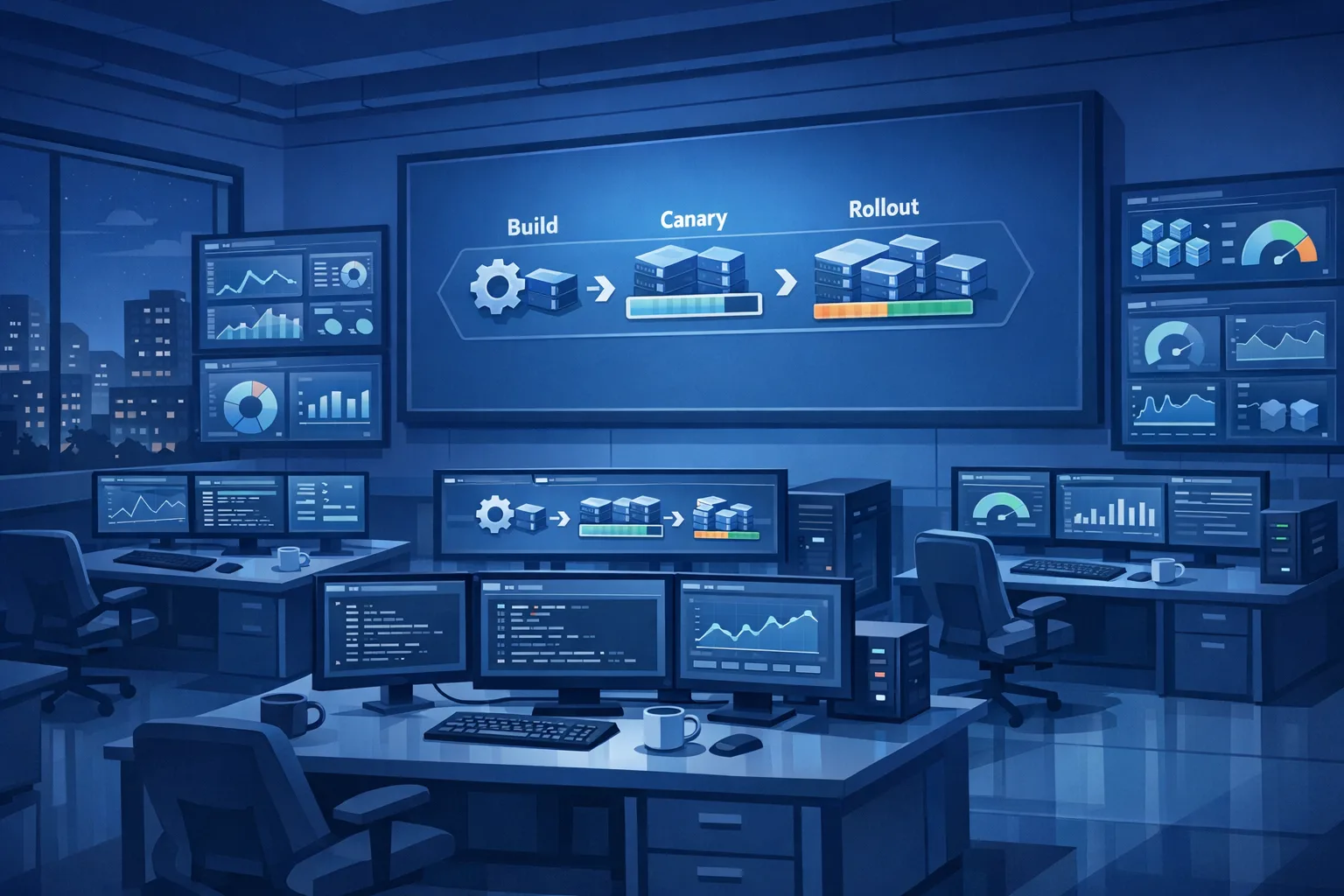
- Stage the runtime update: The Node.js security releases will land shortly after the holidays. Be ready to roll patches the day they drop with a canary plan and rollback guardrails.
This order solves the “running out of daylight” problem: you remove the highest‑leverage threat first, then remove the highest‑probability operational failure, then you line up for a clean runtime patch.
Risk notes and gotchas teams actually hit
Self‑hosted runners and secrets: If you switched to short‑TTL tokens but kept long‑lived secrets in a runner’s filesystem, you didn’t fix the real problem. Treat runners like cattle: immutable, auto‑replaced, no manual state.
Monorepos with many packages: Granular tokens are safer, but the management overhead is real. Write a script to create tokens per package with least privilege, then store metadata in code (e.g., a security.json) so it’s auditable.
Private Next.js APIs: Teams often patch Next and call it done, but forget environment variables that were exfiltratable before the patch. Rotate secrets in the order your app would have leaked them (database first, then payment, then analytics, etc.).
Permission Model surprises: If you enable Node’s Permission Model flags in prod, note that some libraries lazily spawn subprocesses or open sockets you didn’t expect. Add targeted allow‑lists and log denied operations during canary to learn before you block.
People also ask
Should we jump to Node 25 now or wait?
Production SaaS? Wait to upgrade majors until after the security releases ship for your line, then evaluate 25.x in a dedicated cycle. If you’re already on 24.x with disciplined testing, piloting 25.x in a canary service is reasonable—but don’t conflate “security patch” with “major upgrade.” Different risk models.
Do we need to rotate secrets after patching Next.js?
If your public app used RSC and was internet‑reachable in early December, assume compromise and rotate. Rotation costs time; a stolen database password costs customers. Prioritize secrets with the highest privileges and the broadest access.
What’s the safest way to publish from CI without long‑lived tokens?
Use Trusted Publishing where the registry trusts your CI identity, or create granular tokens scoped to the specific package with a short lifetime. Avoid organization‑wide tokens. Build a prepublish job that checks the token scope against the package name to fail fast when misconfigured.
A lightweight framework your team can reuse
Use this Patch–Prove–Protect loop whenever a vendor delay collides with active exploitation:
- Patch: Apply the highest‑impact application‑level fix first (here, React2Shell/Next.js), then the pipeline control (npm tokens).
- Prove: For each change, capture evidence: a successful test publish to a private scope, a diff of the running Next.js version, WAF rules live, and a short report that secrets were rotated.
- Protect: Add compensating controls while you wait for the Node.js security releases: WAF rate limits, permission flags where feasible, log alerts on suspicious RSC traffic, and CI checks that block unscoped tokens.
This loop keeps security tangible for leadership and repeatable for engineers. It also fits neatly into a holiday freeze when you need proof without big deployments.
Data points to anchor your plan
Timeline matters when you brief stakeholders. Keep these dates in the deck:
- December 3, 2025: Next.js posts its advisory and mitigation steps for React2Shell.
- December 5–6, 2025: Exploitation attempts begin; maintainers urge secret rotation for unpatched apps.
- December 9, 2025: npm classic tokens permanently revoked; session‑based auth and CLI token management go live.
- December 17, 2025: Node security releases delayed to January 7, 2026 for quality and timing.
Communicating these dates clarifies why you’re prioritizing app‑level RCE and CI hardening now, and the runtime patch right after New Year’s.
Testing and rollout tactics that won’t break prod
For Next.js patches: stand up a staging environment seeded with production anonymized data. Run replay traffic for critical paths (checkout, sign‑in, content rendering) and verify no unexpected server function calls appear in logs. Keep the change isolated; don’t smuggle feature work into this deploy.
For npm: add a pipeline job that executes npm token list via the API and asserts no classic tokens are present in org or repo secrets. On failure, block release and message #security in chat with the offending repo and secret name.
For Node’s upcoming patches: define a canary percentage and a revert plan now. If you’re containerized, bake images for the patched Node lines and store them side‑by‑side so you can flip back fast if a dependency misbehaves.
Where our earlier guidance still helps
If you’ve been following our rapid updates this week, you’ve seen us emphasize two themes: patch and prove. Those hold. If you need more structured guidance, our 48‑hour Node.js patch plan still applies to the first week of January, and our patch‑and‑prove checklist shows how to gather evidence without boiling the ocean. For teams squarely in the Next.js blast radius, start with the React2Shell: Secure Next.js this week guide and then close the loop with the December Next.js patch playbook.

Manager checklist: seven things to confirm before Friday
- All internet‑reachable apps using React RSC or Next.js App Router are patched and redeployed.
- Secrets rotation executed for affected apps; access logs show expected key usage after rotation.
- npm publishing works via Trusted Publishing or granular tokens; dry‑run publish succeeded from CI.
- Security alerting enabled for unusual RSC requests and failed token scopes.
- Staging environments prepared for the January 7 Node drops; canary and rollback documented.
- Communication sent to support and sales about maintenance windows and potential canary impact.
- Incident playbook updated with “RSC RCE” and “npm token failure” scenarios.
What to do next
Today: Patch Next.js/React RSC, add basic WAF rules, rotate the highest‑risk secrets. Prove the change with a quick memo and screenshots.
Tomorrow: Migrate npm pipelines, run a test publish, and remove any classic or over‑scoped tokens. Document the new publishing flow in each repo.
Early next week: Bake images for your Node release lines, rehearse the upgrade, and stage a canary plan so you’re ready on January 7. Keep freezes for feature work; green‑light these security tasks as exceptions.

Zooming out, the JavaScript platform is maturing: frameworks shipping emergency updaters, registries killing long‑lived secrets, runtimes taking the time to ship clean patches instead of rushed ones. Your job is to turn that momentum into pragmatic defense—fix what attackers can reach today, keep your supply chain trustworthy, and be ready to land the Node.js security releases the moment they ship in January. Quiet, boring security is a gift. Give it to your customers before the year ends.



Comments
Be the first to comment.