Node.js Security Releases Dec 18: Patch Playbook
The Node.js security releases scheduled for December 18, 2025 span four active lines—25.x, 24.x, 22.x, and 20.x—and address multiple vulnerabilities, including three rated high severity. If your APIs, Next.js SSR, or CI builders run on Node, you need to move fast but methodically. This guide lays out a clear upgrade path for containers, serverless, and edge runtimes, plus a short list of proofs your security team will expect. Use it to ship the Node.js security releases quickly without surprises.
Here’s the thing: patch Tuesday doesn’t help if your Dockerfiles still pin old images, your Lambda layers didn’t rebuild, or your native add‑ons recompiled against stale headers. We’ll fix that. And because many teams have also been working through recent framework patches, we’ll connect the dots to Next.js and React Server Components so you can close the loop.
What just shipped and why it matters
The Node.js project planned coordinated releases on December 18, 2025 (or shortly after) to deliver security fixes across 25.x (current), 24.x (Active LTS), 22.x (Maintenance LTS), and 20.x (Maintenance LTS). The advisory highlights three high severity issues, plus one medium and one low. Translation for busy teams: any earlier patch in those lines is considered vulnerable once the new builds land. If your images or runtimes float to the latest patch in a major line, a rebuild may be enough. If you pin exact patches, you’ll need to bump intentionally.
If you maintain Internet‑facing services on Node 24.x or 22.x, plan to be on the latest patch line within 24–48 hours. Internal systems and batch jobs should still upgrade within the week, especially where Node handles untrusted input (HTTP, queue payloads, or file/crypto parsing).
Node.js security releases: the 90‑minute patch playbook
This is the field‑tested sequence we use with teams that can’t afford drift or downtime. Timebox at 90 minutes per service. If you’re running a large estate, run the playbook in parallel across service clusters.
- Inventory fast. Run a quick sweep to find everything running Node: production services, cron/batch jobs, internal tools, CI images, Lambda/Functions, edge workers, and build agents. Don’t forget bastion/jump boxes used for CLI automation. Export versions with
node -vin each environment and capture the container image digests in use. - Decide per line. For each service, confirm the major line (25/24/22/20) and whether you float to the latest patch automatically. If you pin a precise patch (for example,
node:24.6.2), change the tag or digest to the latest patched build in that line. If you float (for example,node:24), a rebuild is typically enough—still verify the version at runtime. - Update images and layers. Containers: bump base images and rebuild. Serverless: update Lambda runtime or layer, rebuild layer zip, and redeploy. Edge and workers: bump the project’s Node target or compatibility flag, then redeploy.
- Recompile native add‑ons. If you use modules with native code (bcrypt, sharp, canvas, better‑sqlite3, grpc), clear caches and trigger a rebuild so prebuilds match the new headers and ABI. In CI, wipe
node_modulesand~/.npm/_prebuildsbefore install. - Smoke tests with real traffic shapes. Run the smoke suite, then hit endpoints that exercise crypto, TLS, HTTP parsing, file streams, and any RSC/SSR rendering paths. Look for subtle regressions: timeouts, memory growth, or header parsing oddities.
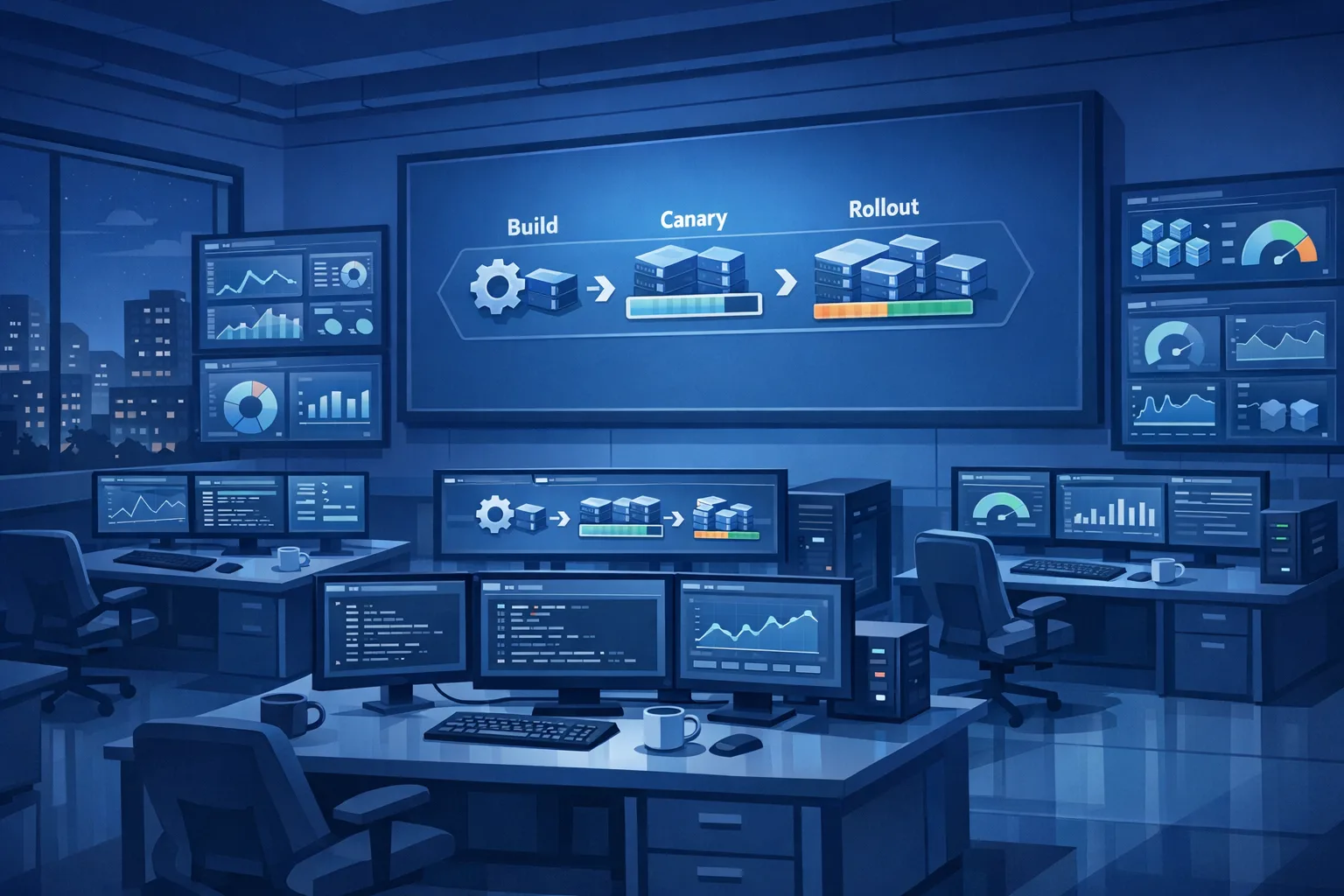
- Roll safely. Use a blue‑green or canary rollout. Watch error rates, latency percentiles, and process restarts. Keep the previous build ready for instant rollback, but avoid drifting back past the patched version except for emergencies.
- Prove the change. Capture
node -vfrom the running container or function logs, store image digests, and save SBOM diffs showing the Node base change. Attach these to the change ticket. - Harden while you’re here. Lock production images by digest, rotate long‑lived tokens used during builds, and ensure outbound egress from CI is restricted to registries and artifact stores.
Containers: upgrade without breaking production
Most teams get bit by subtle image pinning. If you reference node:24, you’ll pick up patched builds on rebuild; if you pinned node:24.×.×@sha256:abc…, you must bump the digest. Do both: tag for human clarity, digest for immutability. After rebuilding, verify inside the container with node -v and log it during startup so operations can grep it later.
For multi‑stage builds, remember your builder stage might run a different Node than your runtime stage. Patch both, because supply‑chain attacks often target the build environment. If you publish SBOMs, regenerate them and confirm the base OS and Node components show the new versions.
Serverless and edge: what actually changes
On major serverless platforms, you select a Node major and the platform rolls patch updates. For example, managed environments commonly offer 24.x (default) plus 22.x and 20.x, and patch under the hood after a redeploy. That’s great—but only if you redeploy and verify. Put console.log(process.version) in a trivially invoked function (health endpoint) and snapshot the value as evidence.
On AWS Lambda, Node 22 is fully supported across regions. If you’re still on Node 18, you’re outside community support and increasingly outside vendor support. Upgrade functions to 20.x or 22.x, or switch to container images and control the exact base. For Vercel Functions, set the project Node version to 24.x or 22.x and redeploy; the platform will auto‑roll patches. For Cloudflare Workers, enable Node compatibility with the appropriate flag and update your compatibility date so the latest Node APIs and fixes take effect in your worker runtime.
Do I need to rebuild native add‑ons after a Node patch?
Often, yes. Anything that ships a prebuilt binary or compiles with node‑gyp can require a refresh even on patch bumps. Typical candidates: image processing, cryptography, database drivers, and PDF/font libraries. If your CI uses caching aggressively, you can trick yourself into running old artifacts on a new runtime. Force a clean build, then verify at startup that required native modules load without falling back to slower pure‑JS shims. If you use N‑API modules with prebuilds, confirm the prebuilds exist for your exact Node ABI; otherwise compile from source.
People also ask: How do I prove we patched?
Security reviewers want three things: the running version, immutable artifact IDs, and test evidence.
- Running version: log
process.versionat boot and export it on/healthz. Save a runtime screenshot or log snippet to the ticket. - Artifact identity: store the image digest and SBOM for the deployed container. For functions, attach the deployment ID and the runtime version from platform logs.
- Test evidence: keep a short smoke suite that exercises crypto handshake, JSON parsing, file streams, and SSR/RSC endpoints. Link results in the change record.
What if we’re stuck on Node 18?
Upstream Node 18 is end‑of‑life. Some vendors offer extended backports, but that’s an operational exception, not a long‑term plan. If you must hold temporarily, isolate the service behind stricter network controls, enable a WAF with targeted rules, minimize exposed endpoints, and schedule the migration to 20.x or 22.x immediately. Also, audit transitive dependencies—older projects pinned to Node 18 tend to carry stale npm trees with known CVEs.
Zooming out: app frameworks and the patch pile‑up
Many teams are patching Node and frameworks in the same sprint. Recent fixes in the React Server Components protocol, plus downstream Next.js security updates, created back‑to‑back releases across app and runtime layers. If your app uses the App Router with RSC, make sure you’re on the current patched Next.js minor for your line and that your lockfile resolves to the latest React patches as well.
If you missed the RCE wave and need a triage plan, we published a pragmatic checklist here: patch, prove, and monitor this week. The short version: upgrade framework and React, rotate secrets if you were exposed during the window, and instrument the app to catch any lingering exploit traffic. Then finish today’s Node runtime patch and close the loop.
Practical checks before you flip traffic
A few quick tests save hours later:
- TLS and crypto paths: hit endpoints that terminate TLS or sign/verify tokens. Confirm no handshake regressions or JWT verification surprises.
- HTTP parsing: send intentionally weird headers and chunked bodies to ensure your proxies and Node agree. Watch for 400s turning into 502s due to upstream changes.
- Streams and file I/O: upload and download multi‑MB payloads; watch memory. Subtle backpressure issues often surface after runtime bumps.
- SSR and RSC routes: run a render storm with typical and worst‑case components to catch edge‑case serialization bugs.
Policy and platform timing you should know
Cloud and edge platforms usually roll Node patch versions into their managed runtimes within hours to days. That’s convenient, but it can mask drift: one region on new bits, another still rolling. Treat a redeploy as mandatory even on managed platforms so you control timing and can verify the running version. Also note that several vendors have formally deprecated Node 18 this year; if you still have functions or build steps on 18.x, you’re on borrowed time.
Field notes: where teams trip
Three patterns keep showing up in incident reviews:
- Only the app image was bumped. The CI builder stayed on an unpatched Node, so postinstall hooks pulled a compromised tool and smuggled credentials out. Treat CI as prod.
- Lambda layers lagged. Teams updated the function runtime to 22.x but forgot the custom layer that bundled a different Node for image processing. Rebuild layers too.
- Native add‑on ABI mismatch. A prebuilt binary compiled against an older Node crashed only under specific traffic shapes. The fix was a clean rebuild and a better cache strategy.
FAQ: quick answers for busy maintainers
Do I have to restart everything?
Yes, to pick up a new runtime you must restart processes, containers, or functions. Rolling restarts with health checks are the safest path. For serverless, a redeploy forces new cold starts on the patched runtime.
Will this change my performance?
Usually not in a noticeable way for patch bumps, though you may see small improvements or differences in crypto and HTTP paths. Measure CPU and latency percentiles before and after to confirm.
How do I confirm our containers actually run the patched Node?
Expose GET /healthz that returns the Node version. In Kubernetes, run kubectl exec into a pod and node -v. Capture the result and the container digest in your change ticket.
Do Pages Router apps in Next.js need the same urgency?
They weren’t directly affected by recent RSC issues, but they still benefit from runtime patches. Keep framework and runtime aligned so future updates are painless.
Verification checklist you can paste into a ticket
- SBOM regenerated; container digest recorded; dependency diff attached.
- Runtime version logged at startup and exposed on health endpoint.
- Crypto/JWT, HTTP parsing, streams, and SSR/RSC smoke tests passed.
- Blue‑green or canary rollout results captured (errors, p95, p99).
- CI/build images patched; secrets rotated for builders and deploy keys.
- WAF and egress controls confirmed in place for build and prod networks.
What to do next (developers)
- Patch your service to the latest Node patch in its major line; rebuild and redeploy.
- Force fresh native builds; don’t trust caches. Verify no optional fallbacks are in play.
- Capture proofs: runtime version, image digest, SBOM diff, and passing smoke tests.
- Review framework patches—especially App Router/RSC—and update lockfiles.
What to do next (engineering leaders)
- Run the 90‑minute playbook on Internet‑exposed services first; schedule the rest within 48 hours.
- Assign a small tiger team to patch CI builders and artifact pipelines the same day.
- Make version evidence a policy: no change ticket closes without runtime version and digest.
- Plan the Node 18 exit if any system remains; set a hard date and track it like a product milestone.
Need help shipping this today?
If you want a structured assist—triage, patch, proofs, and a clean rollback plan—our team does this every week for product companies and platforms. Start with our quick guide, Node.js Security Releases Dec 18: Your Patch Runbook. If you’re juggling framework fixes too, see our Next.js patch and proof plan and our hands‑on memo on RSC fallout. When you’re ready to move fast with guardrails, check our engineering services or reach out via contacts.
Why this approach works
Security fixes in runtimes land on a clock you don’t control. The only reliable response is a repeatable playbook that touches every place Node runs—apps, builders, and functions—then leaves a paper trail. When you do that, you ship the patch, your auditors have evidence, and your customers stay online. Patch windows stop being firefights and become routine maintenance.
If you only have time for one step today, pick your most exposed service and run this playbook to completion. Then rinse and repeat. You’ll be surprised how quickly a sprawling Node estate starts behaving like a well‑oiled platform again.



Comments
Be the first to comment.