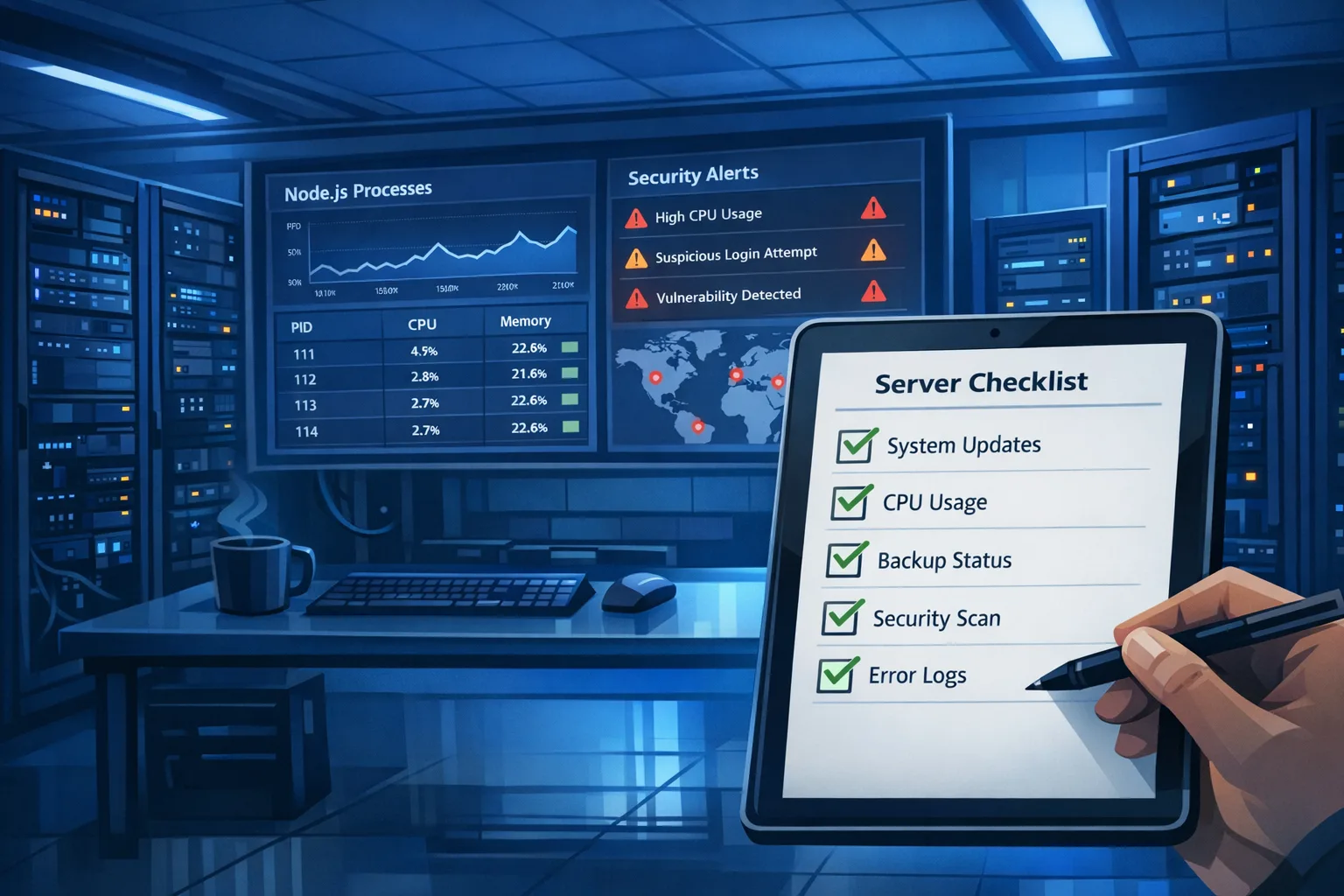
Node.js Jan 2026 Security Release: What to Fix Now
The Node.js January 2026 security release landed on January 13 with updates across all active lines: 20.20.0, 22.22.0, 24.13.0, and 25.3.0. If you’re scanning for the punchline: apply patches and test today. The primary keyword here—Node.js January 2026 security release—matters because it bundles fixes for memory safety, HTTP/2 crash handling, and permission model bypasses that can bite real production apps.

What changed on January 13, 2026 (and why you should care)
Eight issues were addressed across supported release lines: three high, four medium, and one low. Two dependency bumps shipped alongside (c‑ares 1.34.6; undici 6.23.0/7.18.0). The highest-impact items in day-to-day services:
• CVE‑2025‑55131: under specific timeout-based race conditions, buffers created via Buffer.alloc() or TypedArray could expose uninitialized memory, potentially leaking in‑process secrets. If you run sandboxed code with vm timeouts or do heavy buffer churn under load, this is not theoretical.
• CVE‑2025‑59465: malformed HTTP/2 HEADERS frames could crash a process via an unhandled TLSSocket error. Public-facing HTTP/2 servers without explicit error handlers were most at risk.
• CVE‑2025‑55130: the permission model allowed symlink tricks to escape --allow-fs-read/--allow-fs-write boundaries. If you rely on the permission model for isolation in CI, multi-tenant, or plugin scenarios, patch and retest policy assumptions.
• CVE‑2026‑21636: on 25.x, Unix domain sockets could bypass network restrictions when permissions were enabled, letting code connect locally even without --allow-net. If you experiment with the permission model for least privilege, you want this fix.
The 90‑minute triage: decide upgrade scope fast
Here’s how I coach teams to move from alarm to action without derailing a sprint.
1) Inventory by runtime
List every service and job by Node.js line (20.x, 22.x, 24.x, 25.x). Note whether it exposes HTTP/2, uses vm with timeouts, uses AsyncLocalStorage/async_hooks, or depends on the permission model. This tells you which CVEs actually intersect your topology.
2) Map CVE → blast radius
• Public HTTP/2 endpoints? Treat CVE‑2025‑59465 as a production‑stability risk.
• Sandbox or plugin execution? CVE‑2025‑55131 plus permission model fixes are priority.
• Observability that uses async_hooks or ALS? Pull in the crash-path fix for async_hooks to avoid uncatchable exits during edge cases.
3) Choose the upgrade window
If you’re already on 24.x or 25.x, upgrade inside 24 hours. For 20.x/22.x on critical paths, give product owners a direct business justification: reduced crash radius and policy isolation. Then book the maintenance window.
“Will this break my app?” The honest risk profile
Security releases can still affect behavior around errors and permissions. Expect differences in three areas:
• HTTP/2 error handling: there’s now a default handler to avoid process‑level crashes. If you previously depended on a crash to trip your supervisor, you’ll want explicit alerts tied to connection‑level errors so silent resilience doesn’t mask underlying traffic anomalies.
• Permission model hardening: symlink and futimes() behavior is locked down. Scripts that mutated timestamps or followed crafty symlinks will now fail under --permission unless granted explicit rights. That’s the point—update your grant lists.
• Buffer initialization: some tight loops that relied (intentionally or accidentally) on uninitialized contents being zero may now show different timings or memory patterns. It’s a good change; just rebaseline performance tests.
How to test the Node.js January 2026 security release like a pro
These checks catch the regressions I’ve actually seen in production migrations.
HTTP/2 resilience checks
• Stand up a canary pod running the patched runtime. Drive synthetic HTTP/2 traffic including oversized header frames and aborted TLS handshakes. Verify your service logs connection‑level errors without terminating the process.
• Confirm that your load balancer health probes continue to pass during malformed traffic tests. I’ve seen strict probes mark instances unhealthy when error bursts spike CPU briefly.
Permission model policy tests
• With --permission enabled, attempt read/write of a file outside your allowed dir via relative symlinks. Expect failure now; update tests to assert denial.
• Try fs.futimes() in a read‑only path—calls should be blocked when the permission model is on. If a third‑party lib uses futimes for cache tags, you’ll need an allowlist or a different strategy.
Memory and buffer safety
• Enable a workload that creates buffers under load while the vm module runs with timeouts. Assert zero‑filled buffers on allocation and absence of unexplained sensitive string fragments in logs or responses.
Observability under stress
• If you use AsyncLocalStorage or instrument via async_hooks, run recursive or deeply nested async tasks to ensure exceptions route through your normal error handlers and the process survives as expected.
People also ask: does this affect Node 20.x and 22.x?
Yes. Patches shipped for 20.20.0 and 22.22.0 on January 13, 2026. The vulnerabilities aren’t confined to “latest.” If you’re within those LTS lines, you’re in scope.
People also ask: is the permission model ready for production?
It’s improving, and this release closes real gaps (symlink traversal, timestamp quirks; plus a UDS bypass on 25.x). But you still need to treat the permission model as a defense‑in‑depth layer with explicit tests and tight grants. Don’t assume a sandbox; verify it with CI policies and canary checks.
Upgrade path and versions to target
Patch to these versions (released January 13, 2026): 20.20.0, 22.22.0, 24.13.0, 25.3.0. If your fleet uses multiple lines, upgrade each service to the corresponding patched build. Don’t cherry‑pick: inconsistent fleets make incident response messy.
The Zero‑Drama Patch Playbook
Use this framework to move from “we should patch” to “we are done” in 48 hours without heroics.
1) Prep (30–45 minutes)
• Branch a release for each service pinned to the patched runtime. Update Dockerfiles or runtime shims. Note your undici and c‑ares transitive updates in the changelog.
• Add explicit TLSSocket and HTTP/2 error handlers if missing. You want structured logs for connection‑level faults.
2) CI checks (30 minutes)
• Quick suite: unit tests, permission model deny/allow tests, and a smoke test that writes temp files, follows a symlink, and attempts a futimes() in a read‑only directory. Expect a permission error on the latter two with --permission enabled.
• Security lint: run npm audit and your SCA to pick up dependent bumps; confirm no stale overrides keep old undici versions.
3) Canary (1–2 hours)
• Deploy one instance per service behind the load balancer. Replay recorded traffic plus malformed HTTP/2 frames. Watch memory, CPU, and error rates.
4) Rollout (same day)
• Roll forward region by region (or AZ by AZ). Keep a one‑click rollback to the pre‑patch image and retain error handlers—you’ll want them either way.
Security engineering notes from the field
• Don’t skip explicit error handling just because Node now adds a safer default. I’ve seen silent recovery hide slow‑burn attacks. Surface and alert on error patterns; crash only as a last resort.
• The permission model is only as good as your grants. Generate grants from code, not by hand. A small script that enumerates filesystem and network touch points during tests will save you from drift.
• Keep your runtime consistent across workers, cron jobs, and edge functions. Mixed versions complicate TLS and header behavior under incident pressure.
Related resources from our team
If you need a step‑by‑step checklist with commands and CI config, we published a companion playbook in Ship Fast: January 2026 Node.js Security Release Playbook. For a concise incident‑response brief, see Node.js January 2026 Security Release: Patch Fast and the testing angle in Patch Now, Test Smarter. If you’d rather have us own the rollout, our engineering services cover emergency patching and chaos testing.
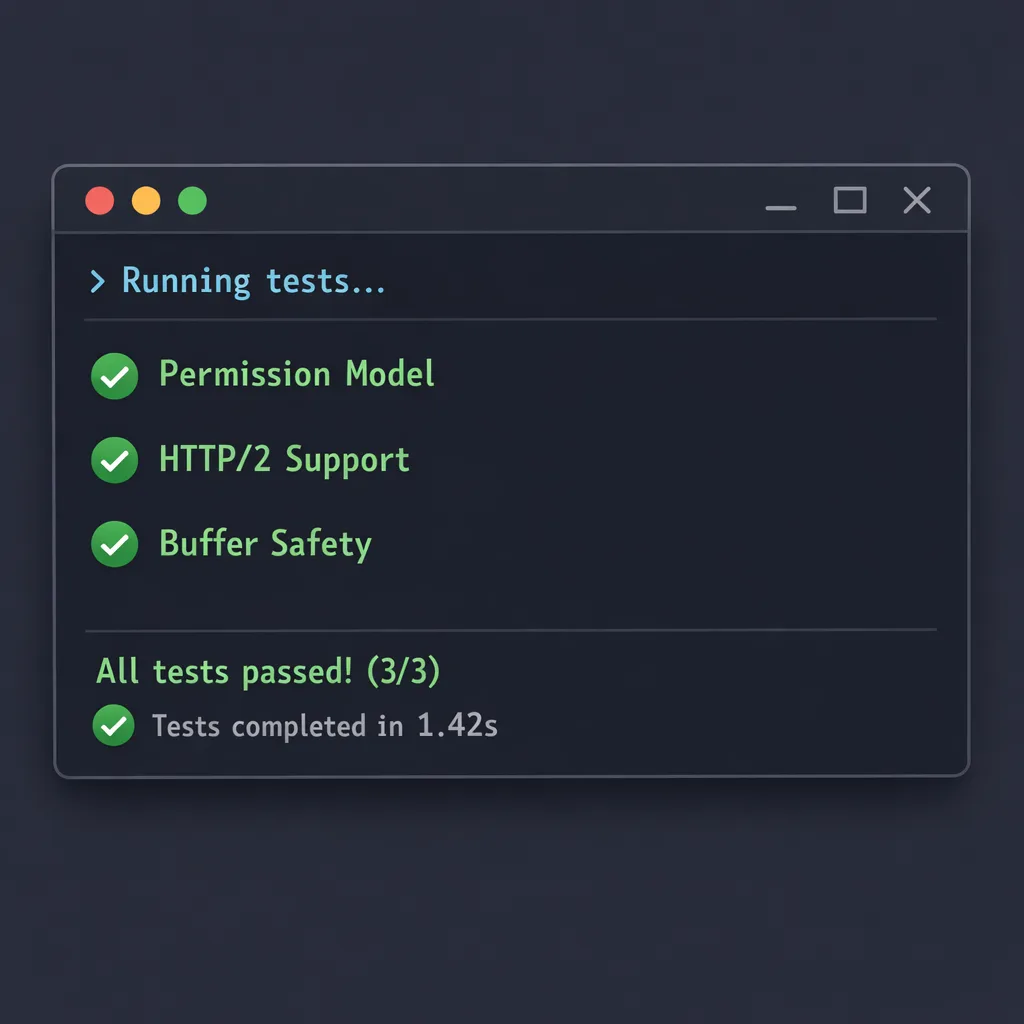
Quick reference: test matrix you can copy
• HTTP/2 malformed headers: send oversized HPACK data to a test endpoint; assert process stays up and logs an error event.
• TLS callbacks: if you use PSK or ALPN callbacks, throw a synthetic error during handshake in staging and verify it routes through your error handlers without crashing or leaking file descriptors.
• Permission model: with --permission, try relative symlink traversal outside the allowed path—expect denial; attempt fs.futimes() on read‑only—expect denial; attempt UDS connect on 25.x without --allow-net—expect denial.
• Buffer initialization: instrument buffer allocations under a vm timeout workload; verify zero‑filled contents and no sensitive remnants.
• Observability: run deep async recursion with AsyncLocalStorage in staging; ensure exceptions are catchable and your app continues serving traffic.
FAQ: practical questions teams are asking
Do I need to change application code?
Maybe. Add explicit error handlers on secure connections if you don’t have them. If you use the permission model, revisit grants and remove any tests or scripts that relied on permissive symlink behavior or timestamp tweaks.
We don’t use HTTP/2. Can we defer?
Even without HTTP/2, the buffer and permission model fixes warrant patching. You’ll also pick up dependency updates. Deferring means carrying risk and doing the same work later with more drift.
Will these patches slow my services?
Not meaningfully in most workloads. The buffer change enforces safer initialization; in practice, the impact is negligible compared to the stability you gain. Measure, don’t guess.
What to do next (developers and owners)
• Today: bump Node.js to 20.20.0, 22.22.0, 24.13.0, or 25.3.0 in your Dockerfiles and runtime managers. Add connection‑level error handlers if missing.
• Tomorrow: run the test matrix above in CI on every service. Capture grants for the permission model from tests, not from memory.
• This week: cut a region‑by‑region rollout with canaries, alerting, and a rollback plan. Document exactly which CVEs your services mitigated.
• This quarter: standardize runtime upgrades as a monthly habit. Fewer “big‑bang” patches, fewer surprises.
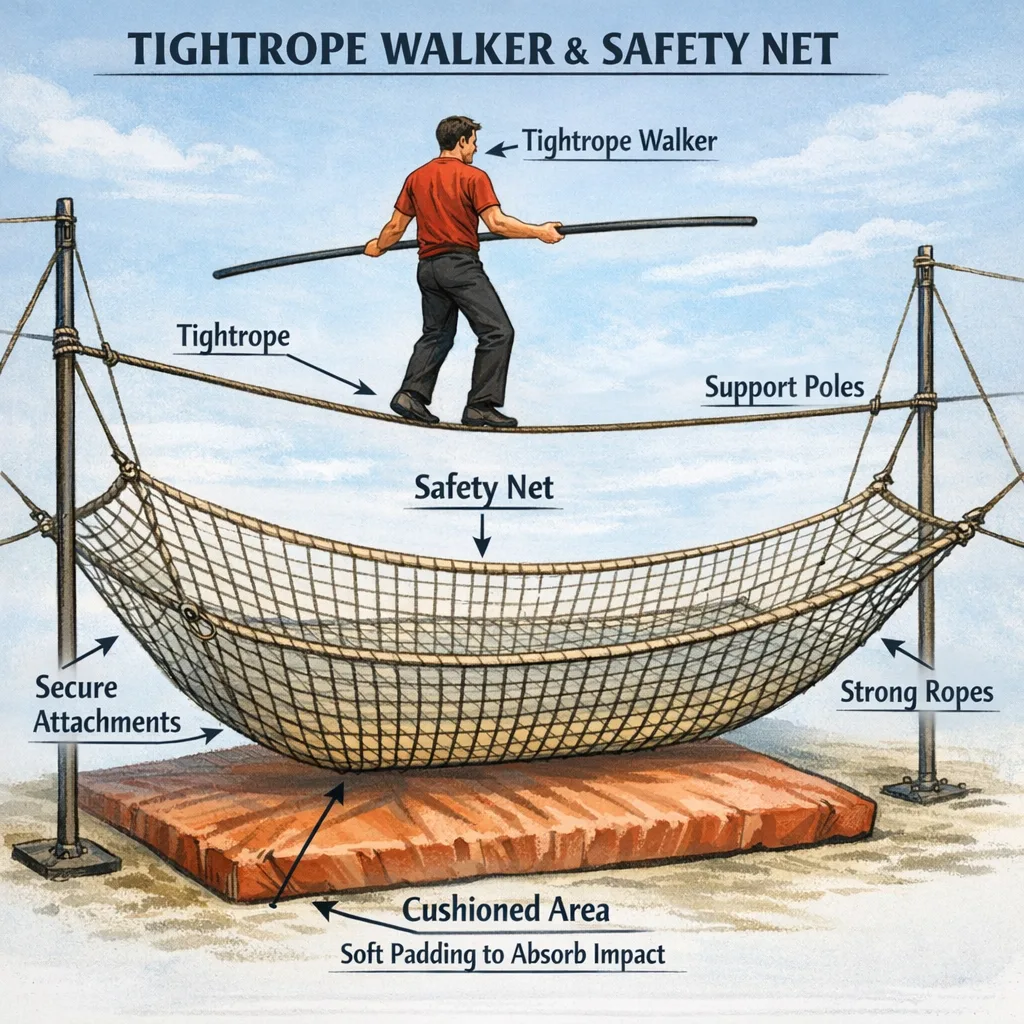
Zooming out: why these changes are healthy
We all want fewer emergency Tuesdays. But the fixes here make the runtime more predictable: untrusted HTTP/2 frames no longer topple your process, buffers behave deterministically, and the permission model acts like a real policy rather than a suggestion. That’s forward progress.
When a new security drop hits, your goal is simple: reduce the blast radius, validate the new guardrails, and keep shipping. Do that a few times and your team’s “security release muscle memory” becomes a competitive advantage.
If you want a partner to get this done without drama, reach out via our contact page, or browse how we run zero‑downtime upgrades in our portfolio. Patch fast, test smart, and carry on.




Comments
Be the first to comment.