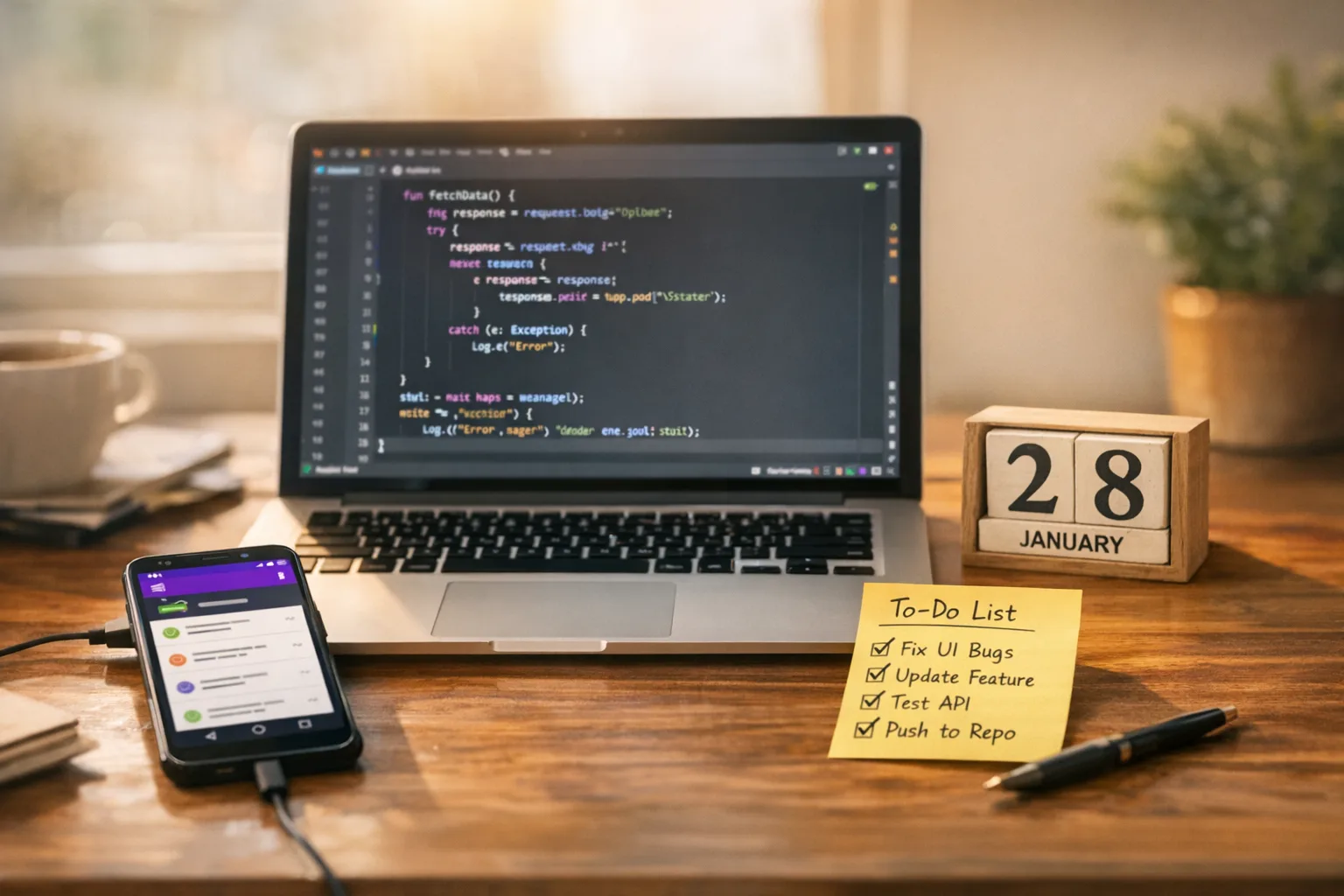
Google Play External Links: Ship by Jan 28, 2026
Google Play external links are now a reality in the United States—alongside expanded alternative billing programs. That’s good news for pricing flexibility, but there’s a catch: you must enroll in the new programs and update your app flows by January 28, 2026. If you monetize on Android, the next three weeks are about triage: pick the right path, integrate the updated APIs, and model the new fees so your margins don’t evaporate.
I’ve led several Android teams through policy pivots like this. The pattern is consistent: teams that treat it as a compliance checkbox pay later with failed reviews, broken restores, and confused subscribers. Teams that do a light but rigorous implementation—clear UX, correct reporting, airtight attribution—sail through review and keep their funnel intact. Here’s how to be in the second group.

What changed, exactly—and why now?
On October 29, 2025, Google began complying in the US with a court injunction that forces it to allow developers to communicate pricing outside the Play Store, use billing systems other than Google Play Billing (GPB), and link to external transactions and even external app downloads. In December, Google published the US policy update and launched two programs you must use if you want to steer users outside the store: the Alternative Billing programs and the External Content Links program, with a hard compliance date of January 28, 2026.
Those programs formalize the capabilities and set the rules of the road—disclosure screens, API hooks, reporting timelines, and service fees. Said simply: you can send people off‑Play, but Google expects attribution, certain UX affordances, and its service fees in defined scenarios.
The timing matters. If your Android roadmap assumed “we’ll get to this in Q2,” that just changed. By late January, Google expects enrolled apps to use the new APIs for linking and transaction reporting. If you’re not enrolled (or you implement the wrong flow), your update can be rejected.
How the new programs work
There are two distinct tracks, each with its own requirements. Decide which you actually need before you write code.
1) External Content Links (including external downloads)
This program lets you place in‑app links that take users outside of Google Play to either complete a purchase (for digital goods and services) or to download an app that’s not managed by Play (for example, your own store or a partner store). To use it, you must enroll the Play app, integrate the External Offers APIs to generate the mandatory information screen, declare and register your linked destination(s), and report resulting transactions within 24 hours.
Fees come in two parts: an initial acquisition fee on qualifying transactions and an ongoing service fee while your Play‑listed app still benefits from Play services. For external downloads, Google also charges a fixed per‑install fee based on category and country. In public documentation for other regions, those fixed fees are listed by country group; for the US, Google has described the same structure and, according to reporting, expects fixed per‑install charges for US users when an install follows a link from your Play app.
2) Alternative Billing (within the app)
Alternative Billing lets you take payments inside your Play‑distributed app using your own processor. You must integrate the updated billing APIs and show Google’s required information dialog before every off‑Play checkout. You still owe Google a service fee on qualifying transactions, with a reduction versus using GPB directly. The latest developer docs specify Billing Library requirements and the new methods you’ll need to call (for example, enabling alternative billing and presenting the information dialog).
Google Play external links: policy and fees at a glance
Here’s the practical summary that matters to product managers and finance leads:
• Enrollment deadline: January 28, 2026. If you plan to link out (to payments or downloads) or to use alternative billing, enroll and ship by that date.
• Initial acquisition fee: 3% on qualifying off‑Play transactions for users acquired via your Play app in the first six months after that user’s Play install; 0% after six months.
• Ongoing service fee: 10% for off‑Play transactions while your Play listing still benefits from Play services (parental controls, security scanning, etc.). Some programs include an optional higher tier that adds service capabilities in exchange for a higher rate on transactions or subscriptions.
• External downloads: a fixed per‑install fee applies when a user installs an app within a defined window after clicking your in‑app link. Google publishes fixed rates by country and by category in Europe; for the US, Google has indicated the same structure and, based on reporting, the rates under consideration are around $2.85 per app install and $3.65 per game install when the install follows a Play‑originating link within a short window. Treat those figures as directional until Google finalizes US rate cards.
What does this mean in practice? If you’re linking to an external web checkout for a $50 non‑subscription item during the first six months after a user’s Play install, you should model 3% initial acquisition + 10% ongoing services = 13% to Google on that off‑Play transaction. For auto‑renewing subscriptions billed off‑Play, model the ongoing services rate at 10% per renewal. If you also link users to install a separate external app, expect a fixed per‑install charge; run sensitivity analyses on 10k, 50k, and 200k monthly installs so you know your breakeven.
The 4D sprint to compliance
Here’s a hands‑on plan you can run in a week, then iterate.
Discover
• Inventory all monetization surfaces: one‑time IAPs, subscriptions, promo pages, upsells, restore flows, and email deep links that land in‑app.
• Decide if you truly need external downloads. Many teams only need off‑Play checkout; external app installs add review overhead and per‑install costs.
• Pull six months of cohort data: how many purchases happen within 180 days of a Play install? That determines how much of your revenue hits the 3% initial acquisition fee.
Decide
• Choose your path per SKU: stay on GPB, implement Alternative Billing, add External Content Links, or a hybrid. For subscriptions, weigh churn risk from a new flow against fee savings.
• Price strategy: if you plan to offer a lower price off‑Play, set guardrails. For example, cap deltas at 5–8% to protect perceived fairness and avoid whiplash across channels.
Deploy
Engineering checklist:
• Update to Play Billing Library 6.1+ where required. Add the new initialization flags for alternative billing-only flows and invoke the mandated information dialog before each off‑Play checkout.
• Integrate the External Offers APIs to generate Google’s information screen for link‑out, and to report transactions within 24 hours.
• If linking to external downloads, register every external app and APK version in Play Console and declare all landing URLs. Budget up to a week for review; don’t cut this close to release day.
• Instrument attribution: you need to know when an external purchase or install resulted from a Play‑originating link within the qualifying window. Use server‑side receipts and link tokens, not brittle client‑side params.
Document
• Capture your compliance decisions in a short ADR (Architecture Decision Record) with fee assumptions, attribution logic, and rollback plan.
• Update your user‑facing help and support macros. The information dialog makes a promise; make sure your support flow can keep it.
Which path makes sense for you?
There isn’t one answer. Use quick math and the realities of your funnel.
Scenario A: content or productivity subscription
If your median subscriber tenure is 8–12 months, and most first payments occur within 30 days of install, Alternative Billing within the app can reduce processor fees versus GPB if your own rates are favorable. Model year‑one revenue at list price minus payment processor cost minus Google’s ongoing services (10%). Factor in the 3% initial acquisition fee for transactions within six months of the Play install. If you also sell gift codes or upgrades on the web, consider External Content Links for cross‑sell—but keep restore logic simple.
Scenario B: utility app with one‑time unlock
External web checkout linked from your Play app often wins on economics when your payment provider costs are low. The main gotcha is UX friction from the required disclosure dialog and the jump to browser. Keep the path ruthlessly short: link → info screen → checkout with wallet autofill. Track the share of conversions that still happen within the six‑month window; that governs how much of your volume incurs the 3% acquisition fee.
Scenario C: game with external downloads
Games see the toughest math if the US fixed per‑install fees land near the publicly discussed $3.65. At 50,000 monthly installs driven by link‑outs, that’s six figures of service fees before you process a single payment. Unless you need an external executable (e.g., a restricted build or regional catalog), reconsider whether external downloads are worth it. A registered alternative store may make sense when it ships broadly, but for January your best move is often Alternative Billing or web checkout without moving installs off‑Play.
People also ask
Do I have to update every SKU to Alternative Billing?
No. You can mix models. Many teams keep small, low‑margin items on GPB and move higher ARPPU items or bundles to Alternative Billing. The rule is consistency per SKU and clean UX—don’t present users with three different ways to pay for the same thing.
Will Google reject my update if I link to a web store without the new APIs?
Yes, if you’re linking users out from a Play‑distributed app, you must use the program’s APIs to present the required information screen and report qualifying transactions. Don’t ship a simple WebView link and hope for the best; you’ll bounce in review.
Are the new service fees retroactive?
No. Fees apply when the qualifying action (purchase or external install) happens after you enroll and link out under the program. That said, the initial acquisition fee depends on when the user originally installed your Play app—so your past acquisition date matters for the next six months of that user’s lifecycle.
What if the proposed settlement changes the numbers?
Model your 2026 plan with ranges. For external downloads, run sensitivities using the rumored US fixed per‑install fees and a lower case. For Alternative Billing, assume a modest discount to GPB that keeps Google’s service fee in the low‑to‑mid teens on off‑Play payments. You can revisit in Q2 after the court calendar moves.
UX that passes review and converts
• Don’t bury the disclosure. The program requires a clear information screen before off‑Play checkout. Treat it as a branded reassurance: call out refund policy, support email, and payment logos to rebuild trust immediately after the legal copy.
• Keep price parity (mostly). If you present off‑Play discounts, keep the delta small and stable; big swings smell like dark patterns and invite complaints.
• Make restore bulletproof. If users buy off‑Play, your app must still recognize entitlements instantly. Cache entitlements locally, verify server‑side, and handle offline gracefully.
Engineering pitfalls we’ve seen
• Forgetting to report transactions within 24 hours. Automate this with retries and alerting; manual backfills are error‑prone.
• Not registering external apps or APKs before linking to downloads. Google reviews these, and it can take days.
• Mishandling subscription proration. If you migrate a subscriber off‑Play mid‑cycle, align renewal dates and benefits to avoid chargeback risk.
• Skipping device‑level edge cases. Clear caches, re‑installs, and multi‑account devices will surface bugs fast; bake them into QA.
Finance: quick calculator for your CFO
Build a simple model with three inputs per SKU: (1) share of transactions within 180 days of Play install, (2) share of revenue that remains on GPB vs Alternative Billing vs external web checkout, (3) if you use external downloads, projected monthly installs driven by Play links. Then compute:
• Off‑Play web checkout: revenue − processor cost − (3% initial acquisition for qualifying cohorts) − 10% ongoing services.
• Alternative Billing: revenue − processor cost − program’s service fee for off‑Play transactions (typically similar to the ongoing services figure).
• External downloads: add the fixed per‑install cost. Use a range for US rates until Google publishes a final schedule; sanity‑check $2.85/apps and $3.65/games in your high case.
What to do next
1) Decide your program mix per SKU this week.
2) Enroll in the correct programs in Play Console and accept the terms.
3) Upgrade Billing Library and wire the Alternative Billing information dialog.
4) Integrate External Offers APIs for link‑outs and transaction reporting.
5) Register all external apps/APKs if you plan external downloads.
6) Ship a canary to 5–10% and verify attribution, restores, and refunds.
7) Update support and legal pages so they match the in‑app disclosures.
8) Run price experiments with small, stable off‑Play discounts.
9) Create a dashboard for fee spend (initial, ongoing, and per‑install).
10) Re‑forecast your Android P&L for Q1–Q2 with best/mid/worst cases.
Need a deeper plan, or hands‑on help wiring the new flows? Our team has already shipped these integrations for clients in subscription content, utilities, and games. See how we scope and deliver in our service breakdown, review our recent mobile case studies in the portfolio, and if you’re navigating broader store policy changes, this companion brief on Google Play’s new linking fees pairs well with our Apple roundup, what to ship by Q1 2026. When you’re ready, chat with us—we’ll turn this policy sprint into clean UX and predictable revenue.



Comments
Be the first to comment.