
App Store Policy Changes: Your Q1–Q2 2026 Ship List
App store policy changes are coming fast, and they’re not abstract. In December 2025 alone, Apple confirmed material shifts for Japan and Brazil, and Google Play posted a U.S. policy update with a clear compliance date. If you carry mobile P&L or release management, this is your two-quarter roadmap to ship what matters and protect revenue. We’ll translate the app store policy changes into concrete deadlines, a 60‑day rollout plan, and a pragmatic QA checklist you can adopt this week.

What changed in December 2025 (and why it matters)
Three moves matter for most teams:
First, Google Play’s U.S. policy update on December 9, 2025 set January 28, 2026 as the date to comply if you plan to use alternative billing or link out to external content and transactions in the United States. The window is short, and the rules are deterministic: get your disclosures, flows, and user experience in line by that date or drop the features for U.S. users.
Second, Apple announced iOS changes in Japan on December 17, 2025 to comply with the Mobile Software Competition Act (MSCA). For developers, the headline is new options for distribution via alternative marketplaces and for payment processing outside In‑App Purchase—paired with additional disclosure and security expectations. Japan is a revenue-dense market; don’t wait for the last‑minute documentation scramble to start your engineering design.
Third, on December 23, 2025, Apple reached a settlement with Brazil’s competition authority that compels support for third‑party app stores and alternative payment options, with a 105‑day implementation window. Counting from December 23, that lands around April 7, 2026. If your LATAM revenue plan assumes App Store‑only distribution or a single billing stack, it’s time to model multiple paths.
The big picture: your 2026 monetization surface just widened
Here’s the thing: every one of these changes expands your choice set and your operational overhead. You can add alternative billing, enable compliant external links, pilot an alternative marketplace in Japan or Brazil, and run price experiments outside platform rails—but you’ll need crisp rules on fees, disclosures, attribution, refunds, and support.
For growth, this is an opportunity to improve CAC/LTV by channel. For engineering and legal, it’s a requirements split across markets. For finance, it means forecasting multiple take rates instead of one. To avoid death by permutations, standardize your flows behind feature flags and market toggles.
Deadlines and decisions you can’t punt
Lock these dates into your release calendar now:
- January 28, 2026 (U.S., Google Play): If you link to external content or offer alternative billing, your app must meet the published program and policy requirements by this date.
- Early April 2026 (Brazil, iOS): The 105‑day implementation window from December 23, 2025 ends around April 7, 2026. Assume Apple’s documentation and review flows will harden ahead of that week.
- Japan (iOS, MSCA): Apple’s December 17, 2025 announcement confirms new distribution and payment options are coming. Expect staged rollouts and additional safeguard requirements; begin design and legal review now so you can enter pilot programs as they open.
If your team froze releases through mid‑January, treat the Jan 28 deadline like a hard checkpoint. You can ship a toggle‑off build to keep U.S. distribution live while you finalize compliant external link flows for a minor update the following week.
The 60‑day rollout plan (engineering + growth + legal)
Use this two‑sprint framework to ship safely without blowing up your roadmap.
Weeks 1–2: Triage market scope and fees
Decide exactly where and how you’ll participate, and document take rates so finance can model margin by channel:
- U.S. on Google Play: Will you link externally, enable alternative billing, or stay on Play Billing? Capture UX copy, disclosure placement, and eligibility (e.g., subscriptions only).
- Japan on iOS: Identify whether you’ll distribute via an alternative marketplace, keep App Store distribution, or run both. Flag child/teen protections and consent flows for additional design.
- Brazil on iOS: Plan for alternative store distribution and/or alternative billing capabilities. Build a cash‑flow view for each path so you can rationalize fees vs conversion.
Create a one‑pager per market with fee assumptions, refund responsibilities, and risk notes. Store it in your repo next to the feature flag definitions.
Weeks 3–4: Implement “compliance rails” behind feature flags
Build once, deploy many. Your goal is to wrap variances with predictable toggles:
- Link modules: A component that renders external content links with compliant labels, per‑market disclosures, and an intercept sheet. Log taps for auditing.
- Billing gateway: An abstraction layer that selects Google Play Billing, Apple IAP, or your alternative processor by market and product type.
- Consent and risk checks: Age gates, parental consent where required, and fallback behaviors. Make them testable independently using mocked region configurations.
Document your toggles in the README and capture sample screenshots for each pathway. Your App Review notes will be easier to write—and approve.
Weeks 5–6: QA, audit, and staged rollouts
Don’t let legal be the last stop. Put them in the driver’s seat for sign‑off alongside QA:
- UX copy review: Validate disclosures, confirmation modals, and support language. Keep a versioned text file so localization doesn’t drift.
- Receipts and refunds: Prove that external purchases get receipts and that refund requests are reachable in two taps from the purchase surface.
- Staged rollout plan: 5% → 25% → 100% with guardrails: error rate, chargeback spike, and session length thresholds that auto‑pause the rollout.
The RIBS framework: a simple way to keep complexity in check
When policy permutations explode, I use RIBS with clients:
- Regulation: Map the rule to exact UX copy, disclosures, and review notes. No vague “legal OK” status—write the literal strings you’ll ship.
- Integration: Encapsulate market differences behind a gateway (billing) and a renderer (links). One code path per concern.
- Billing: Model net revenue per scenario—platform fee, processor fee, tax, fraud reserve—and decide where to steer traffic.
- Support: Train support on refund sources, dispute flows, and parental consent questions. Publish a market‑specific help article before you flip the switch.
People also ask: quick answers for product and legal
Do alternative billing and external links eliminate platform fees?
No. Expect platform‑specific commissions or program fees to apply even when you don’t use a default in‑app purchase stack. Run the math per market and per product (subscription vs one‑time) before you commit. The right answer may be a hybrid: keep platform billing for introductory offers and trials, use external flows for annual renewals.
Can we run different prices off‑store?
Usually yes, but price parity and disclosure rules vary by program. If you advertise lower prices off‑store, bake that messaging into your intercept sheet so users aren’t surprised when they return to the app. Keep screenshots handy in your review notes to show the full flow.
How do we handle refunds when the transaction is off‑store?
Make refund entry points obvious and consistent. In‑app: two taps from the paywall. Web: a self‑serve portal link in the receipt. Train support on processor‑specific timelines and document them in your help center.
Do these rules affect kids’ and teens’ experiences?
Yes. Expect stronger guardrails around data use, consent, and messaging placement for younger users. Design age gates and parental flows as first‑class features—treat them as UX, not just compliance.
Engineering patterns that survive the next policy wave
Patterns beat point fixes. If you implement these well once, you’ll adapt faster when the next wave hits:
- Policy‑aware routing: A middleware that resolves market, age category, and product type before rendering paywalls or links.
- Composable disclosures: Treat disclosures as components with variables (market, processor, product). Test them like any other UI.
- Event schema for audits: Log intent, intercept, and completion for each payment or external link. Keep 180 days of logs for audit and appeals.
- Feature flags with SLIs: Flags that ship with default SLIs (error rates, cancellation spikes) and automatic rollbacks.
Revenue strategy: where to steer traffic in 2026
Don’t chase lowest fees blindly; chase highest LTV per friction. A few practical heuristics:
- Subscriptions: Platform billing remains strong for trials and upgrades. Alternative billing can win for annual renewals and B2B expansions where invoicing matters.
- One‑time unlocks: Test off‑store bundles and seasonal pricing tied to your web storefront. Measure chargebacks and support load, not just gross margin.
- Alt marketplaces (Japan/Brazil): Use them for partner co‑marketing, early access channels, and price testing. Keep support staffing proportional to the extra surface area.
Security and fraud: the catch nobody budgets for
More payment paths invite new abuse. Bake in a few guardrails from day one:
- Transaction attestations: Verify server‑to‑server purchase webhooks before granting entitlements. No client‑only unlocks.
- Rate limits on link flows: Intercept sheets and outbound link taps should be rate‑limited and monitored for automation attacks.
- Post‑purchase verification: Tie entitlements to receipt or processor transaction IDs, not user claims, and recheck periodically.
For a rapid hardening playbook geared to JavaScript and mobile teams, see our incident‑driven approach in this 72‑hour patch‑and‑prove plan.
How this intersects with your roadmap and review process
Expect review notes to matter more. Include:
- Annotated screenshots of external link intercepts, disclosures, and help center entries.
- Exact fee and processor names in your notes if the program requires them.
- Contact points for refunds and parental consent verification.
If you’re juggling Next.js or framework upgrades alongside policy work, plan both on a shared release train. We’ve documented reliable upgrade windows and security guardrails in our guide to upgrading to Next.js 16 and React 19 safely.
Case paths: three realistic configurations
Use these as starting blueprints; each can be shipped behind flags and toggled by market:
- U.S. Android “hybrid billing”: Platform billing for monthly plans; compliant external link flows for annual upgrades with a one‑tap receipt email and a refund link in settings.
- Japan iOS “dual channel”: Keep App Store distribution for mass market; use an alternative marketplace for beta features with a co‑marketing partner, plus external payment for enterprise SKUs.
- Brazil iOS “marketplace pilot”: Launch a curated distribution channel with regional pricing, local processor support, and an in‑app migration wizard that preserves entitlements when users reinstall from the alternative store.
Actionable checklist: don’t ship without this
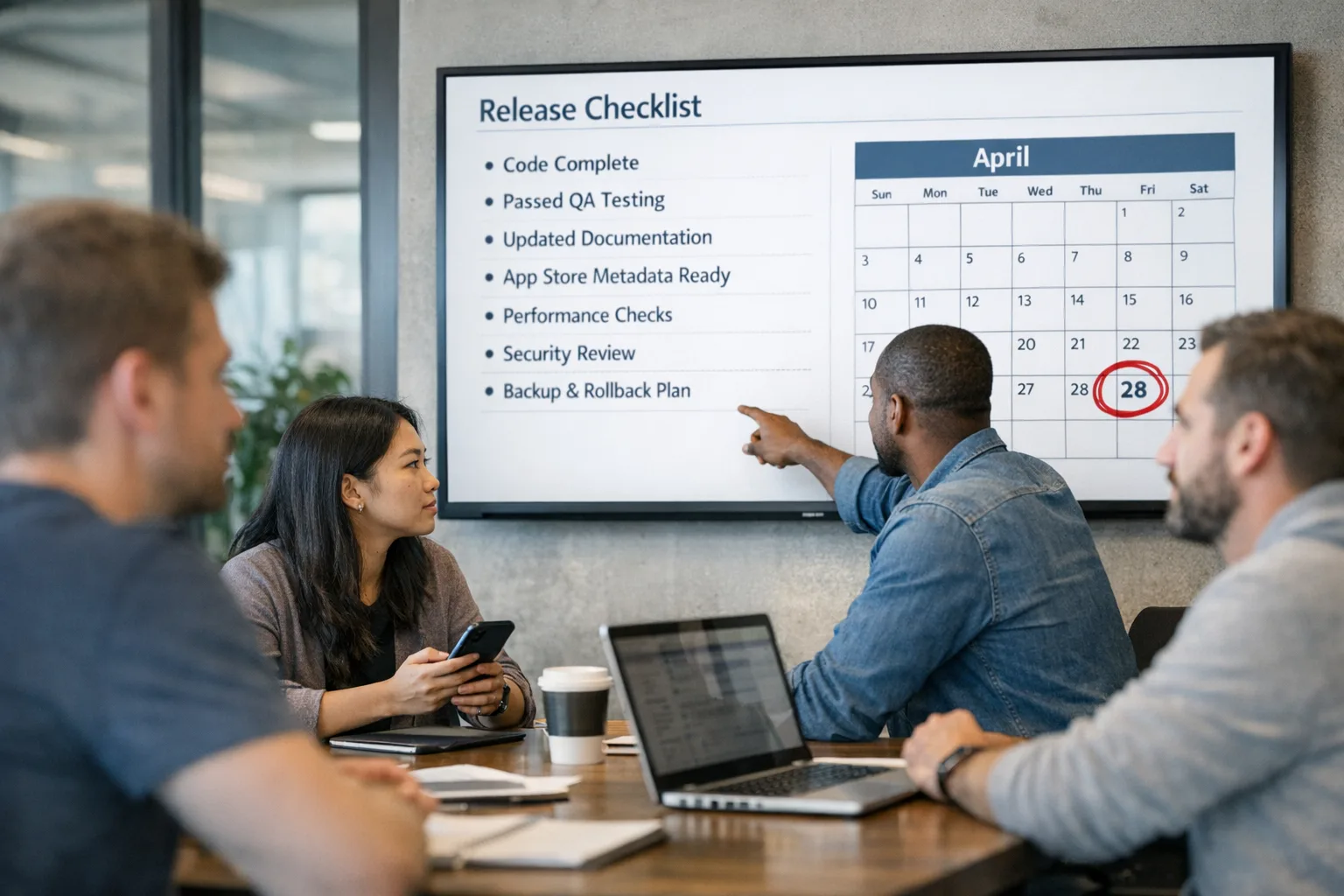
Print this, stick it on the wall, and check each box before release:
- Feature flags for links, billing, and marketplace distribution per market.
- Intercept sheet with clear disclosures, fees, and a support link.
- Server‑validated receipts and entitlement mapping.
- Refund and cancellation paths documented and live.
- Age/parental flows tested with real content and copy.
- Review notes with screenshots and a short risk statement.
For a deeper country‑specific plan, we’ve outlined a timeline in our Brazil 105‑day plan and a broader cross‑platform view in what to ship by Q1 2026. If Android linking and fees are your pain point, start with this practical Google Play linking fees guide.

What to do next (this week)
If you do nothing else, do this in the next five days:
- Decide which markets get alternative billing or external links in Q1 2026; document the fee math per product.
- Implement the link intercept and billing gateway components behind flags.
- Draft disclosures and help center pages; run a 24‑hour internal review with legal.
- Schedule a two‑stage rollout around January 28 with a fallback build that disables external links for U.S. users if needed.
Risks, limitations, and edge cases
Policy shifts don’t guarantee stable economics. Court‑driven changes can sunset or evolve, and program terms may tighten with new safeguards. Build for reversibility: one commit to disable external links in a market; one config to route all payments back to platform billing; one release note template to explain changes without tanking reviews.
Also consider entitlements for users who switch channels. If a subscriber upgrades via an external flow, make sure your entitlement system merges rather than overwrites the platform purchase record. Keep your fraud tooling tuned; spikes in refund abuse usually follow the first week of an alternative billing launch.
Why move now
Waiting sounds safe but costs more. Teams that ship in January earn two advantages: they learn the new review process while the queues are shorter, and they collect net‑revenue data early enough to reallocate spend before Q2. That’s the difference between a controlled pilot and a Q1 fire drill.
If you want help designing the flags, flows, and review kits, talk to us about an accelerated engagement via our services page or reach out on contacts. We’ve run this play in multiple markets, and the pattern holds: fewer permutations in code, more clarity in docs, faster approvals.

Bottom line
You don’t need a 40‑page legal memo to adapt. You need a deadline‑anchored plan that collapses complexity into a few feature flags, clear disclosures, and a measured rollout. Treat December’s app store policy changes as a forcing function to tighten your billing architecture and your review playbook. Do that, and you’ll capture upside from the new choices without turning your Q1 into whack‑a‑mole.




Comments
Be the first to comment.