
Python Free Threading in 3.15: The Real-World Guide
Python free threading just took a major step from experiment to something you can plan around. With Python 3.15 final scheduled for October 1, 2026 and the second release candidate landing this week, teams finally have a stable ABI for free‑threaded builds (abi3t), clearer wheel tags, and concrete guidance for extension authors. If you ship Django, FastAPI, Celery, NumPy/SciPy stacks, or inference services, this is the moment to decide how and when you’ll adopt it.

What actually shipped this week—and why it matters
Here’s the headline: CPython 3.15 reaches its final release candidate with support for a free‑threaded build and a companion stable ABI called abi3t. That stable ABI is the missing piece for ecosystem adoption. It lets C extensions publish one set of wheels that work across minor versions of Python and across GIL and free‑threaded variants, when they follow the rules.
In practice, that means fewer “works on 3.15t but not on 3.16t” surprises, simpler CI, and a credible path for widely used packages to add support without maintaining a matrix explosion of wheels. It also gives operations teams confidence that upgrading won’t rebreak native dependencies every quarter.
Python free threading 101 (in one minute)
Traditional CPython protects internal state with the Global Interpreter Lock (GIL), so only one thread can run Python bytecode at a time. A free‑threaded build replaces that approach with fine‑grained synchronization and per‑object strategies so threads can execute in parallel across CPU cores. You still need thread‑safe code, of course. What changes is the ceiling: CPU‑bound Python code can now scale beyond one core in a single process, and C extensions no longer need to dance around the GIL to do real work in parallel.
Will everything get faster? No. Some micro‑ops cost more due to added synchronization. But for the right workloads—ETL, image transforms, model post‑processing, search index updates, or high‑throughput request handling with CPU filters—the gains can be dramatic when you exploit true parallelism.
Key packaging changes you’ll see
If you maintain or consume native wheels, expect two visible changes:
First, wheel tags. Free‑threaded builds use a distinct interpreter tag (you’ll see things like cp315t) so pip can pick the right artifact. Second, the new abi3t stable ABI allows one wheel to support both GIL and free‑threaded variants when the extension confines itself to the compatible API surface. You’ll also see new build‑time defines and headers to opt in.
There’s also a capability surface for tooling. Environment markers can advertise whether the running interpreter is free‑threaded. That lets you gate optional dependencies or enable different code paths at install time without guessing from version strings.
Should web teams adopt free threading now or wait?
If your bottleneck is the database or external APIs, switching to a free‑threaded build won’t make your app faster. You’ll get more by fixing N+1 queries or moving to async. But if your endpoints do CPU work—templating heavy PDFs, image pipelines, analytics fan‑out, auth token crypto, or model inference—free threading lets you scale vertically inside the same process, which can simplify deployment and cut instance counts.
My take: pilots are worth it for CPU‑bound services starting this quarter. For monoliths that are mostly I/O‑bound, track support in your dependencies and wait until your critical C extensions ship abi3t wheels.
How to test a free‑threaded build locally
Set up a clean virtual environment and install a free‑threaded 3.15 build. On Linux, many distributors will publish a parallel package (often suffixed with t). On macOS and Windows, use the official installers or build from source with the free‑threading option enabled. Verify your interpreter reports the free‑threaded feature flag, then try:
• A CPU‑bound micro‑benchmark using concurrent.futures.ThreadPoolExecutor (hashing, image resize, JSON schema validation).
• Your real request path under load with threads equal to 2–4× vCPUs.
• Compare latency percentiles and throughput with and without free threading.
Expect some variability: free‑threaded builds trade a small amount of single‑thread overhead for multicore wins.
The FT‑Readiness Scorecard (10 checks you can run this week)
Here’s a pragmatic framework I use with client teams evaluating Python free threading:
1) Inventory C extensions
Export your production lockfile and list native modules (e.g., via pip index versions or examining wheel filenames). Pay attention to NumPy/SciPy stacks, cryptography, image libraries, regex engines, and any service‑specific SDKs with native shims.
2) Check abi3t wheel availability
For each native dependency, look for abi3t or cp315t wheels. If they don’t exist yet, check the project’s issue tracker for timelines. No published wheel? That’s a yellow flag for immediate adoption.
3) Validate pure‑Python hot paths
Threads will now run concurrently, so racy code may regress from “rare flake” to “frequent crash.” Audit global caches, singletons, and memoization layers. Replace ad‑hoc dicts with thread‑safe structures or guards.
4) Measure in a realistic harness
Benchmarks should mirror production: same JSON sizes, same ORM models, same image dimensions. Use your standard load‑testing tool and production deployment flags. Don’t micro‑optimize hello‑world endpoints.
5) Watch allocator and GC behavior
Parallel allocation patterns change pressure on arenas and GC pauses. Capture CPU and RSS profiles under load to see if new hotspots emerge.
6) Confirm framework support
Django and FastAPI work fine in a free‑threaded interpreter, but your middleware and plugins may assume GIL semantics. Check your logging, tracing, and APM agents.
7) Reassess your worker model
Gunicorn with threads may outperform multi‑process for CPU work now. Conversely, if you adopted many small processes to dodge the GIL, you can simplify back toward fewer, bigger workers with larger thread pools.
8) Secure your C FFI boundaries
Extensions compiled for abi3t must honor stricter API contracts. If you maintain glue code, ensure you’re not touching disallowed internals, and test for data races with sanitizers.
9) Update your observability
Thread pools deserve first‑class metrics: queue depth, running threads, per‑thread CPU, and contention. Add spans around CPU‑heavy sections so you can compare before/after.
10) Target a small but meaningful pilot
Pick a CPU‑bound endpoint or batch job with clear success criteria (e.g., 1.7× throughput at p95 ≤ prior). Ship it behind a flag, collect data for a week, then decide whether to expand.
“Will free threading break my dependencies?”
It might—if an extension reaches into CPython internals not covered by the stable ABI or assumes the GIL protects shared state. That’s exactly why abi3t exists: it defines a safe subset. Popular libraries are already moving in this direction, but some long‑tail packages will lag. The practical question is whether your specific set of native wheels has an abi3t‑compliant path or a credible roadmap.
“How big are the speedups for web services?”
For mixed I/O and CPU workloads, I’ve seen 1.2–1.6× throughput gains from thread parallelism alone, and more if you collapse multiple worker processes into a single process with a bigger thread pool and a shared cache. For pure CPU pipelines, scaling to core count is finally on the table—assuming you eliminate obvious bottlenecks like the ORM or synchronous network hops in the hot path.
“Is asyncio dead now?”
No. Async I/O is still the best way to multiplex network and disk waits efficiently. Free threading helps when you burn CPU. Many stacks will combine them: async for I/O, threads for CPU‑intensive sections. That’s healthy.
Migration gotchas we keep seeing
• Hidden globals: Module‑level caches and singletons can cause racy writes once multiple threads run in parallel. Initialize them at startup or guard with locks.
• Hash‑salt assumptions: Code relying on deterministic dict/set iteration will behave differently under parallelism and ASLR. Fix tests that depend on order.
• Unsafe C shims: Homegrown ctypes/cffi glue that bypasses the stable ABI tends to explode first. Consider a targeted rewrite or isolate in a microservice until a proper abi3t wheel exists.
• Tuning fatigue: Teams forget to retune thread pools, database pool sizes, and connection limits after changing the concurrency model. Treat this as a holistic capacity change.
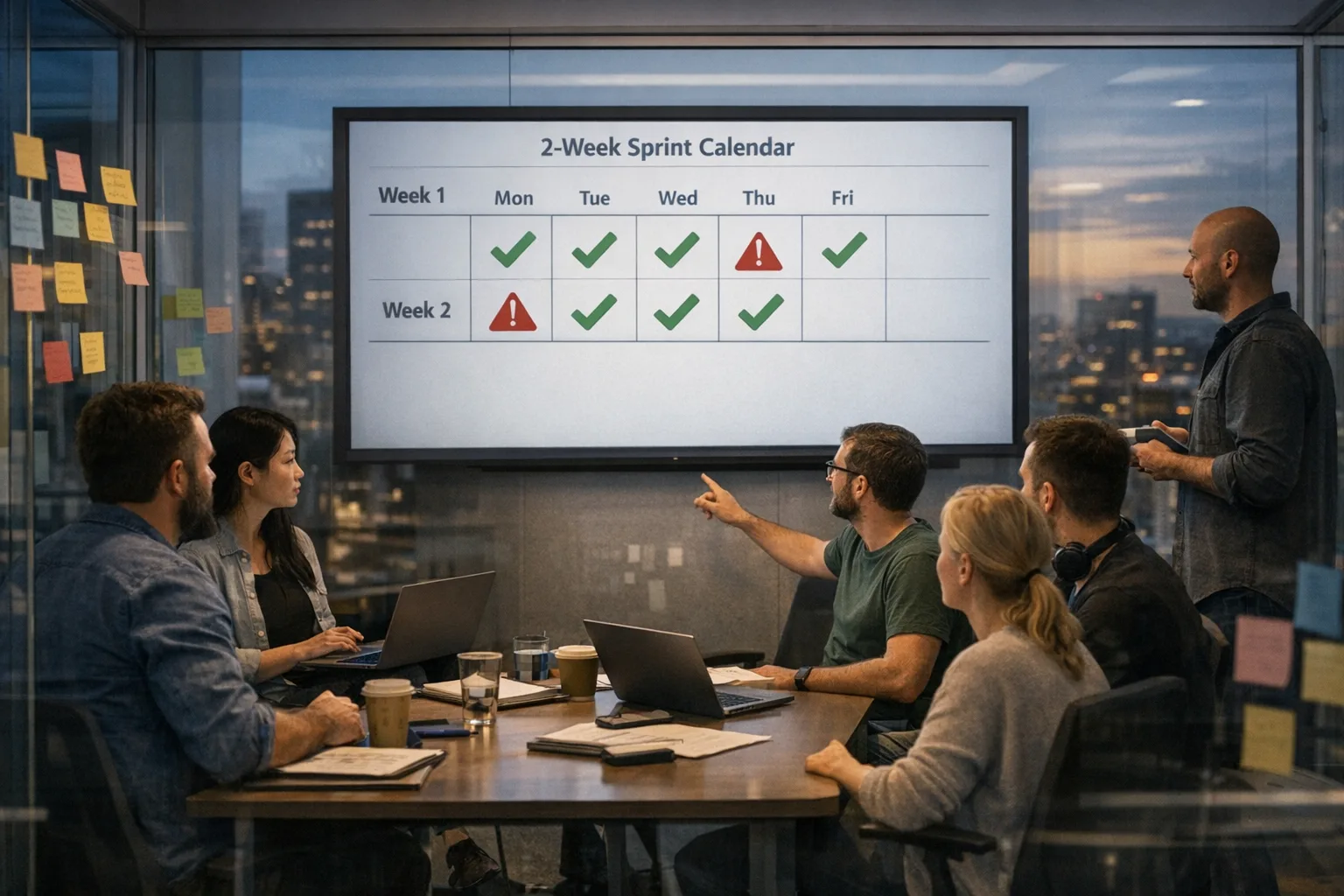
Let’s get practical: a 14‑day adoption plan
Days 1–2: Baseline
Capture throughput, latency percentiles, CPU, and memory profiles on your current production build. Identify one CPU‑heavy service to pilot.
Days 3–5: Build and boot
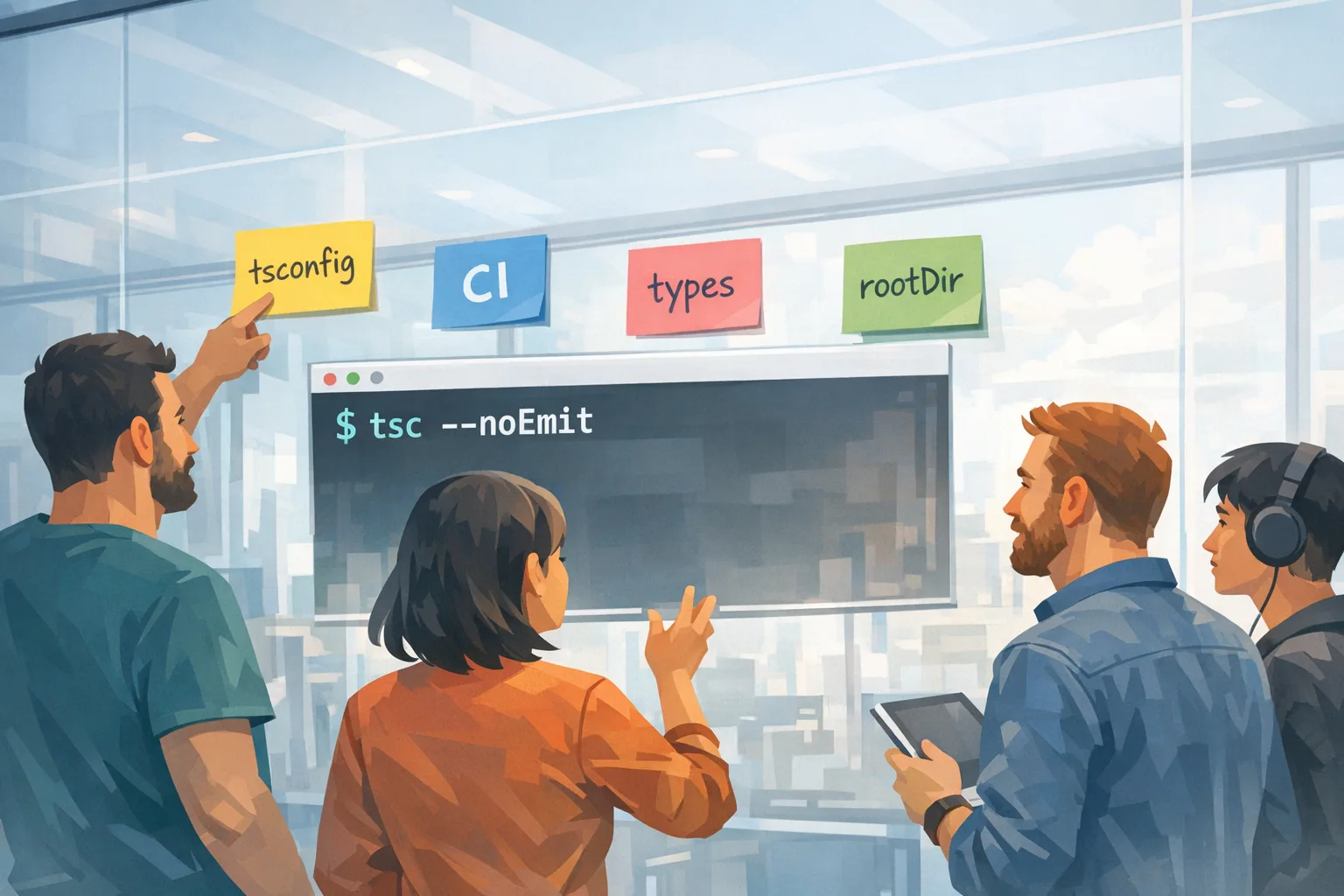
Install a free‑threaded 3.15 build in CI. Add a matrix job that runs unit tests and type checks against it. Fail fast on native wheels that don’t install.
Days 6–8: Dependency strategy
For each native dependency, choose: wait for abi3t wheels, pin to a known‑good version with a compatible wheel, or replace with a pure‑Python or Rust alternative. Document gaps.
Days 9–11: Load testing
Run end‑to‑end load tests with threads sized to 2–4× vCPUs. Tune worker counts, DB pool sizes, and GC thresholds. Collect flame graphs and lock contention profiles.
Days 12–14: Ship a pilot
Deploy behind a flag or to a canary pool. Watch p95/p99 latency, CPU, and error rates. If success criteria are met, plan the next rollout wave.
Security and reliability angles you shouldn’t skip
Parallel execution changes your failure modes. Races that were once rare become reproducible. Add thread‑safety checks to code review. Enable sanitizer builds for any C/C++ you ship. Make sure secrets and token caches aren’t shared unsafely across worker threads. Finally, revisit your incident runbooks: thread dumps, contention metrics, and CPU saturation alerts should be first‑class citizens.
How this plays with AI workloads
Most Python AI stacks spend their heavy cycles in native code (BLAS, CUDA, Metal), but there’s still a lot of CPU work in data preprocessing, tokenization, and orchestration around the model. Free threading helps those layers scale on CPU‑rich nodes, can reduce the number of processes per instance, and simplifies sharding strategies. If you’re auditing your model pipeline anyway, our 30‑Day AI Model Review pairs nicely with a free‑threading pilot to remove hidden CPU sinks before you scale.
Ops implications: fewer processes, simpler autoscaling
Many teams multiplied processes purely to dodge the GIL. With free threading, you can often consolidate. That reduces memory overhead, shortens cold starts, and simplifies autoscaling logic (no more juggling process and thread pools). It also improves cache locality: one process can hold a larger in‑memory cache, which boosts hit rates and trims DB load.
Where this leaves WSGI, ASGI, and your server of choice
Gunicorn, Uvicorn, and friends don’t need to change much. You’ll tune them differently: favor more threads per worker for CPU‑bound routes, keep async for network multiplexing, and consider reducing worker processes. If you’re all‑in on ASGI with async views, threads still matter for CPU sections—use a bounded executor and measure.
FAQ for skeptics
Is Python 3.15 the default free‑threaded build?
No. Free threading is an opt‑in build. What’s new is that 3.15 makes it much easier to support by stabilizing the ABI and tooling around it. Expect pressure to grow for package authors to support it, especially where CPU matters.
Will my single‑thread performance get worse?
Some operations get a little slower due to extra synchronization. If your app is purely I/O‑bound, you may see negligible benefit and a small overhead. That’s why you pilot first, with your workload, on your hardware.
What about Windows?
Free threading targets all major platforms. The exact packaging cadence for abi3t wheels will vary by project and CI constraints, but there’s no fundamental blocker specific to Windows for adoption.
What to do next
• Pick one CPU‑bound service and run the 14‑day plan above.
• Ask maintainers of your top 5 native dependencies about abi3t wheels and timelines.
• Add thread‑safety checks to code review and enable sanitizers for native code.
• Update your dashboards: thread pool metrics, contention, per‑thread CPU, GC pauses.
• Revisit your worker topology—fewer processes, more threads—and measure.
Need a partner for the pilot?
If you’d like a second set of eyes on architecture, benchmarking, or extension strategy, we help teams ship real upgrades without drama. See what we do for engineering teams, explore our client work, or scope a focused engagement on our backend performance engineering services page. When you’re ready, start the conversation. We’ll get you a plan, a pilot, and numbers you can take to your CFO.






Comments
Be the first to comment.