
PostgreSQL 19: Upgrade Playbook for 2026
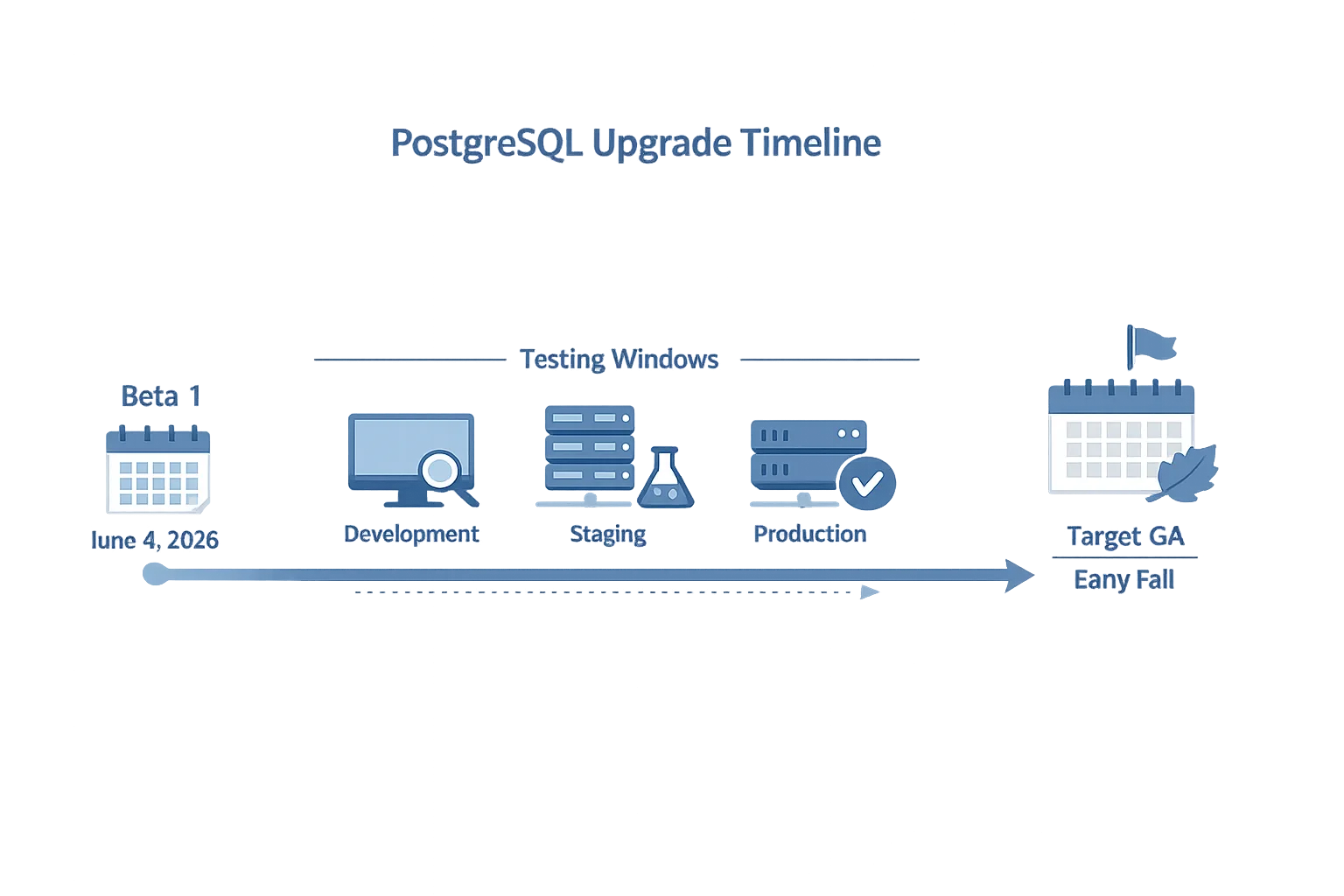
PostgreSQL 19 is here in beta and it’s not a “nice-to-have” release; it changes daily operations. Beta 1 dropped on June 4, 2026, with general availability targeted for early fall. If you own uptime, query latency, or compliance, you want a plan now. This upgrade playbook focuses on what to verify, tune, and stage so your PostgreSQL 19 rollout is safe, measurable, and—most importantly—predictable.
PostgreSQL 19 at a glance
Here’s the thing: PostgreSQL 19 doesn’t just add features; it rearranges your operational defaults.
Highlights you’ll actually feel in production:
- Online enabling/disabling of data checksums, with background processing and throttling controls.
- Autovacuum gets parallel workers and a scoring system to prioritize tables.
- Default TOAST compression switches to lz4, improving typical storage/CPU tradeoffs.
- JIT is disabled by default; analytics-heavy shops must opt in intentionally.
- Logical replication grows up: sequence synchronization, publication EXCEPT lists, and dynamic activation without restart.
- Streaming replication gets
WAIT FOR LSN, enabling safer read-your-writes patterns via standbys. - Built-in
REPACK(includingCONCURRENTLY) replaces those hair-raisingVACUUM FULLandCLUSTERdance moves. - Security: SNI via
pg_hosts.conffor multi-domain TLS, plus MD5 auth warnings and password-expiry nudges. - Developer ergonomics: SQL/PGQ for property graphs,
FOR PORTION OFbecomes truly useful with UPDATE/DELETE,GROUP BY ALL, and quality-of-life improvements across EXPLAIN/pg_stat.
What might break—and how to defuse it
Nobody likes surprises on cutover day. Attack these first:
1) MD5 is effectively on notice
Servers now warn after successful MD5 authentication and introduce a configurable warning threshold for expiring passwords. If you’re still on MD5 anywhere, move to SCRAM. Inventory pg_hba.conf and app connection strings. In mixed estates, run dual-stack auth during migration windows and watch connection audit logs for stragglers.
2) RADIUS support is gone
If you depended on Postgres’ old UDP-only RADIUS, plan an auth path using SCRAM with your IdP or terminate RADIUS upstream at your proxy layer. Test failover flows and reissue secrets before staging cutover.
3) inet/cidr btree_gist opclass changes
The default opclasses for inet and cidr move off the broken btree_gist variants. Action: locate any indexes using those opclasses and replace them. Note: pg_upgrade will refuse to proceed if it detects these—catch this early in a rehearsal upgrade.
4) JIT defaults flipped
JIT is now disabled by default due to unpredictable costing. If your warehouse-style workloads relied on JIT speedups, explicitly enable it and revisit cost thresholds. Benchmark with your real queries, not micro-benchmarks.
Performance and operations you should lean into
Autovacuum, but smarter
Autovacuum can now use parallel workers and includes a scoring system to prioritize tables most in need. This reduces tail-latency surprises from bloated hot tables. Start with conservative global limits and raise parallelism table-by-table using storage parameters. Track the new pg_stat_autovacuum_scores and extended pg_stat_progress_vacuum columns to validate behavior on staging.
Online checksums: finally practical
Data checksums can be enabled or disabled online. That means fewer risky, all-or-nothing maintenance windows and better corruption detection everywhere—including replicas. Use pg_enable_data_checksums() during a low-traffic window, throttle via the function’s cost limits, and watch I/O and replication lag while the background worker rewrites pages. If you’ve ever postponed checksum adoption because of downtime, this is your moment.
lz4 as the default TOAST compression
lz4 becomes the default for TOAST, usually translating to lower CPU overhead on decompression and better cache behavior. You’ll see outsized wins where large JSON/text payloads live. Validate with a subset of heavyweight tables using staging snapshots; measure end-to-end query times and memory churn, not just compression ratios.
I/O worker tuning
io_method=worker can now auto-scale via new min/max worker settings. On bursty write loads, this smooths stalls without manual worker babysitting. Start with defaults, then raise ceilings in step with disk and WAL bandwidth. Correlate EXPLAIN (ANALYZE, IO) stats with filesystem metrics to avoid wishful tuning.
REPACK goes core—with CONCURRENTLY
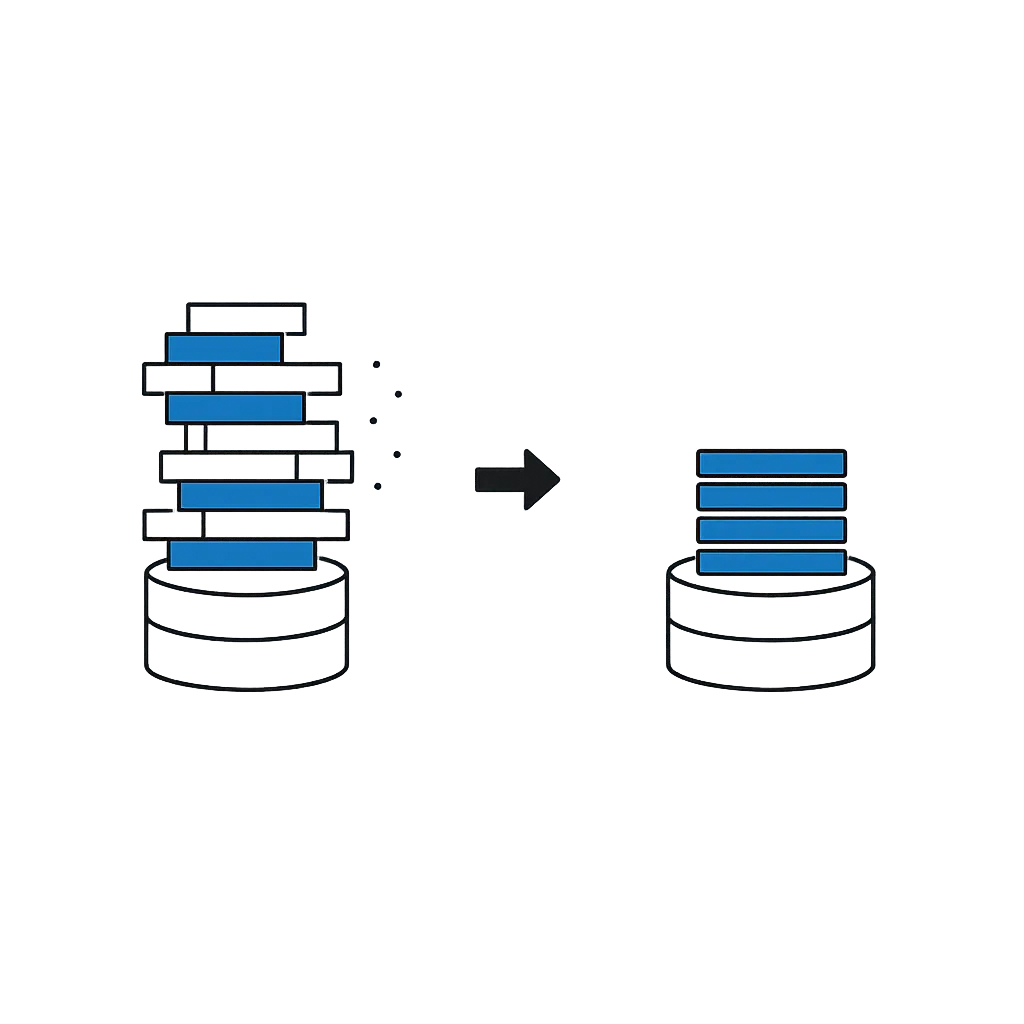
PostgreSQL 19 ships a native REPACK command, including a CONCURRENTLY option to rebuild tables while staying online. You still pay I/O and index maintenance costs, so schedule during known quiet periods and budget WAL accordingly. But for routine pruning and bloat control, this is a clear operational upgrade.
Replication and upgrades just got easier
Logical replication in PostgreSQL 19 closes two long-standing gaps for low-downtime upgrades:
• Sequence synchronization: sequences can be kept in sync, minimizing drift headaches during cutover.
• Flexible publications: CREATE/ALTER PUBLICATION ... EXCEPT lets you publish “everything except these tables,” ideal for excluding audit or ETL scratch spaces.
• Dynamic activation: you can enable logical replication without a restart, and a new effective_wal_level reports what’s actually active.
On physical replication, WAIT FOR LSN finally enables precise read-your-writes on standbys. For latency-sensitive apps serving reads from replicas, that’s tangible control you can automate.
Cloud users, you’re covered: PostgreSQL 19 Beta 1 is already available in preview on major managed platforms, so you can validate with near-production parity before GA.
Security upgrades you should adopt on day one
SNI and pg_hosts.conf
Multi-tenant clusters and on-prem HA setups get cleaner TLS with SNI. Configure per-hostname certificate mappings in pg_hosts.conf and rotate certs without risky server-level changes. Pair this with short-lived certificates and automated renewal to reduce breakage windows.
Password hygiene with fewer footguns
PostgreSQL 19 adds password-expiration warnings and continues nudging MD5 toward the exit. Move to SCRAM across all clients; treat any MD5 left in pg_hba.conf as tech debt with an owner and a date.
Developer-facing wins: SQL/PGQ and temporal data
With SQL/PGQ, you can express property graph traversals directly in SQL. For teams juggling a transactional Postgres and a separate graph engine, this can eliminate sync pipelines for many use cases. Does it replace a dedicated graph database everywhere? No. But it likely handles embedded graph queries close to your OLTP data with fewer moving parts.
Temporal operations evolve too: UPDATE and DELETE FOR PORTION OF let you manage application-time ranges cleanly. Add in GROUP BY ALL, window-function improvements, better EXPLAIN I/O visibility, and a suite of new pg_stat_* insights—you’ll spend less time spelunking and more time shipping.
PostgreSQL 19 Readiness Framework (use this)
Run this as a checklist across dev → staging → pre-prod. Capture metrics before/after each step.
- Inventory risk: Find MD5/RADIUS use, btree_gist inet/cidr indexes, and any unusual encodings or names that would fail upgrade. Flag by owner and remediate path.
- Stage a rehearsal upgrade: Use
pg_upgradeon a production-sized snapshot. Time each phase: dump (if applicable), upgrade, analyze, and application warm-up. Log blockers. - Enable checksums online in staging: Kick off
pg_enable_data_checksums()during off-peak. Throttle via cost parameters. Watch replication lag and disk I/O. Document playbook rollbacks. - Tune autovacuum scoring: Start with defaults; identify top-5 hot tables. Add per-table
autovacuum_parallel_workers. Record bloat/visibility map deltas and 95th percentile latency. - Benchmark with JIT both ways: For analytics workloads, measure representative queries with JIT off (default) and on. Lock in a team-approved default and a per-database override strategy.
- Prove logical replication cutover: Test publications with
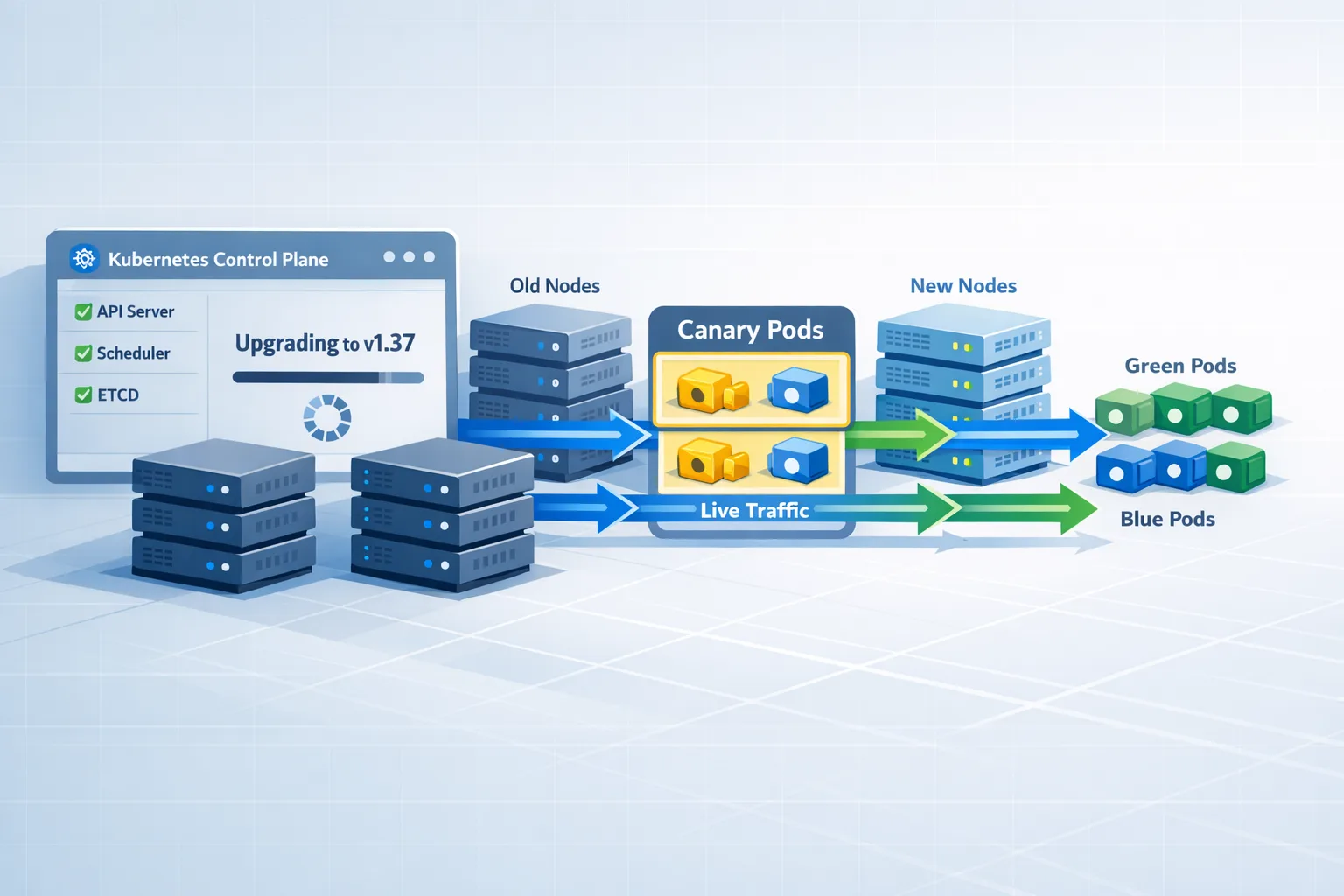
EXCEPT, sequence sync, and dynamic enablement. Run a timed blue/green cutover drill with a checklist and a go/no-go gate. - Adopt SNI: Configure
pg_hosts.conf, validate cert rotation, and test client SNI behavior. Document audit evidence for compliance. - Observe everything: Add dashboards for new
pg_stat_*views, WAL full-page write bytes, andEXPLAIN (ANALYZE, IO). Link alerts to runbooks. - Chaos lite: Kill a replica, throttle disks, or spike write I/O during checksum enablement and REPACK on staging. You want to learn here, not at 2 a.m. in prod.
People also ask
Is PostgreSQL 19 safe for production today?
As of July 15, 2026, it’s in beta. Run it in staging, validate on a managed preview if you’re on cloud, and schedule production rollout after GA hits early fall—once your rehearsal upgrades are boring and repeatable.
Do I have to reindex inet/cidr?
If you use the broken btree_gist opclasses, yes—replace them ahead of pg_upgrade or the upgrade will fail. Script detection across all schemas; don’t forget extensions and embedded microservices with their own migrations.
How do I enable checksums online safely?
Plan a low-traffic window, call pg_enable_data_checksums(), throttle if needed, and monitor I/O plus replica lag. Expect additional WAL. If the server restarts mid-process, rerun the function; it restarts from the beginning. Do this on staging first and capture timings.
Will disabling JIT slow my queries?
Many OLTP queries won’t notice; some analytical workloads will. That’s why you benchmark both ways. If JIT helps your real workload, explicitly enable it and set costs accordingly.
What this means for your roadmap
Zooming out, PostgreSQL 19 nudges teams toward safer defaults (checksums, SNI, lz4), more predictable maintenance (autovacuum scoring, REPACK CONCURRENTLY), and lower-friction upgrades (sequence sync, restart-free logical activation). The net effect is less time spent firefighting the data layer and more time shipping value.
If you want a partner that treats database rollouts like product releases—gated, instrumented, and boring—see what we do for complex platform work and our Postgres migrations and performance tuning services. Want to see how we harden CI around these changes? Pair this with our guidance on hardened self-hosted runners. For a taste of our release-readiness style, check the Node platform checklist we published for Node.js 26 LTS.

What to do next (this week)
Here’s a focused action list you can knock out fast:
- Stand up a PostgreSQL 19 beta environment that mirrors production shape. Capture baseline perf.
- Run an index audit for inet/cidr opclass use; script replacements.
- Map your auth: kill MD5, retire RADIUS, and plan SCRAM rollout with expiry warnings.
- Dry-run
pg_enable_data_checksums()on staging; record I/O, lag, and duration. - Enable autovacuum parallelism on one hot table; measure before/after latency.
- Prototype a logical-replication cutover with sequence sync and an
EXCEPTpublication. - Wire dashboards for new
pg_stat_*views and EXPLAIN I/O stats.
When you can do all of the above without thinking, you’re ready for GA.
If you’d like help designing or executing this plan, reach us via our contact form. Or browse recent database-heavy builds to see how we approach reliability work in real products.







Comments
Be the first to comment.