
Patch Tuesday Checklist: 72‑Hour Plan for Sept 2026
If you run fleets, stores, or SaaS, this week isn’t business as usual. Microsoft’s monthly drop on September 8, 2026 (US time) includes two vulnerabilities that were already exploited, Adobe Commerce shipped an emergency fix for a zero‑day on September 7, and NetScaler posted critical guidance on recent CVEs with new remediation notes on September 7–8. You need a Patch Tuesday checklist you can execute now without lighting up your pager.
What shipped this week (and why it matters)
Here’s the thing: shipping fast is only half the job; shipping safely is the point. The specifics this week tilt the balance toward “patch now.”
Microsoft: two exploited Windows bugs, broad platform coverage
On September 8 (US), Microsoft released security updates across Windows client and server, Office, Exchange, .NET, Visual Studio, SQL Server, and Azure components. Two Windows vulnerabilities were confirmed as exploited prior to the update’s release: an ALPC elevation-of-privilege issue (CVE‑2026‑85880) and a Windows Update stack elevation-of-privilege issue (CVE‑2026‑81963). For Windows 11, the associated KBs include the 5124xxx series this month. If you manage Exchange on-prem, the Exchange Team published separate deployment guidance aligned with this release window.
Translation for teams: treat domain-joined Windows and any interactive workstation pools as highest priority, followed by servers in exposed tiers. Elevation-of-privilege bugs are catnip for lateral movement once an attacker gets in.
Adobe Commerce: zero‑day remote code execution
Adobe flagged an actively exploited Adobe Commerce/Magento zero‑day on September 7 (CVE‑2026‑75650) and pushed emergency updates and hotfix instructions. If you operate a Magento storefront—hosted or self‑managed—assume bots are already probing. The vulnerability allows unauthenticated code execution on unpatched instances. Patch windows for retail are tight; that’s exactly why you need a small, rehearsed runbook (below).
NetScaler: recent critical CVEs plus fresh remediation notes
Cloud Software Group (NetScaler) issued critical bulletins in late August covering CVE‑2026‑19489 and CVE‑2026‑19490 and published new console‑guided remediation content on September 7 for CVE‑2026‑8451. If your ADC/Gateway is in front of anything customer‑facing—or bound to auth flows (VPN/AAA)—prioritize those appliances in the first ring. Historical exploitation patterns for ADC/Gateway issues are brutal: exposed devices get scanned within hours of public guidance.
Use this Patch Tuesday checklist to land changes in 72 hours
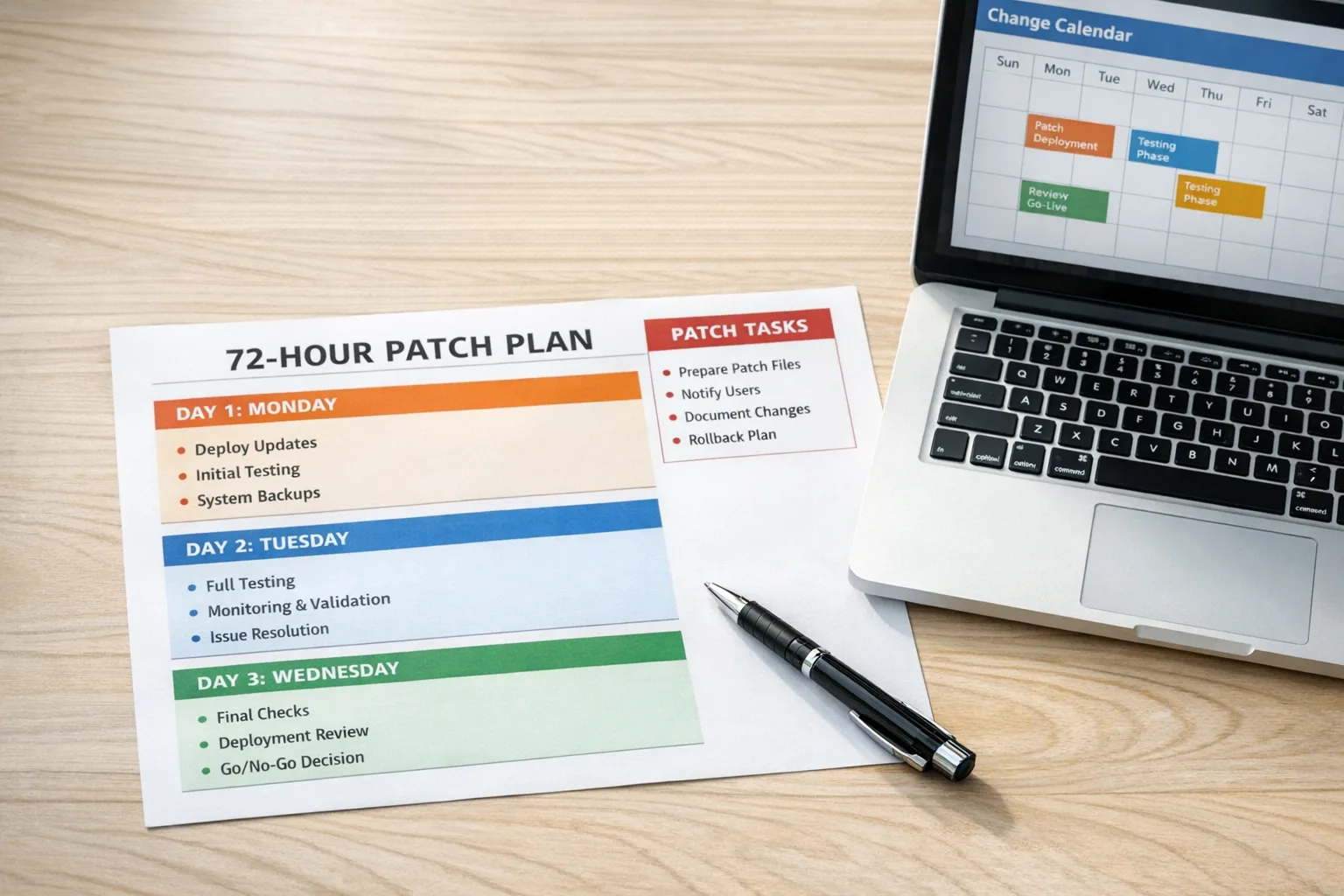
This Patch Tuesday checklist is tuned for mixed estates (Windows fleets, a few Linux workloads, e‑commerce, and common ADCs) and assumes you can touch production within a 3‑day window. Tune the rings and hours to your operations reality.
0–8 hours: triage, inventory, and guardrails
Start with a single page that answers four questions:
- What’s exploitable now? Flag the two Windows EoP CVEs and the Adobe Commerce zero‑day as must‑patch. Add any NetScaler instances with exposed gateways.
- What’s internet‑facing? Enumerate reverse proxies, WAFs, gateways, and storefronts first; then RDP, SSH, and admin consoles reachable from the web or partner networks.
- What’s blast radius if we break it? Tag tier‑0/identity (DCs, ADFS), network edge, payment flows, and SSO. Those get extra pre‑checks and rollbacks.
- What blocks rollout? Note change freezes, payment windows, and marketing events; adjust rings to avoid revenue cliffs.
Guardrails you should enable now:
- Backups/snapshots for critical VMs three hours before patching; verify at least one restore test passes.
- Health probes and canary alerts per tier; success means SLOs flat, error budget intact.
- Signed artifacts only in CI; if you haven’t locked down automation secrets, fix that today. Our short guide on securing CI secrets and 2FA can help—see how to fix your CI before it breaks.
8–24 hours: ring 0 and ring 1
Ring 0 (pilot): 1–3% of Windows workstations, one non‑critical Windows server, one test Exchange node (if applicable), and a staging Adobe Commerce instance with production‑like data. Apply the September 8 Windows cumulative updates, the Exchange rollup if you’re on supported ESU/SE builds, the Adobe hotfix, and the NetScaler build recommended for your CVEs. Validate with:
- Login/out on SSO, MFA prompts, and password resets.
- Payment sandbox flows and tax/shipping calculators (Commerce).
- ADC/Gateway health: TLS handshakes, session stickiness, and auth flows across VPN/AAA.
Ring 1 (edge): Internet‑facing Windows servers, ADC/Gateway pairs, and the primary Commerce production cluster in low‑traffic hours. Keep the blast radius contained: one AZ/zone or one store shard at a time. Watch error budgets and roll back at a 2× alert threshold (e.g., 2× baseline error rate for 10 minutes).
24–48 hours: core services and identity
Finish Windows workstation waves (target 80%+ coverage), then move to identity: domain controllers, ADFS/IdP nodes, and jump hosts. Identity outages are high‑cost, so apply the “two‑by‑two” rule: never patch more than half of DCs in a site; keep one pristine until the patched half returns green. If you’re running Exchange on‑prem, complete your DAG/cluster pass now using the vendor’s sequence.
For Adobe Commerce, complete the production cutover, then run smoke tests: cart → checkout → refunds; catalog updates; search; payment processor edge cases (3‑D Secure flows, partial captures). Keep a warm rollback build for 48 hours. For NetScaler, commit the upgrade or hotfix and validate: TLS ciphersuite policy, SSO redirects, and long‑lived sessions over midnight UTC (gotcha: session ticket keys that rotate mid‑flow can break re‑auth).
48–72 hours: long tail and verification
Close out the long tail: kiosks, lab PCs, low‑risk VMs, training tenants. Then verify outcomes:
- Patch compliance reaches your target SLA (e.g., 96% Windows coverage in 72 hours; 100% of externally exposed systems).
- No open exposure for Adobe Commerce storefronts or NetScaler gateways.
- SIEM confirms exploit chains quieted: blocklists, IDS signatures, WAF rules haven’t spiked.
- Change records finalized with actual KBs/builds and test evidence attached.
People also ask
Is it safe to delay this Patch Tuesday one week?
Not this round. Two Windows bugs were already exploited in the wild before the September 8 release, and Adobe labeled its September 7 Commerce issue as actively exploited. If you must stagger, at least complete edge systems, Commerce, and ADC/Gateway pairs within 24–48 hours.
How do we patch Exchange without downtime?
If you’re still on Exchange 2016/2019 with ESU, follow the vendor’s rolling upgrade guidance, moving one node at a time, draining active databases, and monitoring transport queues before and after each step. If you’ve moved to Exchange SE, validate dependent services (antivirus agents, backup drivers) in a staging node first—driver hooks can be the hidden failure.
What if I can’t patch Adobe Commerce today?
Reduce exposure until you can. Put the admin panel behind IP allowlists or VPN, enforce WAF rules that block suspicious payloads on checkout/cart endpoints, and consider traffic throttling for repeated requests with unusual headers. None of that replaces patching, but it buys time and shrinks the blast radius.
Do NetScaler mitigations exist if we can’t upgrade?
Workarounds vary by CVE and build. In general, prefer a maintenance window to upgrade. If that’s not possible, disable risky virtual server bindings, strip problematic headers at the edge, and isolate management interfaces from the internet. Then schedule the upgrade at the next possible low‑traffic window.
Your friction‑free patching framework
Here’s a simple loop teams can adopt for every month, not just September 2026.
RING‑SCORE‑PROVE
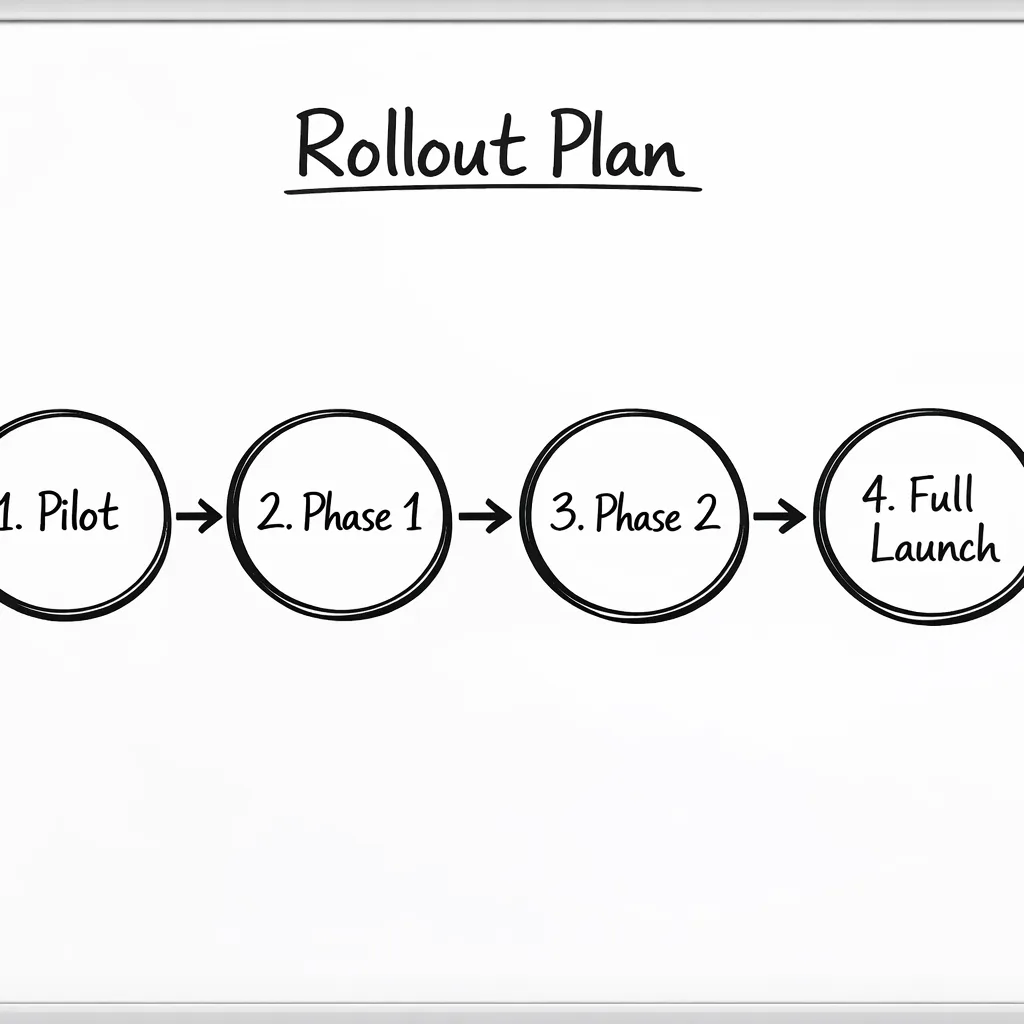
- Ring: Pre‑assign four rings (pilot, edge, core, long tail) for each product area so you never debate order mid‑incident.
- Score: Rate each item on exploitability (known exploited, network‑exposed, privilege), business criticality (payments, identity), and rollback readiness. Anything with “exploited” and “internet‑facing” bubbles to the top automatically.
- Prove: Define three acceptance checks per ring that reflect user journeys (e.g., “MFA + checkout + refund”). If they pass, you advance. If two or more fail, you roll back and investigate.
Operational guardrails that pay for themselves
- Change templates that auto‑populate KBs/CVEs and the release date for every platform. Saves 30–60 minutes per change.
- Golden canaries with synthetic tests that mirror real user behavior, not just “port up.”
- SBOM + asset inventory so you can ask, “Where are my Commerce instances? Which ADCs terminate TLS?” and get answers in 30 seconds, not three meetings.
- CI/CD hygiene: signed artifacts, 2FA on registries, and secret rotation. If your pipelines are creaky, start here: tighten CI authentication before it bites.
Gotchas we’ve seen in the field
Real talk: patches fail for boring reasons. Avoid these:
- Identity whiplash: Patching DCs at the same time as ADFS/IdP nodes can cause transient auth failures. Stagger identity tiers.
- Driver hooks: Security agents and backup tools slip kernel drivers under the hood. Validate on a staging node with the same agent versions before touching production.
- ADC session churn: After NetScaler upgrades, sticky sessions may reset if ticket keys rotate. Drain and cut over gracefully; don’t yank the rug mid‑promo.
- Headless Commerce scripts: Custom checkout scripts sometimes rely on undefined client behavior. Run a headless integration test suite against staging right after applying the hotfix.
What to do next (this week)
- Today: Patch Windows pilots and edge servers; upgrade or hotfix Adobe Commerce staging then production during your lowest‑traffic window; remediate NetScaler per your CVE coverage.
- Tomorrow: Finish Windows workstation waves and identity; complete Exchange/SE rotations if applicable; re‑run Commerce smoke tests.
- Within 72 hours: Close the long tail and publish your change record with KBs/CVEs, test evidence, and rollback notes.
- This month: Automate the RING‑SCORE‑PROVE loop and harden CI. If you want help, see our security and platform readiness services and implementation packages, or talk to our team.
Zooming out
We’re in a cycle where vendors patch faster and attackers adapt quicker. The practical answer isn’t heroics—it’s a boring, repeatable Patch Tuesday checklist that moves the riskiest systems first and measures success like a product launch. Do that week after week and you’ll cut breach risk without burning out your team.
If you need a hand turning this into muscle memory across Windows, Commerce, and ADCs, that’s what we do for a living. We ship, we measure, and we stand behind it.






Comments
Be the first to comment.