Google I/O 2026 Search: What Devs and SEOs Must Ship
On May 19–20, 2026, Google used I/O to put AI directly into how people search. The company described the change as the biggest upgrade to its search box in 25 years and rolled out agent-driven results that synthesize answers, compare products, and tee up actions. This isn’t hype; it’s a material shift in discovery and conversion. If you care about visibility, you need a plan for Google I/O 2026 search—and you need it now.
What actually changed in Search this week
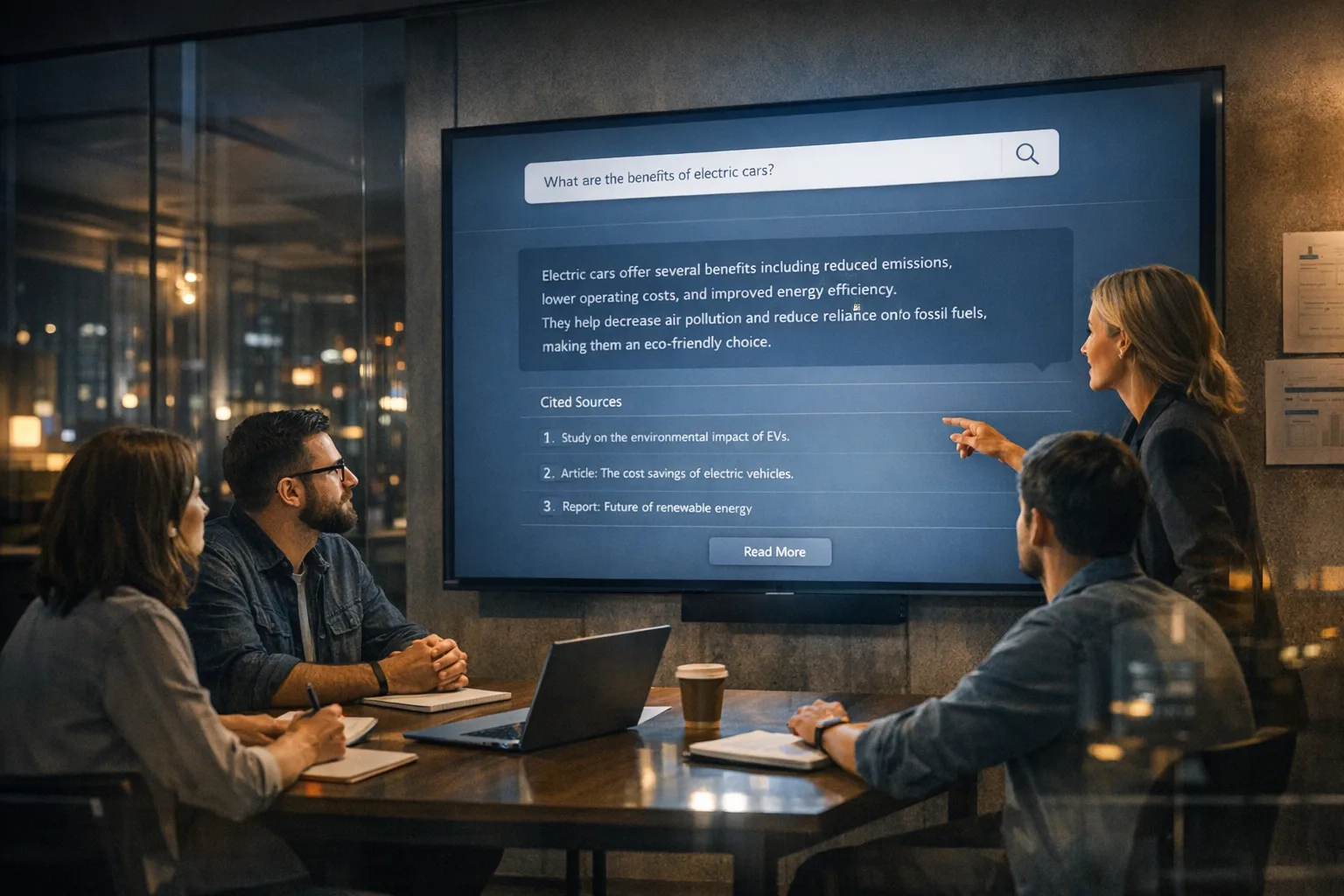
Let’s anchor the facts. On May 19, 2026, Google showcased a revamped search box that expands as you type, encourages multi‑step prompts, and routes more queries through AI responses. Gemini models power conversational clarifications, richer shopping and video surfaces, and an onramp to information agents. Ask YouTube rolled out a conversational layer for video discovery, and Gemini is surfacing structured, step‑wise answers across more categories.
Practically, this compresses the user journey. Instead of: query → scan links → click → skim → bounce → refine, many sessions will become: query → AI summary with calls to action → narrower set of sources → targeted click. If your content, data, and performance don’t map cleanly into those summaries, you’ll be invisible even if you still “rank.”
Why this matters for product and SEO leads
Here’s the thing: AI summaries aren’t replacing results; they’re prioritizing sources that are cleanly understood, well‑structured, fast, current, and trusted. Your goal is to be the source the agent cites, summarizes, or calls. That demands changes in three layers—content, data, and delivery.
Content needs to answer tasks, not just questions. Data needs to expose meaning and freshness (schema, feeds, canonical signals). Delivery needs to be fast, stable, and generated from a runtime that won’t break when frameworks update. The winners will treat Search like an API client; the losers will publish prose and pray.
Agentic Search Optimization (ASO): a 7‑step playbook
This is the framework we’re asking teams to ship over the next two sprints. It’s simple, specific, and aligned to how agentic surfaces pick sources.
1) Map intent to tasks—not just keywords
Stop building pages around a single head term. Cluster by task: research, compare, decide, act, troubleshoot. For each task cluster, write the canonical resource that an AI agent would trust for step‑by‑step help. Include inputs, constraints, and edge cases. Use checklists and ordered steps where appropriate; agents love unambiguous sequences.
2) Upgrade structured data coverage to 95%+
Inventory your top 200 URLs by traffic and revenue. Add or fix schema for HowTo, FAQ (only where it adds unique value), Product, Review, Recipe, Event, Course, Organization, and Article. Ensure dates, authorship, version numbers, availability, and price are machine‑readable. Use canonical URLs consistently and eliminate conflicting markup. Validate in CI so schema breaks don’t reach prod.
3) Wire product and content feeds for freshness
Search agents weight up‑to‑date sources. If you sell things, push real‑time inventory, price, and variant data via product feeds. If you publish, expose a changelog or last‑updated timestamp and keep it honest. For technical docs, include version matrices and deprecation notes—summaries pull these verbatim.
4) Authoritativeness you can prove
AI summaries tend to favor sources that look accountable. Add clear author bios, affiliations, and revision history to high‑stakes pages. Cite original research or primary docs. For regulated topics, publish your review process. Yes, this is E‑E‑A‑T, but implemented as product features, not slogans.
5) Performance that meets agent thresholds
Keep Core Web Vitals in the green: LCP under ~2.5s, CLS under ~0.1, INP under ~200ms on key templates. Ship image CDNs, server‑side rendering or streaming where it makes sense, HTTP/2 or HTTP/3, and preconnect to critical origins. Agents won’t wait for bloated JS to hydrate content that could’ve been in HTML.
6) “Answer then pathway” UX
Design pages to present the short answer first—then a clear pathway to deeper actions: calculators, configurators, demos, contact, or purchase. If the AI snippet pulls your first two sentences, the on‑page experience should match that promise and immediately let the user do the next thing.
7) Govern your change cadence
Agents reward freshness, but churn creates contradictions. Adopt an editorial calendar with explicit ownership, SLAs for updates, and a content freeze window around major releases. Tie doc and site updates to your sprint reviews. If you’re modernizing your stack, see our runtime upgrade strategy for upgrading without breaking production SEO.
Technical checklist you can copy into Jira
Let’s get practical. These are backlog items we’ve shipped with teams in the last quarter that directly increase inclusion in AI summaries and agentic flows.
- Add HowTo or Product schema to the top 50 pages by opportunity (combine traffic x conversion gap). Validate with automated tests in CI.
- Implement server‑rendered answer boxes: first 140–180 characters summarize the task outcome, followed by a scannable steps list. No vague fluff.
- Expose canonical, crawlable comparison tables with column headers in HTML (don’t hide in canvas or images). Include specs, prices, and availability.
- Publish a machine‑readable updates feed (RSS/Atom or JSON) scoped to docs, pricing, and release notes. Include version numbers and exact dates.
- Consolidate duplicate variations of the same page. One canonical, parameter logic handled server‑side, hreflang correct if multilingual.
- Trim render‑blocking resources to under 150KB total on first paint. Inline only mission‑critical CSS. Defer non‑critical JS and eliminate unused bundles.
- Implement signed image URLs on your CDN and add width/height attributes so CLS stays stable.
If you need a refresher on how we ship from discovery to launch with these controls baked in, read our end‑to‑end web development process.
FAQ: The “People Also Ask” you’ll hear this week
Will the classic 10 blue links disappear?
No—but the first meaningful interaction is shifting. Users will see a reworked box and more AI‑guided summaries, especially on complex, multi‑step queries. That means your first “impression” may be as a cited source in an AI panel, not a plain link. Optimize to be the source, then earn the click with a page that completes the task.
Does AI Mode mean zero‑click doom?
Zero‑click behavior will rise on informational lookups. But transactional and high‑stakes queries still push users to owned experiences. Give agents a reason to send people to you: trustworthy specs, pricing, calculators, live availability, and experiences that can’t be summarized away.
How does Ask YouTube change video SEO?
Chapters, transcripts, on‑screen text clarity, and structured titles matter more. Write descriptions that match task language (“How to size a 240V breaker in 3 steps”), add timestamps for each step, and link to a corresponding task‑oriented page on your site. Expect conversational queries to surface videos that demonstrate the exact step sequence a user needs.
Data and dates: what we can say confidently
I/O happened May 19–20, 2026. Google presented a redesigned search box and expanded AI‑driven responses across Search and YouTube. The company framed this as the largest upgrade to the search box since its late‑1990s debut. Multimodal prompts and agent participation inside the SERP were center stage. The rest is execution: the sites and apps that present clean data, stable performance, and accountable authorship will be selected and summarized more often.
Measurement: how to know you’re winning
Don’t wait for a perfect dashboard. Stitch together a pragmatic view from signals you control:
- Template‑level Core Web Vitals: LCP, INP, CLS across your top 10 templates. Track weekly, not monthly.
- Markup coverage: percent of traffic landing on pages with valid schema. Target 95%+.
- Feed freshness: mean time to reflect price/availability changes on-site and in feeds. Target under 15 minutes for critical SKUs.
- Snippet share: percent of monitored queries where your domain appears in any enhanced result (video carousel, “from the web,” how‑to, product). Even anecdotal tracker data helps.
- Task completion: form starts, calculator uses, configurator opens, and demo clicks from organic sessions. Tie these to the above templates.
Also add brand safety and governance checks if you’re embedding AI on your own site. For compliance guidance, bookmark our EU AI Act 2026 last‑mile playbook.
Content patterns that AI summaries actually quote
We’ve tested dozens of patterns; these consistently earn citations and clicks when they match intent:
- Two‑sentence executive summary, then numbered steps. Keep steps explicit and self‑contained.
- Comparison grids with objective attributes (power, size, ports, API limits), plus thresholds when a choice flips.
- “Gotchas” and constraints: incompatible versions, limits, lead times, return policies, or failure modes.
- Versioned docs: include release dates, EOL notes, and migration tips right on the page.
- Short demo videos embedded near the answer, with captions and chapters.
If you’re choosing a partner to help industrialize this, use a buyer’s checklist—start with our guide to choosing a web development agency and decide if you need a full team or a specialist. If budget planning is blocking action, see our breakdown of custom website costs in 2026.
Risks and edge cases to plan for
Agents sometimes over‑generalize. If your product has tight constraints—compliance jurisdictions, compatibility, or safety steps—state them high on the page and in schema. For dynamic pricing, ensure ranges and disclaimers are machine‑readable. For B2B with long cycles, publish decision criteria by role (engineering, procurement, security) so summaries don’t flatten nuance. And remember: if you change a spec weekly, document why and provide a stable reference so agents don’t oscillate.
What to do next: 30/60/90‑day plan
Next 30 days
- Ship schema to the top 50 pages by opportunity. Validate in CI.
- Refactor answer boxes on 10 high‑intent pages with “answer then pathway.”
- Cut render‑blocking payload by 30% on core templates. Preload hero image and primary font.
- Publish a machine‑readable updates feed. Include last‑updated dates site‑wide.
Days 31–60
- Roll structured data to 95% of organic landings. Add author bios and revision logs to YMYL content.
- Wire a real‑time product or content feed. Target <15 minutes to live.
- Create 3 task clusters with end‑to‑end content (research → compare → decide → act) and supporting tools.
- Instrument task completion events and dashboard your template CVRs.
Days 61–90
- Expand video chapters and transcripts on your top 20 videos to align with Ask YouTube queries.
- Build one interactive pathway that AI can’t compress (calculator, configurator, or guided demo).
- Run a performance burn‑down to keep LCP <2.5s, INP <200ms, CLS <0.1.
- Codify governance: who updates what, how often, and how you roll back.
Need a partner to move fast without breaking SEO? Explore our services and how we ship durable upgrades inside real delivery constraints.
Zooming out
The last decade rewarded sites that answered questions cleanly and loaded quickly. The next few years will reward teams that package those answers as data, wire freshness into their stack, and design pages that convert from an AI‑quoted snippet. Google I/O 2026 search didn’t kill SEO; it raised the bar. Treat Search like a developer platform, not a black box. Ship the data, ship the performance, and ship the pathways. The rest follows.




Comments
Be the first to comment.