Google’s May 2026 Core Update: What To Ship Now
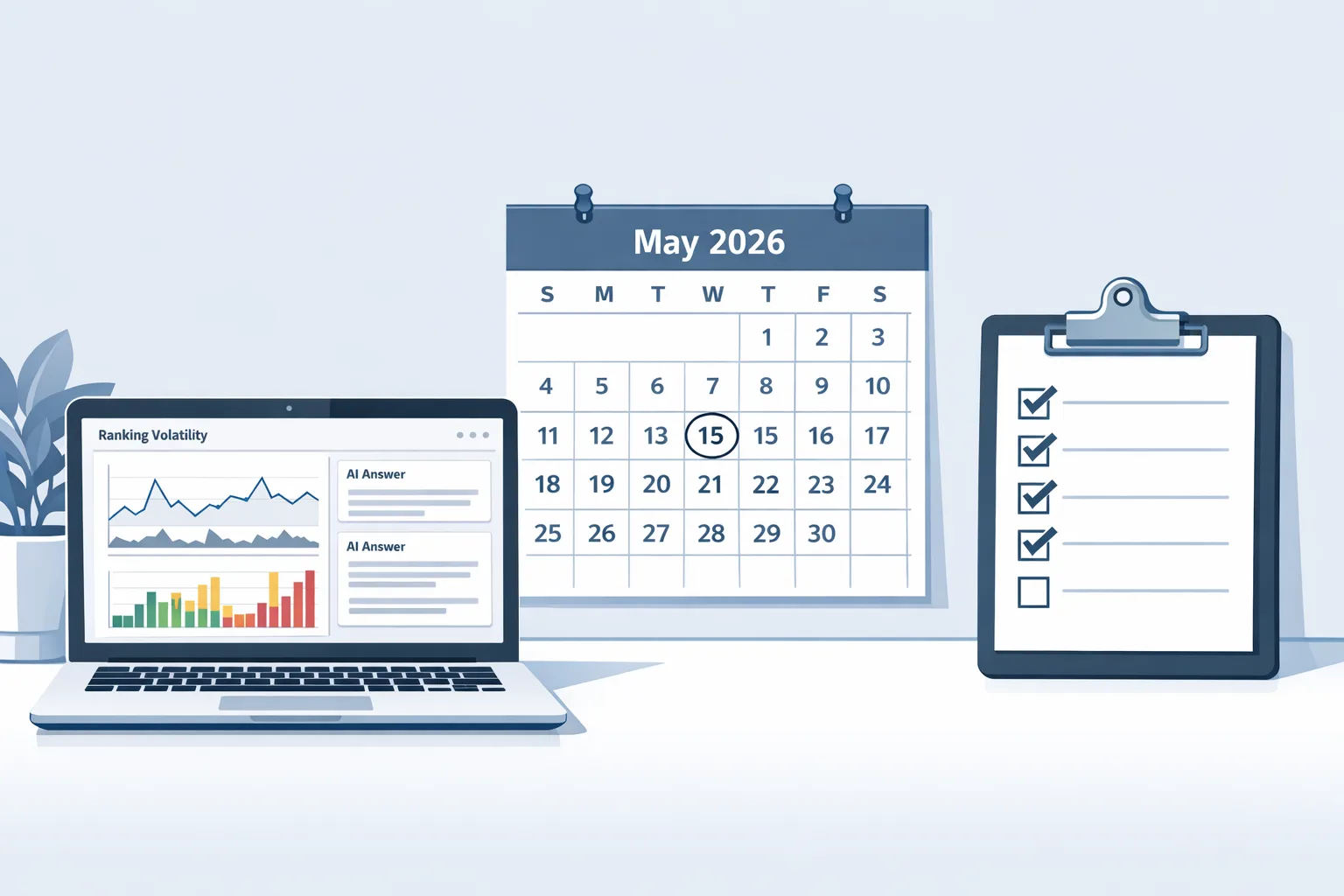
The Google May 2026 core update started rolling out on May 21, 2026 and is expected to take up to two weeks. It arrives right after Google I/O’s AI Search announcements and follows a May 15 documentation change clarifying that Search spam policies apply to generative AI responses (AI Overviews and AI Mode). Add Google’s new enforcement for “back button hijacking” beginning June 15, and you’ve got ranking recalibration, AI answer visibility, and UX compliance converging at once.
Here’s the thing: chasing early swings is how good sites make bad decisions. During rollouts, we focus on signal, not noise—collect clean baselines, patch true policy risks, and ship content improvements that stand regardless of algorithm mood.
What actually changed—and what stayed the same
Core updates rebalance multiple ranking systems to surface more relevant, satisfying results. The Google May 2026 core update is the second broad update this year (after March 27–April 8) and lands days after Google publicly framed the biggest upgrade to the Search box in 25+ years at I/O (May 19). On May 15, Google also clarified that its spam policies govern AI Overviews/AI Mode answers, closing a tactic gap some were abusing. Separate but related: Google added “back button hijacking” to its malicious practices policy, with enforcement beginning June 15, 2026.
Zooming out, none of this overturns fundamentals. Sites that steadily improve expertise, originality, and UX tend to rebound; sites leaning on scaled, derivative, or UX‑hostile patterns tend to slide. The difference this time is the AI surface area: what you publish can now influence (or get excluded from) synthesized answers as well as classic blue links.
Timeline snapshot you can brief your stakeholders
• Feb 5–27, 2026: Discover core update completes.
• Mar 24–25, 2026: March spam update enforces existing policies.
• Mar 27–Apr 8, 2026: March core update completes in ~12 days.
• May 15, 2026: Spam policies clarified to cover AI Overviews/AI Mode.
• May 21, 2026: Google May 2026 core update begins; allow up to two weeks.
• June 15, 2026: Enforcement starts for back‑button hijacking.
The 7‑Day triage and 30‑Day rebuild (what to do when rankings wobble)
Let’s get practical. When visibility moves during a rollout, we run a two‑phase plan: stabilize first, then rebuild.
Days 1–7: Stabilize and get clean baselines
1) Freeze risky changes. Don’t mass‑rewrite copy or redirect clusters mid‑rollout. Document open tickets; schedule them for after completion unless they’re policy risks.
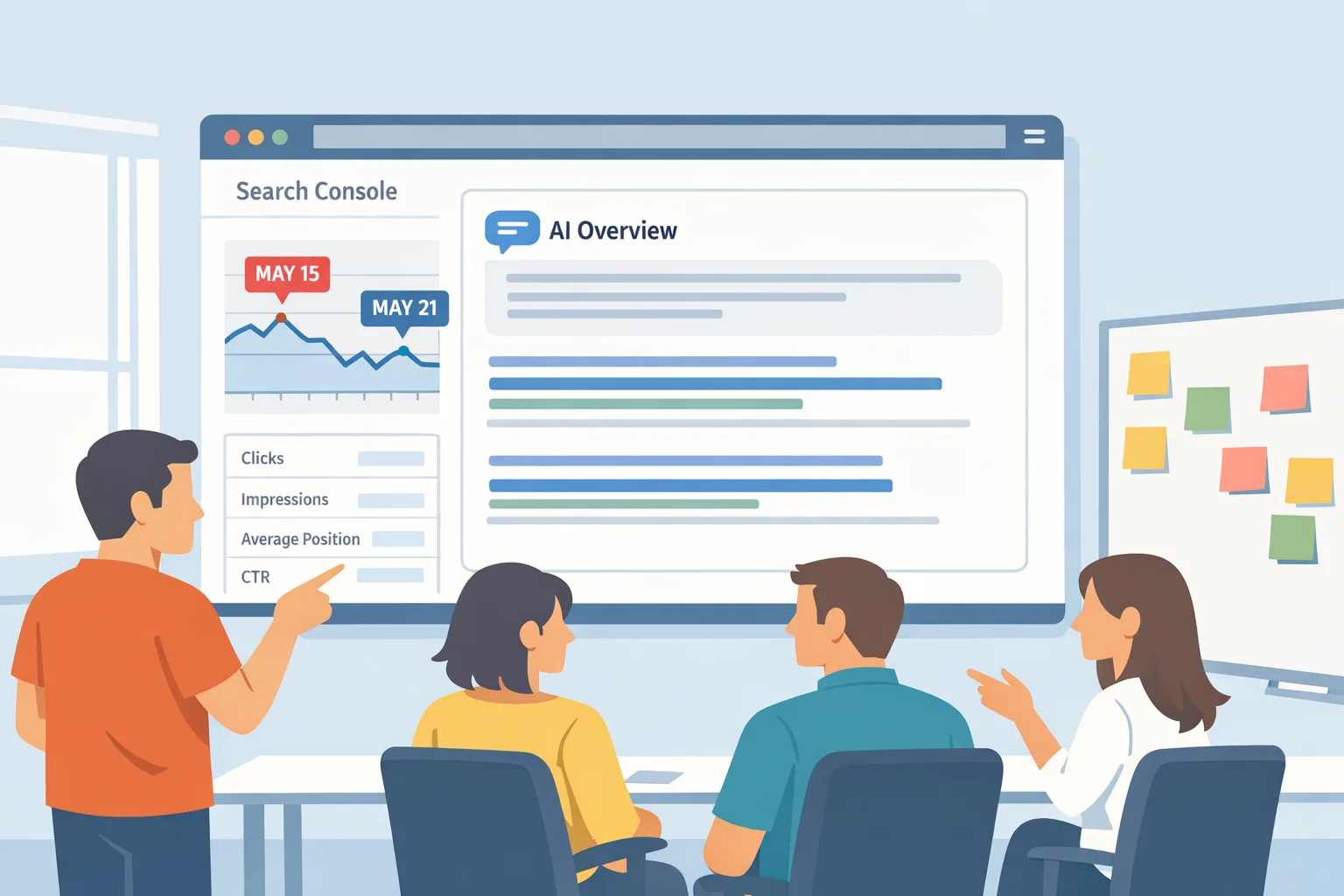
2) Capture pre‑update baselines. Export Search Console query/page data for May 1–20 and annotate the property on May 21. Mirror in analytics to separate SEO from other channels.
3) Segment drops by intent and feature. Break out keywords where AI Overviews appear versus pure blue‑link SERPs; separate commercial vs informational queries; isolate Discover and Top Stories if relevant.
4) Quick policy + UX sweep. Remove or disable anything that could trigger spam actions: doorway‑style location pages, scaled boilerplate with no utility, auto‑generated reviews, and any script that tampers with browser history (back‑button hijacking).
5) Compare winners/losers by content type. If guides are up while thin category pages slide, that’s a directional signal for the rebuild phase.
Days 8–30: Rebuild the moat
1) Consolidate duplication. Merge overlapping articles; canonicals are not a substitute for editorial consolidation.
2) Upgrade “evidence density.” Add first‑party data, original screenshots, code samples, formulas, and decision criteria. Replace generic tips with verifiable steps and outcomes.
3) Improve intent fit. If a query expects a tutorial, make the tutorial scannable: prerequisites, exact steps, expected output, and failure modes. If it’s a product/service query, add comparison tables and eligibility tradeoffs users actually weigh.
4) Refresh author and site signals. Strengthen bylines, link to author credentials, and add decision logs or changelogs to high‑stakes pages so readers (and systems) see upkeep and accountability.
5) Tighten internal linking. Route equity to canonical versions, bind related resources with descriptive anchors, and prune orphaned content. If you need a partner to structure this with design/dev, see our services overview.
Optimizing for AI Overviews without “optimizing for AI Overviews”
Yes, your content can be cited in AI Overviews and AI Mode. No, you shouldn’t chase gimmicks. With spam policies explicitly covering AI responses, the safest route is the most boring: be the best source to quote.
What works in practice:
• Make your answers excerpt‑ready. Lead with the concise, correct answer in one or two sentences, then support it with steps, data, and edge cases. Use natural headings that map to common sub‑questions.
• Provide original proof. Tables with measured results, GitHub links, before/after screenshots, ingredient specs—whatever “proof” looks like for your niche.
• Structure your content. Use schema where it adds value (HowTo, Product, FAQ, Recipe), but don’t spam. If you can’t maintain it, don’t deploy it.
• Cover counter‑cases. Add “When this won’t work” and “Alternatives” sections. Synthesis systems favor sources that acknowledge limits.
What to avoid now that policies cover AI answers:
• Building pages solely to bait AI snippets (e.g., micro‑answers with no substance).
• Fabricated “best of” lists with undisclosed affiliation or no evaluation criteria.
• GEO/AEO‑style tactics that manufacture mentions or inject brand claims without evidence.
New spam enforcement risk: back‑button hijacking
If your site (or your ad stack) manipulates browser history so users can’t return to the previous page—or inserts ghost pages into the history—you’re in the crosshairs. Enforcement begins June 15, 2026. Audit now:
• Manually test back navigation on mobile and desktop across key templates (article, category, checkout).
• Review third‑party scripts (ad tech, widgets, overlays). Remove anything that rewrites history or traps users.
• Add regression checks to QA so this doesn’t sneak back in after a marketing tag change. If you need a repeatable shipping process, our web delivery playbook shows how we gate UX and SEO checks before launch.
The 5×5 Content Upgrade Grid (ship this in week two)
When a page loses ground, teams argue “quality” in the abstract. This grid forces concrete changes. Pick five high‑potential URLs and apply five specific upgrades each:
1) Clarify the job to be done: State who the page is for and the exact outcome it enables.
2) Add a worked example: Screenshots, code, or a mini case with inputs/outputs.
3) Quantify: Time to complete, cost range, performance delta, or acceptance criteria.
4) Expand alt paths: “If A fails, try B or C”—include tradeoffs.
5) Cite and compare: Link to primary specs, standards, or docs; contrast approaches fairly.
Track: re‑crawl dates, new impressions, AI Overview citations (where visible), and assisted conversions, not just average rank.
Technical hygiene that still moves the needle in 2026
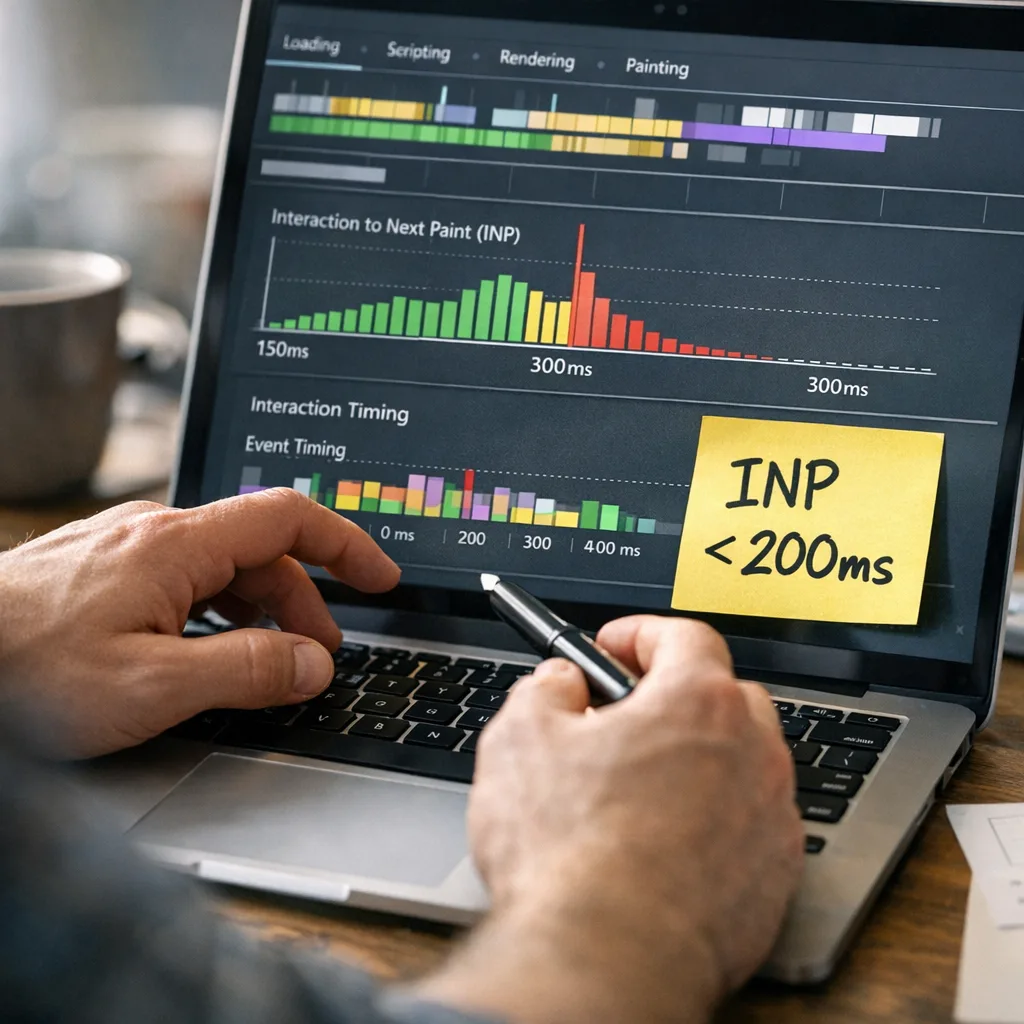
• INP and responsiveness. Laggy interaction tanks satisfaction. Measure real‑user INP and fix long tasks; don’t only chase Lighthouse lab scores.
• Crawl budget sanity. If you’ve created thousands of low‑utility faceted pages, rein it in with robust canonicals, noindex where warranted, and internal link restraint.
• Sitemaps that pull their weight. Keep lastmod accurate, separate news/video if you publish them, and don’t stuff expired URLs.
• JavaScript transparency. Server‑render critical content or ensure hydration timing doesn’t hide essentials from users (and systems).
• Programmatic scale, done responsibly. If you ship at scale—locations, SKUs, docs—ensure templates produce genuinely helpful differentiation (unique attributes, policies, or specs), not just templated city swapping.
Will the May 2026 update hit ecommerce, SaaS, or publishers hardest?
Expect cross‑category impact. Given the recent cadence (Discover, spam, then two core updates inside 60 days) and the I/O push toward AI Search, sites that win tend to show clear usefulness and upkeep: fresh pricing and SKU availability, transparent specs, return/warranty terms; for SaaS, implementation depth and comparison clarity; for publishers, original analysis, reporting, or tested walkthroughs over rewritten summaries.
How to explain swings to executives without hand‑waving
Use this one‑slide template:
• What changed (dates): May 15 policy clarification (AI Overviews coverage), May 21 core update start, June 15 back‑button enforcement.
• What we saw: net change in clicks/impressions for [priority segments], and AI answer presence where applicable.
• What we shipped: policy/UX fixes, evidence upgrades, consolidation.
• What’s next: 30‑day rebuild goals and owners.
If your leadership wants budget clarity for sustained fixes, share our breakdown on what web development really costs in 2026 and how to scope durable SEO work into product cycles.
People also ask
How long will the Google May 2026 core update take?
Google indicated up to two weeks from May 21, 2026. Don’t call winners or losers until at least a week after completion; then compare against pre‑update baselines.
Should we change content during rollout?
Fix policy risks immediately. Otherwise, queue material rewrites until the rollout completes so you can isolate cause and effect.
Do spam policies really apply to AI Overviews and AI Mode?
Yes. On May 15, 2026, Google clarified that existing Search spam policies also govern generative AI responses. Tactics designed to manipulate AI answers can now trigger the same consequences as classic web spam.
What is back‑button hijacking in practice?
Anything that traps users by breaking expected browser back behavior—like rewriting history to insert a page the user never visited. Enforcement begins June 15. Audit your site and vendor scripts now.
The E‑E‑A‑T evidence checklist for the AI era
Use this page‑level checklist on any URL you expect to rank or earn AI citations:
• Stakes and scope: Is the user’s goal explicit? Are we solving it end‑to‑end?
• Credentials: Is there a named author with relevant experience? Is there a way to contact or verify?
• Verifiable proof: Data tables, screenshots, code, videos, or photos you created—clearly labeled.
• Maintenance: Last updated date with a brief changelog; external references refreshed to current versions.
• Balance: Are risks, alternatives, or “don’t do this if…” scenarios clearly presented?
If you need help turning this into a repeatable cadence, our team’s approach to discovery, QA, and launch is outlined in Our Web Development Process. For selecting a long‑term partner, here are the 10 questions we recommend asking any web development agency.
Instrument your monitoring like it’s 2026, not 2016
• Search Console: Track clicks, impressions, and CTR by page and query; segment by appearance where available (e.g., AI surfaces vs classic). Annotate May 15 and May 21.
• Log files: Watch crawl rate shifts after publishing major consolidations.
• Real‑user performance: INP and LCP from field data; correlate interaction lag with bounce/engagement changes.
• Content inventory: Maintain a living map of topics, owners, last updated, and evidence assets—so refreshes are routine, not fire drills.
What to do next (this week)
1) Annotate and export: Lock in pre‑update baselines (through May 20) and annotate May 21 in your tools.
2) Policy and UX sweep: Remove back‑button traps, doorway clusters, thin scaled pages, and synthetic reviews.
3) Pick five URLs: Run the 5×5 Grid upgrades; schedule two more batches over the next 30 days.
4) Consolidate overlap: Merge look‑alike content; update internal links to the canonical.
5) Brief leadership: One slide with dates, impact, shipped fixes, next 30‑day plan.
The temptation is to chase the algorithm. Resist it. Build the site you wish your competitors had to outrank—clear intent fit, real expertise, and crisp UX. That strategy travels well across blue links, AI Overviews, Discover, and whatever Google ships next.

If you want a partner to help you execute this calmly and quickly, explore our services and recent client work. Let’s ship the right fixes, on time.






Comments
Be the first to comment.