
The 30‑Day AI Model Review: A Developer’s Playbook
The AI model review isn’t a thought experiment anymore—it’s a real, time‑boxed stage before you ship a powerful model. Since early June 2026, federal agencies have been tasked with offering a voluntary prerelease review for “frontier” systems. Over the first two weeks of August 2026, industry briefings clarified that the framework would remain nonpublic for now while the 30‑day window stays intact. If your team is planning a Q4 model launch, assume you’ll need to show how you secure access, document risks, and validate capability claims inside that window.
What changed between June and August 2026
Here’s the thing: on June 2, 2026, the White House directed agencies to stand up a voluntary prerelease review for advanced models, with access for the government and selected partners up to 30 days before broader release. By August 3–5, 2026, major labs received briefings but the final playbook wasn’t posted publicly. As of August 14, 2026, the implementation remains “voluntary,” but the policy signal is unmistakable—if you sell to public‑sector or critical‑infrastructure buyers, opting in will quickly become a procurement expectation.
The framework points to specific guardrails: confidentiality around model access, cybersecurity controls, insider‑risk mitigation, and protection of IP. It also introduces a designation concept (whether your system is considered a “covered frontier model”) that hinges on capability and risk, not just parameter counts. Translation: teams will need to maintain consistent, defensible evaluations and a clean audit trail for how those evaluations were produced.
Does this voluntary AI framework apply to you?
Ask three questions to triage scope fast:
- Are you releasing a closed‑source model (weights not publicly released) with capabilities at or near the state of the art for your domain (general reasoning, multi‑modal synthesis, code generation, or agentic autonomy)?
- Will you market, pilot, or sell into public‑sector, defense, healthcare, finance, energy, or other critical‑infrastructure use cases within the next two quarters?
- Could misuse or failure produce national‑security, safety, or significant economic harm—directly or via scaled exploitation (e.g., automated vulnerability discovery, social engineering at scale, or bio‑risk assistance)?
If “yes” to any two, treat the 30‑day AI model review as a gating milestone in your release plan. If you’re strictly open‑source today, you’re likely out of formal scope—but watch this space: policymakers have signaled they may revisit open‑model treatment as capabilities climb.
AI Model Review: what it covers—and what it doesn’t
Based on agency guidance and public commentary since June 2026, expect reviewers to focus on four evidence packs:
- Capability and risk characterization. Benchmarks, red‑team results, jailbreak resistance, and evidence of guardrail efficacy under adversarial prompts and tool use. Include procedures, seeds, and reproducibility notes.
- Secure access design. How weights and inference endpoints are protected, who can touch what, and how exfiltration is technically prevented (not just policy‑blocked). Rotations, KMS policies, HSM boundaries, and signing attestations matter.
- Data lineage and IP hygiene. Training data classes, licenses, filtering pipelines, deduplication, and processes for honoring takedowns. Show that your synthetic data loops don’t create degenerative feedback.
- Operational controls. Runbooks for abuse response, rollbacks, and patch cadence. Prove you can hot‑fix system prompts and tool policies without destabilizing production.
What’s likely outside the 30‑day window? Full‑blown algorithmic transparency (e.g., gradient‑level explainability) isn’t required; neither is handing over weight files to be copied. Still, assume secure interactive access for evaluation, with strict logging and containment.
Practical checklist: pass prerelease review without slipping your date
Use this 10‑step flow. It’s tuned for small to mid‑size AI product teams but scales to platform labs.
- Decide the path: Opt‑in or out? If public‑sector or regulated buyers are in your pipeline, treat opt‑in as default and advertise it as a trust signal.
- Define your model card+ (add an evaluation dossier): include benchmark suites, adversarial test harnesses, and real misuse scenarios tied to product features.
- Build a “clean room” review enclave: separate VPC, short‑lived credentials, read‑only weight mount, egress‑restricted inference, immutable logs, and one‑click shutdown.
- Instrument the red team: mix human red‑teamers and automated agents. Target tool‑enabled chains (file I/O, web access, code execution) and multi‑turn jailbreaks.
- Document data rights: training corpus classes, licenses, and removal pipeline. Maintain a living data provenance ledger with sampling proofs.
- Prepare incident runbooks: jailbreak discovered? You’ve got a 24‑hour hot‑patch SLA, guardrail tests, and comms templates—prewritten.
- Attest the build: supply chain SBOM for model, serving stack, and agents. Sign artifacts and pin dependency hashes in CI.
- Stage the release: flags and cohorts for progressive exposure; kill‑switch coverage down to tenant or feature level.
- Brief your GTM team: one slide on review status, what you’ll share, and what you won’t; align sales language with legal and security.
- Rehearse the review: 60‑minute dry run with a “reviewer” squad. Timebox evidence retrieval and Q&A to 30 minutes. Ship fixes the same day.
If you need help tightening CI/CD or secret hygiene ahead of review, borrow ideas from our field notes on locking down GitHub Actions in high‑trust pipelines and our secret scanning playbook for dev teams.
People also ask: Is the voluntary AI framework actually mandatory?
Not by statute—at least as of August 14, 2026. But “voluntary” often becomes table stakes in practice. If your customers are government agencies or vendors that sell into them, expect RFPs and security questionnaires to ask whether your frontier model completed a federal review. Even commercial enterprises in critical industries will borrow the expectation. Plan for it like you plan for SOC 2: optional until it isn’t.
People also ask: Does the AI model review cover open‑source?
Today, the center of gravity is closed‑source, frontier‑class systems. That said, open models are sprinting up the capability curve, and regulators have publicly wondered how they should be treated. Two pragmatic bets: (1) the bar will track capability, not license; (2) distribution channels (app stores, cloud marketplaces) will start proxying the requirement. If you ship open weights with hosted endpoints, align your hosted offering with the same review‑ready controls.
Build a secure review environment in a week
Here’s a minimal, battle‑tested design we’ve used with clients to enable evaluation access without handing over the crown jewels.
Day 1–2: Isolate
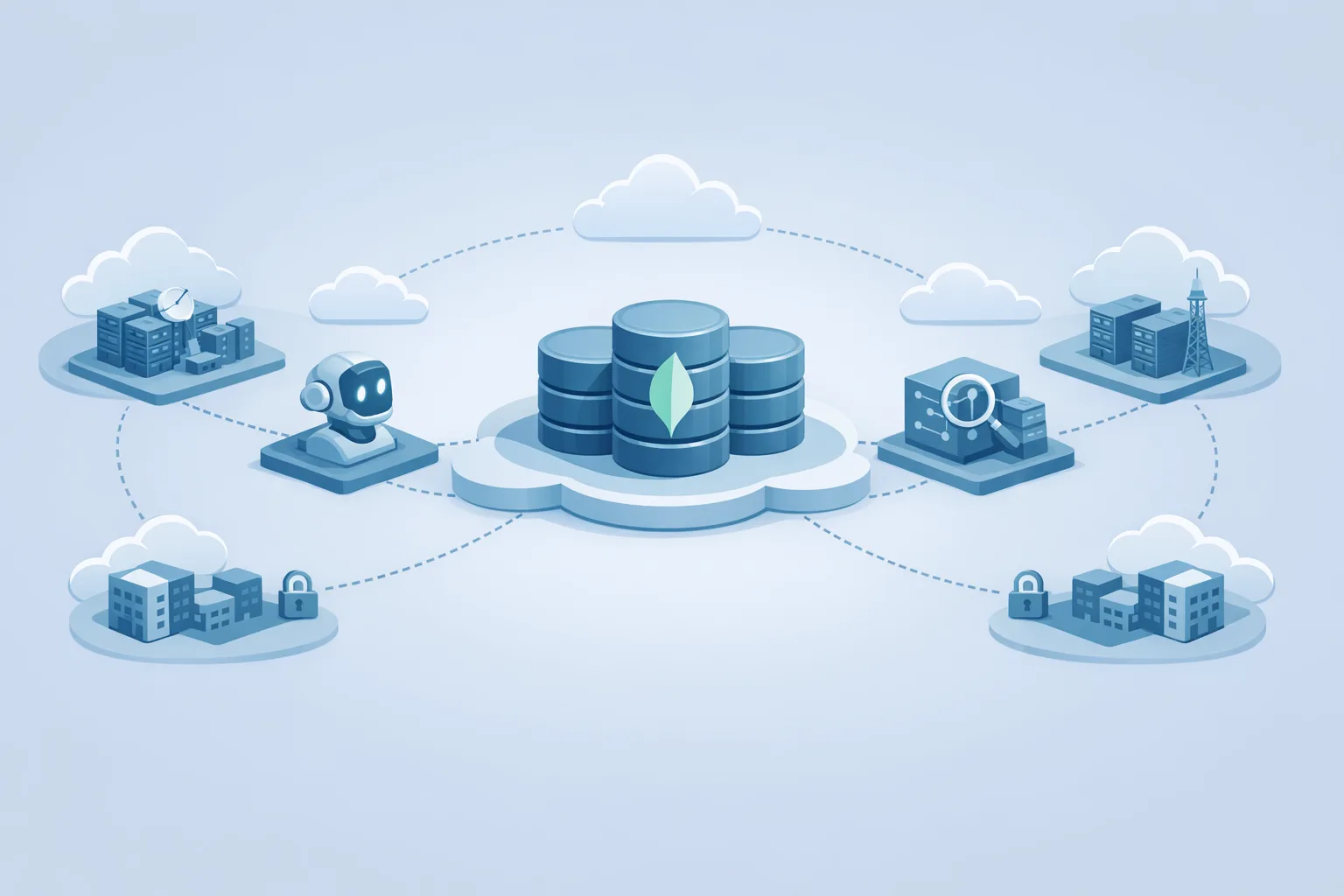
Stand up a dedicated VPC/VNet for the review. Use a separate cloud account or subscription, deny cross‑account listing by default, and provision a read‑only snapshot of the model weights into an encrypted volume. No public subnets; force all reviewer traffic through a bastion with SSO and device posture checks.
Day 3: Lock down egress
Inference services talk to nothing except your metrics and logging endpoints. Use private link/service endpoints for observability. Deny DNS to the public internet. If reviewers need tools (e.g., a code interpreter), stub them to sandboxed services with file‑type allowlists and size caps.
Day 4: Prove who did what
Turn on immutable audit logs (object‑lock/S3 or append‑only equivalents). Log prompts, tool calls, and system prompts with secure redaction for sensitive fields. Sign logs at write time. Expose real‑time dashboards to the review team and export a daily signed digest.
Day 5: One‑click teardown
Create an automated workflow that revokes reviewer identities, rotates keys, detaches volumes, and destroys the enclave with a single approval. Capture a final evidence bundle: hash report of reviewed artifacts, benchmark summaries, and notable findings with follow‑up SLAs.
If you want a hand stitching this into your delivery pipeline, see how we approach secure shipping on our AI & cloud engineering services page and scan recent work in our portfolio.
Evaluation that stands up to scrutiny
Most reviews stall because teams present pretty charts without the procedural guts. Give reviewers everything they need to replay your claims:
- Benchmark hygiene: pin versions, seeds, and prompts. Include calibration runs to show variance. Explain why a given suite is material to your product’s risks.
- Red‑team coverage: map tests to concrete harms (credential phishing, data exfiltration via tools, code‑gen exploits). Show mitigations and re‑test results.
- Long‑context and agent tests: many failures emerge over 20+ turns or during tool planning. Include traces that demonstrate your guardrails still apply when the model chains actions.
- Human factors: document operator training for reviewers and for your SOC. When an alert fires, who decides to block or throttle? What’s the escalation ladder and the paging policy?
Pair your evaluation with clearly defined kill‑switches. A reviewer will ask, “What happens if we find a jailbreak the day before launch?” Your answer can’t be “We’ll figure it out.” It must be, “We can revert the system prompt, disable high‑risk tools, and rotate secrets within two hours—here’s the runbook and a video of the drill.”
Data provenance and IP: how clean is your story?
Expect pointed questions about training data: license scope, opt‑outs, and filtering. Maintain a data provenance ledger that tracks sources by class (open‑licensed, commercial, internal, synthetic), hash samples for spot audits, and shows deduplication and toxicity filtering steps. If you fine‑tune on customer data, isolate that pipeline, enforce contractual use limits, and ensure you can purge by tenant with proofs of deletion.
On the output side, clarify your content provenance approach (e.g., C2PA or watermarking) and your logging posture for disputes. You don’t need to watermark everything, but you do need to explain what signals you emit and why they’re sufficient for your use case.
GTM and contracts: don’t let legal slow engineering
Pre‑wire NDAs and evaluation terms with confidentiality, IP use boundaries, insider‑risk requirements, and liability protections. Align messaging so sales doesn’t promise weight access or unrestricted corpus dumps. Put one page in your deck that explains the AI model review plan, who gets access, what data is retained, and the teardown timeline. The faster you answer these questions, the less time you’ll spend in procurement limbo.
We’ve seen teams save weeks by mentioning review readiness in RFP responses and by adding a short appendix to their security questionnaire. If you want a template set to adapt, reach out via our contact page or browse implementation stories on our blog.
But there’s a catch: the bar will keep rising
Two dynamics will tighten expectations over the next 6–12 months. First, capability growth: as small teams hit frontier‑adjacent results, policymakers will care less about license labels and more about potential impact. Second, buyer pressure: enterprise and public‑sector security teams love external validation; once a few marquee vendors complete reviews, everyone else will be asked to keep pace. Plan for annualized reviews, not one‑and‑done.
Edge cases and tradeoffs to watch
Small labs and startups. You can meet the bar without a platform army. Lean into commodity controls (managed HSM/KMS, short‑lived credentials) and focus your spend on red‑team coverage and logging. Buy where possible; build only the glue you need.
Fine‑tunes over base models. If you fine‑tune a third‑party base with new tool affordances (code exec, RPA, external APIs), you inherit risks that may elevate the designation. Document control points you add on top and why they’re sufficient.
Agents and long‑running tasks. The failure modes shift from single‑prompt jailbreaking to multi‑step planning errors. Your evaluation must include chain‑of‑thought alternatives (hidden vs externalized reasoning), tool permissioning, and rate‑limited retries.
Geo and export frictions. If your review process touches staff or infra in restricted jurisdictions, expect extra questions. Keep your review enclave and reviewer identities wholly domestic when selling to U.S. public sector.
What to do next (this week and this month)
This week (3–5 hours)
- Declare whether the upcoming release will seek a 30‑day AI model review.
- Assign one DRI for evaluation evidence and one for secure‑access engineering.
- Draft the one‑page “review readiness” slide and add it to every customer deck.
This month (20–40 hours)
- Stand up the review enclave and run a red‑team drill with real tools enabled.
- Publish a model card+ dossier with reproducible evaluation traces.
- Ship the incident runbook and wire the kill‑switch to a real on‑call rotation.
- Attest your build pipeline and lock secrets across CI/CD and hosting. If you need a refresher, see our field guide to hardening GitHub Actions.
Zooming out
The voluntary AI framework aims to create daylight between “we think it’s safe” and “we shipped it.” Whether you love the idea or not, it’s a forcing function to operationalize what mature teams should do anyway: document capabilities honestly, test adversarially, and treat access to powerful systems as a security problem first. Do that work now and the 30‑day AI model review becomes a calibration exercise—not a fire drill that wrecks your launch date.






Comments
Be the first to comment.