
Third‑Party Cookies in Chrome: Your 2026 Plan
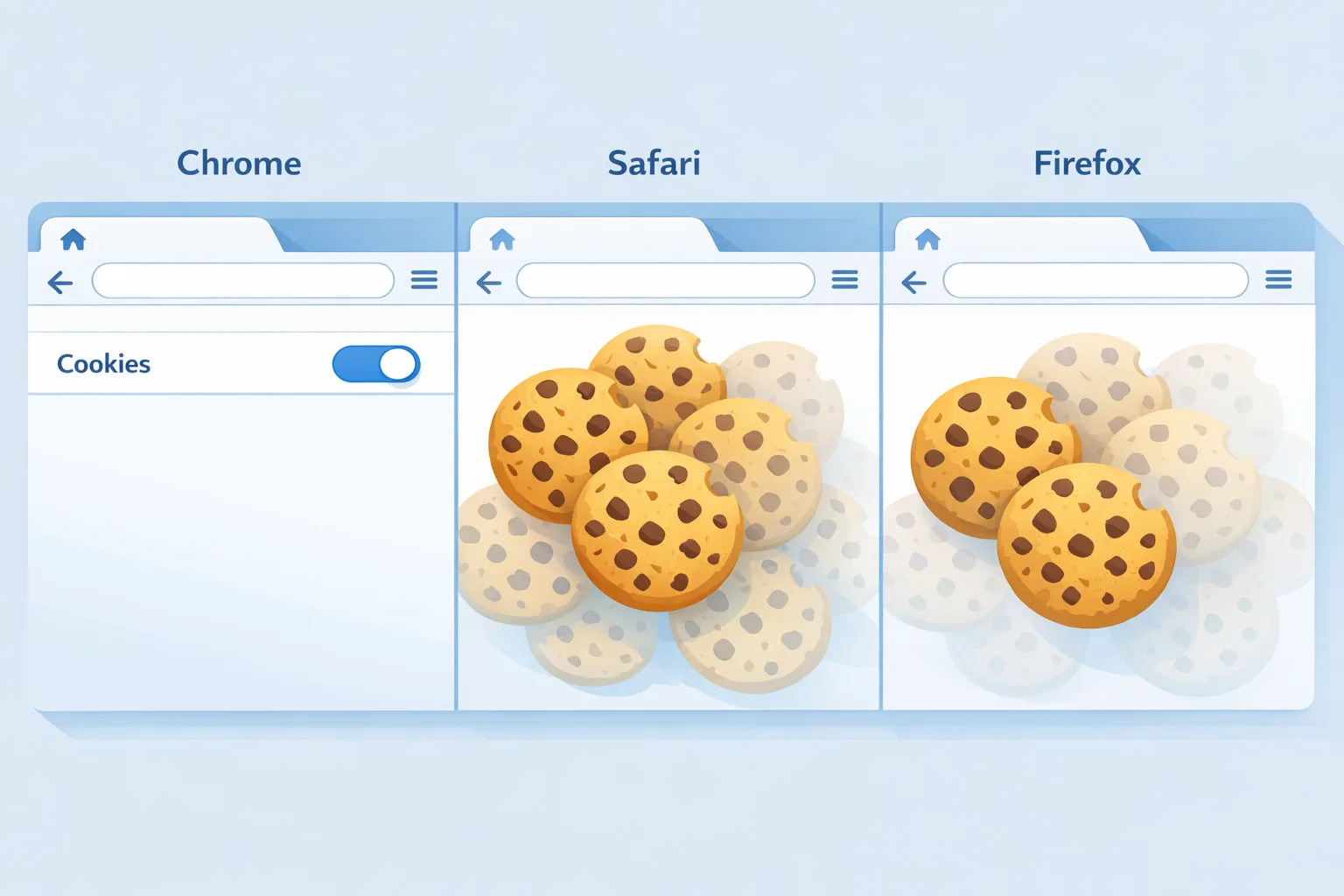
Let’s get this straight up front: third-party cookies in Chrome aren’t going away on a set deprecation timeline. After years of starts and stops, Google shifted to a user‑choice posture and regulators closed their oversight loop in October 2025. If your 2026 roadmap still assumes Chrome will hard-disable third‑party cookies for everyone, you’re planning for a world that isn’t arriving. That’s good news for continuity, but it comes with a catch: the measurement gap didn’t magically close—Safari and Firefox still block, consent still rules, and Chrome users can still block third‑party cookies at any time.
Here’s the thing: treating this as “business as usual” is how teams burn quarters and budgets. The durable advantage now is a flexible measurement stack that works across mixed environments—some with third‑party cookies, many without.

What actually changed—and what didn’t
Between January 2024 and October 2025, Chrome tested restrictions for a small share of users and introduced mechanisms to temporarily re‑enable third‑party cookies on breakage. By mid‑2024, Google publicly pivoted away from a hard deprecation, emphasizing user controls instead. In October 2025, the UK regulator that had been overseeing the rollout formally released its Privacy Sandbox commitments. Translation for your team: no big‑bang “cookiepocalypse” on Chrome in 2026.
But three realities didn’t change:
- Safari and Firefox continue to block third‑party cookies by default. Your modeling must already compensate for this.
- User consent is non‑negotiable. Without consent, you’ll see gaps in both client‑ and server‑side signals, regardless of browser.
- Chrome users can still block third‑party cookies, and enterprises increasingly enforce stricter default settings.
So yes, you can keep the pixels—if they’re compliant and useful. But your competitive edge won’t come from pixels alone.
Primary strategy: a first‑party data layer that actually works
If you’ve been “planning to get to it,” 2026 is when you either make your first‑party data layer operational or accept that your attribution will drift. The core job is simple to say and hard to do: on every meaningful touchpoint, capture durable, consented identifiers and events into your warehouse, with quality checks and replay logic.
What a solid first‑party layer includes
Think of this as your minimum viable standard across sites and apps:
- Event contract: A stable schema for product, marketing, and finance—purchase, lead, subscription, churn, and key product actions—versioned and documented.
- Identity: A privacy‑safe user key (hashed email or account ID when available) paired with session and device context. Gracefully degrade to anonymous events when consent isn’t granted.
- Consent binding: Every event carries consent state at time of collection. No consent? Don’t leak identifiers. Honor regional rules and enterprise preferences.
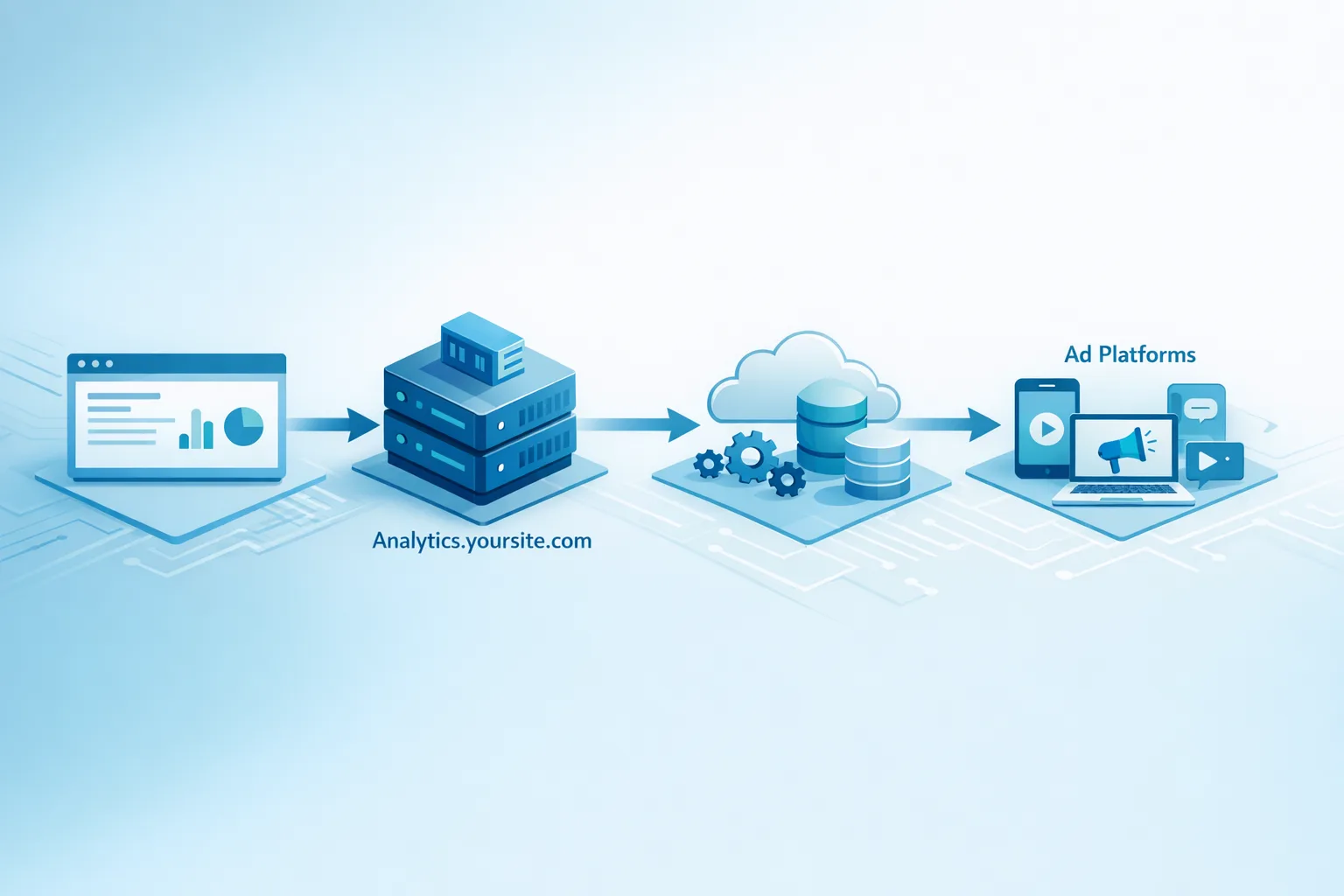
- Edge and warehouse: Stream events to a lightweight edge for real‑time needs and land in your warehouse/lake for modeling. Enforce data contracts at both points.
Once this exists, third‑party tags become optional accelerants—not critical path.
Use third‑party cookies in Chrome where they still add value
Here’s a pragmatic stance that’s working in production: enable third‑party tags that demonstrably improve activation or measurement and are backed by a data processing agreement, a clear retention policy, and a consent integration. Everything else gets disabled or moved server‑side.
Three high‑ROI uses that still make sense
- Conversion lift and holdout testing: Certain ad platforms’ native lift tests still provide incremental clarity faster than homegrown experiments. Keep them on, verify they respect consent, and map IDs to your first‑party layer.
- Remarketing where allowed: For logged‑in users with consent, third‑party cookies in Chrome keep remarketing practical and cheap. Use frequency caps and time‑bounded audiences to avoid creep and waste.
- Fraud signals: Some vendors still rely on cross‑site context to flag automated abuse. If they can prove efficacy and align with your privacy posture, they’re worth the slot.
Everything else? Push to first‑party, server‑to‑server, or drop entirely.
People also ask: Will Chrome block third‑party cookies in 2026?
No fixed end‑date is on the calendar. Chrome pivoted from a mandated phase‑out to improving user choice and controls. Expect incremental privacy features and enterprise policies to keep tightening the window for ungoverned tracking, but not a universal shutdown hanging over Q1 or Q2.
The 3×3 Measurement Plan for 2026
Use this framework to align execs, product, and growth without boiling the ocean.
1) Signals
- Consent‑bounded web events: Normalize your consent framework. Store proof and the exact policy version per event.
- Server‑side tag relay: Mirror high‑value conversions server‑to‑server with signed requests and rate limits.
- Modeled conversions: Establish a small set of models—e.g., logistic regression for propensity, Bayesian for incrementality—governed by a documented data sheet.
2) Identity
- First‑party ID: Standardize a hashed user key at login and email capture moments.
- Session stitching: Favor deterministic joins; fall back to probability only when you have coverage metrics and confidence bounds.
- Partner clean rooms: For high‑spend channels, plan a clean‑room integration where permissible to reconcile reach and conversions.
3) Governance
- Data contracts: Schemas with owners, tests, and SLAs. Break builds on contract violations.
- Access tiers: Sensitive attributes in quarantined tables; role‑based access audited.
- Drift monitoring: Weekly checks on event volume, consent rates, and match rates. Page the owner when thresholds fall.
Run this as a 90‑day program: month 1 contracts and consent; month 2 identity and server‑side; month 3 modeling and governance checks.
Server‑side tagging: when it pays, when it doesn’t
Server‑side tagging tends to reduce client bloat, improve data quality, and give you control over what leaves your domain. It’s not a magic privacy cloak and it does add infra cost.
Green lights
- High‑value conversions where browser noise causes undercount. Mirror with signed, verified server calls.
- Performance‑sensitive pages where shaving 150–300ms off tag execution matters to revenue or SEO.
- Strict consent regimes where you want a single enforcement point to avoid accidental leakage.
Red flags
- Blanket lift promises without proof. Require A/B measurement for 30 days before committing.
- Vendor lock‑in around proprietary mappers. Prefer open configurations you can move.
- “All tags, server‑side” as doctrine. Some pixels are safer, cheaper, and just fine client‑side with consent.
Consent that users actually understand
Dark‑pattern banners were already a liability; now they’re also leaving money on the table. Clear, layered notices convert better and sustain trust. Treat your banner as product: run copy tests, measure opt‑in by geography and traffic source, and tie revenue impact to variations. Then enforce consent at collection, not in post‑processing.
If you want a sanity check on UX, our team’s quick audits often find 3–5 easy wins in under a week. See how we approach engagements on our analytics and growth services page, and browse relevant case notes in our portfolio.
Attribution in a mixed world
One model won’t cut it. You need a small toolkit, each with a job:
- Rules‑based views (time decay, position‑based) for day‑to‑day channel ops. Simple, explainable, quick to compute.
- Geo‑based lift for upper‑funnel channels that don’t click well. Rotating markets, balanced calendar windows.
- Incrementality tests using platform lift where available, validated against your warehouse conversions.
- Media mix modeling when you’re at multi‑million‑per‑month spend and need guardrails across channels. Start simple; avoid overfitting.
Decide who owns which lens. Sales wants a rules‑based view, finance wants MMM guardrails, growth wants lift. That’s normal—codify it.
Timeline: the milestones that matter
Anchor your planning to real dates, not rumors:
- January 4, 2024: Chrome began testing cookie restrictions with about 1% of users, alongside temporary re‑enablement controls for breakage.
- July 2024: Google said it would not fully deprecate third‑party cookies and would focus on user choice.
- October 17, 2025: The UK regulator released the Privacy Sandbox commitments, signaling no ongoing oversight tied to a deprecation timeline.
That’s the record. Expect incremental browser privacy features to continue, but no forced Chrome cutover scheduled for 2026.
Engineering checklist: ship this in Q1–Q2
Print this. Use it in sprint planning.
- Inventory tags: List every third‑party tag, purpose, consent coverage, and last usage. Kill three you don’t need.
- Harden consent: Store consent state with every event. Add automated tests that block deploys if consent isn’t honored.
- Event contracts: Define schema, owners, and tests. Break the build on contract violations.
- Server‑side relay: Mirror only high‑value conversions with signed requests. Document error handling and replay.
- Identity plan: Capture a hashed user key wherever users log in or share email. Map it to sessions without leaking PII.
- Drift dashboards: Weekly monitoring of event volume, consent rate, and partner match rate. Page the owner on threshold breaches.
- Holdout tests: Stand up one platform lift test each for search, social, and display in the first half.
- Data retention: Enforce TTLs on user‑level tables. Archive or aggregate per policy.
People also ask: Is Privacy Sandbox dead?
No. Several APIs exist and may continue evolving, but they’re optional for most teams. Treat them like any other dependency: evaluate, A/B test, and adopt selectively where they improve reach or measurement under your consent and governance rules.
Performance and SEO side benefits
Cutting redundant tags and moving the right ones server‑side often trims 50–150KB of script and shaves 100–300ms off main‑thread time. That helps Core Web Vitals and, in turn, organic performance on competitive SERPs. If you’re planning framework upgrades, pair them with tag rationalization. Our practical upgrade guide for modern stacks—Next.js 16 + React 19: a 30‑day plan—is a useful companion.
Risk ledger: be explicit
Every dependency has a failure mode. Write them down and own them:
- Browser variability: Your metrics will diverge by browser. Report it that way. Stop pretending one number is “the truth.”
- Consent volatility: Expect consent rates to move with UX changes and headlines. Instrument and explain shifts to leadership.
- Vendor churn: Contracts and APIs change. Keep an exit plan and a canonical mapping in your repo.
- Legal exposure: Work with counsel; log consent states; honor deletion and access requests. Engineering owns the proof points.
What to stop doing in 2026
- Whack‑a‑mole polyfills that try to simulate cross‑site tracking where it’s clearly blocked. Waste of time and trust.
- Bloated tag managers with dozens of paused or unused tags. They still cost performance and risk.
- Attribution absolutism—one model, everywhere. Use the right lens for the job.
What to do next
Keep what works in Chrome, but build like Chrome could flip the switch tomorrow. That mindset will keep you ahead of policy, platform shifts, and procurement cycles.
- Week 1–2: Run a tag/consent audit and cut noise. Document your event contract.
- Week 3–6: Implement server‑side relays for top conversions; light up drift monitoring.
- Week 7–12: Launch lift tests in two major channels; socialize a multi‑model attribution view with finance and sales.
If you want a second set of eyes on your stack or help landing the first‑party layer, talk to us. Or browse the rest of our blog for hands‑on upgrade and policy guides, including mobile distribution changes that can impact your growth mix.

FAQ: quick answers for busy stakeholders
Do we still need a CMP if Chrome isn’t deprecating?
Yes. Consent is a legal and brand requirement, not a Chrome requirement. You also need it to run clean experiments and model conversions credibly.
Should we migrate everything to server‑side?
No. Move the highest‑value conversions first and keep low‑risk utility tags client‑side with consent. Measure performance and accuracy before broadening scope.
Can we keep remarketing audiences in Chrome?
Yes—when you have consent and the program is respectful on frequency and duration. Bake in caps and audits; sync audiences with your first‑party layer.
Will a future Chrome release change the picture?
Expect steady privacy improvements and enterprise policy shifts, not an abrupt, universal shutdown. Build like you could lose third‑party cookies tomorrow, but don’t stall vital growth programs today.
Zooming out, this is a relief for teams that planned for continuity—and a wake‑up call for those who outsourced measurement to a handful of pixels. Your advantage in 2026 is the boring stuff done well: consent tied to every event, clean contracts, tight identity, and a small, honest attribution toolkit. Ship that, and you’ll grow through whatever the browser wars throw at you next.




Comments
Be the first to comment.