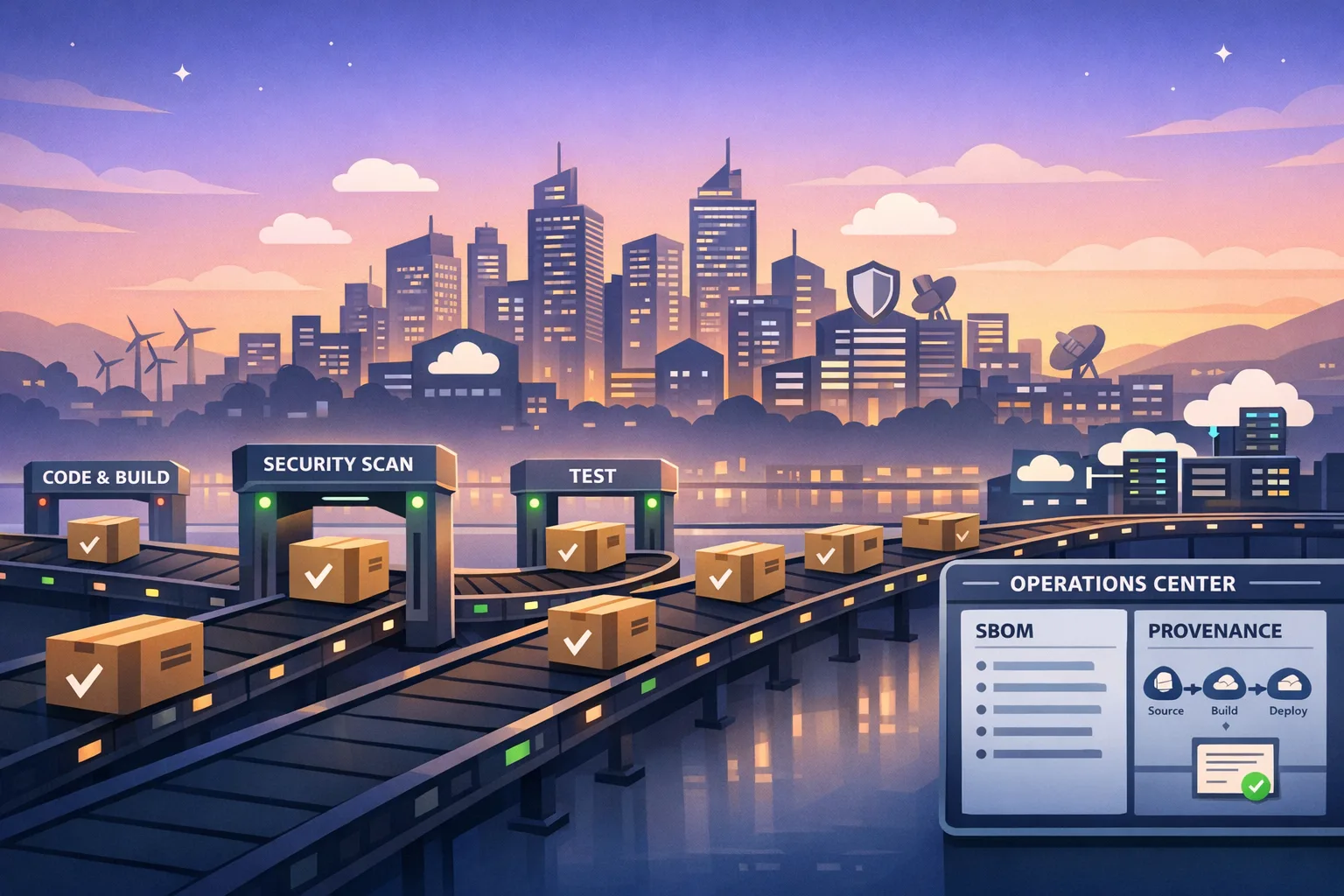
Software Supply Chain Security: 2026 Playbook
If you ship on the web or mobile, software supply chain security is no longer a nice‑to‑have—it’s the first gate your code hits after CI. December incidents reminded every CTO what happens when one package turns into an outage and a comms drill. The good news: the hardening work is repeatable, measurable, and it doesn’t have to grind feature velocity to a halt.
What changed at the end of 2025—and why it matters now
Here’s the thing: dependency risk isn’t theoretical anymore. A single publish can land in your transitive tree within minutes via caret ranges and automated updates. The blast radius isn’t just production; it hits build hosts, CI secrets, app telemetry, and even customer support if you’re forced to cut a hotfix on a holiday weekend. As of January 1, 2026, the teams that handle this well do three things consistently: they know exactly what’s in their builds, they verify who created it, and they can rotate or replace components in under 72 hours without chaos.
Most modern frontends and Node backends pull in hundreds—sometimes thousands—of transitive packages. That isn’t a moral failing; it’s how the ecosystem composes. The move is to reduce implicit trust and make integrity decisions explicit and automated. If your lockfiles, artifact signing, and promotion gates are disciplined, a compromised dependency becomes a routine maintenance event, not a board update.
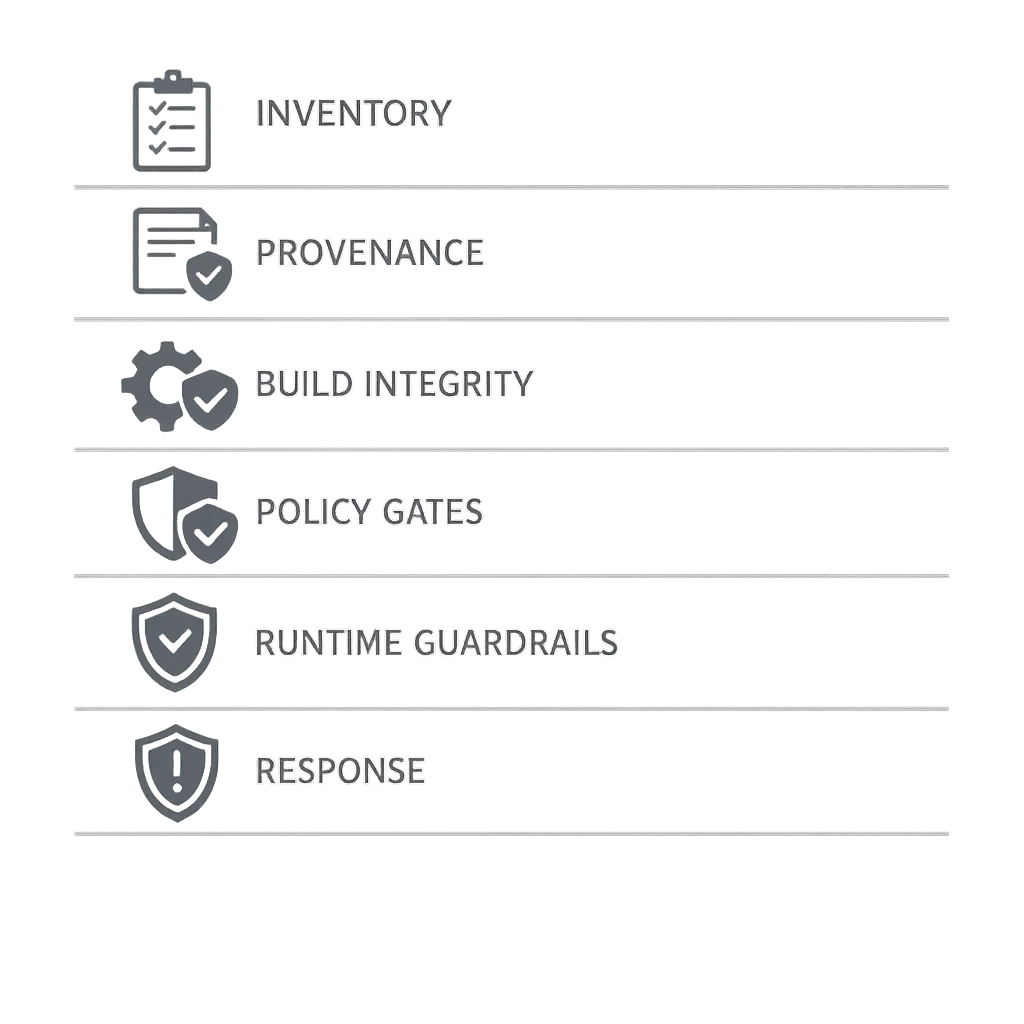
A 6‑part Software Supply Chain Security model for 2026
Think of this as a layered defense you can implement incrementally. Each layer blocks silent drift and speeds up incident response when something slips through.
1) Inventory and trust baseline
You can’t defend what you can’t name. Start with a living inventory per service: package manager lockfiles, a generated SBOM (CycloneDX or SPDX) for every build, and a manifest of external services called at build and runtime. Pin registries by scope and mirror hot dependencies to an internal cache. Establish a single source of truth for “what got shipped on Monday” that auditors and engineers both accept.
For JavaScript apps, treat package-lock.json or pnpm-lock.yaml as artifacts, not suggestions. Make lockfile changes a first‑class review item. In CI, run immutable installs (e.g., npm ci or equivalent) so no one can sneak in a surprise minor update during build.
2) Provenance and signing
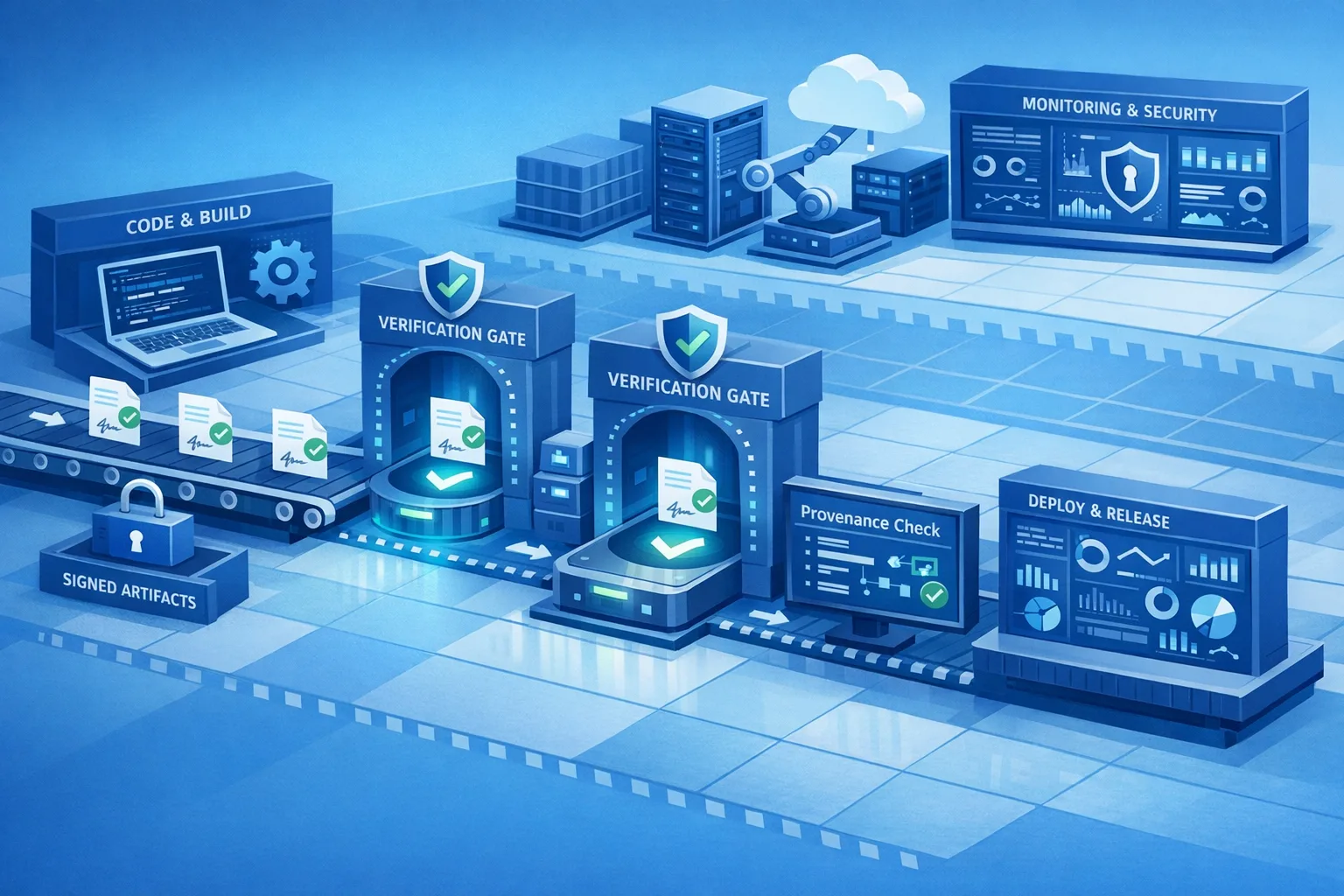
Provenance answers: who built this, from what source, with which workflow identity? Adopt build provenance in CI and sign your artifacts. For containerized services, sign images and verify before deploy. For npm publishing inside your org, use publishing tokens tied to workload identities and restrict who can publish high‑risk packages. When your artifacts and SBOMs are signed, you can prove integrity quickly without scraping logs after the fact.
Yes, cryptography adds ceremony. Do it anyway. The first time you need to demonstrate that a malicious tarball never landed in prod, you’ll be glad your pipeline enforces “no signature, no promotion.”
3) Integrity at build time
Build hosts are juicy targets. Isolate CI from the public internet as much as practical: fetch from a registry mirror, block outbound calls that aren’t necessary, and fail closed if integrity checks can’t be performed. Reproducible builds help, but even basic guardrails move the needle: immutable base images, locked toolchain versions, and ephemeral runners with short‑lived credentials.
On the web side, enable Subresource Integrity (SRI) for any third‑party script you must load. For mobile apps embedding webviews, lock down allowed domains and audit that list quarterly. Integrity isn’t just build‑time; it’s also what you allow into the runtime envelope.
4) Policy and gates
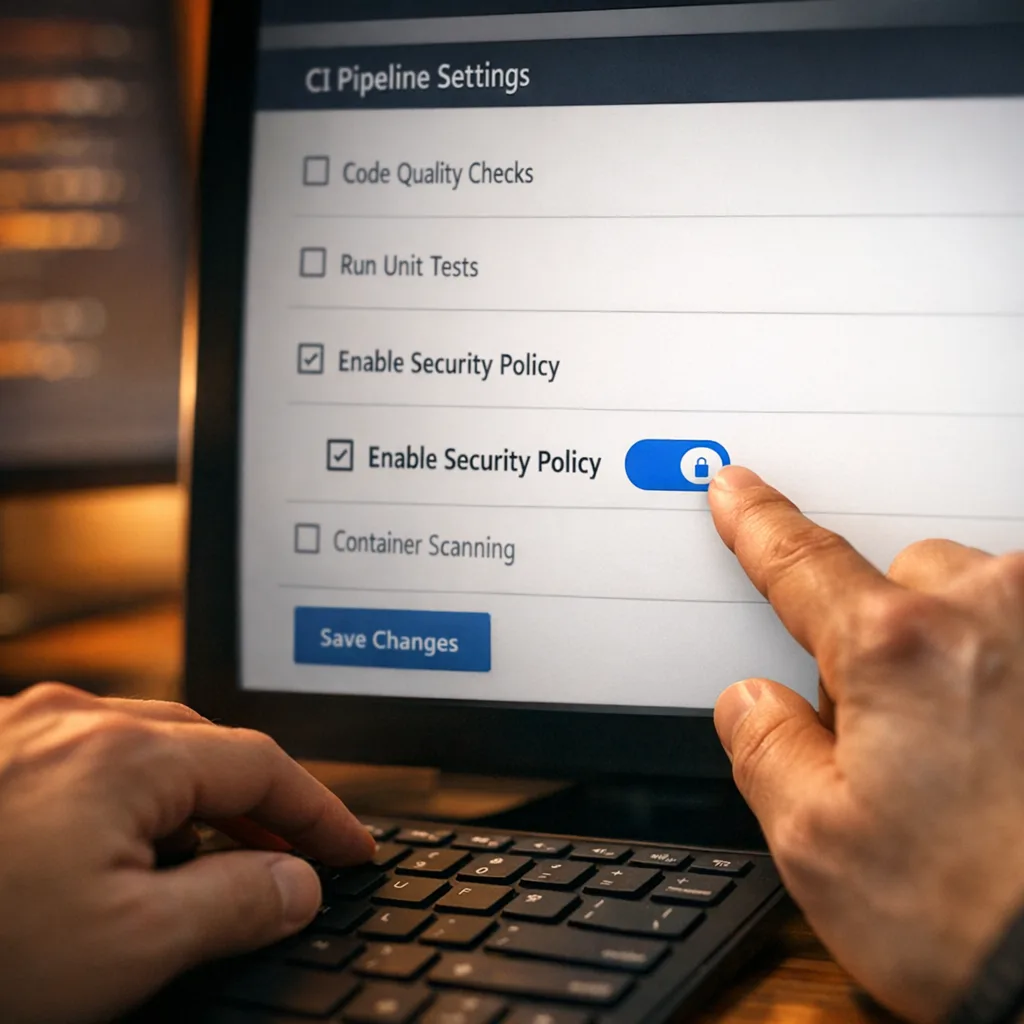
Codify risk decisions so you stop having the same debate every Thursday. Define policies such as “reject unsigned artifacts,” “block new dependencies without a license match,” or “no high‑severity advisories in production images.” Express them in code and enforce them in promotion pipelines. If you follow maturity models like SLSA, set a practical target per system. Level targets are optional; enforcement is not.
Policy gates aren’t there to be punitive. They’re your brake‑assist. People make mistakes; gates catch them early when fixes are cheap.
5) Runtime guardrails
Assume something will slip. Limit blast radius with minimal runtime permissions, egress allowlists, and secrets that rotate automatically. Use read‑only file systems for containers when possible. Observability should include unusual package loads or network calls during startup; that’s often the first smoke you’ll see from a compromised dependency.
For frontends, content security policy (CSP) with strict script-src and connect-src rules reduces the damage a malicious script can do. Pair that with feature flags that let you dark‑launch fixes without a drawn‑out deploy dance.
6) Rapid response: patch and prove
When an issue hits, speed plus evidence wins. Your runbook should include: a reproducible way to rebuild from a clean baseline, a search of all services for the affected version, a fast lockfile patch process, and a promotion path that produces signed artifacts and a signed SBOM. Then you capture proof: hashes before/after, affected services and versions, and the deployment windows.
If you want a battle‑tested flow, use our 72‑Hour Patch‑and‑Prove Plan. It’s designed to take you from triage to executive sign‑off without improvisation.
Let’s get practical: the 14‑day checklist
Two weeks is long enough to change your posture without derailing your roadmap. Run this as a focused security sprint with a clear definition of done.
- Day 1–2: Baseline. Generate SBOMs for your top five services and store them with build artifacts. Turn on immutable installs in CI.
- Day 3–4: Lock the gate. Add a promotion job that verifies artifact signatures and SBOM presence. Fail the build if they’re missing.
- Day 5–6: Mirror and pin. Stand up a private registry/cache for npm and point CI to it. Pin scopes to your mirror.
- Day 7: License and policy. Add an automated license allowlist and a rule to block new dependencies without review.
- Day 8–9: Secrets and identity. Convert CI credentials to short‑lived tokens and bind publishing to workload identity.
- Day 10: Runtime egress. Add egress allowlists for services and lock down webview domains in mobile apps.
- Day 11: Observability. Create dashboards for dependency diff per deploy and unusual startup behavior.
- Day 12: Playbook drill. Run a tabletop based on a transitive package compromise. Time the patch.
- Day 13–14: Close the loop. Document the process, measure the sprint, and make two policies mandatory at promotion.
When that’s done, book a 30‑minute executive readout and show concrete wins: faster rebuilds, fewer open advisories, and a signed chain from source to prod.
People also ask
What is software supply chain security in plain English?
It’s the set of controls that ensure the code and dependencies you ship are the ones you intended, built by the identities you trust, and promoted only when they meet your policies. Think bill of materials, signatures, and gates—not just vulnerability scanning.
Do I still need an SBOM if I already run audit tools?
Yes. Audits tell you about known issues; SBOMs tell you what you actually shipped. You need both. The SBOM becomes your ledger when you must ask, “Were we using version X on December 28?” and answer it in minutes, not days.
How do we keep velocity while adding all these checks?
Automate and scope. Put strict gates at promotion, not on every developer machine. Pre‑approve common libraries, use registry mirrors for speed, and keep policy code in the repo so changes ride normal reviews. When controls are embedded in CI, developers stop tripping over them.
Architecture patterns that reduce blast radius
Even with strong gates, design choices matter. Separate build contexts: don’t let your frontends and backends share CI credentials or runners. If one context gets messy, the other stays clean. Use immutable artifact promotion rather than rebuilding the same commit in multiple environments.
For web apps, chunk boundaries are your friend. Keep risky or fast‑moving dependencies in isolated bundles that can be swapped without redeploying the whole app. If you practice module federation, treat remote containers like external services with their own policy and signing requirements.
For mobile, keep webviews on short leashes: explicit allowlists, no inline scripts, and feature flags that let you turn off a risky integration if a partner updates a script unexpectedly. Schedule quarterly reviews of embedded third‑party SDKs; they’re dependencies too, just with nicer logos.
Metrics and proof executives will actually read
Security work sticks when you can measure it. Set a small set of product‑facing metrics that map to risk reduction and speed.
- MTTR for dependency incidents: target under 72 hours from alert to fully deployed fix across affected services.
- Signed coverage: percentage of production artifacts and SBOMs verified at promotion; target 100% for critical systems.
- Policy pass rate: percentage of builds passing promotion gates on first try; use trends to coach, not punish.
- Lockfile discipline: percentage of deploys with no unreviewed lockfile changes.
- Runtime egress noise: number of blocked outbound calls per service after allowlists go live; the curve should drop quickly.
Put these on a single page. When an incident happens, attach the page to your stakeholder update. It turns “we think we’re fine” into “here’s the evidence.”
Tooling map for 2026 budgets
Don’t buy everything at once. Start with the capabilities you can turn on in a week using platforms you already own, then add point solutions for your specific risks.
Native or already paid for: CI provenance features, artifact signing support, registry namespaces, lockfile‑aware installs, SBOM generation, dependency update bots, and policy engines. Use these first—they’re integrated, and your team won’t fight them.
Where to buy vs. build: if you operate at scale or in regulated environments, a private package registry/cache with policy enforcement pays for itself. So does a signing service integrated with your key management. For organizations running on AWS, review the managed options highlighted in AWS re:Invent 2025: What to Adopt Now and map them to your pipeline stages.
On the frontend, plan upgrades with security in mind. If you’re moving to the latest React or Next.js, fold hardening in while you touch the build. Our 30‑Day Upgrade and Security Plan for Next.js 16 + React 19 shows how to pair performance wins with stricter integrity checks.
Governance that isn’t annoying
Policies fail when they’re invisible or arbitrary. Publish a short, readable document that says: which registries and scopes are allowed, who can approve a new dependency, what the license rules are, and how to request an exception. Keep it in the repo next to code owners and tests. Short beats perfect.
Make a monthly “dependency council” meeting 30 minutes max. Review new packages, policy exceptions, and incident drill results. Limit attendees to decision‑makers so it doesn’t sprawl. The goal is to make secure the default, not turn devs into full‑time compliance officers.
What to do next (starting this week)
Pick your path based on schedule pressure. Both tracks assume you can spare a few hours per day without pausing feature work.
- 14‑day sprint: implement SBOMs, immutable installs, a signing + promotion gate, and a registry mirror. Run a drill. Ship the metrics dashboard.
- 90‑day program: add workload identity for publishing, license enforcement, egress allowlists, and runtime integrity checks. Set SLSA‑aligned goals per system and require signed SBOMs everywhere.
If you’re dealing with an active dependency incident today, go straight to the React2Shell 72‑hour playbook and pair it with the sprint above so you don’t repeat the pain next month.
Where we can help
We’ve implemented these controls for teams from seed‑stage startups to regulated enterprises. If you want a partner to stand up the mirror, wire signing into CI, and run the drill with your engineers, talk to us. Start with our secure SDLC and incident response services, skim recent case studies, and if it sounds like a fit, get in touch. We’ll help you turn supply chain anxiety into measurable resilience—without derailing the roadmap.
Final thought
Resilience isn’t about guessing the next headline. It’s about making sure surprises don’t turn into crises. In 2026, that means treating the supply chain like product code: versioned, tested, signed, and measured. Do the small, boring things now so the next “heresy in transitive dependencies” story barely dents your sprint plan.




Comments
Be the first to comment.