Node.js security releases land today, December 15, 2025, across the 25.x, 24.x, 22.x, and 20.x lines. Maintainers pre‑announced a batch that includes three high‑severity issues plus one medium and one low. If you run Node in production, this isn’t a routine point update—it’s a runtime event. Here’s a practical plan to handle these Node.js security releases without surprises.

What changed on December 15, 2025?
Earlier guidance from the Node.js project set expectations for today’s coordinated security drops on or shortly after December 15. The affected release lines are 25.x (Current), 24.x (Active LTS), 22.x (Active LTS), and 20.x (Maintenance LTS). The advisory notes three high‑severity issues, one medium, and one low. Exact CVE IDs publish with the releases, but you shouldn’t wait on the blog post to prepare; your work is to get the pipelines, base images, and rollout levers ready now.
One more calendar marker that matters: Node 18 reached end of life on April 30, 2025. If you still have anything pinned to 18.x, it won’t receive today’s upstream fixes. Several cloud platforms have been stepping down Node 18 support this quarter, so factor those deprecations into your upgrade path.
Why these Node.js security releases matter for production
Node sits at the bottom of a lot of stacks: web APIs, job workers, background queues, SSR frameworks, and CLI tools that run inside your CI. When the runtime changes, you touch far more than a package.json. Expect ripple effects on OpenSSL behavior, HTTP parsing, native addons, and the tiniest timing assumptions in tests. That’s normal. What isn’t normal is letting those ripples break production because you didn’t stage the rollout properly.
Here’s the thing: most outages during runtime patch weeks aren’t from the vulnerabilities themselves. They come from drift—Docker base images on different patch levels, native modules compiled against an older ABI, or serverless layers that didn’t get refreshed because they live in another repo.
The 48‑hour Patch Playbook
This is the short, no‑drama runbook I use with product teams. Adjust for your environment, but keep the sequence.
T‑24 to T‑12: Pre‑release prep
- Inventory services that execute Node at runtime: API servers, workers, SSR frontends, monorepo tools, serverless functions, scheduled jobs, edge handlers, and any container build steps doing server‑side rendering or static generation.
- Pin a temporary staging channel: create a branch or environment variable toggle that lets you inject the new Node patch release quickly (Docker ARG, .nvmrc bump, or runtime layer version).
- Prime caches: warm your CI module cache for each active major (20/22/24/25) so you’re not discovering build breaks at 3 a.m.
- Rebuild native addons in staging: anything with node-gyp, sharp, bcrypt, sqlite3, better-sqlite3, node-sass, or grpc should do a clean rebuild against the new headers.
- Baseline OpenSSL behavior: if you terminate TLS in‑process, confirm minimum protocol versions and cipher suites; some point releases tweak default security levels.
T‑0 to T‑+6 hours: Patch day
- Pull patched Node images/layers as soon as they’re live. For containers, rebuild your base images from the upstream distro images you trust.
- Run smoke tests that include: TLS handshake to real upstreams, HTTP/2, streaming responses, large JSON payloads, and any SSR that hits React/Vue/RSC rendering paths.
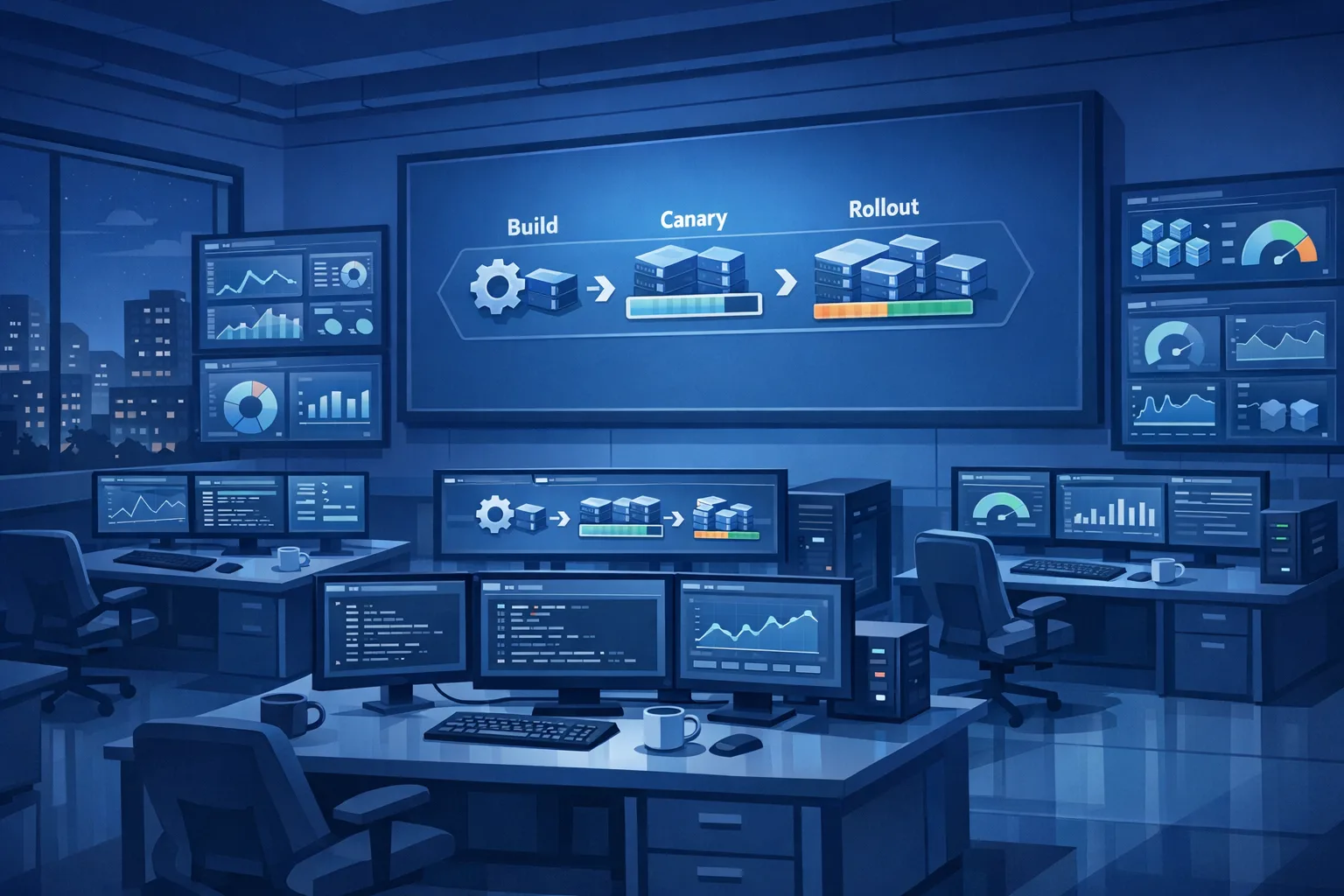
- Deploy canaries at 1–5% of traffic per service with aggressive telemetry on error classes, tail latency, and memory.
- Hold the line on feature deploys until the runtime patch is through production for at least one full traffic cycle.
T‑+6 to T‑+48: Complete rollout
- Scale canary to 25%, then 50%, watching p95–p99 latency and GC pauses. Memory regressions often show up at higher concurrency.
- Rotate serverless layers and edge runtimes explicitly. Don’t assume “latest” aliases moved; pin a new version and record the ARN/hash.
- Backfill stragglers: batch and event workers, cron jobs, internal CLIs, preview environments, and long‑lived staging clusters.
- Update your SBOM and runtime manifest after rollout so audit logs match what’s actually in production.
Will this break my build? The likely failure points
I look for issues in the same places every patch cycle:
- Native modules: Anything that compiles C/C++ bindings may need a clean rebuild. If you vendor prebuilt binaries, ensure your CI pulls the correct artifact for the new ABI.
- OpenSSL defaults: Tightened defaults can block old upstreams or internal test fixtures. Set explicit TLS minimums and ciphers in code if you must maintain legacy interop.
- HTTP and URL parsing: Subtle changes in llhttp or URL handling can break brittle tests or middleware assumptions.
- ESM/CJS boundaries: If you’re on a hybrid package, verify that exports maps and type resolutions still resolve correctly under the new runtime.
- Docker base images: Divergent base images across services create inconsistent runtime behavior. Standardize on a single Node image family per major line.
- Serverless layers: Lambda/edge platforms don’t auto‑upgrade your custom layers. Rebuild and republish.
Which version should you target?
Stay on your existing major and take the patched point release. If you’re on 24.x or 22.x (Active LTS), patch there. If you’re on 20.x (Maintenance LTS), patch there and put an upgrade plan on the calendar. Teams already running 25.x (Current) should adopt the patched 25.x as soon as tests pass. Save major upgrades for a separate window unless the vendor release notes require one for a specific fix.
Still on Node 18? Upstream support ended on April 30, 2025, and cloud vendors have been methodically removing it from supported build and runtime environments this quarter. Treat the jump to 22 or 24 as a project, not a Friday chore.
People Also Ask
Do I need to rebuild native addons for these Node.js security releases?
Yes, plan for a clean rebuild of native modules. Even when the ABI stays stable between patch versions, you avoid mysterious runtime crashes by compiling against the exact headers you deploy. Automate a full rebuild step, not an incremental one, and ensure your CI cache keys include the Node version and architecture.
How do I roll this out on serverless?
If you use managed Node runtimes, republish any custom layers that embed Node or native dependencies. For frameworks that bundle the runtime, explicitly raise the version and verify cold start latency and memory under load in a pre‑prod environment. Remember to update background jobs and scheduled functions—they’re easy to miss.
What about Docker images?
Don’t just bump a tag in your Dockerfile and call it good. Rebuild from a fresh base image, lock digest pins for reproducibility, and promote images through a registry with signed provenance. That prevents drift between services as the patch propagates.
The Production Patch Framework (PPP)
Use this lightweight framework to keep today organized:
- Scope: List every workload that executes Node at runtime, including CI tasks that perform SSR or transpilation.
- Stage: Create an isolated canary environment with the patched Node and identical config to production.
- Stress: Run traffic that hits slow queries, big payloads, and render paths; record CPU, memory, and GC stats.
- Ship: Promote by percentage, not by environment, and include rollback toggles.
- Seal: Update SBOMs, lockfiles, and observability dashboards to the new runtime version, then document.
Data points to anchor your plan
Today’s drop covers 25.x, 24.x, 22.x, and 20.x with three high‑severity issues plus medium/low items. Releases are slated for December 15, 2025 (or shortly after). Node 18 upstream support ended on April 30, 2025, and multiple vendors have since tightened their Node 18 deprecation timelines. Those facts dictate urgency: patch supported lines now and retire 18.x where it still lingers.
Security and supply chain: don’t forget npm and CI
If you haven’t recently audited your CI tokens and private registries, do it while you’re touching the runtime. The safest rollout pairs a Node patch with a dependency hygiene sweep: enforce provenance on published artifacts, rotate any long‑lived access tokens, and verify that ephemeral credentials work in cold cache scenarios. If your team missed the recent npm classic token changes, start there and stabilize your pipelines.
For deeper guidance on token hygiene and build hardening, see our write‑up on fixing CI after npm classic tokens were revoked. It walks through practical steps to avoid broken builds when your cache turns over at the worst moment.
Frameworks atop Node: Next.js, React Server Components, and friends
Many of you run SSR/SSG stacks on Node (Next.js, Remix, Nuxt). Runtime patches can surface latent bugs in server rendering code or caching layers. If you’re on Next.js, review the latest security advisories and our Dec 11 Next.js security update field guide and plan a combined test pass: Node patch plus framework patch. Likewise, teams that recently mitigated RSC issues should re‑check server component rendering under the new runtime; we published a 14‑day React Server Components patch and proof plan that includes test cases you can reuse today.
Real‑world rollout scenario
Picture a SaaS with three public APIs, a scheduler, and two SSR frontends. This morning, you pull the patched Node images and rebuild base images. CI runs a full native addon rebuild, then spins a dedicated canary environment. You replay five minutes of production traffic that includes large JSON payloads and streaming uploads. Latency and memory check out, so you promote to 10% of traffic and hold for an hour while synthetic tests keep hammering known‑slow endpoints. By mid‑afternoon, you’re at 50%, with autoscalers adjusted to offset a small increase in memory per container. After the evening traffic wave, you go 100%, rotate serverless layers, and kick off a background job to rebuild preview environments. You end the day with a changelog that cites the Node version bump and a link to the security advisory.
Operational guardrails worth keeping
- Observability: Track Node version as a dimension in logs/metrics so you can correlate errors to the runtime change.
- Health checks: Add an endpoint that reports Node process versions and OpenSSL settings for each pod or instance.
- Provenance: Sign your images and artifacts; require signature verification in CI and at the cluster admission controller.
- Rollbacks: Keep the previous image around for 48 hours. Roll back by image digest, not by tag.
FAQ: risk, timing, and edge cases
Is it safe to roll this into a year‑end code freeze?
Yes—with process. Treat runtime patches as freeze‑exempt but require canaries, error budgets, and explicit SRE approval. The bigger risk is entering the holidays with known high‑severity vulnerabilities unpatched.
Should I combine this with a major upgrade (e.g., 20 → 22 or 24)?
No. Patch in place first. Plan a separate major migration window with dependency updates, feature flags, and dual‑runtime testing. Mixing them slows you down and increases blast radius.
What if a dependency only supports older Node?
Open an issue with the maintainer and test whether it truly breaks or just marks the new runtime as unsupported. In the interim, isolate the dependency (separate process or function) to minimize impact and monitor closely.
What to do next
- Designate an incident commander for today’s rollout; publish a Slack channel and schedule.
- Rebuild base images or layers with the patched Node release per major line you use.
- Run the smoke suite: TLS, HTTP/2, large payloads, SSR paths, and native addon hotspots.
- Canary to 5–10%, then 25%, then 50%, watching p95–p99 and memory.
- Update SBOMs, lockfiles, and observability to reflect the new runtime.
- If you’re on Node 18 anywhere, open an upgrade ticket today and timebox a migration to 22 or 24.
Need a hand?
We help teams plan and execute patch windows without slowing their roadmap. See what we do for engineering leaders, browse a few case studies, and reach out via our contact page. If you want a broader security‑patch mindset for your org, our December Patch Tuesday playbook pairs nicely with today’s Node work.

Zooming out
Security work compounds. Teams that keep a crisp motion for runtime patches—inventory, stage, stress, ship, seal—spend less time firefighting and more time delivering features. Today’s Node.js security releases are an opportunity to practice that motion. Execute cleanly, take notes, and you’ll be even faster when the next batch lands.




Comments
Be the first to comment.