
Node.js Security Release, Jan 2026: Ship Safe Now
The latest Node.js security release landed on January 13, 2026, with updates for 20.x, 22.x, 24.x, and 25.x. It fixes a handful of high and medium severity bugs that can leak memory contents, crash HTTP/2 servers, and punch holes in the experimental permission model. If you run Node in production, this isn’t “nice to have”—it’s a get-it-done week.

What exactly shipped on January 13, 2026?
Four release lines received security updates: Node.js 20.20.0, 22.22.0, 24.13.0, and 25.3.0. The patches include dependency bumps (notably undici and c-ares) and fixes for several CVEs. Here’s the short list in plain English so you can map risk fast.
High severity
• CVE-2025-55131: In rare timing windows, buffers created via Buffer.alloc and some typed arrays could end up non-zero-filled when execution is interrupted (often via the vm timeout option). That can expose previous memory contents—tokens, secrets, arbitrary data—within the same process. The exploitability depends on workload and timing, but the impact is high enough to warrant immediate patching.
• CVE-2025-55130: Symlink tricks can bypass the permission model’s filesystem boundaries. If you’ve been trialing --permission with scoped fs access, a clever relative symlink chain could escape the sandbox. It affects multiple release lines.
• CVE-2025-59465: A malformed HTTP/2 HEADERS frame can crash servers by triggering an unhandled error on secure sockets. If you terminate TLS at Node and serve HTTP/2, this is a clear remote DoS path unless you update or add robust error handlers at the socket layer.
Medium severity
• CVE-2025-59466: With async_hooks enabled (or internals that use it) a stack overflow could bypass normal error paths and kill the process. The patch improves recoverability; your architecture should still avoid designs that rely on catching stack exhaustion.
• CVE-2026-21636: Unix Domain Socket connections weren’t fully checked by the permission model, allowing local socket access even when network permissions were restricted. Scope: Node 25.x with --permission enabled.
• CVE-2026-21637: Exceptions thrown inside certain TLS callbacks (PSK/ALPN) could bypass error handlers, leading to crashes or file descriptor leaks. A remote client could nudge this repeatedly during the handshake to degrade availability.
• CVE-2025-59464: Memory leak when extracting fields from client certificates to UTF‑8. This primarily affects flows that call socket.getPeerCertificate(true) with mutual TLS. It was already addressed on a subset of earlier 24.x builds but is now part of the coordinated update.
Low severity
• CVE-2025-55132: fs.futimes() could alter timestamps under the permission model even with read-only rights. It’s not a data-stealing issue, but it can obscure activity trails and violate audit expectations.
Why this Node.js security release matters
Here’s the thing: none of these bugs are sci‑fi on their own, but combined they hit the three pillars you actually care about—confidentiality, integrity, and availability.
• Confidentiality: The zero‑fill race means secrets can leak between operations that never should cross streams. In multi‑tenant processes, memory safety matters even without a sandbox breach.
• Integrity: The permission model bypasses tell you the guardrails aren’t ready for high‑trust isolation. If you were treating --permission as a hard boundary, rethink that assumption today.
• Availability: The HTTP/2 and TLS callback paths could crash your process or leak file descriptors until it falls over. If your Node process is also your TLS terminator and HTTP/2 server, this is directly remotely triggerable.
Undici and c‑ares updates are also in the bundle. Undici is the modern HTTP client underpins fetch(); c‑ares handles DNS. Both sit on hot paths in many services. That’s good because they get fixes, but it also means you must test network behavior under load after the upgrade.
Fast path: a 48‑hour rollout plan
If you’re a software lead, your job is to ship the patch without blowing up the on‑call. Use this cadence—we’ve run this play across dozens of environments.
Hour 0–4: Inventory and scope
• Identify every Node runtime in production, staging, CI, and data jobs. Include base Docker images, AMIs, Lambda layers, build agents, and CLI tools. Don’t forget cron containers and sidecars.
• Map which services terminate TLS, speak HTTP/2, or enable --permission. Prioritize those for early rollout.
• Freeze merges to affected repos until your pre‑deploy tests pass on the new runtime.
Hour 4–12: Upgrade sandboxes and staging
• Pin exact versions: 20.20.0, 22.22.0, 24.13.0, or 25.3.0. Don’t rely on :latest. In Dockerfiles, explicitly reference the patch tag.
• Rebuild with a clean cache to avoid stale OpenSSL or npm artifacts. For Node image variants, align distros (alpine vs debian) with production.
• Run smoke tests that hit TLS handshakes, HTTP/2 endpoints, file IO, DNS resolution, and external API calls via fetch() or undici. Add a test that attaches an error listener to secure sockets and confirms the process does not crash on malformed frames.
Hour 12–24: Performance and regressions
• Load test the upgraded image with production traffic patterns. Watch CPU at TLS handshake, heap growth during mutual TLS flows, and the p95 latency of external API calls.
• If you use AsyncLocalStorage or custom async_hooks, exercise deep call chains to ensure no surprise terminations.
• Validate DNS behavior after the c‑ares bump—especially in Kubernetes with short‑lived pods and aggressive service discovery. Spiky NXDOMAIN sequences can mask cache issues.
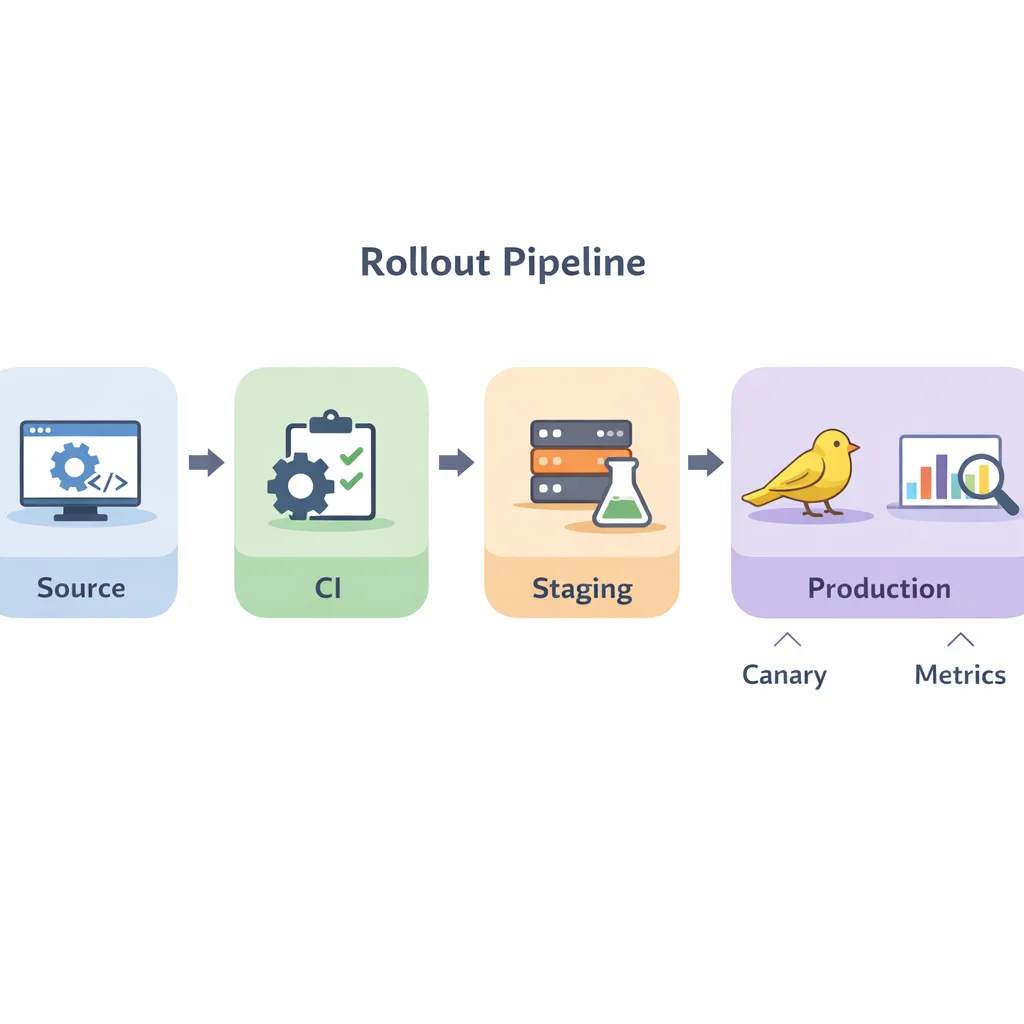
Hour 24–48: Progressive rollout
• Roll to a small region or a subset of pods first. Keep surge capacity ready in the old version for a quick rollback.
• Turn on tight alarms: process restarts, file descriptor counts, heap growth, TLS error rates, and 5xx spikes from HTTP/2 clients.
• After one or two peak cycles without anomalies, promote globally. Document the runtime change in your post‑deploy notes with the exact Node version and base image digest.
“Is it safe to delay Node.js upgrades for a week?”
You can stage carefully, but don’t punt for a week if you terminate TLS or serve HTTP/2 from Node. The crash‑class bugs are low‑effort for attackers. If Node only runs workers behind a reverse proxy terminating TLS, your exposure is lower, but you still want the memory and permission model fixes sooner than later. Rolling constraints? Patch the edge first, then the workers.
“Do I need to change my code after upgrading?”
Probably not, but you should add two things: a default error handler on secureConnection sockets, and integration tests around TLS and HTTP/2. The permission model changes may break scripts that leaned on futimes() or symlinked paths; treat that as the runtime finally enforcing what docs always promised.
“Is the Node permission model production‑ready in 2026?”
As of the January release, it’s still experimental and repeatedly bypassable via corner cases (UDS, symlinks, metadata). It’s useful for defense‑in‑depth in build tools and internal scripts, but it’s not a replacement for container isolation, user separation, or MAC/RBAC on the host. Use it as a belt, not the pants.
Upgrade gotchas we’ve seen in the wild
• Undici sensitivity: Some teams found stricter header and connection pooling behavior revealed flaky upstreams. If you use undici directly, review pool limits and timeouts. When in doubt, set explicit headersTimeout and bodyTimeout for critical calls and watch for 408/502 changes after the upgrade.
• HTTP/2 proxies: Mixed environments where a proxy downgrades to HTTP/1.1 but occasionally forwards HTTP/2 frames can produce edge‑case errors. Confirm your load balancer always speaks the protocol you expect to Node.
• Mutual TLS: If you depend on socket.getPeerCertificate(true), monitor heap. The patched builds fix a leak path; if you still see steady growth, your app may be retaining decoded certificate data longer than intended.
• Docker pinning: Teams relying on node:current or node:lts accidentally rolled forward without tests. Pin patch versions for deterministic builds, then bump on purpose.
Hands‑on checklist: harden your Node edge
Use this quick pass after upgrading. It’s the difference between “patched” and “actually safer.”
• Add a secure socket error handler: attach server.on('secureConnection', s => s.on('error', () => {})) to prevent unhandled TLS errors from taking down the process.
• Verify HTTP/2 paths: ensure your server explicitly opts into HTTP/2 only where needed. If most traffic is HTTP/1.1 behind a proxy, consider terminating HTTP/2 upstream.
• Audit vm timeouts: if untrusted code runs in vm contexts, re‑evaluate timeouts and scheduling. Keep work predictable to avoid odd timing windows.
• Reassess the permission model: remove it from threat‑model diagrams as a hard barrier. If you still use it, sandbox via containers and drop Linux capabilities; treat --permission as a convenience layer.
• Tighten undici defaults: set per‑host pools, sane max connections, and circuit‑breaker style retries to avoid amplifying transient failures after the update.
• Watch FD counts: put alerts on lsof -p or equivalent metrics. A slow file descriptor leak will page you at 3 a.m.; find it at 3 p.m. instead.
Data you can take to your execs
• Release date: January 13, 2026.
• Versions: 20.20.0, 22.22.0, 24.13.0 (LTS), 25.3.0 (Current).
• Risk classes: memory exposure, permission model bypass, remote process crash, resource leak.
• Affected roles: API gateways that speak HTTP/2, services terminating TLS, any host testing the permission model, workers using vm, and apps that call fetch() heavily.
• Expected rollout effort: 1–2 days for well‑pinned Docker shops, 3–5 for mixed environments with OS package managers and custom AMIs.
Let’s get practical: the maintenance contract you really need
If your team still gets surprised by runtime patches, the fix isn’t more heroics—it’s boring predictability. Put your Node base image on a monthly patch train, codify a performance canary run, and pin versions everywhere. That makes weeks like this one routine rather than crisis‑colored.
We’ve helped teams set this up across finance, marketplaces, and media—playbooks, tooling, the lot. If you want a partner to instrument the process, start with a quick scope call via our engineering services, or browse how we ship upgrades in our portfolio. For a shorter take on urgent patches, see our note on what to patch today, and if you’re juggling Windows servers too, our January 2026 Patch Tuesday guide lists the OS fixes you should sequence alongside this Node update.
Primary risks, mitigations, and owner actions
Buffer zero‑fill race
Risk: In‑process secrets may bleed into newly allocated buffers under specific timing.
Mitigation: Update the runtime. In high‑risk zones, reduce reliance on vm with timeouts for untrusted code or isolate such workloads in separate processes.
Permission model gaps
Risk: Symlink and UDS paths bypass expected boundaries; read‑only metadata can still be altered in edge cases.
Mitigation: Do not treat --permission as a boundary. Use container isolation and filesystem permissions. Keep the flag for experimentation only.
HTTP/2 and TLS error paths
Risk: Malformed frames or callback exceptions can crash or slowly exhaust resources.
Mitigation: Upgrade; add error handlers on secure sockets; instrument FD counts; rehearse chaos tests that inject handshake errors.
What to do next
• Today: Pin and roll 20.20.0, 22.22.0, 24.13.0, or 25.3.0 to staging. Run the smoke suite listed above.
• Tomorrow: Roll out progressively, starting with the services that terminate TLS or speak HTTP/2. Monitor heap and FD metrics.
• This week: Add a default secure socket error handler, undici timeouts, and alerting on process restarts and FD counts.
• This quarter: Put Node on a monthly patch train, enforce version pinning, and retire “latest” from Dockerfiles and build scripts.
If you need a hand, reach out via our contact page and we’ll help you model the blast radius, set up the pipelines, and ship safely without weekend heroics.






Comments
Be the first to comment.