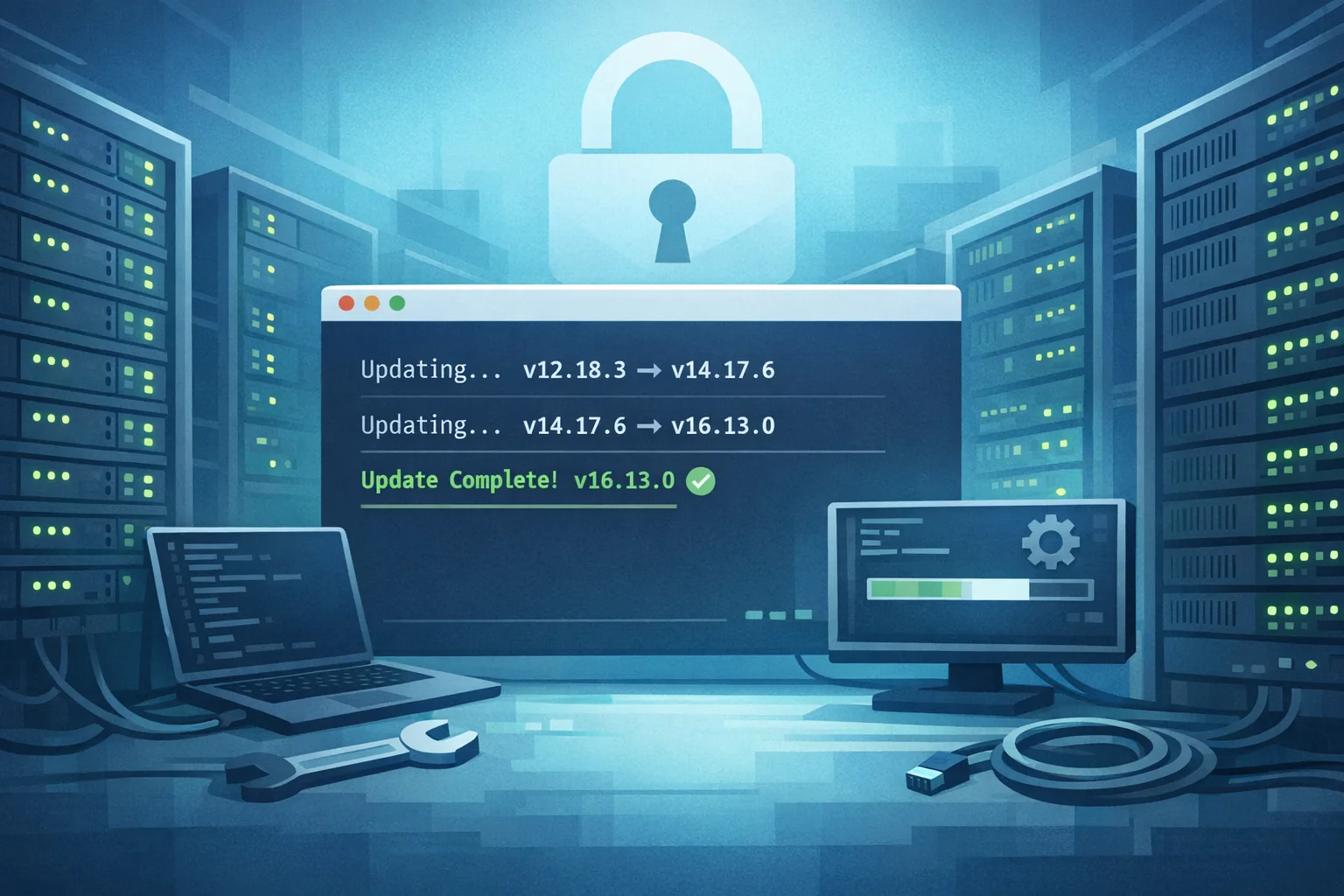
Node.js Security Release: January 2026 Playbook
The January 13, 2026 Node.js security release lands squarely on every team running 20.x, 22.x, 24.x, or 25.x. It fixes three high‑severity issues, four medium, and one low, plus dependency bumps for c‑ares and undici. Translation: if you ship Node in production, this patch belongs on your shortlist right now.
Here’s the thing—most organizations don’t get owned by exotic zero‑days. They get tripped up by well-documented bugs that linger in staging because “we’ll roll it next sprint.” This guide focuses on the decisions you have to make this week: who’s at risk, how to triage, what to test, and a rollout plan that won’t wreck your release calendar.
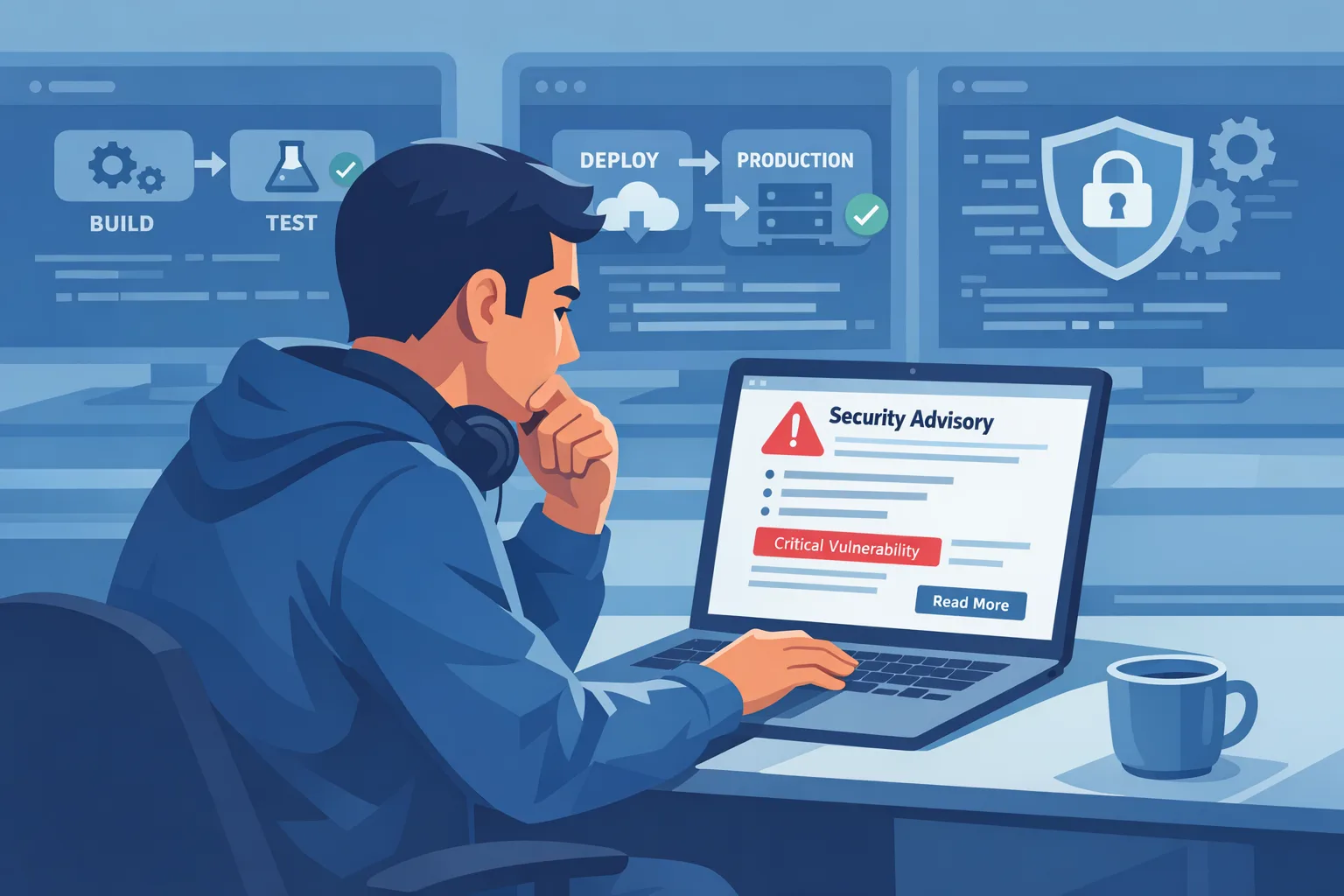
What changed in the January 2026 Node.js security release
Three items demand attention because they’re either remotely triggerable, leak data, or punch holes in your isolation assumptions:
- CVE-2025-55131 (High): Timeout-based race conditions can make
Buffer.alloc()andTypedArrayinstances observable before zero-fill completes. In practice, this can expose stale in-process memory. Risk goes up with thevmmodule’s timeout option, heavy concurrency, or when untrusted input shapes workload timing. - CVE-2025-55130 (High): Permission Model symlink traversal lets code escape an allowed directory specified via
--allow-fs-reador--allow-fs-write. If you rely on the Permission Model for tenant isolation, sandboxing, or CI safety, patch priority is high. - CVE-2025-59465 (High): Malformed HTTP/2
HEADERSframes can crash a process via an unhandled TLS socket error, enabling remote DoS on servers using HTTP/2.
Additionally, the release updates c‑ares (DNS resolver) and undici (HTTP client) across active release lines. These aren’t the headline risks, but they’re the kind of dependency bumps that quietly close public bugs and make your network stack more predictable under stress.
Do I really need to move if I’m already on LTS?
Yes. The fixes shipped across supported lines, including LTS branches. Even if your workload is “internal only,” the HTTP/2 crash is remotely triggerable, and the Permission Model bypass undermines assumptions developers often make in CI, test harnesses, and multi‑tenant workloads. If you expose Node services to the internet, you’re in scope.
Node.js security release: how to tell if you’re exposed
Start with a short, brutally honest inventory. You’re looking for three categories of risk: HTTP/2 servers, Permission Model usage, and places where timing can expose uninitialized memory.
1) HTTP/2 crash exposure
Search your code and infra for:
- Servers created via
http2.createServer()or proxies/ingress that negotiate HTTP/2 upstream to Node. - TLS servers without an explicit
socket.on('error')handler. The patch improves defaults, but you still want defensive handlers. - Edge cases like long‑lived streaming, gRPC over HTTP/2, or custom
undiciadapters.
2) Permission Model bypass exposure
Scan for --permission flags in app arguments or scripts:
# package.json scripts, Docker CMD/ENTRYPOINT, Helm charts
node --permission --allow-fs-read=./data --allow-fs-write=./tmp server.js
If you see the Permission Model in play and your app follows symlinks (or writes files that might be symlinked by an attacker or untrusted tenant), prioritize this fix.
3) Buffer/TypedArray zero-fill race exposure
Look for intensive buffer allocation under load, vm with timeouts, or modules that allocate and immediately serialize buffer contents (e.g., returning new buffers to clients, logging raw bytes, or proxying data). Anywhere a partially initialized buffer could be surfaced is suspect.
Production-safe upgrade checklist
Here’s a battle-tested, two-day plan you can use without pausing your sprint.
- Freeze drift: Lock package versions and Docker base images so test results are explainable. Note current Node versions per service.
- Pull patched builds: Update to the latest patch in your active line (20.x, 22.x, 24.x, or 25.x). Refresh container images and CI runners.
- Run fast unit and smoke tests: Focus on request parsing, TLS termination, streaming endpoints, file upload paths, and any code that touches symlinks.
- Add defensive handlers now: Even if you’re patching, add a top-level TLS/HTTP error handler to catch protocol weirdness. It’s cheap insurance.
- Stage and canary: Ship to a small slice of production traffic (1–5%) with saturation tests. Watch process crashes, memory growth, and slow error spikes.
- Roll forward with guardrails: If metrics stay flat for 60–120 minutes, expand to 25%, then to 100%. Keep an instant rollback ready in your orchestrator.
Quick tests you can run today
These aren’t exhaustive, but they’re fast and catch common edge cases.
HTTP/2 stability smoke
// Start an HTTP/2 server in staging with TLS and aggressive connection churn.
// Then flood it with mixed valid/invalid headers while monitoring for crashes.
const http2 = require('http2');
const fs = require('fs');
const server = http2.createSecureServer({
  key: fs.readFileSync('key.pem'),
  cert: fs.readFileSync('cert.pem')
});
server.on('stream', (stream, headers) => {
  stream.respond({ ':status': 200 });
  stream.end('ok');
});
server.on('secureConnection', (socket) => {
  socket.on('error', (err) => console.error('TLS error', err));
});
server.listen(8443);
Use your favorite fuzzer or a simple script to send malformed HEADERS frames; the process should not crash. If you terminate TLS at a proxy, repeat upstream to Node.
Permission Model symlink guard
// In a sandboxed test, create a symlink chain that points outside an allowed dir.
// Your app should fail safely when reading/writing through that chain under the Permission Model.
If your CI uses --allow-fs-* flags, add a test that attempts to traverse a symlink out of the allowed path and verifies access is denied.
Buffer zero-fill sanity
// Under stress and timeouts, ensure zero-initialized buffers are truly zeroed before use.
// This is a sanity check: allocate, immediately inspect, and verify contents are zero.
const b = Buffer.alloc(1024 * 1024);
if (!b.every(byte => byte === 0)) {
  throw new Error('Non-zero byte in zero-fill buffer');
}
This won’t reproduce the race, but it makes accidental regressions obvious and documents your expectation in tests.
Can’t patch today? Pragmatic mitigations
Patching is the right call. If you absolutely need a stopgap while you schedule maintenance windows:
- Terminate HTTP/2 at the edge (reverse proxy or CDN) and speak HTTP/1.1 to Node upstream for internet‑facing traffic. That sidesteps the crash vector while you roll the fix.
- Disable or narrow the Permission Model scope in environments where symlink creation is possible by untrusted actors. Prefer read‑only mounts and temp dirs owned by the service user.
- Add explicit TLS socket error handlers on servers now. It won’t fix underlying bugs, but it prevents unhandled errors from taking down the process.
These are temporary guardrails, not long-term strategy.
What changed in dependencies (and why you should care)
c‑ares underpins DNS resolution. Upgrades here tend to reduce weird resolver stalls, IPv6/Happy Eyeballs edge cases, and CPU spikes under DNS failure storms. undici powers Node’s modern HTTP client; bumps often harden header parsing, keep‑alive behavior, backoff logic, and connection pooling. If your services are chatty—microservices, payment gateways, AI API calls—regressions or fixes surface fast. Bake network‑heavy journeys into your canaries.
FAQ developers are asking
Is any of this remotely exploitable?
Yes for the HTTP/2 crash in typical internet‑facing APIs, and potentially for Buffer/TypedArray races when workloads and timeouts can be influenced by untrusted input. The Permission Model issue is more about local escape and sandbox trust boundaries.
Which exact Node versions are safe?
Use the most recent patch release available in your active line (20.x, 22.x, 24.x, or 25.x) dated on or after January 13, 2026. If you’re pinned to distro builds, track your vendor’s security tracker and move as they publish fixed packages.
Does this affect Bun or Deno?
The CVEs here target Node’s implementations and Permission Model. Other runtimes have different internals. Still, if you run Node compatibility layers or embed Node, treat the Node advisories as in‑scope until you confirm otherwise.
A lightweight canary plan you can copy
When clients ask us to land security updates without drama, we use a tight loop that balances speed and caution.
- Replica ready: Build patched containers for each service. Keep the old images tagged for instant rollback.
- Golden journeys: Automate 8–12 critical flows: login, checkout, file upload, webhook receive, and any HTTP/2/gRPC calls. These run continuously during the canary.
- 1–5% traffic for 2 release intervals: That’s usually 60–120 minutes, enough to cross a few GC cycles and TLS renegotiations.
- Watchdogs: Track process crashes, 5xx rate, p99 latency, memory RSS, and event loop lag. Graph them side by side with the previous build.
- Expand to 25%, then 100%: Stop on first signal, not first failure. If a metric blips, hold steady and gather logs before deciding.
If you want help implementing this, our engineering services include production rollout playbooks and emergency patch support. You can also browse how we ship and harden releases in our portfolio of projects.
The 20-minute compliance sweep
Security isn’t just about patches; it’s how you document them. Do this once and you won’t scramble during audits:
- Log advisory IDs, affected services, and the patch version you deployed.
- Attach proof: CI run links, container digests, and the canary window timestamps.
- Record any mitigations you applied (edge HTTP/2 termination, error handlers) and when you retired them.
If your team needs a broader patching calendar beyond Node, see our practical guidance in January 2026 Patch Tuesday: What to Fix First. We keep it focused on what breaks builds and what saves you hours.
Security regression traps to watch for
Upgrading Node is usually smooth, but security releases sometimes bundle dependency changes that tighten behaviors in surprising ways.
- Stricter header parsing: If a partner sends quirky headers, a hardening change could turn a soft failure into a hard one. Keep synthetic checks targeting partner flows.
- Socket lifecycle: Default error handling improvements are great, but if your code depended on odd timing, you may see different close events. Treat this like a minor behavioral shift.
- Filesystem assumptions: If you leaned on timestamp adjustments or followed symlinks in odd places, verify those paths behave as expected post‑patch.
A simple framework: RISK
When you’re triaging security releases under deadline, use RISK to avoid bikeshedding:
- R—Reachability: Can an attacker or tenant trigger it remotely or locally in your environment?
- I—Impact: Data exposure, process crash, isolation break, or just noisy logs?
- S—Surface: Where does the vulnerable code run—edge API, internal worker, CI?
- K—Kill-switch: Can you disable the feature, route around it, or terminate at the edge temporarily?
Score each issue 0–3 on R, I, and S; any total of 5+ gets patched immediately, even if it means a short maintenance window.
What to do next
- Upgrade Node to the latest patch in your active line (20.x, 22.x, 24.x, or 25.x) released on or after January 13, 2026.
- Add explicit TLS socket error handlers and keep them—defense in depth pays dividends.
- Run the HTTP/2, Permission Model, and buffer tests above in staging and CI.
- Canary with golden journeys for 60–120 minutes; watch crash, memory, and p99 latency graphs.
- Document advisory IDs, versions, canary windows, and mitigations for audit trails.
If you’d like a second set of eyes on your rollout plan or want us to ship it for you, reach out via ByBowu Contacts. For ongoing release hardening, see what we do and how we integrate security work into normal sprint cadence. And if you’re juggling mobile policy deadlines alongside server patches, our recent Play and App Store guides on the blog will save you a few late nights.





Comments
Be the first to comment.