Google Play External Payments: Ship by Jan 28
Google Play external payments are now real for U.S. users—and the clock is ticking. On December 9, 2025, Google announced policy changes that enable developers to link users to external content and offer alternative billing programs in the U.S., with a compliance date of January 28, 2026. On December 23, Google shipped Play Billing Library 8.3.0 with APIs for external payments. That’s your integration path. But there’s a catch: new fees and reporting obligations change the math you’re used to.
What changed—and when
Let’s anchor the timeline so you can plan capacity and coordinate releases:
• October 29, 2025: Play Store (U.S.) begins allowing developers to communicate pricing outside Play, link to external downloads or payment pages, and use non‑Play billing inside apps.
• December 9, 2025: Google posts a formal policy announcement with enrollment requirements for the External Content Links and Alternative Billing programs; the compliance date is January 28, 2026 if you want to keep linking or keep using alternative payments.
• December 23, 2025: Play Billing Library 8.3.0 lands, adding programmatic support for external payments flows and reporting.
Some elements are still subject to court oversight in the Epic v. Google matter. A January hearing could tweak terms, but the developer‑facing programs, deadlines, and required APIs are live now. If you plan to link out or accept external payments in Q1, don’t wait for perfect clarity—ship a compliant baseline and keep it feature‑flagged.
Google Play external payments: how the fees actually work
There are two distinct tracks with different economics and technical steps.
Track A: External Content Links (linking out to download or purchase)
• Per‑install service fees: If a user clicks your Play listing’s external link and installs within 24 hours, Google plans to charge a per‑install fee—roughly $2.85 for apps and $3.65 for games.
• Transaction commissions for external purchases: If you link users to pay off‑Play, Google expects a commission on digital goods that happen outside Play: 20% for one‑time purchases and 10% for subscriptions (including renewals).
• Reporting and tracking: You must integrate Google’s attribution/reporting mechanisms and reconcile installs and transactions monthly. Think of this like server‑side attribution with strict data requirements.
Interpretation tip: the per‑install fee is tied to the external link flow from your Play listing. If your off‑Play install is not attributed to that click window, the fee may not apply—but then your funnel is likely colder. Model both paths.
Track B: Alternative Billing (inside your Play‑distributed app)
• Commissions on non‑Play processors: Purchases routed through your own or a third‑party processor inside the Play‑distributed app generally incur a 20% fee on one‑time digital goods and 10% on subscriptions.
• No per‑install fee: Because the install originated via Play, the economics are about revenue share, not a separate install levy.
• UX rules and parity: You’ll need to meet design guidelines and enable Google’s required disclosures. Expect UX compromises: disclosure modals, attestation, and side‑by‑side options. The goal is comparability for users, not conversion maximization for you.
Billing Library 8.3.0: the new knobs
Play Billing Library 8.3.0 adds the classes and methods you’ll use to enable and report external payments and enroll in the right program at runtime. Key surfaces include enabling external payments, describing developer‑provided billing details, and listening for results. From a delivery standpoint, 8.3.0 is the minimum viable upgrade if you plan to use Track A or Track B in Q1 2026.
Should you switch? A practical decision matrix
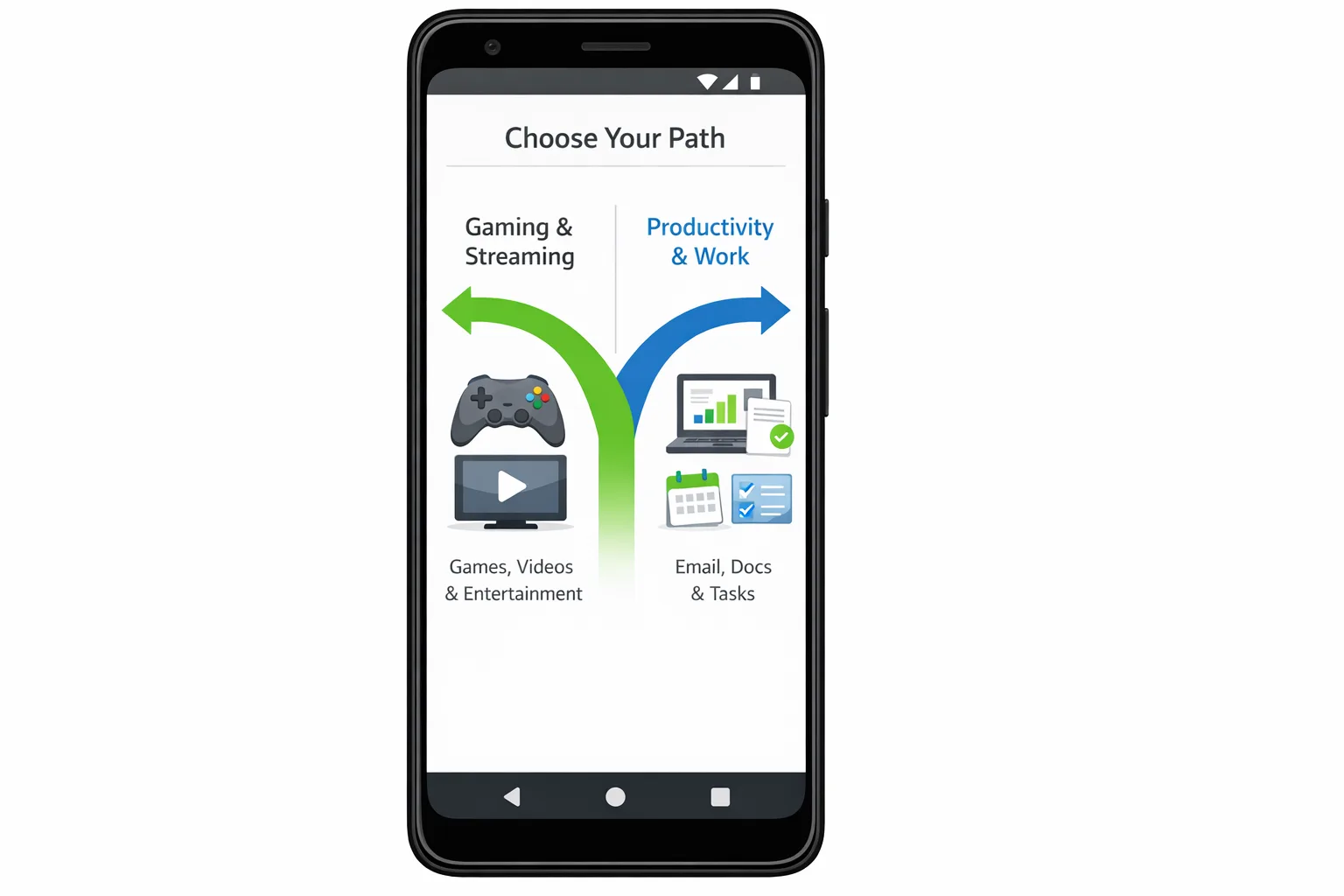
Here’s the thing: the headline is “freedom,” but the spreadsheets decide. Use this quick matrix to avoid ideology‑driven choices.
• High‑ARPU, low‑install game with strong direct monetization: Alternative Billing often wins. A 20% cut beats many legacy effective rates, and you avoid per‑install fees entirely. Keep experiments inside the Play app first.
• Utility or productivity app with sticky subscriptions: External links can work if you already own a strong web checkout. However, the 10% subscription fee plus the potential per‑install fee on the acquisition click means you must watch payback windows. Consider Alternative Billing to avoid the per‑install exposure.
• Ad‑heavy apps with light IAP: Don’t bother with external payments right away. Your net gain is limited, and compliance overhead is real. Put this on your roadmap for A/B infra maturity, not next sprint.
• New titles betting on virality: External install fees can eat your lunch. If you use Play for discovery, Alternative Billing is the safer step one.
Simple unit economics you can copy
Define:
• P = price of one‑time SKU (or first‑year net for subs)
• R = average revenue per paying install within 30 days
• Fext = 0.20 for external one‑time purchases (0.10 for subs)
• Falt = 0.20 for in‑app alternative billing one‑time (0.10 for subs)
• Cinst = 2.85 (apps) or 3.65 (games) per external‑link install inside 24 hours
Break‑even for External Content Links on one‑time purchases:
Net per paying install = R × (1 − Fext) − Cinst × (installs per payer)
If your conversion to payer within the 24‑hour cohort is low, the Cinst term dominates. Run the same math for subs with 0.10 in place of 0.20 and your expected year‑one LTV instead of P.
Implementation checklist: a 3‑week plan that ships
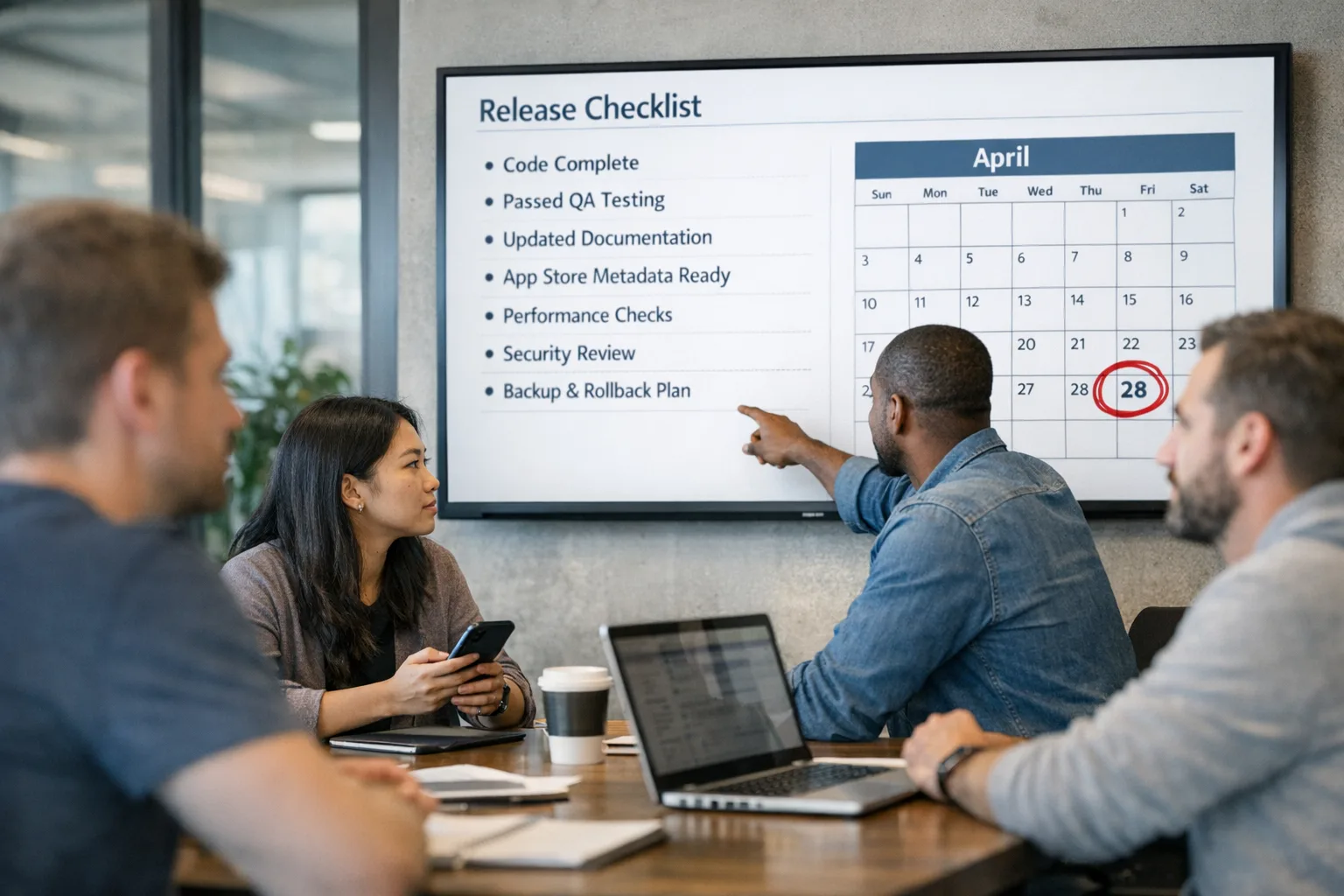
You have four weeks on the calendar, but assume holidays and app review variance. Here’s a no‑drama plan that gets you live by January 28, 2026.
Week 1: Policy enrollment and architecture
• Enroll in the External Content Links and/or Alternative Billing programs in Play Console. Assign an owner for attestations and monthly reports.
• Upgrade to Billing Library 8.3.0 and bump your minimum Play Services versions where applicable.
• Decide your initial scope: one SKU, one geography (U.S.), one flow. Use feature flags to switch among Play Billing, Alternative Billing, and External Link flows per user cohort.
• Draft the UX: required disclosures, side‑by‑side pricing, and link warnings. Plan copy reviews early—legal will have opinions.
• Data contracts: define install attribution, purchase events, refunds/chargebacks, and monthly reconciliation schema. Your finance team needs roll‑ups that match Google’s.
Week 2: Integration and QA
• Implement Alternative Billing first (lower risk, no per‑install surprises). Wire the new 8.3.0 APIs and your processor’s SDK. Capture result codes and receipts for audits.
• Add External Content Links behind a kill switch. Implement server‑side click tokens and 24‑hour attribution handling. Log enough to explain every install.
• Security and fraud: lock down deep links, CSRF tokens, and replay protections on your checkout.
• Test with staged rollouts and internal tracks. Validate monthly report exports match Google’s expected format.
Week 3: Finance modeling and rollout
• Build a margin dashboard showing net revenue by flow: Play Billing vs Alternative Billing vs External Link. Include the per‑install line item.
• Run a 10% U.S. cohort on Alternative Billing for two weeks. Keep External Links to a 1–2% treatment group until you see CAC stability.
• Document a reversal plan. If a January hearing tweaks fees, you want a one‑click kill switch, not a Friday fire drill.
People also ask
Do I have to upgrade to Billing Library 8.3.0?
If you’re sticking with standard Play Billing only, not immediately. If you plan to use Alternative Billing or External Links with off‑Play transactions, 8.3.0 is the practical baseline because it exposes the enrollment and reporting pathways you need to stay compliant.
Will the per‑install external link fees stick?
They’re part of Google’s current compliance plan and could be modified by the court. That’s exactly why you should architect with flags and keep your financial model live. Don’t hardcode economics into your UX.
How do subscriptions change under Alternative Billing?
Expect a 10% commission on subscription payments processed via your provider. Model churn, grace periods, and proration carefully—your billing system owns entitlements now, so edge cases are on you, not Play.
What if I’m a small developer under $1M annually?
Some fee caps and reduced rates may apply under existing programs, but the external payments rules still bring reporting and compliance overhead. Simplicity might be worth more than theoretical savings—validate with your actual AOV and payback period.
Risks and gotchas nobody should learn the hard way
• Attribution drift: Your external link funnel lives and dies by click‑to‑install linkage. If your campaign spans web, QR, and referrals, make sure your token survives redirects and app‑to‑web handoff. Audit it weekly.
• Refund liability: When you process off‑Play, you own refunds, taxation, and chargebacks. If you’re not set up for tax nexus in key states, fix that before scaling. The first angry thread will form in Support, not Finance.
• UX friction: Required disclosures and parity rules can knock a few points off conversion. Don’t fight them—design with them. Clear copy beats clever footers.
• Data mismatches: Your ledger must tie out to Google’s monthly statements. Build a retryable pipeline and a manual true‑up path. Engineers hate CSVs until Finance can’t close the month.
• App review surprises: External links and alt billing touch sensitive surfaces. Budget time for review back‑and‑forth and get your screenshots and screencasts perfect the first time.
Zooming out: Apple moves matter too
Why mention Apple in an Android article? Because platform economics travel. In Brazil, Apple agreed to allow third‑party app stores and alternative payments, with a 105‑day implementation window from late December 2025. If you operate in LATAM, expect a busy Q1–Q2 2026 lining up SKUs, payment providers, and compliance workstreams across both ecosystems. We published a tactical plan for Brazil’s timeline here: Apple’s Brazil App Store changes.
Let’s get practical: a compliance and growth checklist
Use this as your one‑pager in standup.
• Strategy: Pick one flow (Alt Billing first) and one SKU. Set measurable goals (net revenue lift, payback days, refund rate).
• Legal & Finance: Update TOS, privacy policy, tax settings, and refund SLAs. Establish monthly reconciliation with a named DRI and a deadline.
• Engineering: Upgrade to 8.3.0, implement required disclosures, instrument attribution, and build export jobs for reporting.
• Data: Create dashboards for install attribution, purchase funnel by flow, net revenue per cohort, and chargeback rate.
• Support: Write macros for new flows, refunds, and failed payments. Train agents on what “off‑Play” means for users.
• Marketing: Run small, targeted campaigns to test external links. Watch the install fee line item in real time.
• Risk: Feature flags for flows and fees. A runbook for reversing changes within hours if terms shift after the January hearing.
Example scenarios to sanity‑check your model
• Mid‑market fitness app: $59 annual sub, 4% D30 payers from Play installs. With Alternative Billing, a 10% fee on subscriptions yields $5.90 per year per subscriber to the platform. If your gross margin on processing is solid and your refund rate doesn’t spike, this can outperform your current effective take—especially if you already run web checkout.
• Mobile game with $20 ARPPU and 8% payer rate in the first 30 days: Alternative Billing can reduce platform take to ~$4 per $20 purchase vs higher legacy takes. External links for installs, however, add $3.65 per attributed install—hard to win unless your payer conversion on those cohorts is materially higher than Play‑native.
• B2B companion app with low IAP: Stay put. Keep Play Billing, ship nothing risky in January, and revisit when your product’s revenue mix justifies the overhead.
Related deep dives
If you need more on the revenue mechanics and policy nuance, we’ve broken down the moving parts in plain English: see Google Play’s new linking fees. Working across both mobile ecosystems? Pair this with App Store policy changes you must act on now. And if you want help scoping or shipping, our mobile growth and compliance services cover policy enrollment, billing integration, and finance ops.
What to do next (this week)
• Decide your first flow and SKU. Don’t try to boil the ocean.
• Enroll in the relevant Play programs and accept updated terms.
• Upgrade to Billing Library 8.3.0 and wire basic reporting.
• Implement Alternative Billing behind a flag; ship to 10% U.S. traffic.
• Model External Links economics and stage a micro‑test (≤2%).
• Stand up dashboards for net revenue by flow and per‑install costs.
• Book a January fail‑safe release slot for quick reversions.
These next four weeks set the tone for your 2026 mobile revenue. The teams that treat this as an engineering, finance, and product problem—together—will pull ahead. If you need a sparring partner, we’ve shipped this before. Talk to us.




Comments
Be the first to comment.