December 2025 Core Update: Your 30‑Day Recovery Plan
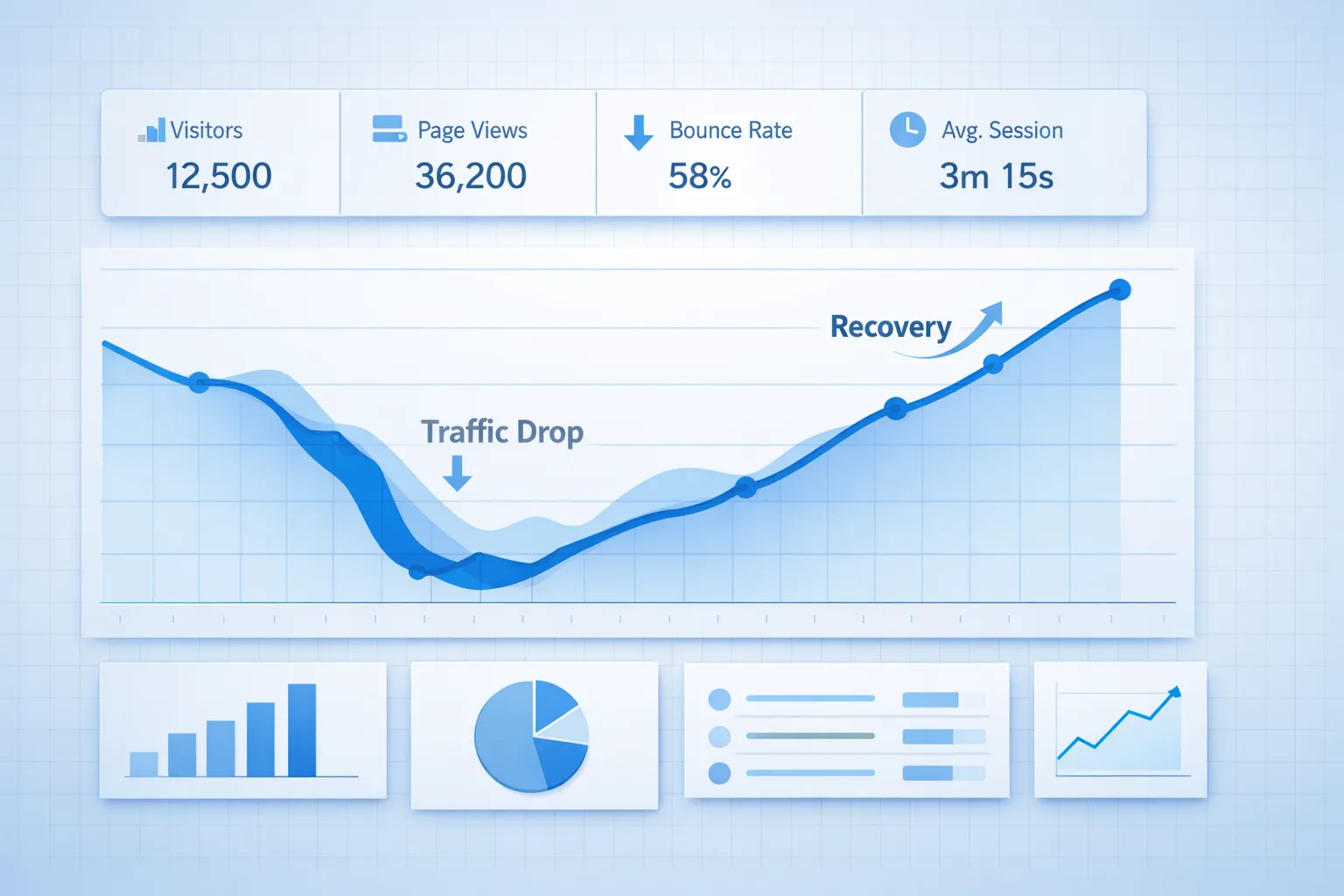
The December 2025 core update arrived on December 11 and finished rolling out on December 29—an 18‑day stretch that rattled rankings during the busiest period of the year. If you saw traffic slide, you’re not alone. And you’re not powerless. This playbook gives you a focused, 30‑day recovery plan rooted in how core updates actually work, so you can stabilize in January and set yourself up for growth in Q1 2026.
I’m going to assume you want practical answers fast: what changed, what to fix first, what to leave alone, and how to measure progress without chasing noise. We’ll move from triage to content surgery to technical tune‑ups, then show you how to build guardrails that keep you resilient for the next core update.
What the December 2025 core update actually means
Core updates are broad adjustments to ranking systems designed to surface more relevant, satisfying content. They don’t target a single factor (like links or page speed) and they don’t punish sites. They rebalance how signals are interpreted across many systems. That’s why winners and losers span every vertical.
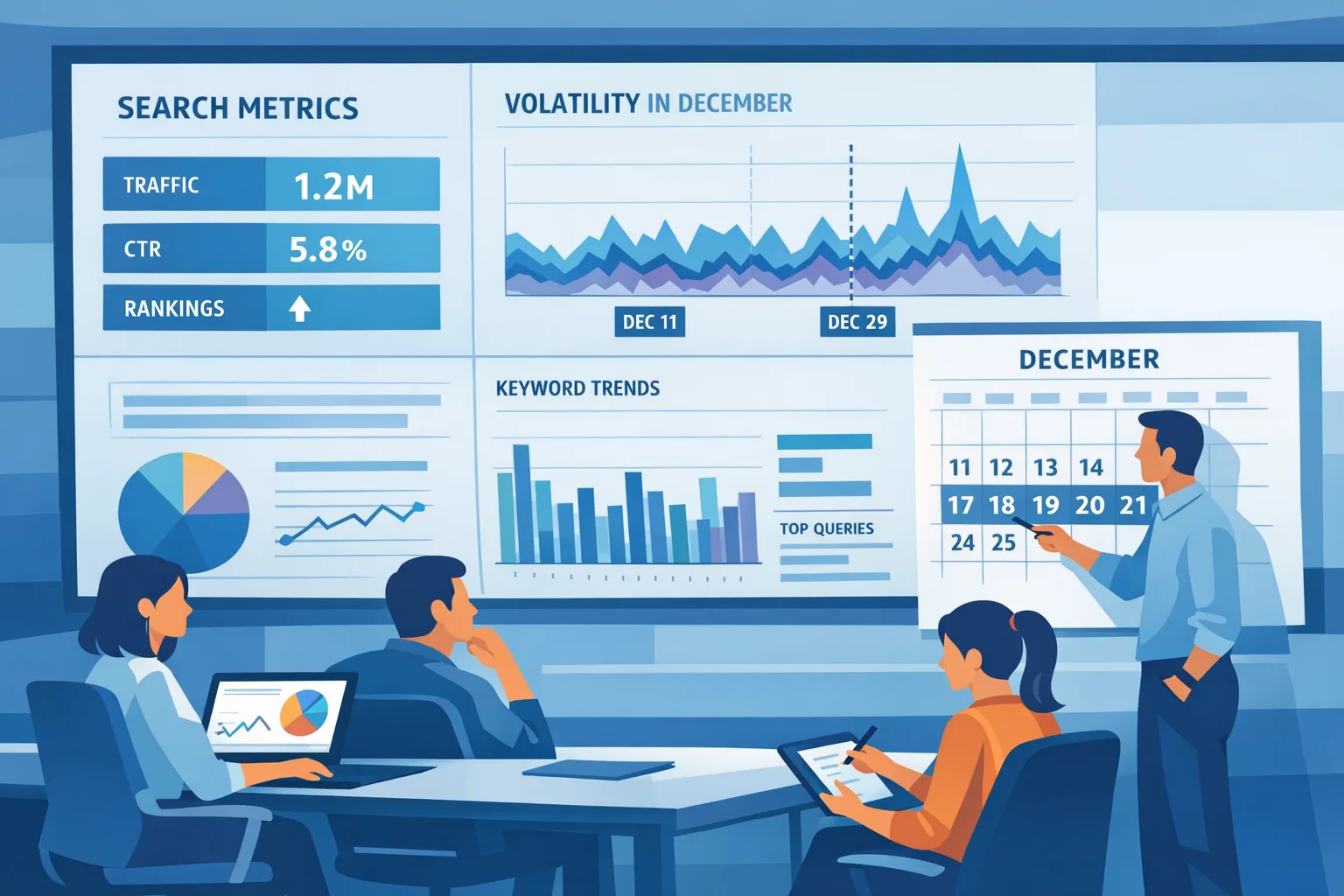
Two details matter for your diagnosis and plan: the timing and the breadth. The rollout began at 9:25 a.m. Pacific on December 11, 2025 and completed late morning on December 29. If your analytics show a slope change around December 13 with another noticeable swing near the week of December 20, that lines up with the industry’s observed volatility. Use those dates to bracket your before/after analysis rather than eyeballing arbitrary weeks.
Also remember: recovery from a core update is rarely instant. When you improve content and technical signals, you’re improving how your site is evaluated over time. Expect meaningful movement in weeks to a few months, not days. That’s normal.
Diagnostic first: separate signal from seasonal noise
Holiday traffic masks a lot. E‑commerce spikes, B2B dips, and news cycles whiplash. Before you touch a single title tag, ground your diagnosis in a clean comparison.
Do this:
- In Google Search Console, compare December 1–January 1 to the prior 31 days, then also to the same period last year. Segment by device and country. Look for step changes that coincide with December 11–29, not just week‑over‑week noise.
- Pull the Performance report and filter by page. Identify “Lost Leaders”: URLs that previously drove non‑brand clicks and impressions but dipped materially post‑December 11.
- Map those URLs to their primary query groups. Did you lose intent match (e.g., informational pages falling on commercial queries)? Or did a SERP feature (Top Stories, video, or an AI‑formatted answer) push you below the fold?
- In your analytics tool, overlay organic sessions by hour with the rollout window. If the curve turns at or just after December 13 and again around December 20, that’s algorithmic, not a campaign or site outage.
Now you’ve got a short, prioritized list of pages and query groups. That’s your surgical target for the next four weeks.
The 30‑day plan for the December 2025 core update
Here’s the thing: most sites don’t need a sitewide rewrite. They need precise improvements where intent, credibility, and utility slipped. Work the plan in order. Don’t skip ahead.
Week 1: Triage and proof of harm
Objective: isolate the smallest set of pages creating the biggest traffic drag and collect evidence of why they slipped.
- Make a “Top 25” sheet. List the 25 URLs with the largest drop in non‑brand clicks after December 11. Include their main queries, average position, CTR, and the new top three competitors on those queries.
- Read the live SERPs. What’s now ranking? Longer, fresher walkthroughs? First‑party research? Clearer product comparisons? Capture patterns, not just word counts.
- Check content freshness. Anything citing stale stats (pre‑2024), vague claims without sources, or generic how‑to steps with no process detail goes to the top of your fix list.
- Run a quick technical audit. Confirm noindex tags, canonicals, rel=prev/next ghosts, and hreflang are correct. Verify schema for articles, FAQs, products, and reviews is valid and still appropriate for the page intent.
Deliverable by Friday: a one‑page brief per pattern you found—e.g., “Our how‑to posts lack specific steps and updated references,” or “Our product pages don’t answer key objections vs. alternatives.” Those briefs drive edits in Week 2.
Week 2: Content surgery where it counts
Objective: repair the top 10–15 URLs with the clearest gaps against searcher intent.
- Reframe around intent. If the query is informational, lead with a crisp, expert answer in the first two paragraphs, then deepen with process, data, and edge cases. If it’s commercial‑investigational, add structured comparisons, pricing ranges, and scenarios.
- Show experience. Add first‑hand notes, photos, or screenshots. Spell out failure modes (“When this doesn’t work, try X”). Give readers reasons to trust you beyond claims: methodologies, test setups, and decision criteria.
- Update facts. Replace old stats and versions. If you build with Next.js or React, verify your guidance is current to the latest stable versions. If you’re planning a framework upgrade to support performance and Core Web Vitals, see our Next.js 16 + React 19 upgrade plan for a pragmatic path without downtime.
- Consolidate thin pages. If two or more pages compete for the same intent, merge them into a single, best‑in‑class resource. 301 the old URLs and update internal links.
- Add FAQs that mirror real queries. Two or three well‑chosen questions at the end of a page can capture long‑tail variants and improve dwell time. Don’t stuff; keep them genuinely useful.
Deliverable by Friday: new drafts live for the top 10–15 URLs, with redirects and internal links updated. Track changes so you can attribute outcomes later.
Week 3: Technical tune‑ups that move needles
Objective: remove friction for both users and crawlers. Core updates reward quality, but technical debt can blunt gains.
- Largest Contentful Paint under 2.5 s on mobile. Audit hero images, font loading, and third‑party scripts. Ship modern image formats, preconnect critical origins, and trim render‑blocking CSS.
- Stabilize CLS. Reserve media space and preload key fonts. If layout jumps on your top pages, fix them before worrying about less visible optimizations.
- Refresh internal linking. Promote the refreshed pages from relevant hubs and category pages with descriptive anchors. Avoid repeating the same anchor text everywhere; write for humans.
- Re‑submit sitemaps. After consolidations and major edits, ping Search Console. It won’t force rankings, but it’ll remove crawling uncertainty.
- Logs and crawl budget. If you run at scale, review server logs. Are bots wasting time on filtered faceted URLs or parameter traps? Canonicalize or block those patterns.
If this is stretching your team, we can help with technical SEO, content ops, and performance workstreams. See our services or the overview of what we do.
Week 4: Measurement, iteration, and guardrails
Objective: avoid “whack‑a‑mole” chasing of daily swings. Build a steady cadence.
- Define a post‑update baseline. Use January 5–25 as your stabilization window. Compare it to the pre‑update baseline (November 15–December 5) for apples‑to‑apples insights.
- Ship a lightweight content quality rubric. For every page you touch in 2026, require: clear intent match, fresh facts, first‑hand detail, sources, and a unique angle. If any box is unchecked, it doesn’t ship.
- Set monitoring rules. Alert only on sustained changes: e.g., a 20% drop in non‑brand clicks for a query group over 7 rolling days. Turn off noisy daily alarms.
- Plan the next two sprints. Batch similar pages (e.g., all comparison pages) and apply your learnings at once.
People also ask: key questions about core updates
How long does recovery from a core update take?
When you materially improve a page, you can see early signs in a few weeks—impressions recovering first, then clicks. Full recovery can take a month or two as ranking systems recrawl, re‑evaluate, and reweight signals at the site level. Expect non‑linear progress; plateaus are common before a jump.
Should I delete content that lost traffic?
Not automatically. If a page aligns with a real query and you can make it the best answer on the web, improve and keep it. Delete content that has no audience, no links, and no path to usefulness—or fold it into a stronger page and redirect.
Did AI features change how my pages are discovered?
AI‑styled answers and new result formats continue to evolve, and they change how users scan SERPs. That doesn’t nullify organic. It raises the bar for clarity and utility. Content that quickly answers the core question, then goes deeper with trustworthy detail, still attracts clicks—especially when titles and descriptions reflect the specific value on the page.
The Content Quality Quadrant (use this before every publish)
Use this framework as a pre‑flight for every important page. If you don’t score a “yes” on all four, fix before shipping:
- Intent Fit: Does the intro deliver the exact answer a searcher expects for this query, in plain language, within the first 100–150 words?
- First‑Hand Detail: Do you include steps, data, test results, screenshots, or examples from your own work—details competitors can’t easily fake?
- Evidence and Freshness: Are stats, versions, and recommendations current as of the last 6–12 months, with sources and dates?
- Comparative Helpfulness: Compared to top results, is your page obviously more actionable or comprehensive for the task at hand?
Paste this into your content brief template. It prevents “good enough” pages that stall in the middle of page one or slide after a core update.
Quick technical wins most teams overlook
These aren’t glamorous, but they’re high‑leverage when rankings are wobbling:
- Navigation pruning: Remove orphan states and dead‑end category paths. If bots must click five levels to reach money pages, you’re donating crawl budget.
- Canonical correctness: One canonical per intent. Consolidate duplicate filters and session parameters.
- Schema that matches the page: Don’t stick FAQ or HowTo schema on thin content. Validate, then monitor for errors after releases.
- Media hygiene: Compress and lazy‑load below‑the‑fold images. Reserve space to kill CLS. Provide descriptive alt text that actually helps users.
- Platform upgrades: If you’re on older framework versions, plan your move. Modern runtimes, smarter caching, and server components can improve perceived speed and stability. Our 30‑day Next.js 16 + React 19 plan outlines a low‑risk path to ship those gains.

How to read your data from December 11–29 (without overreacting)
Zooming out, the December 2025 core update took roughly 18 days to complete. Use that window to anchor your analysis—not social chatter or day‑by‑day swings.
Here’s a reliable way to see what’s real:
- Create a Looker Studio view with three time ranges: Nov 15–Dec 5 (pre‑update baseline), Dec 11–29 (rollout), and Jan 5–25 (stabilization). Plot non‑brand clicks by query group and by page.
- Mark two vertical guides for Dec 13 and Dec 20 to catch the common volatility waves. If your curves break at those lines, you’re seeing algorithmic impact, not a campaign artifact.
- Slice by device. Mobile often shows bigger swings when result layouts change; don’t let desktop hide the story.
If you manage multiple sites, build this as a template and use it every core update. Most of the stress in SEO comes from misreading noisy data. Guardrails beat hot takes.
Risk report: common failure modes after core updates
From audits we’ve run for publishers, SaaS, and mature e‑commerce teams, these patterns keep showing up after major updates:
- Content that answers “what” but not “how.” If your posts name concepts without the steps, examples, or tradeoffs to act on them, you’ll get outrun by pages with lived detail.
- Pages that try to win every query. One page, one intent. If you’re mixing informational intros with sales CTAs and thin comparisons, Google struggles to place you.
- Stale facts. Framework versions, pricing, and regulations change. Outdated claims are a trust killer and a fast path to demotion.
- Authority mismatch. Author bios with real credentials and a clear site identity help. Generic bylines and faceless “Team” pages don’t.
- Performance debt. Slow LCP and layout shift erode engagement, which weakens the broader signal profile around usefulness.
What to do next (developers and business leaders)
Pick three actions and execute this week:
- Identify your 10 biggest decliners in Search Console and ship intent‑accurate updates within seven days.
- Merge overlapping posts that compete for the same queries and 301 the extras.
- Fix your worst Core Web Vitals offender and re‑test on mobile.
- Add expert evidence to two cornerstone pages: data, screenshots, or implementation notes.
- Stand up a weekly “Search Health” review for January with a single, shared dashboard.
If you want a partner for the heavy lifting, start with a quick, scoped engagement. Review recent projects to see how we approach complex migrations and growth, then talk to us about a January slot.
Why this matters beyond January
Core updates don’t reward tricks. They reward teams that build content and experiences people finish reading, save, and share. When you consistently show intent fit, first‑hand insight, current facts, and a faster, steadier page, you rank—and stay ranked—through future updates. That’s the work. Do it deliberately for 30 days, then turn it into your operating system for 2026.
Want more practitioner‑level playbooks like this? Keep an eye on our blog and the case‑heavy writeups in our portfolio. And if your stack needs modernization to support sustained SEO performance, our engineers can help you plan and ship the right upgrades without risking revenue.



Comments
Be the first to comment.