
Chrome Third-Party Cookies Are Staying: Your 2026 Plan
Yes, you read that right: Chrome third-party cookies are still here. Google reversed course in July 2024, then dropped the idea of a standalone cookie prompt in April 2025. By October 2025, the UK CMA released Google from its Privacy Sandbox commitments. Translation: the cookie switch you’ve planned for since 2020 isn’t flipping in Q1. But here’s the thing—treating this as a reprieve would be a mistake.

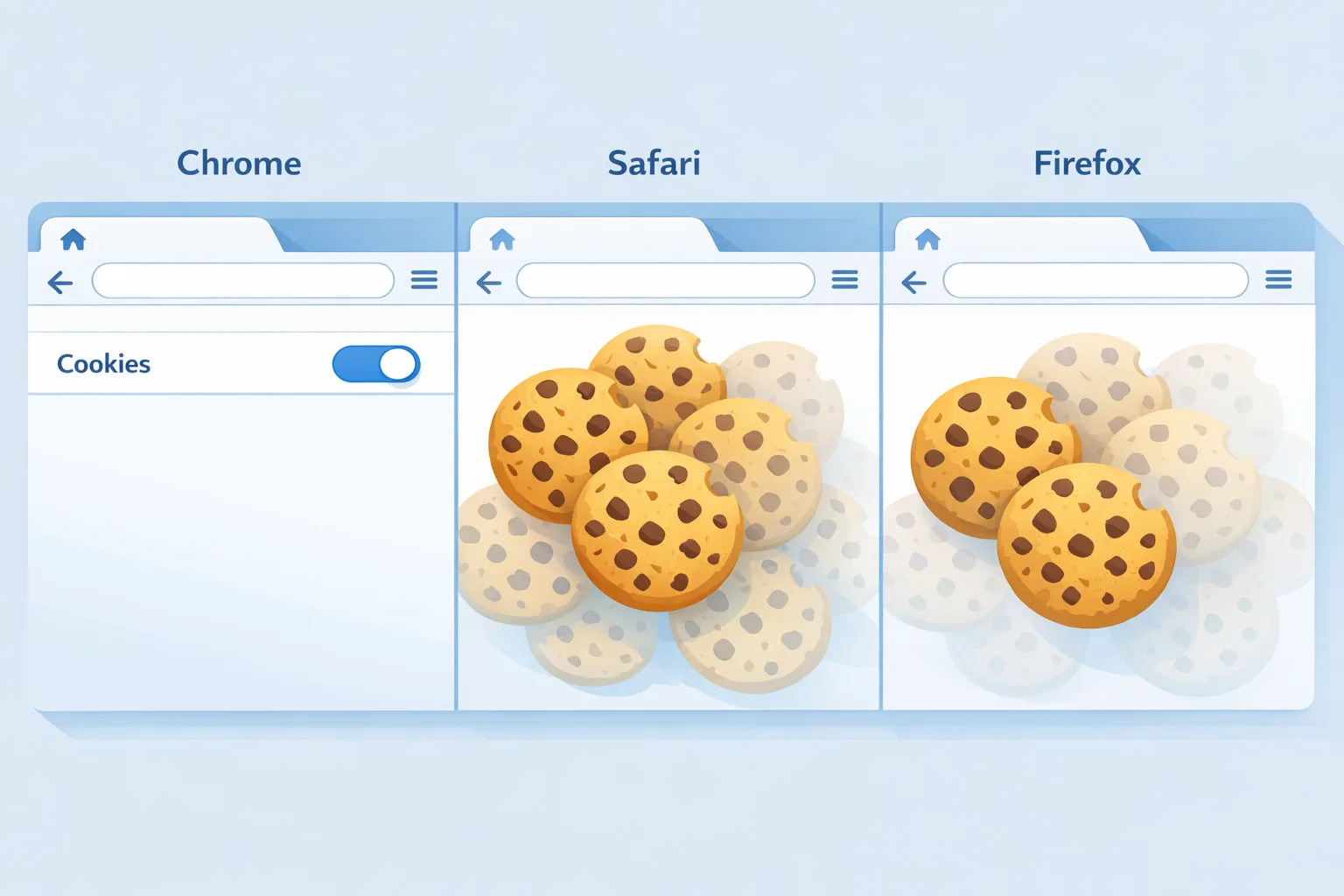
Safari and Firefox still block third‑party cookies by default, and Chrome already ran a 1% restriction test back in January 2024 that exposed plenty of brittle integrations. Meanwhile, privacy expectations, security enforcement (SameSite, ITP, ETP), and platform compliance demands keep tightening. If you lead growth, product, or engineering, your goal isn’t to cling to third‑party cookies—it’s to build a durable measurement and personalization core that works with or without them.
What actually changed—and what didn’t
Let’s ground this with dates and impact:
• July 22, 2024: Google announced it wouldn’t deprecate third‑party cookies and would explore an “informed choice” experience in Chrome.
• April 22, 2025: Google said there won’t be a new standalone prompt. The browser’s existing controls remain.
• October 17, 2025: The UK CMA formally released Google from its Privacy Sandbox commitments, citing reduced competition risk given the reversal.
What didn’t change: Safari and Firefox still block third‑party cookies by default; corporate networks increasingly restrict cross‑site tracking; and consent requirements continue to ratchet up state‑by‑state and region‑by‑region. In other words, Chrome staying the course doesn’t restore your pre‑2020 analytics. It simply buys you time to do this right.
Primary question teams ask: “Should we still prepare for a cookieless web?”
Short answer: yes—because “cookieless” is already your daily reality on a large share of traffic. Even on Chrome, consent choices, ITP‑like workarounds in privacy‑forward contexts, and ad blockers blunt third‑party cookies. If your attribution or remarketing depends on them, your numbers are skewed today. You’re just used to it.
Chrome third-party cookies: what to do now
Use the time to replace brittle patterns with resilient ones. Here’s the plan we deploy with clients.
1) Rebuild your data foundation around first‑party identity
Stop relying on third‑party IDs as the source of truth. Establish a first‑party identity spine tied to consented user accounts, hashed emails, or stable customer numbers. For unauthenticated sessions, use short‑lived, first‑party identifiers with clear retention rules. Document exactly how you map anonymous events to known profiles when a user logs in or subscribes.
Practical moves: unify “user_id” conventions across web, app, and backend; standardize event names and parameters; and define deletion pathways to honor erasure requests. If you don’t have an owner for identity resolution, that’s your first staffing gap to fill.
2) Move critical events server‑side
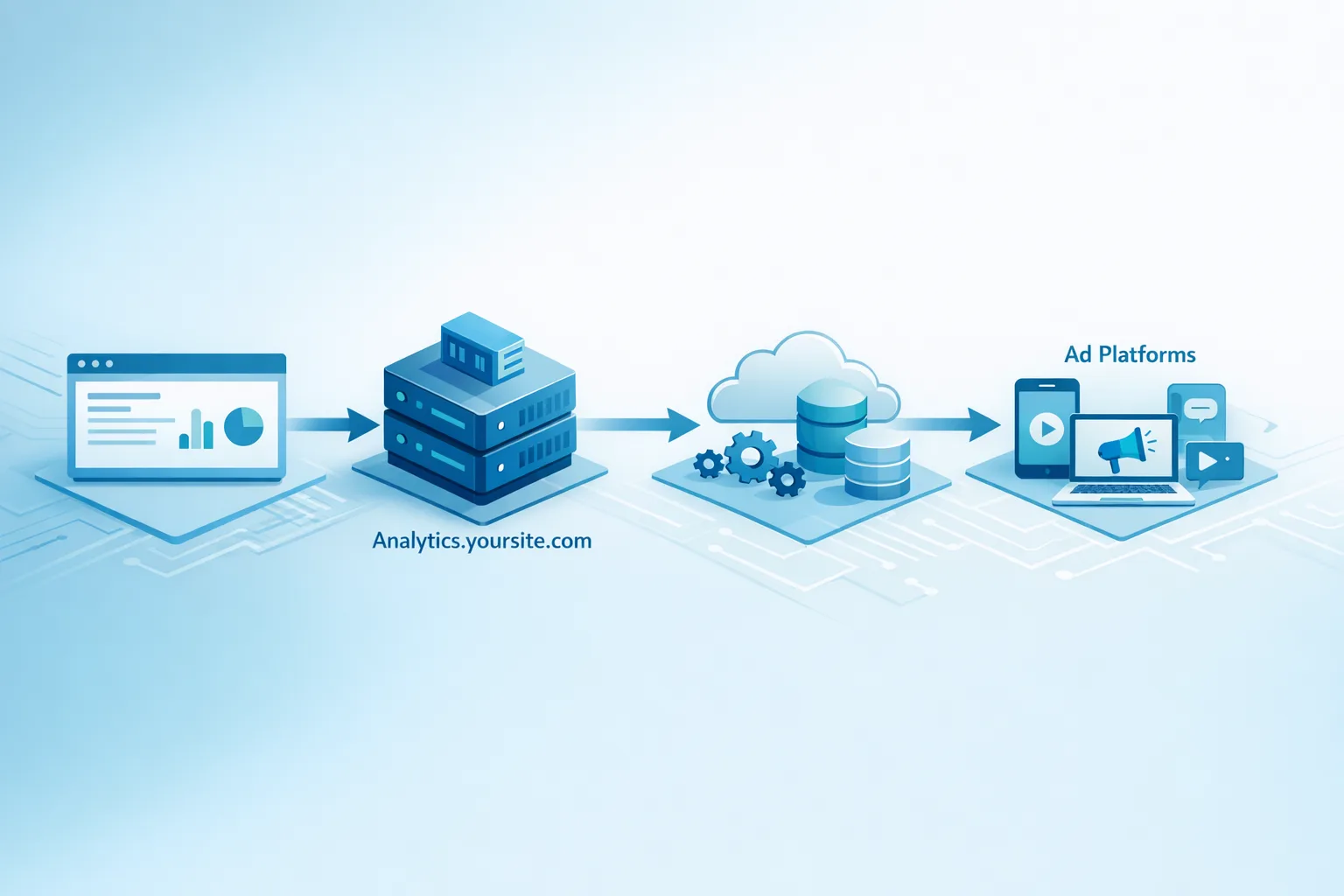
Client‑only pixels are fragile across browsers and consent states. Start routing conversion‑grade signals through server‑side endpoints you control, then forward to ad platforms via their server APIs. This reduces noise from blockers and aligns with least‑privilege data practices.
Minimum viable scope: purchase/lead events, subscription lifecycle (start, renew, cancel), and high‑value in‑app actions. Start with your top two ad platforms and your analytics destination. Measure lift versus client‑only delivery; you’ll usually see a 5–20% increase in matched conversions depending on your mix.
3) Fix consent like an engineer, not just a lawyer
Many banners collect consent but don’t actually gate tags. Build a consent state machine and enforce it at runtime. If you use a tag manager, stop firing “all pages” pixels; wrap every rule in consent conditions and log the decision path. Keep an audit trail in your data warehouse so you can prove that business logic behaved under different jurisdictions.
Also establish “consent‑aware defaults”: store only essential first‑party cookies until a user grants additional purposes. When consent changes, propagate that state to server APIs and queue backfills safely where allowed.
4) Tighten storage and security controls
Harden your cookies and storage access now. Set SameSite=None; Secure for legitimate cross‑site uses, or better, eliminate the need with postMessage + first‑party storage handoffs. Audit third‑party iframes and SDKs that silently rely on cross‑site cookies for login status, cart, or payments. If you discover hidden dependencies, rewrite those flows before your next seasonal spike.
5) Diversify measurement: incrementality, MMM, and modeled attribution
Attribution shouldn’t collapse when a browser toggles a flag. Combine platform conversions (with server‑side signals), geo/cell experiments, lightweight media mix modeling, and on‑site surveys into a single decision layer. You don’t need a PhD to run a holdout—just a clean split and discipline about reading windows and covariates.
The durable analytics stack we recommend for 2026
Every team is different, but the pattern looks similar when it works:
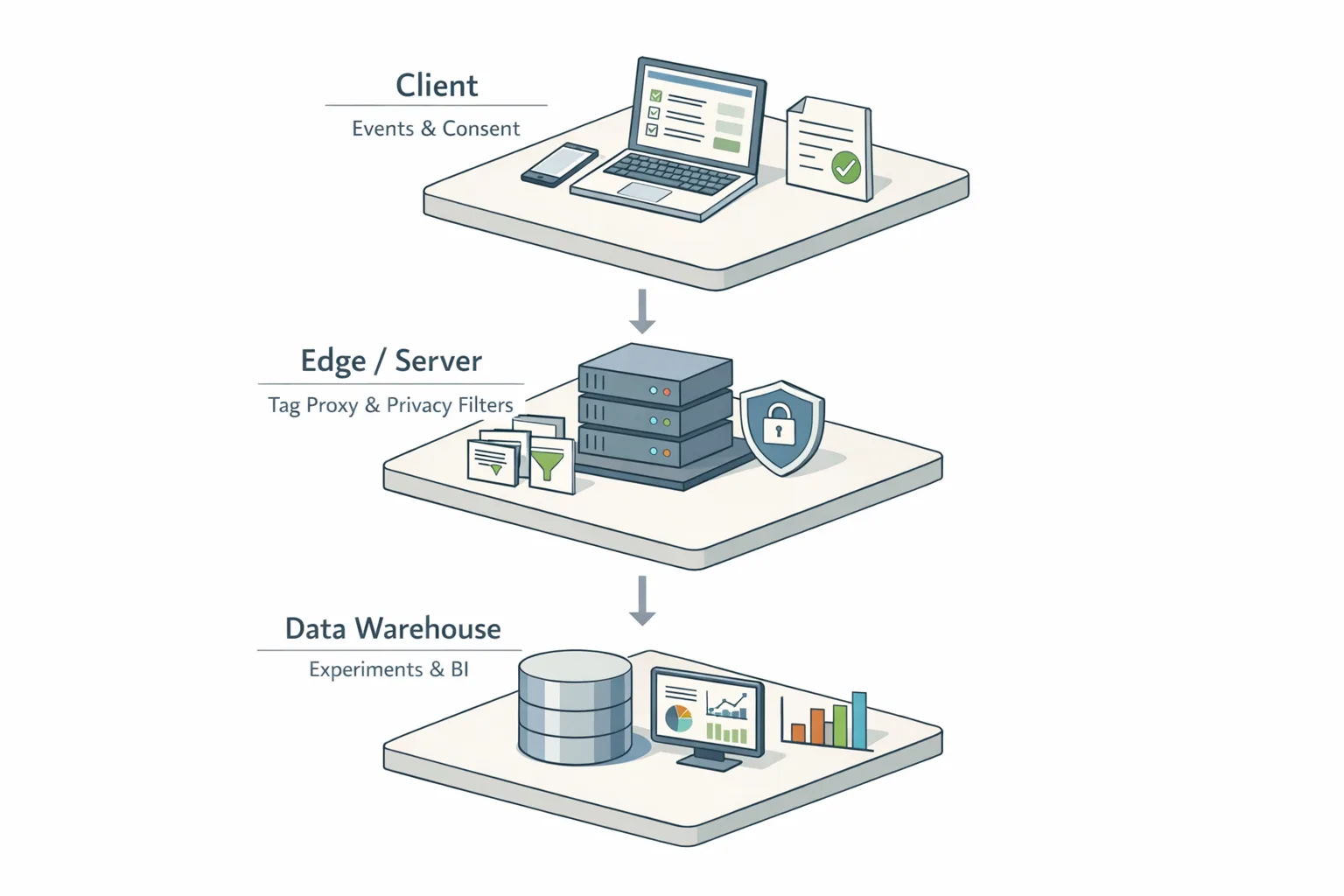
• Client: clean event schema, fewer tags, consent‑aware loaders, and a compact first‑party ID.
• Edge/server: server‑side tagging to normalize events; dedupe and apply consent; forward to ad/analytics APIs; and sign conversions with integrity metadata.
• Data platform: warehouse + transformation layer for identity stitching, consent logs, and experiments; BI for truth‑telling dashboards.
If you’re modernizing infra while you do this, our breakdown of what to adopt from re:Invent will help you choose cost‑sane building blocks for data capture and streaming. Read: AWS re:Invent 2025: What to Adopt Now.
People also ask
Do Safari and Firefox still block third‑party cookies?
Yes. Safari’s ITP and Firefox’s Enhanced Tracking Protection block third‑party cookies by default and have for years. That means your Chrome‑only strategy leaves a lot of conversions unmeasured and remarketing underpowered.
Should we keep testing Privacy Sandbox APIs?
Yes—and treat them as optional enhancements. Topics, Protected Audience, and related measurement proposals are still evolving. Use them where they provide incremental lift, but they shouldn’t be a single point of failure.
Will Chrome change its mind again?
It might. The last five years proved that roadmaps can flip when privacy, competition, and ecosystem realities collide. Build so you’re fine either way.
A 90‑day, no‑excuses plan
Use this exact sequencing to make real progress without boiling the ocean.
Days 1–15: Baseline and breakage hunt
• Inventory every tag, SDK, iframe, and endpoint that touches user data. Mark which require cross‑site cookies.
• Compare conversion deltas across Chrome vs. Safari/Firefox for the last 60 days. Quantify where you’re blind.
• Review consent flows in three key markets (e.g., U.S., EU, Brazil). Verify banner toggles map to runtime gating.
Days 16–45: Ship a server‑side spine
• Stand up a server‑side tagging endpoint. Start forwarding your single highest‑value conversion event to two platforms.
• Implement a consent state machine that sets and enforces purposes before any non‑essential tag fires.
• Harden cookies: audit SameSite, Secure, and lifetime. Replace cross‑site status checks with first‑party storage handoffs.
Days 46–90: Prove lift and scale
• Add two more events (e.g., add‑to‑cart, subscription renewal), then A/B client‑only vs. client+server delivery.
• Start one geo‑based holdout for a major channel. Read the results weekly and adjust spend caps accordingly.
• Document your identity resolution rules and build a deletion request test that actually wipes a user trace.
Engineering gotchas we keep seeing
• Payment popups and embedded wallets: don’t leak session state into third‑party storage. Use a tokenized redirect and verify the order server‑side on return.
• Federated login: some providers still sneak in third‑party cookies. Prefer PKCE flows and first‑party redirects; validate the ID token server‑side.
• “Essential” tags that aren’t: if your banner claims analytics is optional but your SPA fires page_view on load, your risk—and fines—go up.
Marketing team pitfalls
• Re‑targeting lists tied to third‑party cookies: expect decay. Prioritize first‑party lists (logins, subscribers) and model lookalikes from there.
• Over‑reliance on last‑click: adopt modeled attribution with platform conversions and experiment overlays. Last‑click alone will cost you money in 2026.
• Consent ignoring creative: creative that requests data or pushes account creation performs better when the page explains why—privacy language is part of UX.
How this affects SEO
Third‑party cookies don’t influence rankings directly, but everything around them touches SEO outcomes. Better consent and faster pages boost Core Web Vitals, and cleaner tags reduce layout thrash and CPU time. If your CMP or tag manager blocks rendering or chat widgets hammer the main thread, you’ll bleed conversions from organic traffic even when your rankings are strong.
Speaking of performance budgets and dependency debt: if you’re planning a framework upgrade in early 2026, align your measurement cleanup with your front‑end plan. Our guide shows how to time the upgrade with a security and instrumentation sweep: Next.js 16 + React 19: A 30‑Day Upgrade and Security Plan.
A practical checklist you can copy
Use this to review your stack every quarter.
• Consent: map banner toggles to runtime gates; log consent states; verify deletion requests end-to-end.
• Identity: single user_id standard across web/app/backend; clear rules for anonymous→known joins; rotating salts for hashed emails.
• Storage: first‑party cookies only where possible; explicit SameSite and Secure flags; minimal lifetimes.
• Events: server‑side for purchase/lead; dedupe rules; consistent event names and params.
• Attribution: platform conversions + experiments + modeled MTA; channel caps tied to experiment reads.
• Governance: owners for consent, identity, and experiments; quarterly tag audits; incident runbooks for privacy breakage.
But there’s a catch: people and process
Tools won’t save you if incentives are off. Give growth a budget to run experiments and a mandate to kill underperformers quickly. Give engineering air cover to remove zombie tags and SDKs. And have legal sit in sprint planning at least once a month; it’s faster than re‑architecting after a complaint lands.
What to do next
• Pick one revenue‑critical conversion and route it server‑side this month.
• Replace any third‑party cookie dependency in login, cart, or payments with first‑party flows.
• Run a two‑region holdout on your top paid channel for two weeks and read the delta.
• Align your 2026 front‑end upgrade with a consent, tag, and security sweep. If you need a plan, start here: our services and what we do describe exactly how we execute this with product teams.
• Want a second set of eyes? Reach out via Bybowu contacts; we’ll review your audit and suggest a high‑impact 30‑day roadmap.
Chrome keeping cookies changes the timeline, not the destination. Build for a consent‑first, first‑party data world, and your analytics and growth won’t hinge on one browser’s toggle ever again.




Comments
Be the first to comment.