
Google AI Mode is no longer an experiment on the margins. With Gemini 3 arriving in mid‑November 2025 and wiring into AI Mode’s top‑end reasoning, the search results you compete in are shifting from ranked lists to answers, tools, and citations. If your growth plan is still calibrated to classic ten‑blue‑links SEO, it’s time to update your playbook.
This briefing covers what actually changed, how it impacts traffic, and the precise steps to earn citations and qualified visits in AI‑forward SERPs—without burning months on speculation.

What changed in Google AI Mode this fall
Two timelines matter for planning. First, on May 20, 2025 Google began rolling out AI Mode as a dedicated tab in U.S. Search alongside Images and News. That brought a visible, opt‑in interface for full‑answer results with follow‑ups and links. Second, on November 18, 2025 Google launched Gemini 3 and started bringing it into AI Mode for tougher questions, with a “thinking” option for deeper reasoning. That combo—accessible UI plus stronger model—means more queries will resolve inside AI Mode, and those answers increasingly contain structured elements beyond text.
Practically, AI answers now shift shape. Instead of a single block of prose, we’re seeing dynamic layouts: in‑line source links, expandable sections, short tables, mini calculators, product cards, and visual canvases you can tap through. AI Overviews, which have been available broadly for over a year, also continue to include in‑line and right‑rail links, and Google has been testing ad placements within these experiences on mobile. The point isn’t the UI novelty—it’s how the model decomposes a question, runs multiple background searches, and assembles a response that cites specific web pages.
How AI Mode changes the click economy
Here’s the thing: AI Mode can answer more of the query intent before a user clicks. That reduces shallow “navigational” clicks but it can increase high‑intent, deep clicks to the sources cited. When we instrument AI surfaces for clients, we see three patterns:
First, for commodity queries (definitions, everyday how‑tos), impressions stay healthy but clicks concentrate into a small set of cited pages with clear, concise answers and recognizable authority signals. Second, for complex queries (comparisons, planning, local‑plus‑product), AI Mode assembles multi‑step answers and tends to cite pages with unique data, original evaluation, or fresh context—thin content gets filtered out. Third, branded queries generally hold steady; brand navigational demand remains resilient even when an AI answer appears.
So traffic doesn’t “disappear”—it consolidates. Your job is to become the page the model reaches for when it composes that answer.
Gemini 3: Why its behavior matters for SEO
Gemini 3 brings stronger reasoning and a deeper “fan‑out” of background queries. In plain English: it asks the web more, and expects more back. That favors pages that anticipate follow‑up questions, carry well‑structured facts, and make it easy to lift concise statements with attribution. It also favors sites that publish genuine, first‑party evidence—original screenshots, measurements, code, photos, tables, or prices—because those artifacts let the model support an argument rather than paraphrase generic advice.
Another practical shift is UI‑driven. When the answer block includes embedded tools, cards, or tables, the model quotes the parts of your page it can confidently map into that layout. If your content isolates key specs, steps, or metrics in clean elements (lists, tables with headers, or clearly labeled sections), you’ll win inclusion more often than a wall of prose.
Primary keyword: Google AI Mode—what Google publicly says
Google’s public guidance hasn’t changed in one crucial way: there’s no special tag to “turn on” inclusion in AI answers, and you can’t force an appearance in AI Mode. The company keeps telling us to focus on helpfulness, expertise, and accessibility—and their UI keeps adding more ways to display links inside AI answers. Ads are being tested in some AI surfaces on mobile, but organic links remain visible and tappable within AI Overviews and AI Mode. The model’s improvements increase the bar for being cited, not the possibility of being cited.
Let’s get practical: the AI Mode Readiness Checklist
Use this as a weekly working session with your content, SEO, and engineering leads. It’s tuned for Gemini‑3‑powered AI Mode and current AI Overviews behavior.
1) Answer, then expand
For each target query, add a crisp, one‑to‑three‑sentence “answer capsule” near the top of the page. Follow it with depth: methods, tradeoffs, examples, and sources. The capsule gets quoted; the depth earns the click.
2) Surface your evidence
Every key claim should point to something verifiable on the page: a benchmark table, a changelog date, a code sample, a photo you took, or a price you observed. If you rely on third‑party sources, summarize in your voice and link out. Don’t bury the proof in images without alt text—expose the data in text or HTML tables so the crawler can map it.
3) Structure for lift‑and‑cite
Use descriptive H2/H3s that mirror the questions people ask. Mark up with appropriate schema (FAQPage, HowTo, Product, Organization, LocalBusiness, Article) where it truly fits. Keep tables simple: header row, clear units, no merged cells. Use ordered lists for steps, unordered lists for factors.
4) Entity clarity beats keyword stuffing
Name the exact product, version, model number, API method, regulation, or date. Disambiguate acronyms. Link out to the canonical entity (docs, spec, standard) the first time it appears.
5) Freshness with a ledger
Show last‑updated dates and a mini changelog on evergreen pages. If your guidance depends on a version or policy that’s changed (for example, a framework release or pricing tier), state the date explicitly.
6) Speed and resilience
AI surfaces still reward pages that load fast and consistently. Optimize TTFB and LCP, and make sure critical resources aren’t blocked by flaky CDNs. If outages have bitten you before, review our resilience playbook for 2025 outages and shore up edge caches for your most‑cited pages.
7) Build for the scroll‑to‑source
When a user taps your citation, they’re mid‑journey. Open with an anchor‑matched heading, a short TL;DR that mirrors the promise in the AI answer, and a jump link table of contents. Respect intent and you’ll keep the click.
People also ask: the AI Mode edition
Will Google AI Mode kill SEO?
No. It will compress mediocre pages and reward credible, specific ones. We’re seeing fewer low‑intent clicks and steadier or improved conversion on the clicks that do arrive. The path to growth shifts from “rank everywhere” to “be the best source that deserves citation.”
How do I get cited inside AI answers?
Publish something the model needs to support a claim: a fresh data point, a head‑to‑head test, a clear step‑by‑step, or a definition that’s clean and unambiguous. Make it extractable (clean HTML, obvious headings) and attributable (brand, byline, organization page).
Do I need new markup for AI Mode?
No special tag exists. Use established schema accurately. Over‑marking content to “force” eligibility tends to get ignored—or worse, distrusted. Focus on clarity and evidence.
Data‑backed context you can plan around
Key dates for stakeholders’ slides: AI Overviews expanded to more than 100 countries in late 2024 and have been a regular part of results since. On May 20, 2025 the AI Mode tab began rolling out in the U.S. so everyday users could opt into a full‑answer experience. On November 18, 2025 Google launched Gemini 3 and brought it into AI Mode for complex queries, with a “thinking” setting exposed for subscribers. Google has also tested ads within AI Overviews on mobile in the U.S. this year, while keeping organic links visible inside the AI answer block. If you run paid and organic, plan for blended views of performance.
Content patterns that now outperform
Across B2B SaaS, e‑commerce, and developer tools, three formats are consistently earning citations and quality clicks:
• Rapid response explainers with dates and versions: “As of November 2025, here’s what changed in X (vY).” Include a one‑screen TL;DR, then deep detail, with a comparison table to the previous version.
• Evaluations with measurable outcomes: side‑by‑side latency, price‑per‑1000 requests, or throughput comparisons. Show the method and the raw numbers. If the numbers affect cloud spend, consider cross‑linking to our Cloudflare CPU cost switch guide as an example of decision‑grade analysis.
• Procedural content with edge cases: not just “how to,” but “how it fails,” “what to watch,” and “rollback steps.” That combination gets quoted because it anticipates follow‑ups.
Technical implementation notes (devs, this is for you)
• Keep critical content server‑rendered or statically generated. If you rely on client‑side fetches for key facts, the crawler may not see what the user sees. In frameworks like Next.js, favor SSG or SSR for the opening capsule and summary table. If you’re planning a platform upgrade, our Next.js 16 upgrade playbook outlines safe patterns.
• Control HTML cleanliness. Avoid nested interactive wrappers around your H2/H3s. Use semantic tags. Wrap data tables in a simple table element with scope attributes on headers.
• Give images an alt that restates the key fact. AI answers can cite your image and quote the caption. For charts, repeat the highlight in a text sentence right below.
• Mind robots and caching. Don’t unintentionally block key sections with overly broad rules. If you rely on edge caches, verify your stale‑while‑revalidate works under surge. If you need help tuning your stack, see our engineering services and recent projects.

Measurement: prove impact without waiting a quarter
Set baselines now so you can attribute changes to AI Mode shifts rather than seasonality:
• Segment landing pages frequently cited by AI answers versus those that rarely appear. Track conversion rate deltas, not just sessions.
• In Google Search Console, monitor query classes by intent: “define,” “compare,” “best,” “near me,” “how to.” Expect class‑specific shifts rather than a uniform trend.
• Instrument scroll‑depth and time‑to‑first‑value on pages that receive AI‑referred traffic. The first 10 seconds after a click from an AI answer determine bounce or engagement—optimize that moment.
• Maintain a simple weekly log of changes on your pages (titles, capsules, tables added). Correlate with impressions and clicks; over a month you’ll see which structural changes result in more citations.
E‑commerce and local: don’t ignore Shopping and place cards
AI Mode increasingly blends product and place data. If you’re a retailer or a local service:
• Keep a clean Merchant Center feed with rich attributes (sizes, colors, in‑stock flags), and sync it daily during holidays.
• Standardize product titles and MPN/GTINs. Models do better disambiguating when identifiers are present.
• For local, ensure hours, services, and menus are structured and consistent across your site and profile pages. Add a short “Why choose us” capsule with 3 factual differentiators—equipment brand, average turnaround time, or warranty specifics—near the top of each location page.
Risk management: where teams stumble
• Content drift. When models get better at reasoning, vague content gets worse by comparison. Assign owners to pillar pages and review monthly.
• Over‑templating. AI answers lift your unique lines. If every page reads the same, nothing stands out to quote.
• Deferred fixes. Core Web Vitals regressions, flaky CDNs, and missing alt text quietly lower your chances of being cited. Build a tiny weekly “tech SEO” sprint to ship small fixes continuously. If you need a starting point, our earlier AI Mode playbook outlines priorities now validated by Gemini 3.
What to do next: a 30/60/90 plan
Next 30 days
• Pick 10 money pages. Add answer capsules, a TL;DR, and one table of facts each.
• Fix Core Web Vitals on those pages to green across devices.
• Publish one fresh data‑backed piece in your category (benchmarks, pricing analysis, or a head‑to‑head) and link it contextually from your money pages.
Days 31–60
• Expand the model: 30 pages get the same treatment. Add FAQ schema where it’s legitimately Q&A.
• Build a simple internal “evidence library” (images, charts, raw data) and standardize captions and alt text for reuse.
• Add last‑updated and mini changelogs site‑wide for evergreen guides.
Days 61–90
• Run a cohort analysis: pages updated vs. untouched. Compare impressions, citations observed in AI answers, clicks, and conversion.
• Tighten templates: remove fluff sections, promote evidence blocks higher, and add jump links for fast scanning.
• Plan next quarter’s original research calendar. Give your content something new to say each month.
Zooming out
Gemini 3 didn’t erase SEO. It formalized what good SEO has always been: publish specific, verifiable, clearly structured answers that reflect real expertise, then make them fast and easy to quote. That’s how you earn visibility when the model—not just the ranker—decides who gets the click.
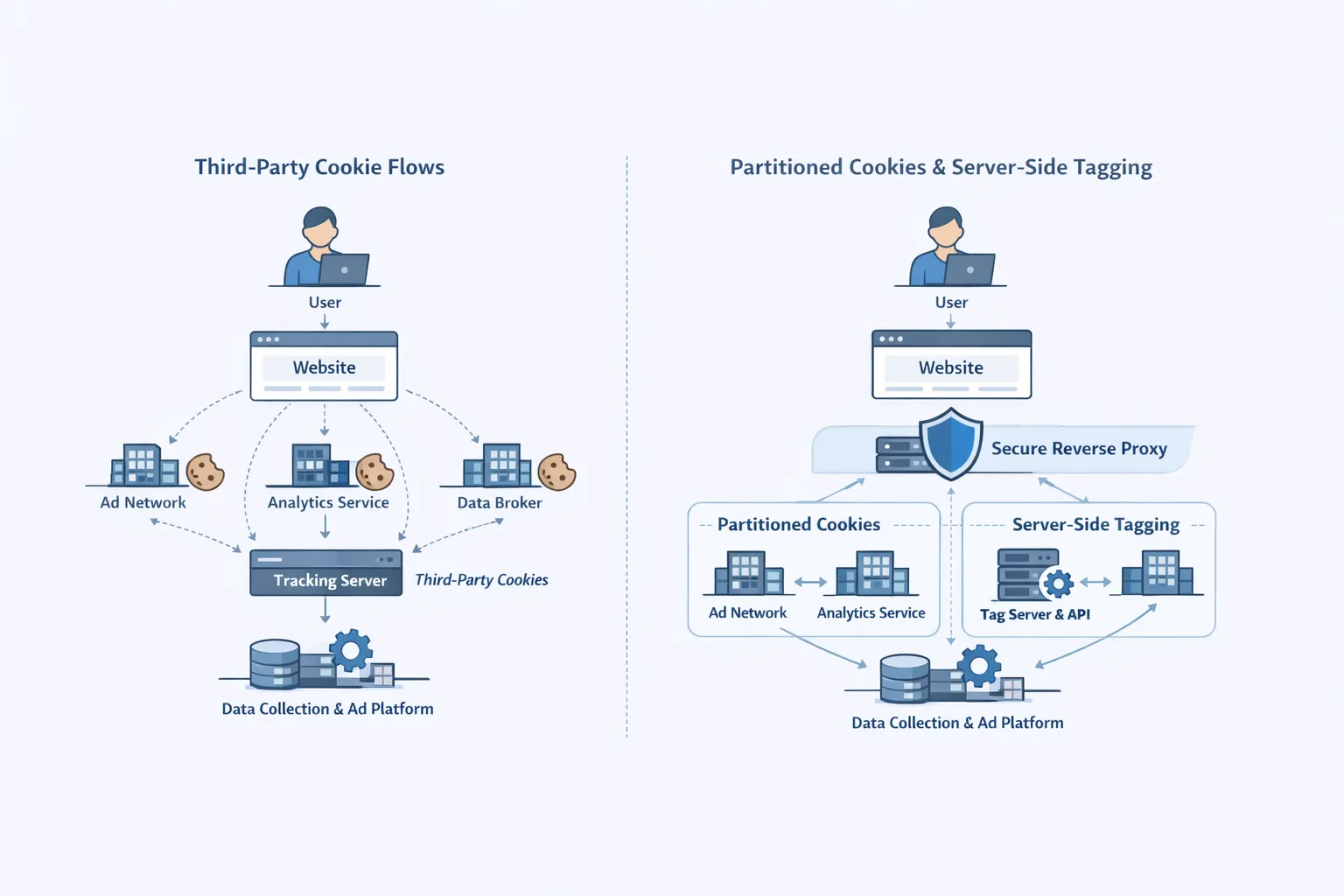
If you’d like help operationalizing this across content, analytics, and engineering, explore what we do and reach out via our contact page. And if you’re navigating broader acquisition changes beyond search, our perspective on the future of third‑party cookies pairs well with this AI Mode plan.







Comments
Be the first to comment.