Custom web development for teams that care about results
If you own revenue, operations, or product, you do not need a vanity redesign. You need a stable, fast platform that turns traffic into pipeline, removes friction from daily work, and does not fall over when you scale.
BYBOWU is a web development agency based in Phoenix, AZ, working with ambitious companies across the US and worldwide. We design and build custom websites and web applications for founders, marketing leaders, and operations teams who want measurable outcomes, not just pretty mockups.
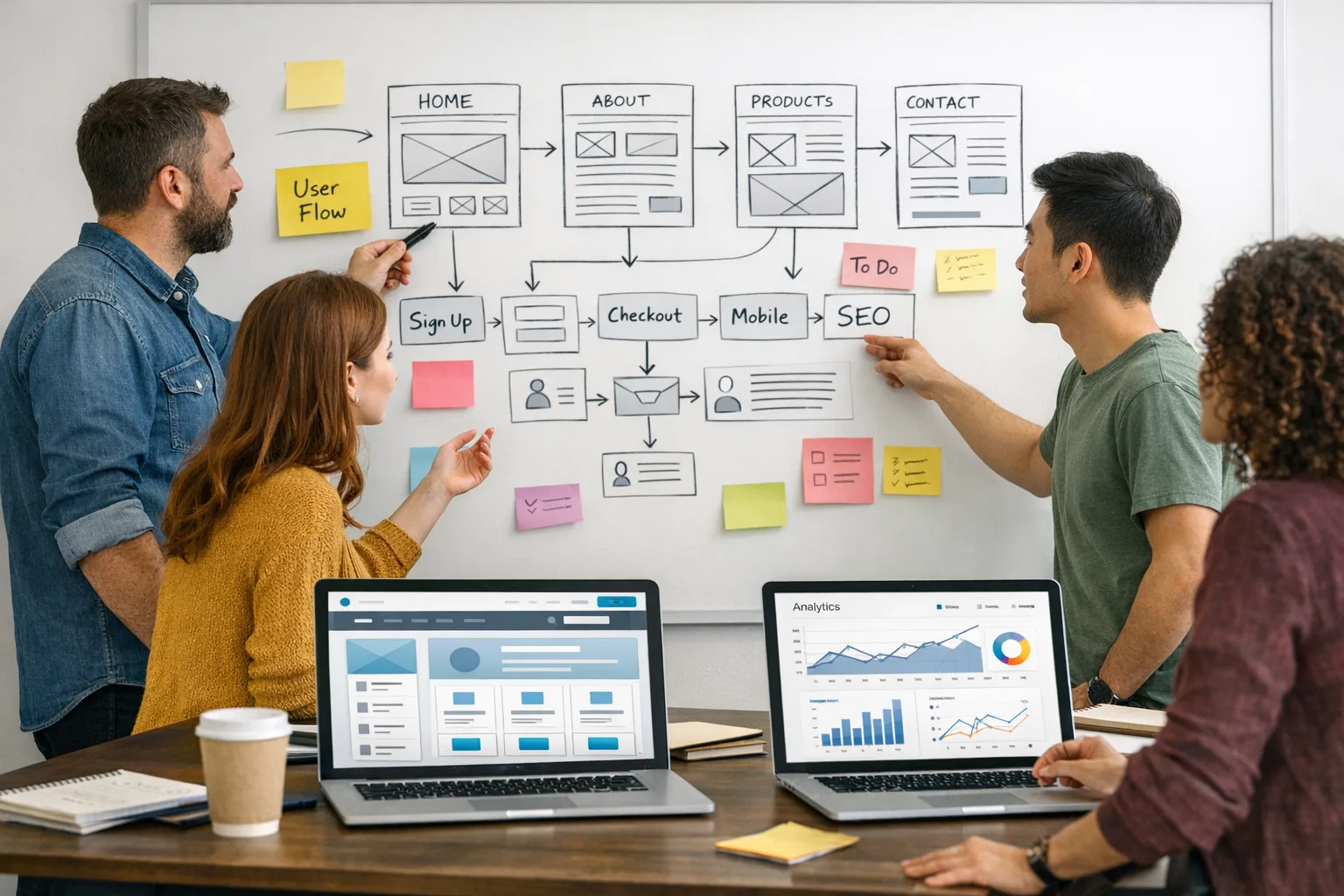
Typical problems we are asked to fix
Most clients come to us after wrestling with one or more of these issues:
- A slow, dated website that is painful to update, so marketing ideas die in backlogs instead of going live.
- Traffic that looks fine in analytics, but low-quality leads or poor conversion to demos, trials, or sales.
- Checkout, booking, or sign-up flows that are confusing and leak users right before the finish line.
- Internal tools and portals stitched together from plugins and spreadsheets that regularly break.
- A fragile stack full of quick fixes that nobody on the current team wants to touch.
- Developers who ship exactly what was asked for, but never question scope or talk about ROI.
Our job is to replace that chaos with a clean, reliable foundation that speeds up your site, clarifies your message, and gives your team tools they can actually use.
How we approach your website or web app
We treat your website or web app as a product that has to earn its keep. Clear goals, simple processes, and accountable delivery, without burying you in technical jargon.
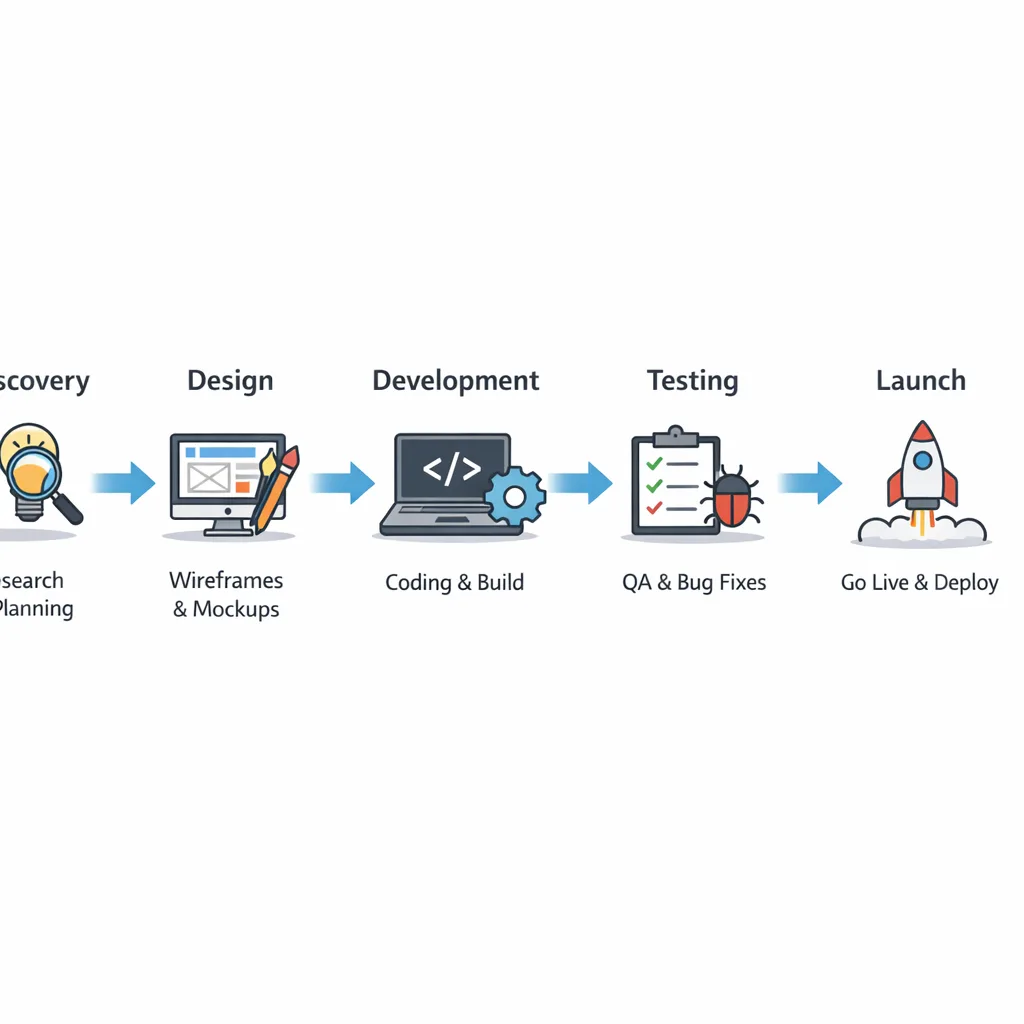
- Discovery and priorities. We start with a focused conversation about your business model, target users, and constraints. Together we define success metrics, must-haves vs nice-to-haves, and a realistic phase 1 that you can launch and learn from.
- UX and interface design. Our design team maps user flows, creates wireframes, then high-fidelity layouts. You see how key pages and journeys will work before any code is written. For complex funnels, we can involve our Website UX Audit & Optimization and Website Design services to tighten messaging and conversion paths.
- Development and integrations. We implement approved designs using modern, battle-tested tools such as React or Next.js on the frontend and Laravel or similar frameworks on the backend. For content-heavy sites we often pair this with WordPress or a headless CMS so your marketing team can move quickly. When needed, our Integrations & API Development specialists connect CRMs, payments, analytics, and internal systems.
- QA, performance, and security checks. We test critical flows across devices and browsers, tune for Core Web Vitals, and cover security fundamentals before launch. When projects require deeper testing, we bring in our QA & Testing Services and, if relevant, Website Security & Vulnerability Assessment specialists.
- Launch and ongoing support. We handle deployment, monitoring, and handover. If you want a long-term partner, our Support & Maintenance services keep your site or app secure, fast, and aligned with your roadmap.
What you get as concrete deliverables
Every engagement ends with tangible assets your team can rely on, not a black box handoff:
- Clickable prototypes or design files (typically in Figma) for key pages and user flows.
- Production-ready frontend and backend code, using frameworks that fit your current team and future plans.
- Clean, semantic HTML and accessible layouts that support SEO, usability, and WCAG-focused improvements. For deeper work, we can involve our Accessibility & WCAG Compliance services.
- Integrations with the tools you actually use: CRM, marketing automation, analytics, payment providers, booking systems, or internal APIs. When needed, we tap our Integrations & API Development team.
- Basic documentation, short training sessions for your team, and deployment pipelines you control, so you are not locked to us.
What you can order
- Conversion-focused landing page — A tightly scoped landing page for one offer or campaign, including UX, on-page copy, analytics, and event tracking, ready for paid traffic and CRO. Often paired with Landing Page Development & CRO or Landing Page Design.
- B2B or services marketing website — A modern, SEO-ready site that explains what you do, builds trust, and drives demo requests or consultation inquiries. Commonly combined with a resources section and support from our SEO & Digital Marketing team.
- Ecommerce website or store — A secure, high-conversion online store with optimized product pages, cart, and checkout. Built on the stack that fits your catalog and internal skills, from Shopify to custom Laravel or headless setups. For ecommerce-heavy needs, see E-commerce Development and Shopify Development.
- Booking and appointment platform — A web solution for scheduling, service selection, and payments, with customer dashboards and automated reminders for clinics, education, and service businesses. Related: Booking & Delivery Platform Development.
- Customer or partner portal — Secure portals for customers, resellers, or internal teams, with access control, personalized dashboards, and content management. See also our Portal Development services.
- Custom web application or SaaS MVP — A tailored web app with user accounts, dashboards, workflows, and integrations that reflect how your business actually runs. Often combined with Custom Software Development, SaaS Product Development, or Startup MVP Development when you are building a full product.
Why choose BYBOWU for web development
- Outcome-first, not feature-first. We design around leads, revenue, and efficiency gains. Features are chosen because they move a metric you care about, not because a framework makes them easy to add.
- Design, engineering, and marketing under one roof. Our UX, engineering, and SEO teams work together from day one, so you do not end up with a beautiful but slow site, or a fast app that confuses users and ranks poorly.
- Senior attention and honest tradeoffs. You work with people who can talk business and tech in the same sentence. We are direct about scope, dependencies, and where a phased approach will save you money and risk.
- Solid technical foundations. Performance, security basics, and technical SEO are built into our process. When projects call for more depth, we can pull in DevOps & Cloud Engineering or Web Performance Optimization specialists.
- A partner for the next phases. Many clients start with a single site or MVP, then continue with us for new features, mobile apps via our Mobile App Development services, or targeted AI & Automation work.
Proof it works in the real world
Fashion marketplace platform
For a modern apparel marketplace, we designed and built a fast catalog experience and smooth checkout, giving the team a platform they can extend as new brands come on board. See project details.
Tactical ecommerce store
For a tactical clothing marketplace, we delivered a store that handles detailed product data and makes category browsing intuitive, helping turn niche visitors into repeat customers. See project details.
Roommate finder web app
We built a web platform that connects people searching for housemates, with profiles, matching logic, and a simple onboarding flow that reduces friction and support requests. See project details.
B2B dropshipping portal
For a wholesaler and dropshipping business, we implemented a web app that streamlines product management and ordering between suppliers and resellers, cutting down manual coordination. See project details.
Questions founders usually ask
What budgets do you typically work with?
Projects vary. Focused landing pages sit at the lower end, full marketing sites with design and development are in the middle, and complex web apps or portals are higher. If you share your constraints, we can usually shape a phase 1 that makes sense. You can also review typical ranges on our Prices page.
How long will my project take?
As a rough guide, landing pages often take 2–4 weeks, marketing websites 4–8 weeks, and more complex web apps 8–16 weeks depending on features and integrations. We confirm timelines, milestones, and launch windows with you before we start, and we keep you updated as we go.
What tech stack do you use?
We choose tools based on your goals, internal skills, and existing systems. Many projects use React or Next.js on the frontend, Laravel or similar frameworks on the backend, and WordPress or a headless CMS for content-heavy sites. If you already have a stack in place, we can often work within it or plan a staged modernization. For specialized work, we offer focused services like Laravel Development, React.js Web App Development, and Next.js Development.
Will the new site be SEO-friendly?
Yes. Technical SEO fundamentals are part of our standard process: clean HTML, logical URL structure, metadata, sitemaps, redirects, and performance tuned to Core Web Vitals. If you want deeper strategy and content, we involve our SEO & Digital Marketing team or our SEO-Optimized Web Development specialists.
Can you migrate my existing site or app without major downtime?
In most cases, yes. We build the new site or app in a safe environment, then plan redirects, data migration, and DNS changes so we can switch traffic over with minimal disruption. We also monitor closely right after launch to catch any issues early.
What happens after launch?
You are not left to figure things out alone. We offer optional maintenance and improvement plans that cover updates, security checks, performance tuning, and new features. If you prefer to run things internally, we provide documentation and handover so your team can work confidently.
Talk through your website or web app plans
If you already have a project in mind, we can usually provide an initial plan, rough budget, and timeline within one business day once we understand your goals.
If you are still exploring options, we are happy to review your current site or app, point out quick wins, and outline realistic next steps.
Contact us for a 24-hour estimate or request a local web development audit.